 \n
\n
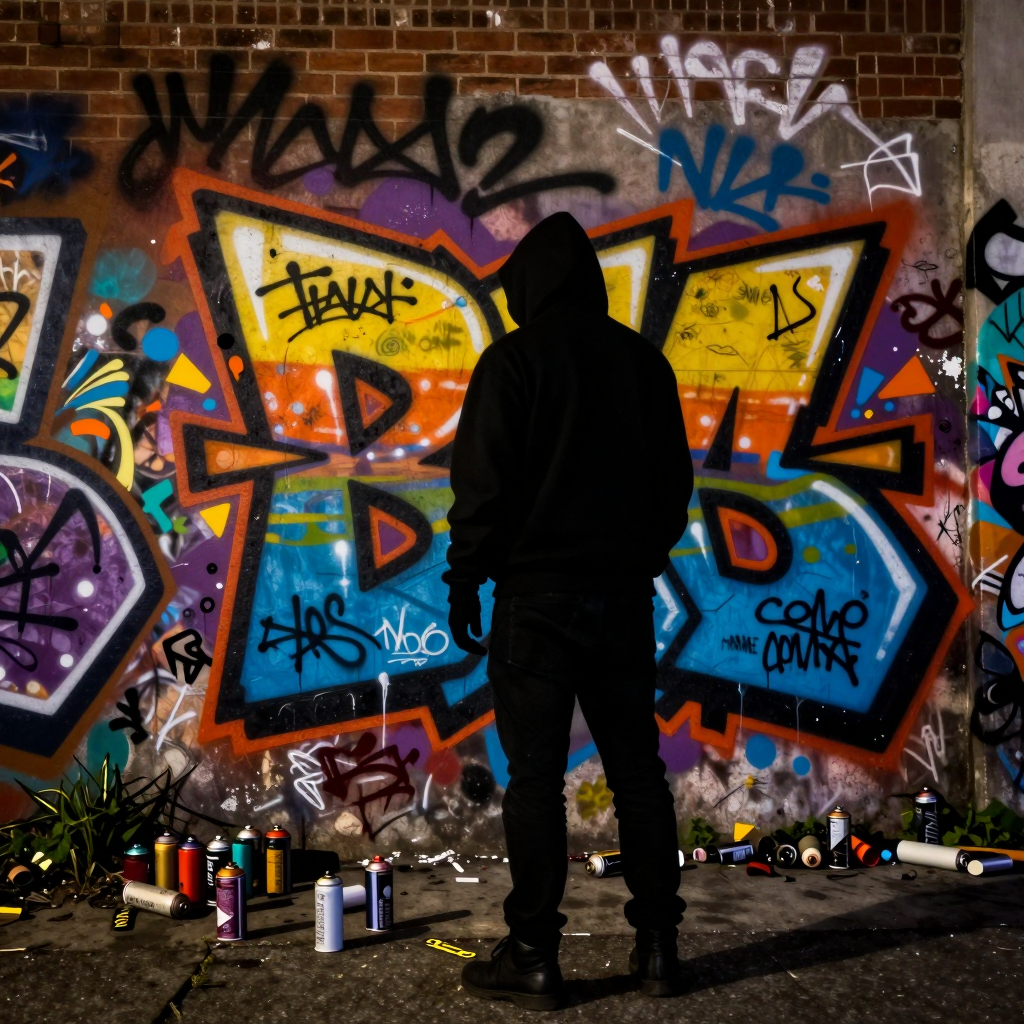
Banksy: The Mysterious Street Artist, Banksy
Who exactly is Banksy? His identity remains shrouded in mystery, but why should we pay attention to him? An artist whose name and face are uncertain uses walls worldwide as canvases to shake society, make headlines, and sometimes even twist the rules of the art market. This very “anonymity” is what transforms Banksy from a mere painter into an event.
Banksy works on the streets. His art isn’t protected under gallery lights but immediately evokes reactions in the city air and through the eyes of the public. To some, it’s a thrilling satire; to others, an uncomfortable question; and to many, a scene too striking to ignore. What matters is that his message is never complicated. Through short, intuitive images, he brings heavy topics like war, power, consumption, and surveillance into our everyday lives, asking, “What do you think?”
Another reason we must focus on Banksy is that his work constantly challenges the ownership and value of art. Who truly owns a drawing left on a city wall? Does it belong to the city, the building owner, the public, or the artist? Banksy exploits this blurred boundary to expose the very process through which art becomes a commodity, sometimes mocking the system itself. As a result, people end up “appreciating” not only the artwork but also society’s response to it.
Ultimately, Banksy’s mystery isn’t just about mystique. Using anonymity as a street device to draw attention, he makes the reality we normally overlook appear strangely unfamiliar. Thus, the fact that we don’t know who he is only sharpens his message. What matters isn’t “who painted it” but “why this scene appears here and now.”
Banksy’s Flashy Graffiti and Hidden Messages
What social messages and secrets lie within Banksy’s artwork? At first glance, they may seem like simple murals, but often hidden within are sharp questions that pierce the realities we pass by unconsciously. That’s why his graffiti goes beyond being just “pretty pictures” and can be read as the most immediate social critique happening on the streets.
Social Questions Raised by Banksy’s Graffiti
Banksy’s favored approach is intuitive. Instead of complicated explanations, he plants symbols in a single scene, allowing viewers to complete the meaning themselves. Heavy themes like war and violence, power and control, consumerism and wealth disparity transform into ironic images, making the message resonate more deeply. The moment you find yourself asking, “Why is that scene funny?” you’ve already stepped into the awareness the artwork creates.
Where Do the ‘Secrets’ in Banksy’s Works Hide?
Banksy’s secrets aren’t about fixed answers—they lie in the way he designs room for interpretation. His pieces often gain meaning through location. Surrounding elements like cracks in a wall, worn signs, or CCTV cameras are deliberately incorporated, making the artwork seem like a warning that was “always there.” He also twists familiar icons (police, children, flowers, balloons) to reveal contradictions between goodwill and violence, innocence and propaganda.
What Makes Banksy ‘More Than Just Murals’?
- Short and powerful symbols: Messages are delivered quickly, like a single-frame satire.
- The coexistence of humor and discomfort: The unease lingering after laughter fuels deeper reflection.
- The street as a gallery: Free for everyone to encounter, flipping the accessibility of art on its head.
Ultimately, Banksy’s graffiti doesn’t end with “just having seen the artwork.” It’s only when we start doubting the rules of the society we live in, the language of the news, and even familiar common sense—that’s when the hidden message finally reveals itself.
Banksy: The Artistic Revolutionary Hidden Behind Anonymity
Why does Banksy fiercely guard his anonymity? It’s not merely the image of an “artist who conceals their identity,” but his brilliance lies in using anonymity itself as an integral part of his work and strategy.
For Banksy, a name holds no significance. In fact, the less his identity is revealed, the clearer his message becomes. When an individual’s fame or private life takes center stage, the uncomfortable questions his art raises—about power, violence, consumerism, and hypocrisy—tend to fade into the background. Anonymity erases the “Who did it?” and forces us to focus on “What is being said?”
Another crucial element is control. The moment an artist’s face is known, the work risks being trapped in narratives dictated by the art market and media—interviews, explanations, controversies. By hiding his identity, Banksy orchestrates his appearances and disappearances on his own terms, shaping the pace and direction in which his message is consumed. His anonymity is not an escape, but a tactical choice to maximize the shock his art delivers to society.
Finally, anonymity transforms Banksy from a single individual into a “phenomenon.” It shifts the focus from a personal talent to an event exposing uncomfortable contemporary truths in public spaces. That’s why his works often end with questions. Why must this nameless artist hide? And the more he disappears, the sharper our view becomes.
Footprints Left Around the World: The Street Messages of Banksy
From the UK to streets across the globe, how do Banksy’s works captivate people’s hearts? Let’s dive into the scene together. Banksy’s art doesn’t stop at turning a specific city into an “exhibition space.” It expands into a full event that includes the atmosphere where the piece appears, the local conflicts and daily life, and the reactions of those who witness it.
What makes Banksy’s marks around the world truly special is that his messages are always tied to the location. The same image takes on different meanings depending on where it’s placed, naturally prompting viewers to reflect on the realities of that area. For this reason, Banksy’s murals go beyond being “pretty” or “cool”; they act as catalysts for social questions.
Another key feature is the unpredictability surrounding his work. It suddenly appears, might be erased or preserved by someone, and sometimes sparks controversy. Through this process, people form their own views on art ownership and public space, the value of street art, and how the message is interpreted. Ultimately, Banksy’s footprints are not just the paint left on walls, but the traces that prompt a city to pause and debate “what really matters.”
Wherever you go in the world, the journey of seeking out Banksy follows a familiar rhythm: the surprise of discovering his work tucked away in alleys and between buildings, and the sharp, single line of questioning that image delivers. That brief encounter makes a foreign city more memorable, and for some, becomes a moment to reconsider reality. This is the most powerful effect Banksy repeatedly creates on streets worldwide.
Art and Society: The Meaning and Impact Left by Banksy
What influence has his work had on the contemporary art world and society? Let’s face the true message Banksy left behind and the lingering impact it carries.
Banksy’s work is closer to an ‘event’ than a mere ‘art piece.’ By infiltrating street walls, public spaces, and even institutional galleries at times, he has shaken the very ground on which art stands. Thanks to this, contemporary art no longer monopolizes specific spaces and languages, and social issues now meet the public through more direct imagery.
- Redefining the Boundaries of Art: Starting outside galleries yet entering the core of art discourse, Banksy reignited the question: “Who decides what art is and where it belongs?”
- Instantaneous Messaging: Without complex explanations, a single image conveys themes of war, power, consumerism, and inequality. This simplicity doesn’t mean ‘lightness,’ but rather a powerful immediacy of understanding.
- Audience-Driven Influence: The nature of street art, designed for photo sharing and viral circulation, shifts the work from personal appreciation to social conversation. Once drawn, these images are reinterpreted thousands of times online, layering new meanings.
Ultimately, Banksy’s greatest impact lies in repeatedly proving that “art is not detached from reality.” By layering laughter and cynicism, beauty and discomfort, he leaves us with questions. In confronting these questions, we don’t just become spectators but members of society who must respond. At this point, Banksy’s lingering effect is not merely the trace of a famous artist, but a catalyst for ongoing social dialogue.
Comments
Post a Comment