 \n
\n
Timberwolves’ Triumph of Resilience: Nuggets vs. Timberwolves – Wolves Defeat Nuggets
How did the Minnesota Timberwolves overcome injuries and adversity to clinch the first round of the playoffs by defeating the Denver Nuggets 4-2? The answer was not in flashy individual plays but in steadier management and balance that grew stronger with every moment that seemed on the brink of collapse.
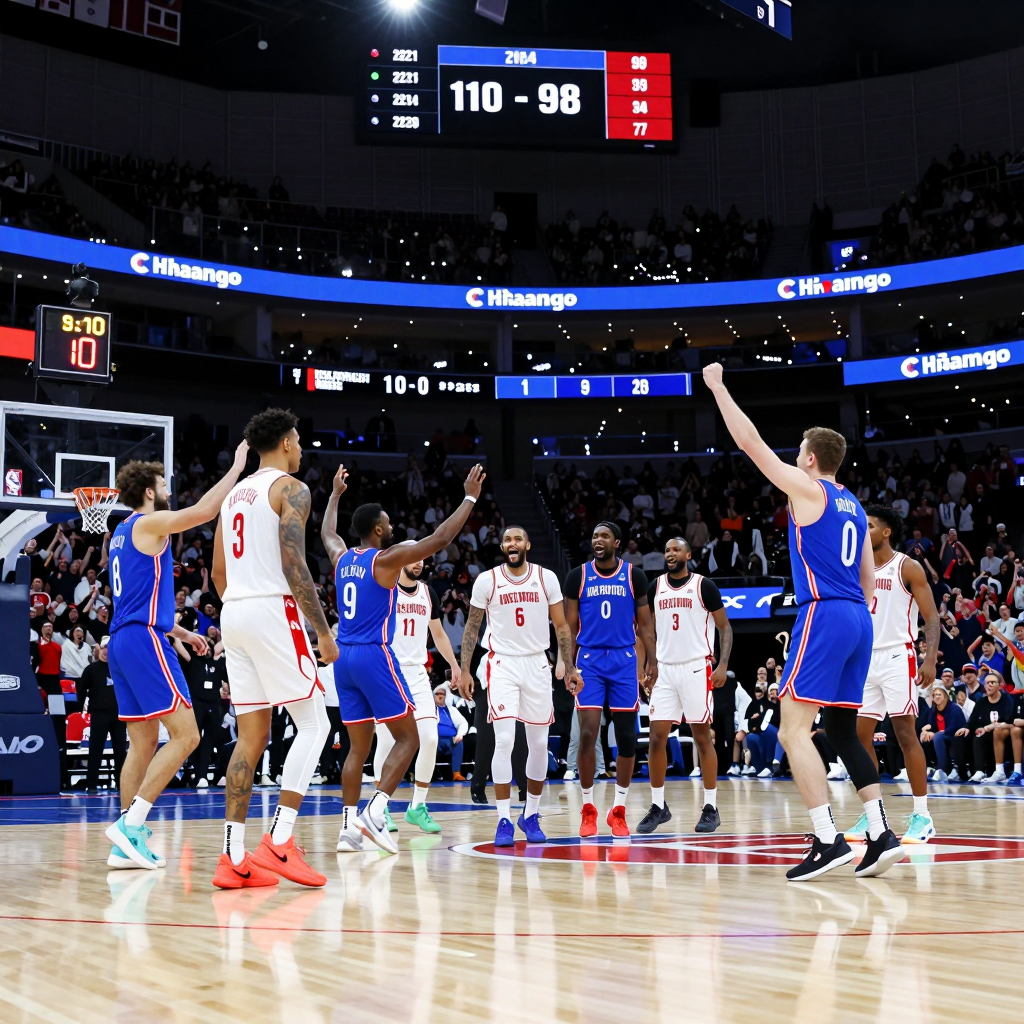
In Game 6, the Timberwolves sealed the series with a 110-98 victory over the Nuggets. What stood out remarkably was their game-changing ball control. Minnesota executed their offense smoothly with 22 assists and only 7 turnovers, a stark contrast to the shaky Game 5 where they suffered a staggering 25 turnovers. This very difference ultimately decided the outcome of the series.
This Nuggets vs. Timberwolves matchup was as much about injury challenges as it was about tactics. Minnesota lost Anthony Edwards (knee hyperextension) and Donte DiVincenzo (Achilles tear) in Game 4, and just before Game 6, their recent leading scorer over three games—Ayo Dosunmu, who had posted 25, 43, and 18 points—was sidelined due to a calf issue. Denver also faced setbacks with Aaron Gordon missing Games 3 and 5 due to calf problems, weakening their lineup. Yet instead of merely holding the line, Minnesota rebuilt their game plan through replacement players and restructured operations, capturing momentum decisively.
The overall series stats illustrate the Timberwolves’ dominance: Minnesota averaged 112.4 points, 46.6 rebounds, and 26.0 assists, surpassing Denver’s 109.4 points, 39.4 rebounds, and 24.6 assists. This was not the result of one or two players exploding offensively but a steady accumulation of advantages through distributed scoring and rebounding control. Early on, Edwards and DiVincenzo had sparked the team’s fire (Edwards with 30 points and 10 rebounds in Game 2, DiVincenzo tallying 31 points combined in Games 2 and 3), and even with key players missing later, the entire team meshed like well-oiled gears to keep the system intact.
Ultimately, the Timberwolves’ 4-2 series victory stands as proof of a “team that does not waver no matter who is sidelined.” Now facing the San Antonio Spurs in the Western Conference semifinals, Minnesota’s true strength might not lie in star power alone but in the team’s balance that shines brightest under pressure.
Game 6, Breathtaking Moments of Victory: Nuggets vs Timberwolves
With 22 assists and only 7 turnovers, the numbers alone reveal how “safe yet sharp” the Timberwolves’ execution was in Game 6. So, what was the secret behind the near-perfect game plan that decided the outcome of Nuggets vs Timberwolves?
There were two key factors. First, the purpose of each pass was crystal clear. Instead of passing just to move the ball around, they delivered passes that shook the defense once more and led to the highest-percentage shot. As a result, those 22 assists became more than just a stat—they became the mechanism that kept the offensive rhythm steady.
Second, managing turnovers translated directly into controlling the tempo. After a staggering 25 turnovers in Game 5, the Timberwolves opted in Game 6 to reduce reckless dribble drives and risky cross-court passes, choosing a “no-lose” style of basketball. This decision cut off the opponent’s attempts to mount a comeback, especially in the fourth quarter, ultimately leading to a 110-98 victory.
Even amid lineup shifts caused by injury concerns, the Timberwolves minimized disruption by prioritizing balance over relying on explosive performances from just one or two players. The decisive moments in Game 6 weren’t about flashy plays but emerged from the “unerring repetition of making no mistakes.”
The Turning Point of Injuries, and the Heroes Within: Nuggets vs Timberwolves
When key players go down one after another, the momentum of a series usually swings sharply to one side. But this Nuggets vs Timberwolves matchup was different. It wasn’t about who had the stronger star—it was about who adapted faster with tactical changes and role adjustments that decided the outcome.
The Timberwolves faced a tough blow after Game 4, with knee injury to Anthony Edwards and Achilles injury to Donte DiVincenzo. Yet in Game 6, they recorded an impressive 22 assists to 7 turnovers, redefining themselves not as a “team weakened by injuries,” but as a “team minimizing mistakes.” Compared to the 25 turnovers in Game 5, this shift was not just a recovery in form—it was an intentional overhaul of their approach. They stopped holding the ball too long, finished their offense with simpler choices, and improved the quality of their passing.
Meanwhile, the Nuggets also had their rotation disrupted by Aaron Gordon’s calf injury. Losing a puzzle piece who provided tough physical defense and timely cuts caused delays in their matchup responses and gradually put them at a disadvantage in the rebounding battles. Behind the Timberwolves’ series-long edge in rebounding lay this “invisible gap.”
The biggest question, though, was the absence of Ayo Dosunmu. Missing a player who scored 25, 43, and 18 points in earlier games wasn’t just losing a scoring option. It meant the simultaneous loss of 1) bench scoring stability, 2) secondary scoring distribution, and 3) breakthrough pressure that unsettled opposing defenses. Timberwolves shifted their focus from “who will score 20 points” to “who can reduce mistakes and keep the offense flowing,” and that answer manifested in Game 6’s low turnover count and balanced attack.
In the end, the heroes of this series were not those who made dazzling highlight plays, but the players who held their ground through deliberate execution and role fulfillment despite injuries threatening to collapse the team structure. What turned the tide was not a miraculous explosion of talent, but unwavering choices and true team basketball.
The Victory Formula Built on Balanced Offense: Nuggets vs Timberwolves
The key to victory throughout the series was not a “one or two players exploding,” but rather superiority across all statistical categories. The Timberwolves consistently outperformed the Nuggets with series averages of 112.4 points, 46.6 rebounds, and 26.0 assists, compared to the Nuggets’ 109.4 points, 39.4 rebounds, and 24.6 assists. This cumulative edge ultimately shifted the momentum of the series. The Nuggets vs Timberwolves matchup was a battle not of “who shot better,” but “who orchestrated the game more reliably.”
1) Scoring: A Distributed Structure That Avoids Reliance on a Single Option
The Timberwolves’ offense thrived because when one player was shut down, another option immediately emerged. Early on, Edwards and DiVincenzo led the charge, and despite role shifts from game to game, their offensive efficiency barely wavered. This diverse scoring structure made it difficult for defenses to focus on one spot and was the core reason for Timberwolves’ scoring advantage throughout the series.
2) Rebounding: Gaining Second Chances and Defensive Finishing Touches
The rebounding gap (46.6 vs 39.4) was more than just a number — it represented the sum of extra offensive opportunities and the prevention of opposing runs. Offensive rebounds grant additional possessions, while defensive rebounds seal off the opponent’s scoring streaks. The Timberwolves continuously led in this area, controlling the game’s flow in their favor.
3) Assists and Turnovers: Operational Stability That Elevated Offensive Quality
The most emblematic moment came in Game 6. The Timberwolves showcased clean execution with 22 assists and only 7 turnovers, sealing a 110-98 victory. This was in stark contrast to their 25 turnovers in Game 5—hardly the same team on the court, such was the transformation in offensive quality. When passing flourishes, shots become easier—and easier shots trigger a positive cycle that even benefits the rebounding battle.
4) Maintaining the ‘Offensive Framework’ Amid Variables (Injuries)
Though the series grew complex with injury issues, the Timberwolves stuck to their fundamental offensive principles. Even as key players departed, their approach to sharing the ball, minimizing mistakes, and securing possessions through rebounding remained steadfast. In the end, the outcome of the Nuggets vs Timberwolves series was not about a single tactical masterstroke, but about the ‘balance’ forged by pushing advantages across every key metric.
The Fruits of Adaptation and Perseverance, Towards a New Challenge: Nuggets vs Timberwolves
A deep roster and spotlight-worthy focus in the face of adversity propelled the Timberwolves to the semifinals. Now, all eyes naturally turn to the next stage: the San Antonio Spurs. The Nuggets vs Timberwolves series wasn’t about “who is healthier,” but rather, “who adapts faster.”
The key revealed in Game 6 is simple. The steady operation of 22 assists and 7 turnovers was a declaration of breaking away from the shaky flow of Game 5’s wild turnover spree. The crucial factor wasn’t skill, but attitude. Despite key injuries and rotation cracks, the Timberwolves didn’t push their offense into “solo heroics”; instead, they moved the ball one extra time to connect to higher-percentage opportunities. Teams like this don’t collapse even when shaken.
Another decisive battleground was the readiness of alternative resources. When scorers drop out and defensive options dwindle, playoffs shift from calculations to improvisation. The Timberwolves turned that improvisation not into mere “winging it,” but into a well-prepared “Plan B.” Even on nights when no single star could solve everything, they maintained standards in rebounding, ball control, and set executions—and that balance decided the series.
Now, the semifinals pose a completely different question. The Spurs are a team with a different rhythm and distinct strengths. Ultimately, the focal point narrows down to one: Can the adaptability and focus proven in this series replicate themselves under even greater pressure? If the Timberwolves prove once again that they are a “team of solutions,” not “a team in crisis,” the next chapter could unfold far beyond expectations.
Comments
Post a Comment