 \n
\n
PSG vs Bayern: An Unforgettable Semifinal showdown, A Dramatic Duel Between PSG and Bayern
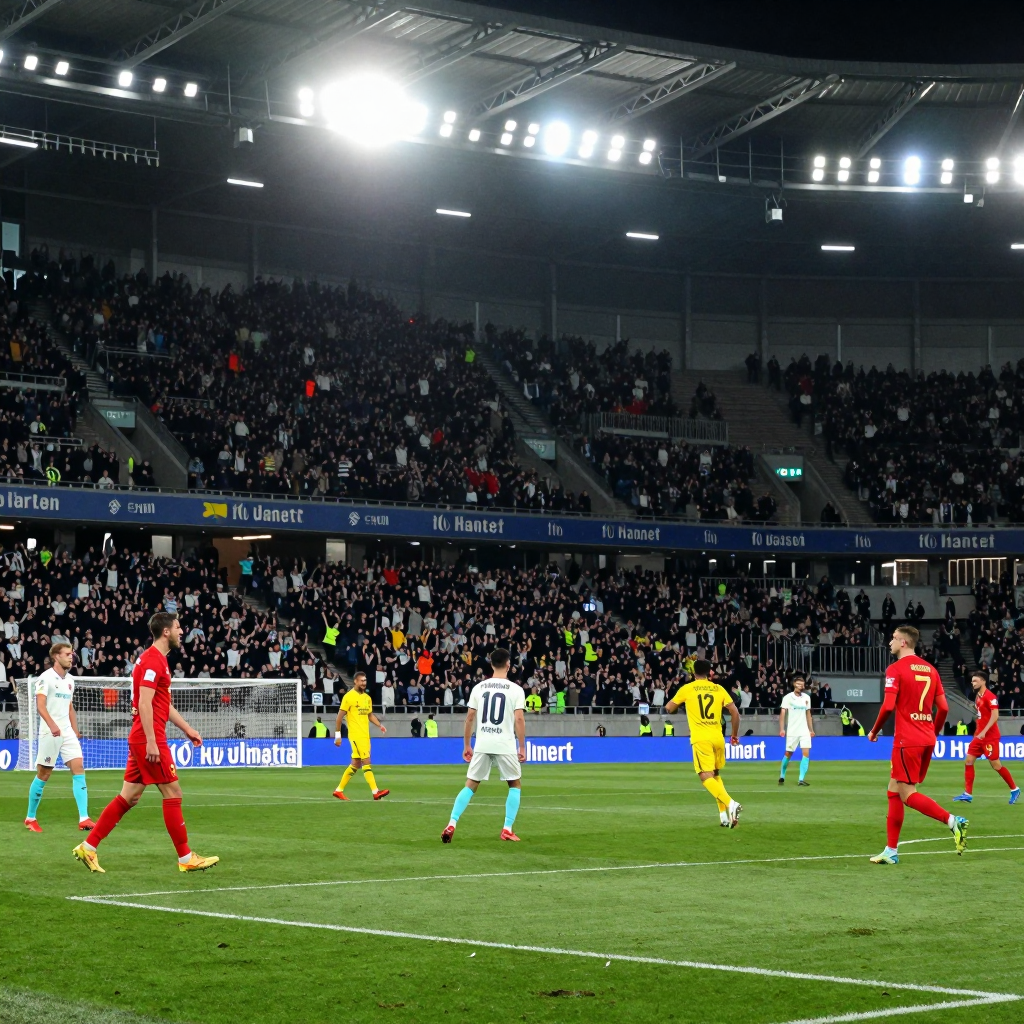
A fierce battle of 9 goals that will be remembered in Champions League history. What incredible moments filled this astonishing match? The first leg at Parc des Princes was, from start to finish, an utterly “breathlessly fast” semifinal where momentum constantly shifted.
The core of this PSG vs Bayern clash goes beyond just a high scoreline. It set a record as the highest-scoring semifinal since the Champions League’s rebranding in 1991-92, with both sides repeatedly choosing moments of sharp decision-making and risk over mere tactics.
- Bayern seemed to seize control early with Harry Kane’s penalty goal breaking the deadlock.
- But PSG quickly responded with Khvicha Kvaratskhelia’s equalizer, opening the floodgates for this goal-heavy duel.
- PSG took the lead through João Neves’s header, only for Bayern to answer back with Michael Olise’s strike, crafting a tense back-and-forth from the very first half.
The second half was even more explosive. PSG surged ahead to a seemingly decisive 5-2 lead, with Kvaratskhelia and Ousmane Dembélé each netting two goals, showcasing their razor-sharp attacking prowess. Yet Bayern refused to back down, cutting the deficit with Dayot Upamecano’s header and Luis Díaz’s shot, sending a clear message that the “second leg still remains.”
Ending 5-4, this match exploded with both records and raw emotion, transforming the upcoming rematch at Allianz Arena next week into not just a replay, but another monumental event.
The Unsung Heroes of the PSG-Bayern Match: Kvaratskhelia and Dembele’s Scoring Spectacle
Can you believe two wingers were responsible for an astonishing four goals, completely transforming the flow of the game with their dazzling performances? The first leg of PSG vs. Bayern was nothing short of an “explosive goal fest,” dominated by relentless power from the flanks. At the heart of this chaos were Khvicha Kvaratskhelia and Ousmane Dembele.
Kvaratskhelia’s Instant Counterstrike Goal That Flipped the PSG-Bayern Momentum
Right after Bayern took the lead through Harry Kane’s penalty, at a moment when PSG seemed vulnerable, Kvaratskhelia immediately leveled the score and reclaimed the atmosphere for his team. This “instant counterstrike” was not just a goal; it was a psychological game-changer.
- Scoring right after conceding breaks the opponent’s momentum and lifts the entire team’s spirit.
- Especially in high-stakes matches like semifinals, this single moment of composure sets the rhythm for the entire 90 minutes.
Dembele’s Consecutive Goals That Didn’t Just Seal the Deal but Hit the Accelerator in PSG-Bayern
Dembele’s multi-goal performance wasn’t merely about adding to the scoreline—it powered the crucial stretch in the early second half where PSG surged ahead 5-2. Every time Bayern pushed their defensive line forward to chase the game, Dembele’s finishing turned “chasing chances” into mounting pressure.
- In a pursuit, each goal forces defenders to attack more, creating wider gaps.
- Dembele expertly exploited these openings, pulling the game’s pace firmly toward PSG’s favor.
What the Four Winger Goals in PSG-Bayern Mean: The Flanks Were the Game Plan
The fact that Kvaratskhelia and Dembele each scored twice reveals that this war of goals was no random shootout—it was PSG’s intentional winning strategy built on flank domination. As the central battle grew tighter, one-on-one plays and timing of flank breakthroughs decisively toppled the game’s balance.
Ultimately, the 5-4 thriller in the first leg of PSG-Bayern was less about “who created more chances,” and more about who shattered the flow from the flanks at critical moments. And the answer? Their four goals tell the story better than words ever could.
PSG - Bayern: Bayern Munich’s Dramatic Comeback Shows the Battle Is Far From Over
From 5-2 to 5-4. Even when the game seemed almost decided, Bayern Munich never gave up. This breathtaking comeback was not just about narrowing the score—it was a psychological reversal that completely shifted the momentum of the entire second leg.
PSG took full control early in the second half by netting five goals, but Bayern fired back with Upamecano’s header and Luis Díaz’s shot, unleashing a clear message: “It’s not over yet.” The chase from 5-2 to 5-4 is especially telling—it proves that with just one more goal, the entire outcome of the match could have changed.
Why does this moment matter so much? Because the PSG vs. Bayern second leg has evolved into more than a tactical battle—it’s becoming a test of “who will crack first.” For PSG, despite their high-scoring lead, cracks appeared in their finishing that raise serious concerns. For Bayern, closing the gap to just two goals away from home has become a massive confidence boost.
In the end, this comeback has rewritten the question heading into the rest of the second leg:
It’s no longer about whether PSG can “maintain their lead,” but whether Bayern can “keep pushing until the very end.” And the answer is likely to be decided in the first 15 minutes at Allianz Arena.
Rewriting History: The Champions League Legend Created by 9 Goals (PSG - Bayern)
Matching the legendary 1959 clash, could the next match possibly break the 16-goal barrier? The most powerful takeaway from this PSG - Bayern first leg is crystal clear: the old notion that “semifinals demand caution” can collapse spectacularly within just 90 minutes.
This game went down in history as the highest-scoring semifinal since the Champions League’s rebranding in the 1991-92 season. What's even more fascinating is how the number ‘9 goals’ echoes a classic chapter in football lore. It mirrors the 1959-60 European Cup semifinal where Frankfurt triumphed 6-3 over Rangers—a legendary total of 9 goals. Different eras, yet football occasionally loses its mind in the same way.
Now, the question looms: “Can the second leg top 16 goals?” This teeters on the edge between reality and fantasy. To break that 16-goal combined record from the semifinals back then, the return match in Munich needs at least 7 goals. Though unlikely, the first leg’s pace suggests it’s not entirely out of the realm of possibility. PSG at one point surged to 5-2, while Bayern relentlessly kept closing in. In other words, both sides have solid grounds to “explode once more.”
Ultimately, what will decide the next game may be less tactics and more the emotional intensity. PSG enters the second leg riding the “confidence of setting a record,” while Bayern carries the “certainty of almost catching up.” History rarely writes itself in a single moment. Yet this PSG - Bayern tie has already set the stage to rewrite it—twice.
PSG vs Bayern Final Showdown Preview: The Second Leg—Where Will the Outcome Tilt?
PSG edged ahead 5-4 in the first leg, stepping closer to the final, yet the tension has only skyrocketed. Next week at Allianz Arena, it won’t just be the score but the momentum and psychology that are likely to decide the fate of this clash. The second leg of PSG vs Bayern transcends the simple math of “one goal can flip it all”—it’s time to peek behind the scenes to uncover what kind of drama awaits.
How Allianz Arena Will Change the Temperature of PSG vs Bayern
The fiery atmosphere of Parc des Princes contrasts sharply with the intense pressure of Allianz Arena. For the away team, surviving the opening 10 to 15 minutes is crucial, while the home side aims to harness the crowd’s energy to speed up the tempo and force errors. If goals come early again as in the first leg, another goal-fest might unfold—but from Bayern’s perspective, this emotional overheating could risk cracks in their defensive line.
First Leg Lessons: PSG vs Bayern Is a Battle of ‘Control’ More than Pure ‘Firepower’
While the first leg was thrilling, it left both teams with clear homework. PSG once led 5-2 but had to withstand a fierce Bayern comeback. Bayern showed resilience late but failed to manage the goal concession rate earlier on. The key for the second leg is clear.
- PSG: How they manage their lead—adjusting lines, controlling fouls in dangerous areas, and perfecting substitution timing—will be paramount.
- Bayern: Rather than a one-off strike, they need continuous scoring bursts, creating relentless pressure through forward pressing and winning second balls.
In short, the second leg is less about “who scores more” but more about who stays steadier for longer.
Behind-the-Scenes Variable: The Drama at PSG vs Bayern Might Begin on the Bench
In a high-stakes clash like this, it’s often the manager’s decision-making on the sidelines that pens the first chapter—not just tactical boards. A conservative starting lineup locks down the game with minimal risks but risks mounting anxiety if the breakthrough goal doesn’t come early. Conversely, going on the offensive can seize early momentum backed by the crowd but exposes vulnerabilities behind. Ultimately, the coach faces a clear dilemma:
- Will they seize initiative early with a bold gamble,
- Or hold their cards for a decisive strike late?
Conclusion: PSG vs Bayern’s Second Leg Hinges on “A Momentary Crack”
Though PSG leads, safety is far from guaranteed; Bayern lags but their story isn’t over yet. The rematch at Allianz Arena is more than a grand tactical battle—it’s a match that could be remembered for one lapse in concentration, one set-piece, or one substitution turning the entire narrative upside down. Next week, the key question looms: on which side will that ‘crack’ appear first? That very moment will define the ultimate showdown.
Comments
Post a Comment