Cavaliers' Home Game Perfection: 5-0 Victory! Starting Playoff Round 2 Comeback Against the Pixtons.
 \n
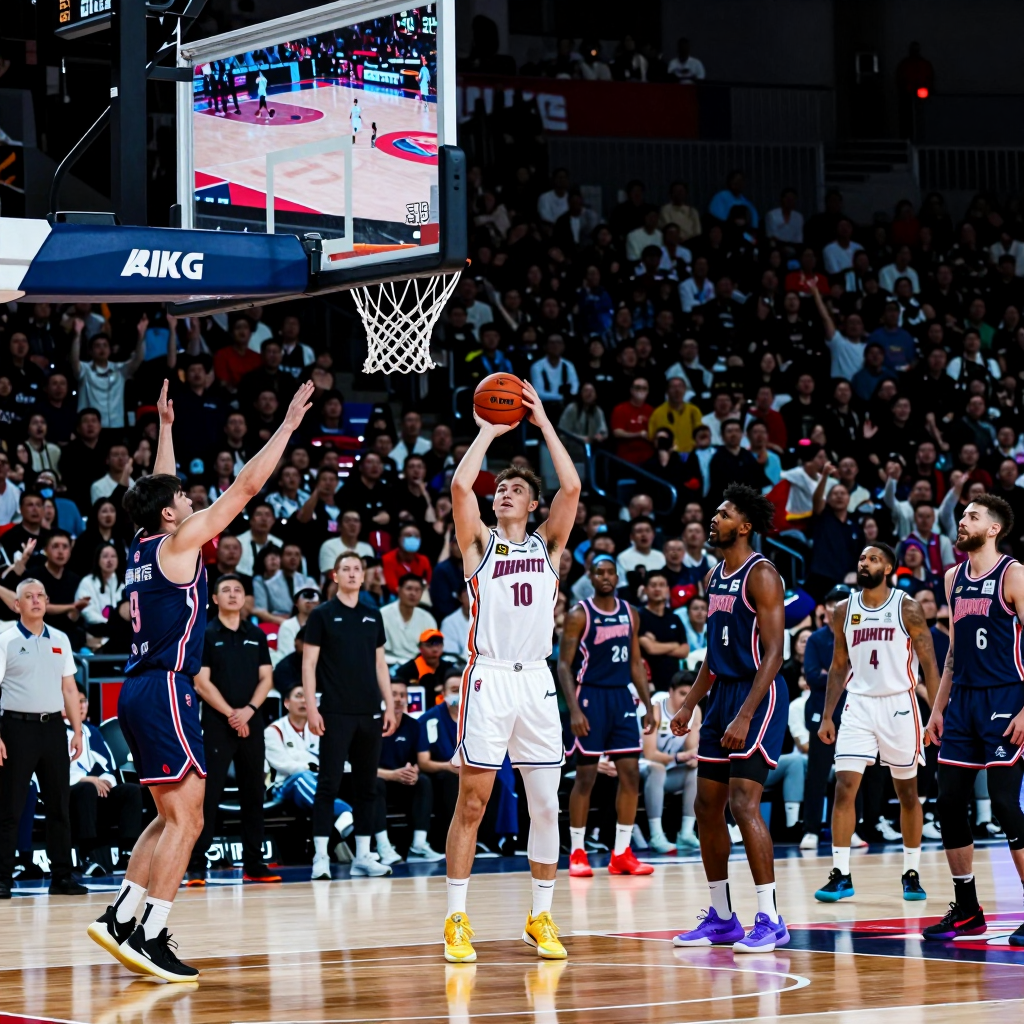
Pistons vs Cavaliers: The Dramatic Battle Begins - Cavaliers Survive at Home
In the final 3 minutes and 39 seconds, the Cavaliers truly created “time that exists to win.” In the clutch moments with the score neck-and-neck, they unleashed a powerful 13-5 run to seal a 116-109 victory. This single burst was more than just a win—it started to rewrite the entire flow of the series.
The key to this Pistons vs Cavaliers Game 3 is clear. Unlike their shaky performance on the road, the Cavaliers were bold in their offensive choices at home and executed with precision. Their field goal percentage of 58.1% proves that this was not a “win held together by luck,” but a “win crafted through offensive efficiency.” Ultimately, the team that created higher percentage shots and calmly converted them survived.
Another crucial shift was the center of gravity in the clutch moments. While Donovan Mitchell led the offense throughout the game, it was James Harden’s presence in the decisive moments that locked in the victory. Harden, who scored only 2 points in the second half of Game 2, turned the tide in Game 3 with critical shots, transforming the Cavaliers from a “Mitchell one-man show” into a “two-star plan”—bringing Plan B to life.
With this victory, the series still has the Pistons up 2-1, but its meaning goes far beyond a simple win. The Cavaliers’ performance at home is a declaration that “we are different here.” And the starting point of that declaration was the 13-5 run in those 3 minutes and 39 seconds. Now, the only question left is: can this home momentum repeat in the next game and truly change the entire course of the series?
Pistons vs. Cavaliers Star Player Battle: Donovan Mitchell and James Harden’s Two-Star System
The heroes of 35 points and clutch shooting. The secret behind Mitchell and Harden’s stunning performances at home was ultimately a clear role division in their “two-star operation.” In Game 3, the Cavaliers didn’t rely on just one explosive player; instead, they designed their offense around two stars covering each other’s weaknesses, dominating the pivotal moments.
Mitchell: The No. 1 Option Who ‘Breaks Defense’ with Explosiveness
Donovan Mitchell heated up the game with 35 points, 10 rebounds, and 4 assists, keeping the momentum alive until the very end. What’s crucial is not just the sheer volume of his scoring but the ripple effect his presence created throughout the offense.
- Early on, he locked the defense in by demanding attention with his scoring, shaking up the Pistons’ rotations
- Mid-game, he stayed involved with rebounds and generating second-chance opportunities, maintaining flow
- Late in the game, his confidence to ‘take over and finish’ ignited the home crowd
As Mitchell applied this pressure, the defense ultimately tightened up. And at that exact moment, the Cavaliers aimed for their next play—Harden’s clutch time magic.
Harden: The Clutch Engine That Chooses the ‘Right Play’ When It Matters
James Harden posted 19 points, a stat that actually feels understated compared to his impact in the game’s critical moments. Especially meaningful was his rebound from scoring just 2 points in the second half of Game 2 to making a significant impact in Game 3.
Harden’s strength lies less in explosive scoring and more in his clutch decision-making. As defenses collapse around Mitchell, Harden reads the gaps and opts for the highest-value shot or pass, converting those moments into points. Even during the Cavaliers’ 13-5 run over the final 3 minutes and 39 seconds, Harden’s presence was a safety net, preventing the opposing defense from recklessly gambling.
The Heart of the Two-Star System: “Take Turns Striking, Finish Together”
What the Cavaliers showed in this Pistons vs. Cavaliers matchup was not just two stars on the floor—it was a clear structure:
1) Mitchell delivers the first strike, drawing the defense
2) As the defense adjusts, Harden retaliates with clutch efficiency
3) If the defense shifts to Harden, Mitchell takes over with one-on-one finishes
When this rhythm flows, the Pistons inevitably leave openings no matter where they focus. The sharp rise in the Cavaliers’ offensive efficiency at home (58.1% FG) stems from two stars not repeating the same actions but flawlessly executing different roles.
Next Watchpoint: Will the Pistons Lock Down ‘Mitchell’ or Block ‘Harden’?
For the Pistons to keep their series lead, they have to decisively shut down one of these two. Yet if they overcommit to one, the other is likely to explode. If the Cavaliers replicate the same formula at home in Game 4, this series—aptly named the “Star Player Battle”—will only grow longer and fiercer.
Victory by the Numbers: Field Goal Percentage and the Power of Home Court (Pistons vs Cavaliers)
The Cavaliers’ 58.1% field goal percentage (FG%) and a perfect 5-0 record at home reveal more than just “being in good form”—these numbers expose the strategic advantage that actually works in the series. So where did the efficiency gap between the Pistons (45.1%) and Cavaliers come from in the same game?
Pistons vs Cavaliers: What 58.1% FG Means for Offensive ‘Quality’
In Game 3, the Cavaliers recorded 43/74 (58.1%), while the Pistons shot 41/91 (45.1%). This isn’t just about “making more shots,” but the playoff truth that the team that scores the same points with fewer attempts carries the game’s advantage.
- Cavaliers: 116 points on 74 attempts → Indicates well-organized shot selection and uninterrupted offense
- Pistons: 109 points on 91 attempts → More chances but less efficient finishing
In other words, the outcome of Pistons vs Cavaliers hinged less on the sheer number of attempts and more on the expected value per possession (shot quality)—and the Cavaliers clearly owned this edge.
Pistons vs Cavaliers: The Tactical Bonus of a 5-0 Home Record
The Cavaliers’ extreme 5-0 home / 0-5 away split might look stark, but the interpretation is clear. At home, the following ‘bonuses’ tend to take effect:
- Shooting Rhythm: Familiar sightlines, consistent backboard rebounds, and energy from the bench and crowd easily boost early efficiency.
- Sustained Defensive Intensity: Managing foul trouble is comparatively easier at home, allowing prolonged high-pressure defense.
- Clutch Execution: In close moments, a simpler offensive option set combined with a familiar environment sharpens set play precision.
The late-game 13-5 run over 3 minutes and 39 seconds, which sealed this particular game, is a pattern more frequently seen on home courts. While a high FG% reflects “results built throughout the game,” the home court provides the “fuel to push hard at the end.”
Pistons vs Cavaliers: Lessons Pistons Must Take from the Data
Though the Pistons maintained game management—highlighted by Cade Cunningham’s triple-double—the 45.1% FG ultimately signals a lack of “good finishing.” As the series lengthens, two key points become critical for the Pistons on the road:
- Defend Early Efficiency: They must disrupt the Cavaliers’ rhythm in the 1st and 2nd quarters.
- Stabilize Clutch Scoring: Prevent one or two failed attacks from snowballing into a home run by the opponent in tight moments.
To sum up, the Pistons vs Cavaliers victory was crafted not only through “star performances” but also by combining shooting quality represented by FG% with the execution power granted by the home court. If the Cavaliers replicate the same efficiency in the next game, the series is highly likely to shift swiftly into a protracted battle.
Seed No.1 Pistons' Counterattack and the Shadow of Away Games: Analyzing Variables in the Pistons vs Cavaliers Series
Even though Cade Cunningham once again proved himself the “main character” of the series with a triple-double (27 points, 10 rebounds, 10 assists), the Pistons collapsed in Game 3. This raises a crucial question: Why did they lose despite strong individual performances? More fundamentally, how far can the weakness on the road alter the course of the Pistons vs Cavaliers series?
Why Cunningham’s ‘Complete Performance’ Didn’t Lead to Victory
Cunningham was deeply involved in orchestrating the offense, contributing to rebounds, and making clutch decisions. However, playoffs aren’t won by one player’s completeness alone—it boils down to team-wide efficiency and finishing ability.
- The efficiency gap was overwhelmingly large. Pistons shot 45.1% FG compared to Cavaliers' 58.1%, signaling not just “bad luck” but a consistent disruption of offensive flow throughout the game.
- Failure to respond to the late-game run was fatal. While the Cavaliers surged 13-5 in the final 3 minutes and 39 seconds, the Pistons’ scoring became one-dimensional, and they allowed easy points on defense.
- Even if Cunningham does everything, on the road the team needs scoring support from secondary options and focused defensive effort. When that balance collapses, a triple-double turns into a ‘stat line of defeat.’
The Shadow of Away Games: A “Lead” Might Just Be a “Conditional Lead”
Though the Pistons still lead the series 2-1, wavering on the road changes the quality of that lead. The home/away gap in this series is glaringly clear.
- Pistons: Home 2-0 / Away 0-1
- Cavaliers: Home 5-0 / Away 0-5
If this trend continues, the Pistons’ series strategy becomes deceptively simple yet difficult: the pressure to secure another win at home mounts, while temptation grows to “steal the series” with just one away game. The problem is, that ‘one game’ on the road is much heavier than it seems. The Cavaliers’ home performance is currently on a whole other level.
The Question Game 4 Poses: What Can the Pistons Change on the Road?
Game 4 will once again be in Cleveland—meaning the Pistons must find answers under their most challenging conditions yet. The pivotal factors are clear.
- Early tempo battle: Falling behind early on the road increases the chance of falling victim to the Harden-Mitchell duo’s explosive clutch performances.
- Efficiency recovery: Shooting in the mid-40% range leaves Cunningham’s playmaking as just a “positive process.” Defensive stops and rebounds are crucial to disrupt the Cavaliers’ high-efficiency flow.
- Rotation variables: If Huerter’s absence extends, the Pistons risk weakening their perimeter firepower and spacing—the exact weapons needed on the road.
Ultimately, the key to watching the Pistons vs Cavaliers series has shifted from “Are the Pistons the stronger team?” to “Can the Pistons prove they are a strong team even on the road?” Cunningham is already prepared. What remains is whether that preparation carries the same weight on hostile courts.
The Intensity of Pistons vs Cavaliers Home Games and Upcoming Match Predictions: The Series Is Now a 'Game of Runs'
The true turning point of the series is approaching. The Cavaliers have regained momentum by displaying near-perfect focus at home, while the Pistons showed signs of vulnerability on the road for the first time. Now, the remaining games will likely be decided less by tactics and more by psychology and momentum, and by one single run that can change everything.
The Reality of ‘Psychological Advantage’ Created by Home Court
The clearest signal from this Pistons vs Cavaliers series is just one thing: the pattern of being strong at home and significantly weaker on the road is becoming increasingly entrenched. The Cavaliers have simplified their shot selection (taking bolder shots), accelerated their defensive rotations, and ultimately boosted their offensive efficiency at home. Conversely, the Pistons experience more turnovers and loosened defensive communication on the road, leading to repeated scenarios of “one mistake snowballing into consecutive points.”
Key Moments to Watch Next: First 6 Minutes and Last 3 Minutes of the 4th Quarter
The decisive factor in upcoming games will come down to stability in two critical periods rather than extravagant strategies.
- First 6 minutes of the 1st quarter: The question is whether the Pistons, led by Cunningham, can control the tempo and dampen the home crowd’s energy. If the Cavaliers break away early here, the momentum will likely lock into “home game mode.”
- Last 3 minutes of the 4th quarter: Just like in Game 3, a 10-point run at the end can seal the game. During this stretch, the Cavaliers rely on Mitchell’s isolation plays and Harden’s clutch shooting, while the Pistons need Cunningham’s game management and perimeter support from his teammates.
Variables: Injuries and Bench Performance — “One Player’s Absence Creates a Run”
As the series tightens, injuries become more than roster updates—they become triggers for scoring runs or scoring droughts. The Cavaliers face uncertainty regarding Sam Merrill’s condition, while the Pistons may have to cope without Kevin Huerter. Neither player is a star, but in a series like this, 2 to 3 strong possessions from the bench can quickly snowball into an 8-0 or 10-2 run.
Predicting the Outcome: “Pistons Maintain the Edge, but Momentum Wavers”
Although the Pistons currently lead the score, Game 3 was more than just one win—it was essentially a declaration that the Cavaliers successfully disrupted the series rhythm. If the Cavaliers maintain their intensity at home in the next game, the series will very likely extend. The longer it goes, the battle ultimately becomes about who can create more frequent and bigger runs.
Now, Pistons vs Cavaliers has truly become a Game of Runs. The first run in the next game—and the critical choices made in the final 3 minutes—can flip the entire series on its head.
Comments
Post a Comment