 \n
\n
Spurs vs Timberwolves: The Turning Point of the Western Conference Semifinals, Game 6 Dominance Story
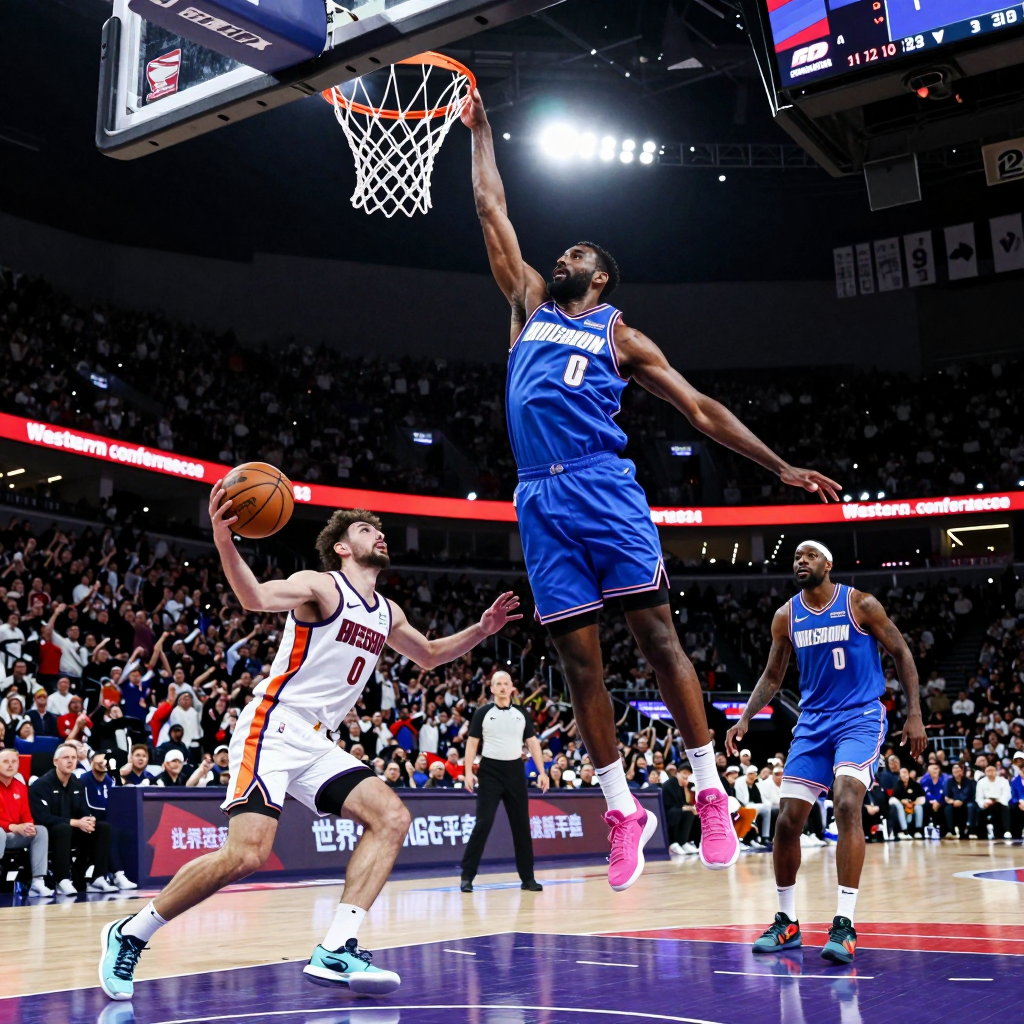
139–109. The Spurs closed out the series against the Minnesota Timberwolves with an overwhelming victory (4–2). While the score suggests a simple blowout, the real significance lies in why this game was the turning point. Game 6 was not a random explosion but rather the result of a gap accumulated and unleashed all at once in the latter part of the series.
Divergent Early Flow: Minnesota’s Slow Start vs Spurs’ Blazing Pace
From the opening tip, the tone was set differently. As the commentators repeatedly noted, Minnesota suffered yet another slow start, while the Spurs raised the opening tempo with a “scorching pace.”
With Spurs’ guards quickly ramping up their shooting efficiency (starting at an impressive 5/7), they established a lead before Minnesota could even properly “set” their game plan, leaving the Timberwolves on the back foot.
- Spurs: Secured the lead with transition play and rapid decision-making → accelerated further
- Timberwolves: Offense slowed down, shooting rhythm fell off, and the entire chase unraveled
Backcourt Dominance Sealed the Outcome: Castle’s Explosion and Guard Matchup Collapse
The hallmark of Game 6 was undoubtedly Stephon Castle’s 32 points, 11 rebounds, and 6 assists. More than just scoring, his all-around contribution—with rebounding and playmaking—was pivotal, especially considering this was an away closeout game performance.
As noted in commentary with lines like “starting guards 23–9 in favor of the Spurs,” the Timberwolves weren’t merely missing shots—they were outmatched offensively and defensively in guard matchups. The Spurs controlled the game’s tempo through ball handling and transitions, and Minnesota never recovered that pace.
The Wembanyama Effect: Rim Deterrence Beyond the Stats Disrupted Offensive Rhythm
Victor Wembanyama repeatedly drew comments throughout the series about how “so tough to finish with Wemby inside.” Game 6 was no different.
The key here isn’t just blocks but rim deterrence:
- Drives reduced in frequency
- Weak-angle runners and forced layups increased
- Resulting in the Timberwolves falling into an “ice cold” offensive flow
In essence, Wembanyama’s presence wasn’t just about a few defensive plays—it structurally narrowed Minnesota’s offensive options and disrupted their entire offensive rhythm.
Fox’s ‘Pace & Poise’: Playoff Closing Ability Anchoring the Young Core
De’Aaron Fox’s impact was less about flashy highlights and more about how he closed out the game.
Behind the Spurs maintaining their lead and momentum were two clear strengths of Fox:
- Pace: Making quick decisions to generate transition points and strike before defenses could set
- Poise: Reducing variables unique to an away closeout, ensuring the blowout was wrapped up decisively
Ultimately, Game 6 between the Spurs and Timberwolves wasn’t about “who felt better that day,” but rather an almost inevitable outcome created by the combination of backcourt control (Castle & Fox) + paint deterrence (Wembanyama). The Spurs’ commanding wins in the final two games reflected how this structure became ever clearer as the series progressed.
Spurs vs Timberwolves: Spurs’ Fired-Up Start Sets the ‘Scorching Hot’ Tone from the Get-Go
From the first quarter, the Spurs opened fire with an impressive 5/7 shooting (about 71%), seizing control of the game. In stark contrast, Minnesota once again suffered a slow start, prompting commentators to label it “another slow start for Minnesota.” On the same court, on the same playoff stage, one team ignited while the other froze. The difference wasn’t luck—it was all in the structure of the first five minutes.
Spurs: Striking Fast and Building a Lead at a Blistering Pace (Spurs vs Timberwolves)
The Spurs’ early offense wasn’t just about making shots; it was about getting good shots out quickly.
- The guards ramped up the tempo, completing their primary options before the Minnesota defense could set up,
- Even during set plays, the ball didn’t stagnate, with shots coming from the corners or top of the key before help defense arrived.
- Stepping Stone Castle’s early 3-pointer and the ensuing scoring spree were a clear signal to Minnesota: “The first button got buttoned wrong again today.”
Once the Spurs grabbed the lead early, they weren’t a team that sat back to defend—they pressed the gas even harder. Saying the Spurs maintained a “scorching pace” doesn’t mean their shot selection was reckless but rather that their offensive quality didn’t drop even after gaining the lead.
Timberwolves: Why Were They ‘Ice Cold’ From the Start? (Spurs vs Timberwolves)
Minnesota’s freeze wasn’t caused by a single factor but a confluence of issues erupting simultaneously in the opening minutes.
1) Psychological Tilt from Repeated Slow Starts
A pattern that “plagued them in this series” was evident again. Slow starts led to rushed offense, and rushed offense fuelled tougher, lower-quality shots. Those early scoreless stretches were not just points lost—they fundamentally shook their entire game plan.
2) Shrinking Options Near the Rim: ‘Wemby Inside’ Limitations
Minnesota’s attack relies on a rhythm of rim attacks followed by kick-outs. But with “so tough to finish with Wemby inside” saturating the flow early on, drives morphed from layups into forced runners or abrupt pull-up mids, undermining offensive fluidity.
Consequently, their perimeter shots became hastily taken attempts instead of “good open shots,” making the commentator’s “Timberwolves have gone ice cold” all too real.
3) Immediate Collapse in Guard Matchups
As the second quarter unfolded, the “starting guards 23–9 in favor of the Spurs” disparity emerged swiftly. This forced Minnesota to take more time to run their offense (= slowing down) and delayed their defensive transition (= more easy points allowed). In short, they entered a vicious early cycle where offense and defense alike sabotaged themselves.
What That Early 71% Really Means: Not Just ‘Hot Shooting’ but a ‘Game Plan Executed Perfectly’ (Spurs vs Timberwolves)
The 1st quarter of Spurs vs Timberwolves Game 6 was far from just a display of shooting touch. The Spurs shook Minnesota first with tempo, claimed control through their guards, and reduced opponent options with rim protection pressure, reshaping the flow from the very opening whistle. Minnesota froze on the opposite end as their slow start once again morphed into a structural weakness plaguing their game plan.
Spurs vs Timberwolves: The Secret Behind Stephone Castle’s Near Triple-Double Masterclass
32 points, 11 rebounds, 6 assists.
When a backcourt guard tears up a closeout game like this, the series isn’t decided by tactics—it’s decided by sheer dominance. Game 6’s Stephone Castle was not just on a scoring spree; he delivered a road closeout performance that sealed the Spurs vs Timberwolves fate.
1) Early Momentum Shift: “Slow Minnesota” vs “Hot Castle”
The broadcast captured the core storyline perfectly:
“Another slow start for Minnesota.”
And the harshest punishment for that sluggish start came from Castle himself.
- From the jump, his consecutive buckets—including threes—pushed Minnesota’s defense backward
- Spurs’ guards upped the tempo, transforming the game into an aggressive transition/early offense battle.
In the playoffs, when a team falls behind early, opponents often choose to speed up and tighten the noose rather than reset their sets. Castle ignited that acceleration.
2) The Meaning Behind 32 Points: Not ‘Lucky Shots’ but Sustained Good Looks
Castle’s explosive scoring wasn’t a fluke of random long balls.
The Spurs’ once 65% shooting efficiency came from Castle not scoring in isolation but from consistently creating high-quality shot opportunities.
- Attacking decisively when the defense wavered
- Passing to open options when help defense collapsed
- Minimizing Minnesota’s chance to regroup under their still-disorganized defense
Put simply, those 32 points were both an eruption and a product of flawless system execution.
3) The Real Story of 11 Rebounds: When a Guard Controls Boards, Tempo Shifts
A guard grabbing 11 rebounds usually means more than stats. Castle’s boards weren’t just numbers; they were a tempo switch for the Spurs.
- When a guard snatches the rebound, one outlet pass is saved
- The push breaks out immediately, accelerating the offense’s start
- Minnesota is forced to take blows before even settling defensively
This is why the “Spurs’ scorching pace” became possible. Castle’s 11 rebounds weren’t just tempo maintenance—they amplified it.
4) The Hidden Value of 6 Assists: It’s Not ‘I Score,’ It’s ‘We Close It Out’
Closeout games can trap stars into selfish finish attempts that stall the offense. But Castle flipped that script, combining scoring with 6 assists to lock in rhythm.
- Passing right when momentum might have paused to keep the flow alive
- Reading Minnesota’s defensive rotations and punishing mismatches and corner threes accordingly
This is the textbook “statement game” American analysts talk about—not just a good game, but a correctly executed big game.
5) Why He Became the “Closeout Game Man”
Castle didn’t just fill the stat sheet in Game 6; he crushed the opponent’s hopes with his style.
- Built an early lead signaling “today won’t be easy”
- Controlled tempo through rebounds
- Lifted teammates through precise passes to secure every escape lane
That’s why the Spurs vs Timberwolves ending wasn’t a tight 4–2 finish, but a one-sided closing statement in the last two games—fully showcasing a new league of dominance. At the center of it all? The backcourt guard who shut down the series: Stephone Castle.
Spurs vs Timberwolves: Wembanyama’s Rim Defense and the Timberwolves’ Broken Offensive Rhythm
What exactly is “rim deterrence”?
It refers to the suppressing power that makes opponents abandon the very choice of attacking the basket, even if it doesn’t show up in the block stats. In Game 6, Victor Wembanyama used this deterrence not merely to “stop” Minnesota’s offense but to transform it into something entirely different.
A recurring phrase from the live commentary sums this up perfectly:
“So tough to finish with Wemby inside.”
The moment Wemby stands near the rim, drives by the Timberwolves become not scoring opportunities but high-risk gambles.
The ‘Invisible Turnovers’ Created by Wembanyama
The Timberwolves didn’t just collapse in shooting percentage; their offensive order and rhythm fell apart.
- First shift: Rim attacks → retreating to floaters/runners
Instead of attacking the rim directly, their finishing point gets pushed a step or two outward. This means the high-percentage layups vanish, replaced by riskier mid-range attempts with lower success rates. - Second shift: Paint collapse fails → kick-out timing breaks down
Drive-and-kick works only when the defense is drawn all the way in. But with Wemby inside, defenders never fully bite, so passes that do come out tend to lead not to open threes but to hurried, contested shots. - Third shift: Reduced offensive options → ‘ice cold’ from the start
The commentary phrase “Timberwolves have gone ice cold” isn’t just about shooting woes; it reflects the offense being pushed into tougher and tougher choices. When the rhythm breaks, the shooters’ feet freeze too.
“More Intimidating Than Blocks is Stopping Before You Even Go In”
Wembanyama’s impact can’t be measured by stats alone. When he’s posted up in the paint, the Timberwolves seem to whisper themselves during offensive planning:
- “Heading in now means no favorable angle.”
- “Let’s pull it out one more time. Solve it from the outside.”
- “Don’t force it early.”
But in the playoffs, “one more time” often becomes a delay that eats up the shot clock, which then leads to high-difficulty finishing attempts. This is why Spurs vs Timberwolves Game 6 tilted early: the Spurs sped up their attack and racked up easy points, while Minnesota’s offense kept faltering against Wemby’s rim presence, showing the unmistakable look of a team chasing the game from the get-go.
Conclusion: Minnesota’s Offense Wasn’t Blocked, It Was Isolated
Wembanyama’s rim defense didn’t just guard the basket; it created a chain reaction that
- pushed attacks away from the rim,
- slowed passing timing, and
- lowered shot quality,
effectively isolating Minnesota’s offense. So, Game 6 wasn’t just a game Minnesota “couldn’t score in” — it was a game designed to be hard to score in. Wemby’s rim deterrence was at the very heart of that design.
Spurs vs Timberwolves: Spurs’ Fully Formed Core and Timberwolves’ Structural Limits Shift the Basketball Landscape in the U.S.
“This is no mere coincidence.” As the Spurs vs Timberwolves series ended with blowouts in Games 5 and 6, the reaction in the U.S. quickly boiled down to one sentence: San Antonio’s victory wasn’t about one-day form or shooting luck, but because they already possessed a fully formed combination that works in the playoffs. Conversely, Minnesota, beyond individual talent, once again faced structural challenges repeatedly exposed in the playoffs.
Spurs: The “Blueprint for a Modern NBA Playoff Team” in Their Four-Core
The Spurs centered around Wembanyama, but the pieces complementing him were incredibly precise. The reason this lineup reads as a ‘contender template’ is crystal clear.
Victor Wembanyama = The linchpin that changes the very rules of defense
It wasn’t just block totals; the series showcased a consistent rim deterrence that reduced opponents’ rim attacks and drives at the attempt stage. Minnesota’s offense often froze early not simply because “their shots weren’t falling,” but because paint zone pressure disrupted the entire rhythm.Stephon Castle = The playoff solution as a two-way guard
His 32-11-6 line in Game 6 isn’t just a highlight—it’s almost a blueprint showing exactly what kind of offense the Spurs want. From the start, the backcourt pushed tempo, flowing seamlessly through rebound, buildup, and finish—a powerful signal that “this player’s role won’t shrink on big stages.”De’Aaron Fox = Pace & Poise, the safety net for the young core
What often separates playoff success isn’t talent but stability in game management. Fox steadied the Spurs when leading and accelerated pace when needed, serving as the team’s rhythm regulator. This explains why this young team looked so composed closing out on the road.Devin Vassell = The piece providing spacing and secondary creation simultaneously
A common problem for Wembanyama-centered teams is “if the surrounding players just stand still, defenses simplify.” Vassell goes beyond 3-and-D as a secondary creator, breaking up offensive monotony. This spacing foundation lets Castle and Fox’s drives thrive.
Ultimately, the Spurs displayed the classic playoff-winning formula all at once: (1) weakening the opponent’s fundamental attack through rim protection, (2) backcourt tearing up the game with tempo, (3) wings maintaining spacing, and (4) stable execution when leading.
Timberwolves: “Talent Was Enough, but Playoffs Demand Structure”
Minnesota’s challenge runs deeper than individual inconsistencies. Scenes repeated throughout the series highlight a structural question.
Repeated Slow Starts
Giving up early momentum leaves less time to recover against teams like the Spurs that accelerate once ahead. A few slip-ups can be fluky, but recurring slow starts turn into a challenge involving preparation, tactics, and mental routines.Wembanyama Matchup Causing Offensive Distortion
The theory says, “If blocked inside, score from outside,” but on the actual court, when the inside is shut down, outside shots also falter. When the initial rim pressure weakens, drive-and-kick opportunities become tougher shots. The ‘ice cold’ shooting is less a slump, more the result of a broken offensive system.Optimization Issues around Edwards-Towns Options
Edwards’ explosiveness is proven, yet playoffs ask, “Can you consistently attack in ways opponents hate most?” Role allocation for Towns, managing big lineups, and finding Plan B when the offense stagnates are the first deep dives U.S. media will launch.
Shift in the U.S. Landscape: A Series That Became a ‘Reference,’ Not Just a ‘Win’
This Spurs vs Timberwolves face-off won’t just be seen as an upset or a one-season flash, but very likely as a signal that the Western power terrain could be shifting. The Spurs aren’t a “rebuild team” anymore—they’ve become a squad setting the bar for the next round, while the Timberwolves have gone from a “talented team” to one where playoff readiness must be proven.
The series’ conclusion can be summed up in one sentence:
The Spurs presented a blueprint, and Minnesota was handed a questionnaire.
Comments
Post a Comment