 \n
\n
What Does Air Force One Really Mean?
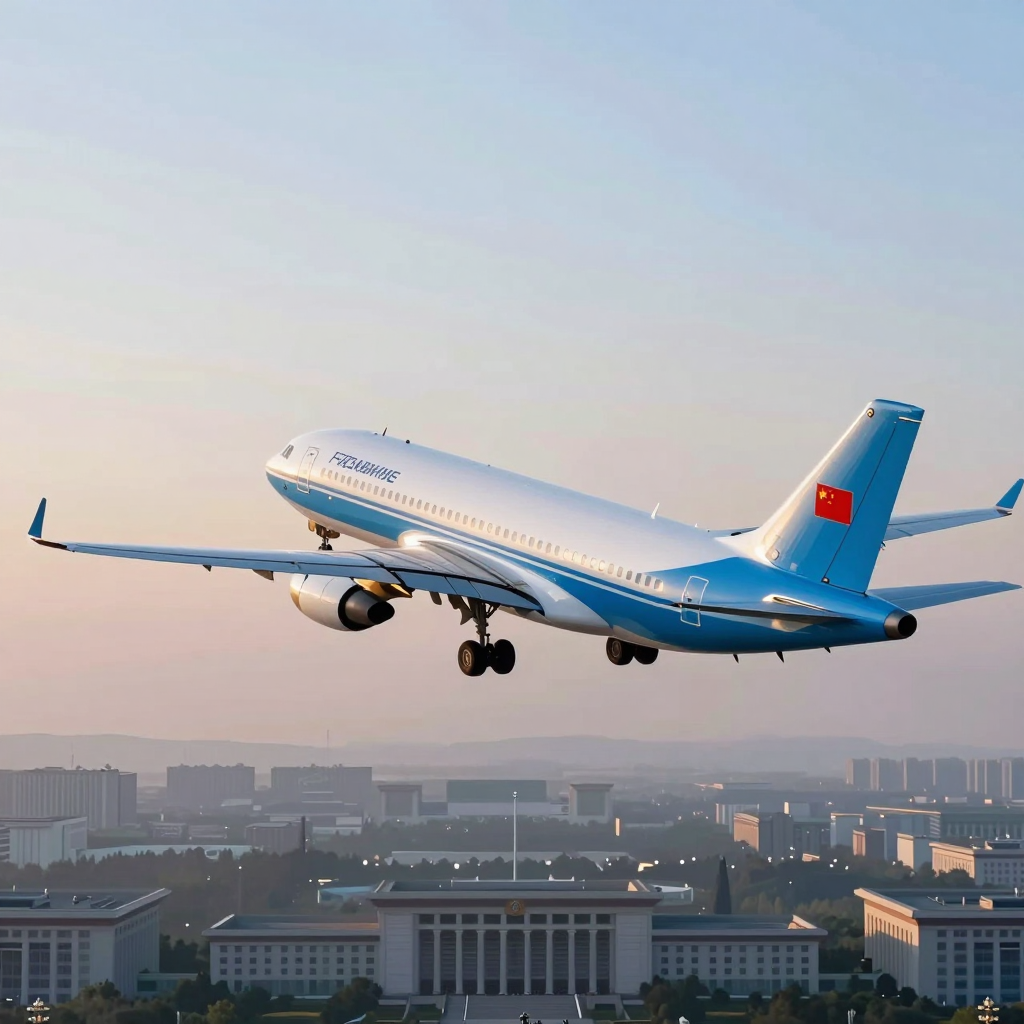
Hearing phrases like "Air Force One has arrived in Beijing" or "Returned home on Air Force One" so often in the news, it's easy to naturally assume that ‘Air Force One’ is the name of a specific airplane. However, this is one of the most common misconceptions. To put it simply, Air Force One is not the name of an aircraft; it is actually a ‘call sign’ used depending on the situation.
Air Force One Is a Call Sign Only When the President Is Onboard
Air Force One refers to “the radio call sign assigned to any U.S. Air Force aircraft carrying the sitting U.S. President.” The key here is not the aircraft itself but the occupant—the President.
- Even if it's an Air Force aircraft, if the President is not on board → it is not Air Force One at that moment.
- Conversely, the same aircraft becomes Air Force One the moment the President boards.
Once you grasp this single definition, the term ‘Air Force One’ you hear in the news will make much more precise sense.
Why the Confusion? The Everyday Term "Presidential Plane"
In everyday language, people tend to refer to the “U.S. President's official plane” simply as Air Force One. The frequent images of the iconic 747 Jumbo jet on screen also leave a strong impression. However, from an operational standpoint, Air Force One is more about the ‘mission status’ than a brand or aircraft name.
Similar Call Signs Exist: Names Change Based on the Mode of Transport
The call sign changes depending on where the President is traveling.
- If the President boards a Marine Corps helicopter → it’s called Marine One
- If the President travels on a civilian airline plane → it’s called Executive One
In other words, while the fact that “the President is on board” remains constant, the call sign varies depending on which organization operates the aircraft. Air Force One is specifically the term used for the “Air Force aircraft + President on board” combination.
In a Nutshell: Air Force One Is a ‘Status,’ Not an ‘Aircraft’
To sum up, Air Force One is not the proper name of a particular plane but the official call sign granted only when the President is on board. The next time you see a news headline like “Air Force One departs,” think of it like this:
“The President is currently aboard an Air Force aircraft, and from that moment on, that aircraft is called ‘Air Force One.’”
The Reality of Air Force One, the VC-25A: Why It Became the White House in the Sky
The “huge two-story jumbo jet” seen on news screens carrying President Trump is almost always the same model: the VC-25A. People often refer to this plane simply as Air Force One, but to be precise, the call sign “Air Force One” is used only when the president is on board this core aircraft, the VC-25A. So why exactly did the VC-25A become the symbol of the U.S. president?
The Form that Created the Symbol of Air Force One: Two-Story Jumbo Jet, Presence Visible from Afar
The first reason VC-25A became symbolic is simple: it is big and commanding attention.
- The base aircraft is a modified Boeing 747-200B (jumbo jet)
- Its distinctive two-deck fuselage silhouette makes it instantly recognizable on the runway
- The moment it lands at an airport, the fact that “the U.S. president has arrived” is conveyed visually before words even speak
In diplomatic scenes, symbols work not through explanation but through visual impact. The VC-25A was born to create exactly that kind of powerful scene.
VC-25A Supporting Air Force One’s Function: More Than a ‘Transport,’ It’s an ‘Operating System’
The VC-25A is not just a comfortable ride for VIPs; it is designed to maintain the continuity of national operations wherever the president may be. That’s why it earned the nickname “the White House in the sky.”
- Work Area: A space where staff organize real-time briefing materials and coordinate messages
- Communication Capabilities: Encrypted communications and satellite links connect with ground command systems (many details remain classified)
- Medical Support: Equipped with onboard medical facilities and constant medical personnel
- Operating Philosophy: Extending the “president’s seat” into the air so that decisions can be made even in crisis situations
Ultimately, the VC-25A is less a glamorous private jet and more a platform carrying presidential authority and the national system on the move, and the name given at that moment (call sign) is precisely Air Force One.
When Air Force One Becomes a ‘Brand’: The Diplomatic Stage Set by the VC-25A
The reason the media repeatedly shows “Air Force One arriving/departing” is that it itself is a diplomatic message.
- The paint and inscriptions (“UNITED STATES OF AMERICA”) serve as a moving national flag
- The scene of the trapdoor opening and the president descending expresses the status and atmosphere of the relationship regardless of the content of the talks
- “Who boards the same plane” hints at the industries and agendas driving the current diplomacy
The VC-25A is not merely a vehicle to move the president; it is the device that most intuitively ‘shows’ America’s presence. That’s why the moment this aircraft appears on screen, people naturally think of the name “Air Force One.”
Inside Air Force One: The President’s Secret Command Center
“From the President’s sleeping quarters to the authority to launch nuclear weapons?”
Air Force One is called the ‘White House in the Sky’ not just because it’s a large, luxurious presidential aircraft. This plane is much more than a mode of transportation—it serves as an aerial command center designed to enable the President to run the country from anywhere. Within the limits of what’s been revealed, let’s dive into the core logic behind its internal layout.
Air Force One’s Interior is Organized by ‘Function’—Not by ‘Route’
Unlike a hotel designed around “convenience,” Air Force One’s layout is divided according to key functions such as operations, security, protocol, and survivability. The easiest way to grasp the interior is to ask, “What activities happen in each space?”
The President’s Private Zone: Where Rest Becomes Work
For the President, ‘rest’ means ‘preparing for the next mission.’ The private quarters are not just bedrooms but are equipped to seamlessly facilitate upcoming schedules and decisions.
- Sleeping quarters (bedroom), shower, and essential living facilities
- A personal office space for reviewing documents and receiving briefings
- A small meeting/reception area
- This area frequently hosts quick briefings with reporters or urgent message coordination.
The focus is less on “comfort” and more on saving time and maintaining security. The more the President leaves this zone, the greater the exposure and unknowns, so critical tasks are handled within the aircraft whenever possible.
Staff and Operations Zones: The ‘Executive Branch’ in the Air
The President can’t govern the country alone. Air Force One includes an office area where advisors and staff can immediately get to work.
- A workspace for White House aides, national security teams, and operational staff
- Continuous tasks like drafting statements, editing speeches, managing diplomatic schedules, and liaising with Congress and departments
- When decisions are made mid-flight, they are swiftly transformed into policy language and execution plans for immediate release.
So when you hear “orders issued onboard,” it’s no exaggeration—Air Force One is genuinely an extension of the administration in the air.
Communications and Security Core: Why It’s a ‘Situation Room in the Sky’
The true essence of Air Force One isn’t in the interior design but in its communications and security systems. While the President is airborne, continuous and secure links to ground command centers (White House, Defense, Intelligence) are absolutely essential.
- A high-security network based on encrypted voice and data communications
- Worldwide connectivity via satellite systems
- Engineered to maintain command chains even in crisis situations.
Here’s where the most pressing question arises:
“Does it really have the capability to authorize nuclear strikes?” While a provocative question, the structural truth is this:
- Air Force One is a platform designed to ensure the President’s command authority is never interrupted.
- In emergencies, it’s equipped to allow the Commander-in-Chief to exercise command, make decisions, and issue orders at the required level.
The key isn’t “carrying weapons onboard,” but rather ensuring that decision-making and command remain unbroken.
Medical Facilities aboard Air Force One: Safety Nets for the Worst-Case Scenario
Long-distance diplomacy and travel always come with uncertainties. That’s why the aircraft includes medical facilities and personnel prepared for more than just basic first aid.
- Medical capabilities that go beyond basic emergency response
- Safeguards to prevent the risk surrounding the single most critical individual—the President—from escalating into a national crisis.
Behind the impressive scenes, Air Force One operates as a mobile system meticulously planned for worst-case scenarios.
Passenger Seating: “Who’s Onboard” Speaks Louder Than Words
Finally, one of the most politically interpreted yet least publicly visible areas is the seating area for accompanying personnel.
- Staffers, cabinet-level officials, security teams, and press pools travel onboard
- Occasionally, representatives from specific industries ride along, subtly signaling diplomatic or economic priorities.
Thus, “who is on Air Force One” isn’t mere gossip—it is a signal revealing the main priorities of the President’s mission.
On the surface, Air Force One looks like a ‘presidential plane,’ but its internal logic is altogether different. It is literally a ‘mobile White House’, engineered so that the President’s daily life (sleep), administration (staff work), national security (communications and command), survival (medical care), and messaging (passenger composition) all function simultaneously within a single aircraft.
A Shining Symbol on the Diplomatic Stage: The Hidden Message Behind Air Force One
There’s a reason why footage of Air Force One landing is repeatedly shown in the news. It’s not merely to announce “the president has arrived,” but rather to deliver the most powerful visual signal of the attitude the United States brings to the negotiation table—in a single shot. So why has this aircraft become a ‘signal flare’ in diplomacy and economic talks?
Air Force One Sends the Message: ‘The White House on the Move’
The moment Air Force One appears on the runway, that location instantly becomes ‘America’s stage.’
Between the bold “UNITED STATES OF AMERICA” painted on the fuselage, the American flag design, the exclusive trap door, and the protocol pathways extending below the stairs—all these elements silently proclaim:
- Not just “The president has arrived,” but
- “The entire U.S. national apparatus (power, information, and decision-making) has come together.”
In other words, Air Force One is not just a means of transport—it is a device that makes a nation’s presence visible.
The Arrival Scene of Air Force One Reveals the ‘Temperature of Relations’
In diplomacy, the airport is more than a mere location; it acts as a thermometer of relations.
Who greets the plane, the scale of honor guards and military bands, and the precision of the red carpet and receiving protocols—all these details send powerful messages.
- More elaborate and grand the ceremony: showcases the relationship’s rank and commitment
- Simpler protocol or fleeting footage: signals distance or tension management
That’s why the media pursues shots of both the arrival and departure of Air Force One as persistently as they cover the summit discussions themselves. Viewers can instinctively sense whether the visit is a light engagement or a major event just by watching these scenes.
Who Boards Air Force One Hints at the Negotiation Agenda
The passenger list of Air Force One sometimes acts like an unofficial agenda billboard.
Summits are not only political events but complex negotiations that intertwine trade, technology, supply chains, and regulations all at once. The leaders and officials boarding the plane become natural subjects of interpretation.
- If a symbolic figure from a specific industry travels along,
→ It hints at the focal point of the current negotiations. - If a ‘surprise addition’ story arises,
→ It implies last-minute agenda items or expanded discussions on-site.
Ultimately, who shares Air Force One with the president becomes a signal read by markets and media even before official statements are released.
The Real Reason Why Air Force One Is Often Close-Up: A Condensed Image of Political Theater
Summits often produce ambiguous outcomes, but the image is crystal clear.
The presidential aircraft stationed on the runway, the president’s precise movements, and the faces of accompanying personnel instantly encapsulate complex diplomacy for the public.
- The atmosphere that “something big is unfolding”
- The emphasis that “the United States takes this issue seriously”
- Securing moments “to show our side (domestic supporters)”
Therefore, Air Force One functions not only as a diplomatic tool but also as a stage prop combining persuasion and display. One single scene explains the summit’s ‘rank’ and ‘agenda’ on its behalf.
Air Force One’s Flight Toward the Future: The Next-Generation VC-25B and Its Enduring Prestige
Decades have passed since the VC-25A first took to the skies. Now, the natural question arises: “How much longer can this aging aircraft hold up?” So, if the next-generation VC-25B replaces the VC-25A, will the meaning of Air Force One change as well? To answer upfront, even if the aircraft changes, the political and diplomatic weight symbolized by the name is likely to become even more solid.
Why Is a ‘Next Generation’ Air Force One Needed? The Aging VC-25A and Today’s Realities
The currently well-known presidential aircraft, the VC-25A, is based on the Boeing 747-200. While this platform is as powerful as it is symbolic, the times have changed and so have the challenges.
- Maintenance and Parts Supply Challenges: Older aircraft require increased maintenance costs and time.
- Rising Demands for Communication and Security: Satellite communication, cyber defense, and electronic warfare responses have raised the standards for the “command post in the sky.”
- Managing Operational Risks: Transporting the president is a mission that simply cannot fail, making an aging platform a national risk.
For these reasons, although the principle of “a call sign assigned to the Air Force aircraft carrying the president” remains unchanged, a generational change of aircraft handling that call sign is inevitable.
Air Force One VC-25B: The More Advanced 747-8 Platform with a Stronger ‘Operating System’
Based on publicly available information, the VC-25B will be a next-generation platform based on the Boeing 747-8. The key is that it’s not just a newer exterior; the mission Air Force One must carry out has become far more complex.
- Upgraded Avionics and Communications Systems: To ensure uninterrupted national leadership wherever the president is, significantly higher levels of secure communications and interoperability are required.
- Modernized Defensive Capabilities: Missile warning, electronic warfare countermeasures, and EMP protection have become not just “nice-to-have” features over time but prerequisites.
- Operational Efficiency and Reliability: Fuel efficiency, maintenance intervals, and system stability directly relate to mission endurance.
In short, the VC-25B is less a “new plane” and more a restructuring of the operating system required to fulfill Air Force One’s role in a new era.
Why Does the Name Air Force One Endure? Because It’s a Call Sign, Not an Aircraft Model
People will naturally continue to call the VC-25B “Air Force One.” But to be precise, Air Force One remains a call sign, not the aircraft’s model name.
- The moment the president boards, the aircraft becomes Air Force One.
- When the president disembarks, even that same plane is no longer Air Force One.
This simple rule is crucial because the symbol’s core lies not in the ‘aircraft’ but in the ‘presence of the president.’ Even when transitioning from VC-25A to VC-25B, the reason the media cameras relentlessly follow the aircraft down the runway won’t change.
Air Force One’s Enduring Prestige: Even the Cost Debates Are Part of the National Brand
Next-generation projects always spark debate. Cost, delivery schedules, paint colors, interior layouts—all become political issues. Ironically, these very debates reveal Air Force One’s prestige.
- A presidential aircraft whose cost becomes headline news.
- A plane whose color scheme sparks national image controversies.
- Seating arrangements that carry diplomatic and industrial messaging.
Ultimately, even in the VC-25B era, Air Force One will function as more than just a means of transportation—it will be a visible symbol of American power. The aircraft may change, but its role as the “White House in the sky” and the messages conveyed by that imagery are destined to endure.
Comments
Post a Comment