 \n
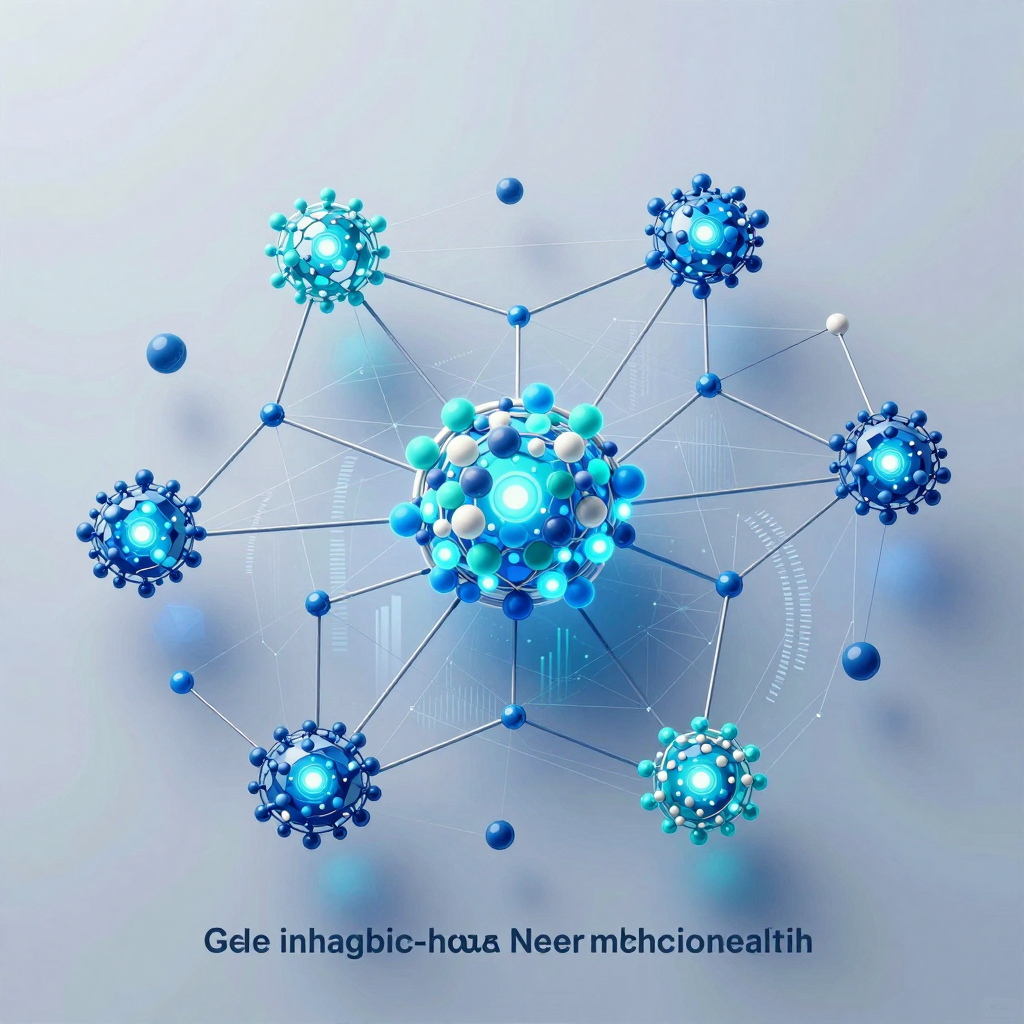
The New Innovation in RAG: Why GraphRAG?
Traditional RAG rapidly gained traction with its simple yet powerful formula: “find document chunks similar to the question and attach them to the LLM.” However, in real-world scenarios, even slightly complex questions often hit a wall. The more a question depends on the overall flow of the documents (global context) and complex relationships between entities, the more fragile the answer becomes when relying solely on a few “similar chunks.” So, why is a new approach necessary to overcome this limitation?
Where RAG Often Fails: It Finds “Similar Sentences” but Misses the “Whole Structure”
The typical RAG pipeline works like this:
1) Split documents into chunks of fixed length.
2) Embed these chunks and store them in a vector database.
3) Embed the question and retrieve the top-k similar chunks.
4) Use the retrieved chunks as context for the LLM to generate an answer.
This method excels at single fact verification and paragraph-specific Q&A. But its structural limitations emerge in questions like:
Questions requiring global context
- “How has our organization’s AI strategy evolved over the past year?”
- “Summarize the entire project flow in one page.”
- These require connecting information from multiple documents and time points into a coherent narrative rather than referring to isolated chunks.
Questions where relationships are key
- “Why did the dependency between Team A and Team B arise, and when did it strengthen?”
- “Which policies, agencies, or precedents connect to this regulation clause?”
- Vector search excels at ‘sentence similarity’ but does not directly model ‘relationship networks,’ causing multi-hop reasoning (jumping across multiple inference steps) to frequently break down.
Loss of higher-level concepts as scale grows
- As data volume increases, top-k chunks only provide “partial clues,” blurring the big picture instead of clarifying it.
- Ultimately, RAG handles “bundles of documents” well but is weak at handling “knowledge structures.”
In short, traditional RAG is strong at local search but weak at global understanding.
The Solution GraphRAG Offers: Shift RAG from “Document Search” to “Knowledge Structure Exploration”
GraphRAG confronts this problem head-on rather than circumventing it. The core idea:
- Don’t just split documents into chunks for storage.
- Extract entities (people, organizations, products, concepts) and relationships (membership, collaboration, causality, dependency, etc.) from documents to build a Knowledge Graph.
- Group densely connected parts of the graph into communities, creating a “topic-level map.”
- Upon a question, instead of merely finding similar chunks, explore the entire graph (global) or its local neighborhoods to piece together the necessary evidence.
In other words, GraphRAG redefines RAG from:
“Attaching similar text fragments”
to
“Finding, summarizing, and reasoning over knowledge structures connected by relationships.”
Why Is a ‘Graph’ Superior for Global Context and Complex Relationships?
Unlike plain text, a graph is a data model where connections themselves are data.
Relationships exist as first-class citizens
- Links like “A partners with B” or “B depends on C” are explicitly represented as edges.
- This makes it easier for the LLM to build not just simple citations but relationship-based chains of evidence when producing answers.
Big-picture grasp via community summarization
- Clustering the graph into communities compresses vast knowledge bases into “topic bundles.”
- Global questions start with community summaries, scanning broad relevant areas before diving deep where needed.
Multi-hop reasoning becomes structurally natural
- Traditional RAG often relies on the “luck” of retrieving the right chunks together for multi-hop chains.
- In GraphRAG, the inference path is the exploration path itself: “node → neighboring node → related community.”
Conclusion: GraphRAG Is Essential When You Need “Understanding,” Not Just “Answers”
For FAQs or simple retrieval, traditional RAG is sufficiently efficient. Yet GraphRAG shines when the demand is for:
- Summaries of strategies, policies, or historical changes spanning multiple document bundles
- Relationship-centered analysis where connections and influence between entities matter
- Situations requiring structured explanation of evidence beyond mere “sentence citations”
The reason GraphRAG rises is straightforward: to handle the global context and complex relationships that traditional RAG cannot, the search unit must shift from “chunks” to “knowledge structures.”
The Revolutionary Design of GraphRAG Based on RAG: Finding Answers Through Knowledge Graphs and Community Structures
Curious about how to build a massive graph composed of entities and relationships beyond simple text chunks—and answer questions on top of it?
The core of GraphRAG goes beyond “RAG that finds document snippets well” by reconstructing knowledge as a ‘network of relations’ and using that structure as retrieval units.
Changing the Retrieval Unit in RAG: From Chunks to “Graphs”
Traditional RAG typically follows the flow of document → chunk → embedding → vector search. Powerful as it is, the retrieval results often end up being “disjointed text fragments.”
GraphRAG, on the other hand, fundamentally changes the basis of retrieval.
- Node: Entities (people, organizations, products, projects, bills, events, etc.)
- Edge: Relationships (affiliation, collaboration, causality, reference, dependency, competition, etc.)
- Graph: A densely connected knowledge network of entities and relationships
In other words, GraphRAG doesn’t just search for “sentences similar to the question,” but finds the connecting structure (subgraph) of entities involved in the question, constructing the answer from that.
The Big Picture of the GraphRAG RAG Pipeline: Build (Offline) → Query (Online)
GraphRAG can be neatly understood in two stages.
Build Stage (Offline): ‘Reindex’ documents into graphs
Entity/Relation Extraction
- Utilize LLMs at the paragraph level to structurally identify “what entities appear and how they are linked (relations).”
- Results are usually enforced into a JSON schema for parsing stability.
Entity Normalization (Merging Identical Entities)
- Merge different expressions referring to the same entity, like “MS / Microsoft / Microsoft Corp.” into a single node.
- Since quality here affects the credibility of the whole graph, reinforcement with rule-based and embedding similarity matching is necessary.
Graph Construction
- Entities are stored as nodes; relationships as edges.
- From this point, the knowledge base transforms from a “document folder” into a “searchable network.”
Query Stage (Online): Solve questions as graph exploration problems
- Upon receiving a question, GraphRAG doesn’t stop at selecting a few relevant text snippets. Instead, it first narrows down relevant communities and subgraphs, and then lets LLM compose the answer based on this structure.
Community Structure: “Unfolding the Map First” in Large-Scale RAG
A particularly unique feature of GraphRAG is the community graph.
As a graph grows, nodes and edges explode exponentially—searching directly becomes inefficient. Hence, GraphRAG adds a layer of “summary maps” above the graph.
- Community Detection
Use graph clustering algorithms like Louvain or Leiden to group densely connected nodes into communities. - Community Summary
Each community’s “topics covered and core narratives” are summarized by an LLM and stored as separate indices.
This structure’s effect is clear:
- When a question arrives, it first selects relevant areas from the community summaries (macro-level filtering).
- Then performs detailed expansion within the chosen community on individual nodes and relations (micro-level search).
- Finally, the selected subgraph is incrementally summarized and fused to generate the answer.
As a result, GraphRAG structurally alleviates the common RAG problem where “top-k chunks miss the overall context.”
Summaries Become Indexes: Multilayer Design of Node and Community Summaries
GraphRAG treats summaries not as mere add-ons but as core infrastructure for retrieval and generation.
- Node Summary: Compresses what a specific entity is and its central events/documents/relations.
- Community Summary: Condenses the cluster’s theme, key events, issues, and evolution.
- (Optional) Hierarchical Summary: Groups large communities into higher-level topics forming a “topic hierarchy.”
Thanks to this multilayered summarization, GraphRAG extends beyond simple Q&A to handle “global” questions like strategic shifts, trends, comparisons, and causal analyses.
In Summary: GraphRAG Transforms RAG from “Document Search” to “Knowledge Exploration”
The innovation of GraphRAG can be summed up in one sentence:
- Text chunk–centric RAG: Finds relevant sentences and feeds them into the LLM
- Graph-centric GraphRAG: Finds the structured knowledge around entities, relations, and communities, allowing the LLM to answer on that basis
Ultimately, GraphRAG is more than a tool that excels at “search”; it is a RAG architecture that indexes the very manner in which knowledge is connected.
The Reality of Building GraphRAG: How Documents Transform into Graphs
Thousands of text files suddenly “transform” into a graph with tens of thousands to hundreds of thousands of nodes (entities) and edges (relations) overnight. What makes this magic happen in GraphRAG is that, unlike traditional RAG that simply splits documents and inserts them into a vector DB, GraphRAG first structures the ‘facts’ and ‘connections’ inside the documents. Below is the actual sequence in which this “secret engine” runs.
The Big Picture of the RAG Pipeline for Turning Documents into Graphs
GraphRAG building (Build/Ingestion) mostly happens offline, producing three main outputs:
- Knowledge Graph: The collection of entities (nodes) and relationships (edges)
- Community Structure: A higher-level map grouping the graph into topic-based clusters
- Multilayer Summaries: Compressed versions of node/community/hierarchical summaries that reduce search and inference cost
Once these three components are ready, the query phase enables a RAG system that fetches “just what’s needed” in either Local or Global mode.
Entity and Relation Extraction: Breaking Text into ‘Fact Fragments’ (The Core of RAG Preprocessing)
The first step is not converting sentences into vectors but extracting and structuring entities and relations from sentences.
1) Entity Extraction
Using LLMs (or rule-based NER/domain dictionaries), candidate nodes for the graph are pulled from text.
- Person, Organization, Product, Project, Concept, etc.
- Attaching a type wherever possible stabilizes the quality of subsequent relations.
For example, from meeting minutes, extract:
Contoso(Organization)Fabrikam(Organization)Azure AI Studio(Product)Project Phoenix(Project)
2) Relation Extraction
Once entities are identified, connections inside sentences are converted into edges.
Contoso—(partnership_with)→FabrikamJane Doe—(works_at)→ContosoProject Phoenix—(uses)→Azure AI Studio
A key point here is to appropriately constrain the relation schema.
If relation labels are too freeform (LLMs inventing new relation names each time), the graph quickly becomes chaotic. Usually:
- Provide a predefined list of relation types, or
- Control via “basic relations + domain-specific extensions.”
3) Enforcing Schema on Extraction Output
Extraction quality defines overall graph quality in GraphRAG. In practice, the following are almost mandatory:
- Enforce output format via JSON Schema
- Minimize entity fields (e.g.,
name,type,aliases,source_span) - Clarify relation fields (e.g.,
subject,predicate,object,evidence_text,confidence)
This process transforms text chunks from mere “searchable pieces” into graph materials ready for inference.
Entity Normalization (Resolution): The Turning Point of RAG Quality to Merge Identical Entities
The more documents you have, identical entities appear under different names.
MS,Microsoft,Microsoft Corp.Azure AI Studio,AI Studio
If left as is, nodes balloon unnecessarily and relations scatter, making the graph “thin” and degrading inference power. Hence, in GraphRAG construction, entity normalization (canonicalization/entity resolution) is a critical step.
A common approach is hybrid:
- String similarity (edit distance, token overlap)
- Embedding similarity (semantic-based)
- Domain rules (abbreviation dictionaries, org codes, product catalogs)
- (If possible) human review loops (HITL)
The goal of normalization is simple:
- “Merge the same, separate the different.”
- Increase graph density to improve community detection and Global query quality.
Graph Construction: Turning Nodes and Edges into a ‘Savable Knowledge Structure’ (RAG Index Extension)
With normalized entities and relations, you build a knowledge graph. You can start with a graph DB (Neo4j, Gremlin family), or files/NetworkX.
In practice, it’s best to also store:
- Node/edge evidence: the document and exact text span where it came from
- Timestamp/version: crucial for domains with evolving knowledge (policy, org, products)
- Confidence: to filter LLM-extracted uncertainties in later stages
This metadata lets you attach “sources” to RAG answers or track and fix erroneous relations.
Community Detection: Compressing a Huge Graph into a ‘Topic Map’ (Prerequisite for Global RAG)
Once the graph grows large, exploring it fully every time is impossible. GraphRAG uses community detection to cluster the graph into topic lumps.
- Representative algorithms: Louvain, Leiden, etc. (modularity-based)
- Result: “tightly connected sets of nodes” become communities
Communities are more than mere clusters; in GraphRAG’s Global mode, they serve as the first routing/filtering layer.
- When a question arrives, instead of scanning all documents,
only community summaries are consulted first to narrow the relevant area. - Then, only the needed subgraph inside that community is expanded (2-hop, 3-hop, etc.).
In other words, communities act as GraphRAG’s “compressed index that makes large-scale RAG possible.”
Multilayer Summarization: A Compression Layer Making the Graph ‘Readable’ to LLMs (RAG Cost Optimization)
While graphs are structurally strong, they’re too large to feed directly into LLMs. Therefore, GraphRAG creates summaries at multiple levels to reduce token costs and inference burden at query time.
1) Node Summary
For each entity, a short summary of:
- What this entity is,
- Its role, and
- Its context through relations
This is especially useful in Local RAG when attaching a neighboring subgraph.
2) Community Summary
At the community level, summarize:
- The topics covered
- Main entities and their relational patterns
- Key events/decisions/disputes (depending on domain)
In Global RAG, these community summaries function as a “top-level index.”
3) (Optional) Hierarchical Summary
If communities are large or have hierarchical structures (e.g., org or product lines):
- Communities of communities (higher-level topics) are merged
- Larger-scale summaries are created
This enables progressively narrowing down large inquiry scopes like “company-wide strategy → AI strategy → RAG project.”
Common Real-World Checkpoints During Construction (From a RAG Operations Perspective)
- Cost: Entity/relation extraction + summarization require many LLM calls, making initial build expensive. Batch strategies and caching are critical.
- Quality: Graphs are sensitive to extraction quality. A few bad edges can pollute community structure and summaries.
- Updates: For environments with continuous document inflow, design incremental updates (only new docs) and reclustering schedules.
- Schema: Avoid endlessly growing relation types. Manage a minimal, domain-meaningful set to stabilize search and summaries.
By going through this process, a pile of documents is no longer just a simple search target but restructured into graph-shaped knowledge expandable and summarizable according to questions. From this point, GraphRAG shines in global context and relation-centric queries where traditional RAG struggles.
RAG Local vs Global: The Next-Level Q&A Demonstrated by GraphRAG
Beyond fragmented information retrieval, from evolving corporate strategies to market analysis—GraphRAG is not just “RAG finding similar snippets in document piles.” Instead, it first identifies the answer-bearing regions within a global knowledge map (graph) and then constructs the response upon that foundation. This distinction becomes especially clear through the two modes of inquiry: Local and Global.
RAG Local Q&A: Enhancing Quick Answers with “Relational Context”
Local GraphRAG preserves the strengths of traditional RAG (fast evidence retrieval) while adding graph neighbor information to explain “why the answer is correct.” The core idea is to answer based on document chunks closest to the question, but reinforce context by including connected entity and relationship data around it.
Conceptual processing flow:
- Embed the question and find relevant chunks via vector search (similar to classic RAG)
- Identify entity nodes (companies/products/organizations/policies, etc.) mentioned in those chunks
- Expand and collect the 1–N hop neighbors (connected relations) of those nodes from the graph
- Example:
Contoso — partnership_with → Fabrikam — supplier_of → Vendor C
- Example:
- Build the LLM input context including:
- Relevant chunks (original text evidence)
- Entity/relationship summaries (node descriptions, edge types)
- Relationship timelines, if necessary (attributes like “from when/until when”)
- Generate the answer + track which nodes/relationships/documents provided grounding
Examples of questions where Local excels:
- “What are the partnership terms between Company A and Company B?”
- “Who is the responsible organization and decision-making line for this project?”
- “Which internal documents reflect a specific regulatory clause?”
In short, Local GraphRAG augments a ‘retrieved chunk’-centered RAG with ‘connected relationships’, improving not only accuracy but also explainability and gap prevention.
RAG Global Q&A: The Engine for Questions “Traversing the Entire Knowledge Graph”
Global GraphRAG represents the core raison d’être of GraphRAG. Questions challenging for traditional RAG typically require a flow across multiple documents and timelines, rather than “a specific paragraph.” In these cases, GraphRAG first compresses the graph into communities (topic clusters), and when a query arrives, it selects relevant communities → extracts the internal subgraph → assembles the answer via multi-level summarization.
Technically crucial Global processing flow:
Community summary index matching
- Use pre-generated “community summaries” as a higher-level index
- Compare question embeddings with community summary embeddings to pick top-k communities
- Effect: quickly narrows “where to look” even in huge graphs (coarse-grained filtering)
Subgraph exploration inside communities + multi-hop expansion
- Score nodes/edges within the chosen community relevant to the question
- Expand 2-hop, 3-hop if needed to enable multi-hop reasoning across documents
- Unlike traditional RAG, expansion is based on “connection structure,” not just “similar text”
Hierarchical summarization to craft a ‘narrative’
- Break down the subgraph into smaller units for first-level summarization (preserving evidence)
- Integrate these summaries for second-level summarization (removing redundancy, organizing flow)
- Result in high-level responses reflecting “trend changes, comparisons, causality”
- Outcome: not just simple extraction but the construction of an ‘evolutionary narrative’ of strategy, market, or policy
Examples of questions where Global shines:
- “How has our company’s AI strategy evolved over the past two years?”
- “How did market fluctuations in the last year impact the product roadmap?”
- “Compare how regulatory issues in Korea vs. the USA have affected our business strategies.”
Such questions cannot be accurately answered by just a few top-k chunks since the full context is fragmented. Global GraphRAG first finds the answer-bearing area within the entire graph, then crafts the response—enabling that “finding the answer in a global knowledge map” approach.
Practical Criteria to Distinguish Local vs Global from a RAG Perspective
Choose Local when:
- The answer is tied to precise evidence such as a specific document/contract/definition/policy clause
- Fast responses with traceable evidence links are crucial
Choose Global when:
- The answer is dispersed across multiple documents and involves “summarization, comparison, change”
- Analysis spanning departments, markets, or time periods is needed
- Viewing connections between communities, not just single chunks, is necessary
In conclusion, GraphRAG extends RAG from “search-based answering” to structure-based Q&A. Local enhances precision and explainability by adding relational data to exact evidence, whereas Global stitches together large-scale flows through graph communities, making it feasible to tackle complex queries about corporate strategies and market analyses in the real world.
GraphRAG RAG: When and How to Adopt It?
Cutting-edge technology isn’t always a “magic key.” GraphRAG is a powerful approach that captures relationships, flows, and enterprise-wide context—things traditional RAG often misses—but this comes with increased implementation costs and operational complexity. The key is to first determine if it’s truly necessary for your problem, and if you proceed, implement it in a sequence that minimizes the risk of failure.
When to Consider Adopting GraphRAG RAG (Suitable Problem Types)
If any of the following occur consistently, GraphRAG tends to outperform traditional vector-based RAG:
- Abundance of global summary/analysis questions
- Example: “Summarize changes in business strategy over the past year,” “How have policy issues shifted?”
- The core is that the question spans multiple documents, time points, departments, and issues, not just 2-3 specific documents.
- Relationships are key to the answer (multi-hop reasoning)
- Example: “When and how did the relationship between A and B change?”, “What is the cause-effect chain in this event?”
- Simple chunk similarity struggles to construct a connected chain of evidence.
- A large knowledge base where relying on top-k chunks causes context loss
- As documents multiply, traditional RAG can find “correct chunks,” but the big picture can become unstable.
- Explainability and traceability are crucial
- Organizations needing to show answers by node/relationship/community—such as for audits, compliance, or executive reporting—benefit greatly.
Conversely, GraphRAG may be overkill if:
- Most searches are local like FAQs or short manual queries
- The dataset is small and updated frequently, making indexing (extraction/summary) costs prohibitive
- You prioritize “fast search + summary” over an “accurate relationship graph” in an MVP phase
Realistic Limitations of GraphRAG RAG (Costs to Calculate Before Adoption)
Success or failure hinges more on operational design than on the technology itself. Keep these four in mind upfront:
- High offline indexing costs
- Extracting entities/relations and summarizing nodes/communities for every document drives LLM call volume sky-high.
- Frequent data changes mean costs recur—not a one-time expense.
- Extraction quality defines overall quality
- Poor relation extraction contaminates the graph, causing bigger errors in later search and summarization.
- Complex domain terminology demands prompts, schemas, and normalization strategies.
- Additional graph operation complexity
- Beyond vector DB operation, you must manage graph storage, community detection, and update pipelines.
- Evaluation becomes harder
- You must assess not just “Is the answer correct?” but also “Is the relational evidence valid?” and “Is the summary free from distortion?”
Step-by-Step Adoption Roadmap to Minimize Failure Risk (From PoC to Production)
The below sequence is a widely adopted safe approach:
1) Define the problem: Collect global questions first
- GraphRAG’s strength shines most in Global mode.
- Start by categorizing user questions as:
- Local-type: Asking about specific documents/clauses/facts
- Global-type: Asking about trends, comparisons, summaries, cause-effect spanning “multiple sources”
- GraphRAG only justifies itself when you have enough important global-type questions.
2) Narrow data scope: Focus on corpora with high “graph gain”
- Throwing in all enterprise documents upfront explodes costs and noise.
- Start with document bundles where relationships and flows matter, like strategy docs, meeting minutes, and reports.
- Organize document metadata (department, date, version, confidentiality) early for later filtering.
3) Entity/relationship extraction: Enforce schema + normalization
- Begin with verifiable structured outputs, not just LLM text snippets.
- Recommended checklist:
- Enforce JSON Schema output (including entity type, relationship type, evidence sentences)
- Entity canonicalization (unify aliases like “MS=Microsoft”)
- Predefine relation types (worksat, partnershipwith, references, causes, etc.)
- Add confidence/evidence fields with traceable evidence spans
4) Community detection + multi-layer summaries: Build the global index
- GraphRAG’s “search units” are community summaries, not simple chunks.
- Pipeline:
- Graph construction → community detection (Louvain, Leiden, etc.)
- Summarize each community (core themes, key entities, relationships, timelines)
- Summarize nodes (entity descriptions, related events, representative relations)
- Design summary prompts to structurally capture attributes for queries (Who/What/When/Why, change points, controversies), not just free-form summaries.
5) Query routing: Combine Local RAG and Global GraphRAG
- Sending every query to Global mode is costly.
- Recommended architecture is a “hybrid routing” strategy:
- Local-adequate questions → standard RAG + a bit of subgraph context
- Questions needing global reach → community-summary-based search → subgraph expansion → staged summarization → final answers
- Routing can start rule-based (by question pattern), then evolve into a trained classifier.
6) Evaluation/monitoring: Look beyond “accuracy” to source quality
- GraphRAG’s answers may sound plausible but summaries can distort.
- Essential metrics:
- Evidence alignment: Are answer sentences traceable back to actual nodes/relations/source?
- Coverage: Are key communities/events missed in global questions?
- Consistency: Are conflicts handled properly when merging communities (including uncertainty markers)?
- Cost/latency: Does indexing cost and online response time meet SLA goals?
Practical Tips for GraphRAG RAG: Start Small, Scale Big
- Fix success criteria for PoC using 2-3 representative global questions.
Don’t settle for “looks good”—measure improvements like reduced omissions, increased consistency, and better evidence traceability over traditional RAG. - Your graph store doesn’t need to be grand at first.
Small scale can work with NetworkX or file-based stores; scale to Neo4j or cloud graph DB later. - For frequent updates, don’t reindex everything—design an incremental update strategy that re-extracts and re-summarizes changed documents only.
In conclusion, GraphRAG is less a one-size-fits-all replacement for traditional RAG and more an expansion layer optimized to tackle global analytical questions. By first identifying when you truly need it and implementing it step by step as outlined, you can control costs and risks while fully leveraging GraphRAG’s unique strengths.
Comments
Post a Comment