 \n
The Battleground of the US World Cup, a Clash of Fate in Miami: Scotland vs Brazil
Why was Scotland vs Brazil called the “Group C decider” in the 2026 World Cup? The answer is simple. In the final match of the group stage, with points and goal differences entwined, the last 90 minutes served as a confirmation ticket to the knockout stage for one team, and the last chance to break a long-standing barrier for the other.
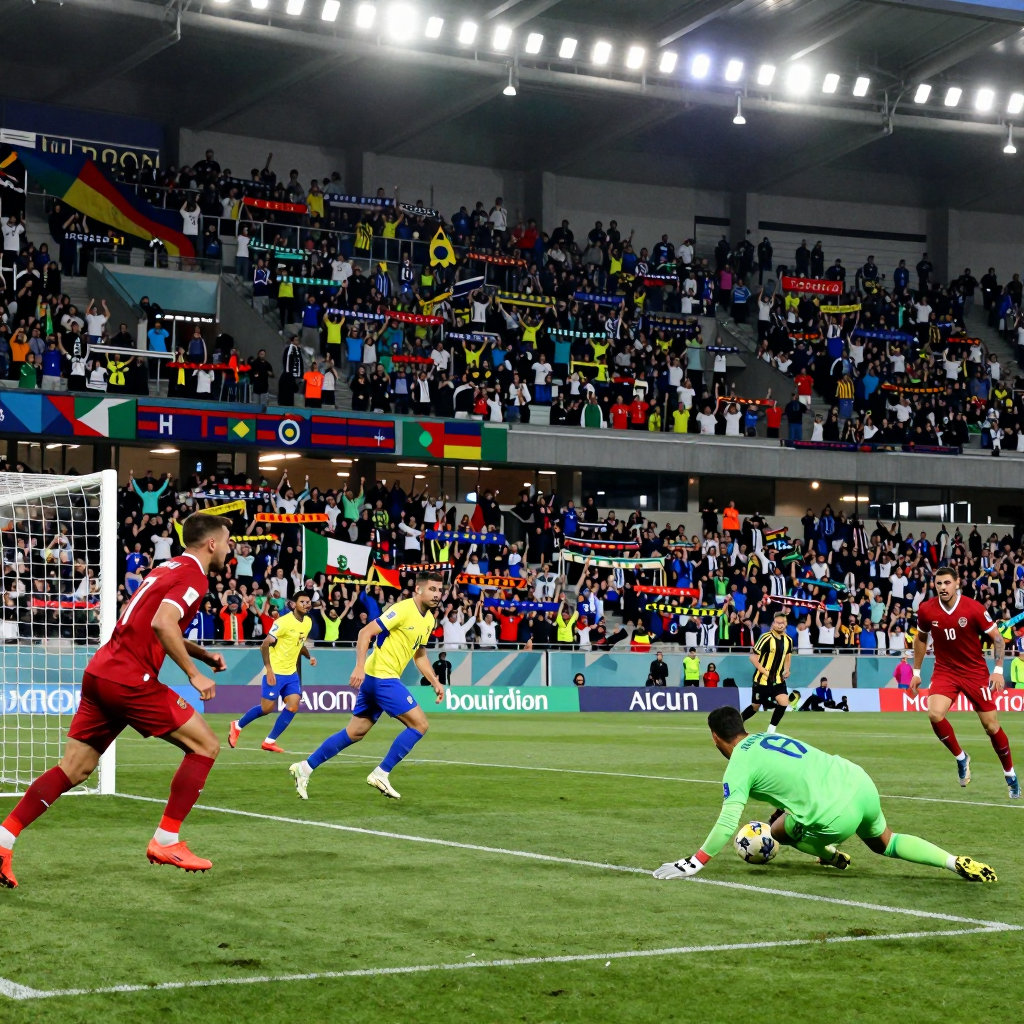
The stage was set at Florida’s Hard Rock Stadium (officially Miami Stadium). Local media spared no words calling it “Group C decision day” because this venue was not just a stadium—it was a showcase symbolizing the hottest fervor of the US-hosted World Cup. From kickoff onward, the area around the stadium buzzed early. The vivid yellow wave of Brazilian fans mingled with the kilts and chants of Scotland’s ‘Tartan Army,’ creating Miami’s uniquely festive atmosphere. Reports said the singing never stopped despite the scorching heat, proving that this match was more than just a sports event—it was a day when the entire city participated in the World Cup.
The match itself lived up to its title as a ‘decider.’ Brazil chased the same ball with the goal of practically securing first place in the group and a spot in the knockout stage, while Scotland aimed to break the curse of their group stage struggles. At a critical moment, the World Cup’s unforgiving rule that even the slightest mistake is fatal came into play. Brazil instantly punished a flicker of hesitation in Scotland’s buildup like a penalty, a moment the American sports media underscored as a defining representation of Brazil’s knack for “punishing mistakes.”
Ultimately, Scotland vs Brazil was a match that foretold why the 2026 US World Cup will be remembered as a “tournament to experience live.” The heat of Miami, the collision of fan cultures, and the tension unique to a final group match—the nickname ‘Group C decider’ was no exaggeration.
Fatal Mistakes and Moments That Decided the Scotland vs Brazil Match
How did a tiny build-up mistake from Scotland explode into Brazil’s explosive scoring spree? The outcome of Scotland vs Brazil was determined not by grand tactical battles, but by an “irreversible moment” forged from a single choice and a single act of pressing. Vinícius Júnior, in particular, exploited that small gap with world-class speed, tipping the game completely in Brazil’s favor.
The 1 Second of Build-Up: When the ‘Safe Pass’ Became Dangerous
Scotland packed the midfield (in a 4-5-1 or 4-2-3-1 shape), attempting to escape Brazil’s pressure with short passes. The problem? This strategy perfectly synced with Brazil’s front-line pressing trigger.
- The short connection between center-back, midfielder, and goalkeeper seemed low-risk,
- But Brazil seized the exact moment the pass was made, simultaneously blocking the first touch direction and the receiver’s field of vision.
Just a slight delay in Scotland’s pass choice, a closed body angle, or half a meter less in support positioning instantly turned it into a moment “handing the ball over to the opponent.”
Vinícius Júnior’s Decisive Chance: Turning a Mistake into a Goal with Lightning Speed
The first goal scene was iconic. As a tiny mistake emerged in Scotland’s build-up, Vinícius Júnior surged without hesitation, accelerating the press, and Brazil finished their transition with a single burst of speed.
- Scotland had no time to reorganize their defensive line after the error,
- Brazil, having pre-set a 1-on-1 situation on the flank, instantly played the ball into the most dangerous space right after regaining possession.
This goal wasn’t luck—it was the lethal Brazilian transition efficiency: pressure → ball recovery → immediate finish.
When Scotland Pushed Up Their Line, Another ‘Crucial’ Gap Opened
After conceding, Scotland had no choice but to push their line gradually higher in search of an equalizer. Yet, this decision gifted Brazil a second chance. With defensive spaces widening behind them, Brazil advanced even more boldly with penetrating passes and runs, ultimately sealing their lead with another goal and steadying the game’s flow.
In summary, the battle between Scotland and Brazil wasn’t about who held possession longer, but about who punished mistakes more ruthlessly. Leading the charge in this ruthless punishment was none other than Vinícius Júnior.
Scotland’s Repeated Fate in History and Brazil’s Reinforcement of Dominance: Scotland vs Brazil
A scene reminiscent of 1990 was reenacted again in 2026 Miami. Scotland vs Brazil marked their fifth face-off on the World Cup stage, and the result once again revived the long-standing narrative of “Scotland failing to overcome Brazil on the big stage.” So, why has Scotland still been unable to erase the phrase “never progressed beyond the group stage”?
Why Scotland vs Brazil Reads Like ‘History’: A Déjà Vu from 1990
This match was special not merely because it was the final group stage game. The accumulated history of encounters in previous World Cups has, each time, remained a “missed opportunity and insurmountable barrier” for Scotland. The memory of losing to Brazil in 1990 is more than just a record—it’s a recurring narrative archetype where Scotland withstands strong teams but collapses at critical moments.
The Decisive Pattern Behind Scotland’s Unbroken Jinx: It’s Not ‘Performance’ but ‘Moments’
It’s harsh to say Scotland completely fell apart this time as well. The problem has always been the same: Scotland’s technical security in decisive moments didn’t hold till the end.
- Brazil turned a minor build-up mistake into a goal without delay,
- while Scotland lost the ‘we can do this’ momentum they built throughout the match with one single error.
When this pattern repeats, the team labels itself a “nearly team.” That self-perception then returns as greater pressure in the next tournament and crucial moments.
How Brazil Cemented Its Strong Team Narrative: A Team That ‘Punishes’ Mistakes
Conversely, Brazil demonstrated most simply why strong teams remain strong. They don’t wait long to exploit lapses and finish them the moment they appear. Vinícius Júnior’s opening goal was emblematic, and the ensuing scoring flow was less about “Brazil taking control” and more about “Brazil delivering the verdict.”
What’s fascinating is that Brazil’s storyline (as a title favorite) remained unshaken even without Neymar in the starting lineup. Whereas past Brazilian teams were often defined by star power, this Scotland vs Brazil showed a Brazil closer to a team defined by system and efficiency.
Conclusion: The Question Left by Scotland vs Brazil Is Not ‘Skill’ but ‘Historical Resilience’
The reason Scotland can’t get past the group stage isn’t merely because they face strong teams. They can create time to endure against top opponents, but they lack the final safety net to convert that endurance into results. In contrast, Brazil is the team that repeatedly turns that final crucial margin into reality. Hence, this match records yet another chapter in “Brazil’s reinforcement of dominance.”
Behind the Scenes with the Star Players in Scotland vs Brazil: Moments with Vinícius Júnior and Neymar
The standout key player in this match was Vinícius Júnior, yet the biggest “scene” was actually Neymar starting on the bench. Scotland vs Brazil was more than just a win or loss; it was a game that revealed how the way stars are utilized can determine the outcome.
Scotland vs Brazil Vinícius Júnior: The Speed of Turning a “Small Mistake” into a Goal
Scotland’s compact defensive block held up reasonably well overall. However, on a grand stage like the World Cup, a single build-up mistake can be fatal, and Vinícius Júnior was the quickest to punish that “gap.”
This is why American media repeatedly described the opening goal moment as a “Scotland mistake” or “errant Scots.” At the brief moment Scotland faltered, he completed the pressure-steal-finish sequence in lightning speed, and that strike shifted the balance of the match.
- From Scotland’s perspective: The “well-held” momentum collapsed with just one error.
- From Brazil’s perspective: What Vinícius Júnior showed was not just individual skill but the habit of a game-changer who never misses critical moments.
Scotland vs Brazil Neymar Starting on the Bench: The Freedom of a Team That Can Afford to Save Its “Card”
In contrast, Neymar was match-ready but left out of the starting lineup—a highly symbolic decision. With Brazil essentially securing passage through the group stage, Carlo Ancelotti’s choice leaned more toward risk management for the tournament rather than maximizing a star’s presence.
This decision carries clear implications:
- Tactical message: Brazil is confident enough to control the game without Neymar.
- Fitness and injury management: Avoid overexertion in the final group game and prepare the “best Neymar” for the knockout rounds.
- Maintaining team balance: Sustain rhythm around in-form attacking players like Vinícius Júnior and Cunha.
In the end, the strength Brazil displayed in Scotland vs Brazil came not just from “stars playing” but from being a team that can strategically decide how and when to deploy its stars.
Scotland vs Brazil Conclusion: The Fine Margins of a Star and the Masterstroke of a Coach That Decided the Match
Vinícius Júnior dominated the game by instantly turning Scotland’s mistake into a decisive moment, while Neymar’s bench start highlighted Brazil’s cool-headed approach to managing the tournament’s short-term challenges. Together, these two episodes make Scotland vs Brazil a match that revealed both “how stars finish off games” and “how coaches manage tournaments.”
Scotland vs Brazil: The Meaning of This Match at the Heart of American Fans and World Cup Culture
At the World Cup held in the United States, matchups like Scotland vs Brazil were more than just final group stage games. To answer the question, “What symbolic impact will this match leave on American sports fans?” there is one key fact: The World Cup is no longer just a tournament held overseas, but has entered the daily American sports calendar alongside the NFL and NBA—and few moments have demonstrated this as clearly as this match.
Miami Showcases the ‘Americanization’ of the World Cup
The festival atmosphere created by Brazilian fans around Hard Rock Stadium (officially Miami Stadium), along with the kilt-wearing ‘Tartan Army’ and their street-side cheering culture, proved that American-style event management can merge seamlessly with the unique fan culture of the World Cup. The energy that began outside the stadium carried directly inside, painting a vivid picture of the World Cup expanding in the U.S. beyond “an event for specific communities” to become a major sporting experience embraced by the entire region.
Why American Sports Media Branded It as ‘Decision Day’
U.S. media highlighting this game as the “Group C decision day” wasn’t just because of Brazil’s popularity. The final group stage’s intrinsic calculations, permutations, and how other groups’ outcomes on the same day ripple impacts into the knockout round, resonated deeply with American fans who are familiar with playoff scenario consumption. Put simply, Americans have begun to watch the World Cup not merely as a “90-minute single game” but as a narrative-rich content experience that includes brackets, seeding, and relativity—an American-style viewing habit that has now firmly taken root.
Brazil: From Global Soccer Star to a Major American Market Draw
Elements like Vinícius Júnior’s clinical finishing and Neymar’s bench start reflect more than just on-field tactics—they reveal how the World Cup operates within the American market. U.S. fans consume far more than tradition and trophies; they follow real-time details like star appearances, fitness, and rotation strategies. Brazil has evolved beyond being a “world soccer powerhouse” to become a premium brand driving broadcast ratings, highlights views, and live blog traffic in the U.S.
Looking Ahead: The World Cup Becomes a ‘Regular Fixture’ in the American Sports Landscape
The greatest takeaway from this Scotland vs Brazil clash is that the World Cup is no longer a one-off festival in the U.S., but is proving to be a replicable blockbuster model. Local media captures the energy in detail, national outlets curate it as a “must-watch event,” and fans celebrate live and then re-engage online through highlights. As this virtuous cycle grows, the World Cup is poised not as an “external event” but as a mega event firmly entrenched in American sports culture.
Comments
Post a Comment