 \n
\n
The Dawn of the On-Device Edge AI Revolution: Google AI Edge Gallery
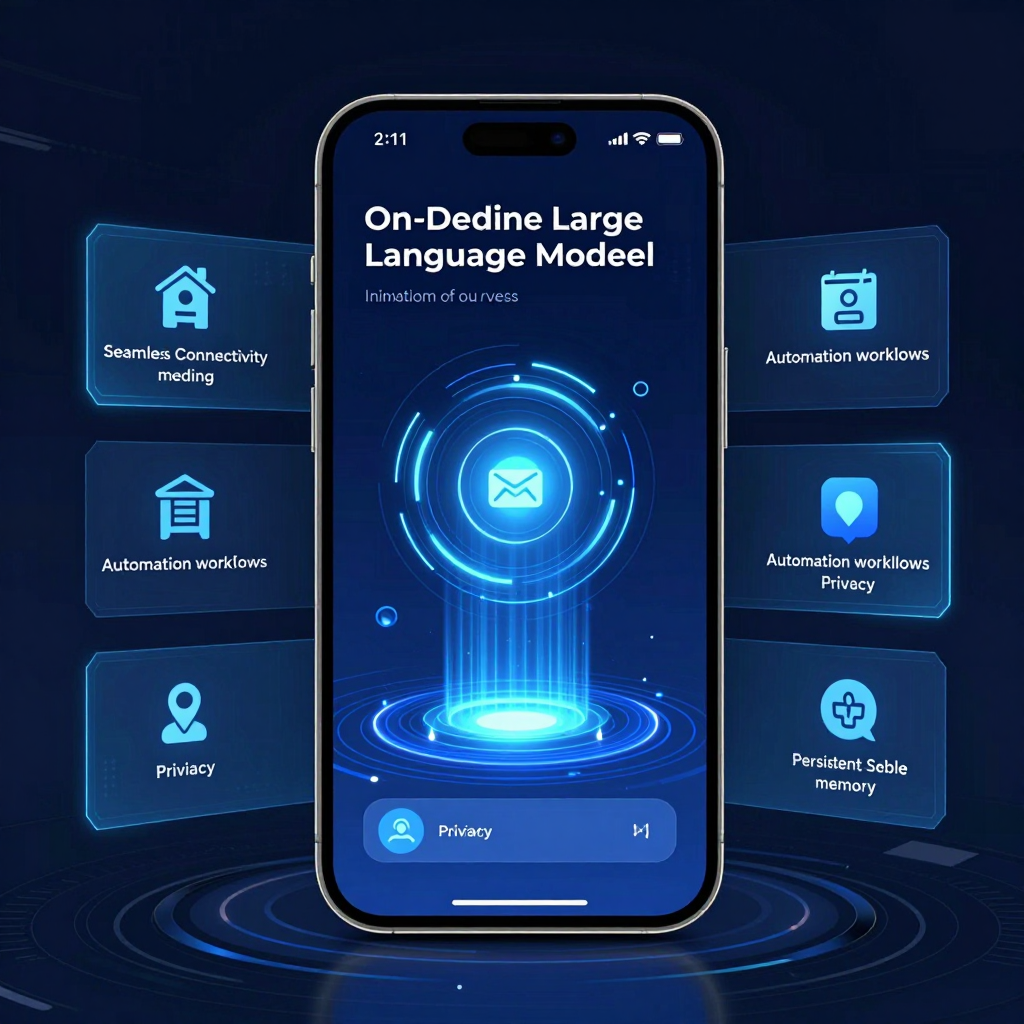
What if large language models ran entirely locally on your smartphone? Google’s latest update reveals the answer. Google AI Edge Gallery is an on-device AI showcase app that allows you to run and experiment with open-source LLMs (Gemma family) directly on mobile devices (Android/iOS). The key isn’t just that “LLMs run on mobile,” but that your smartphone itself begins to function as a small inference server and agent runtime. This is the most intuitive glimpse into where Edge AI is headed today.
The Realistic Impact of Fully Local Execution on Edge AI
Traditional LLM experiences usually follow a “cloud request → response” model. In contrast, AI Edge Gallery boldly centers on performing inference entirely on-device. This difference profoundly affects user experience and product design.
- Lower Latency (Instant Responses): Reduced network round trips make interactions immediate.
- Enhanced Privacy: Sensitive inputs like text, images, and voice can be designed to never leave the device.
- Shifted Cost Structure: From the service provider’s viewpoint, reducing cloud calls lowers operational expenses.
Because of these advantages, Edge AI moves beyond “demo tech” and gains strong traction in fields where data sensitivity and responsiveness are crucial, such as personal assistants, healthcare, finance, and on-site work support.
The Practical Rise of Edge AI Agents with Gemma 4 + MCP
This update’s symbolic power lies not only in adding Gemma 4 on-device support but also in integrating the MCP (Model Context Protocol), laying the groundwork for “connected agents” on mobile.
- Gemma 4 Support: Official support for the latest Gemma 4 family models in the app strengthens the foundation for building LLM-based workflows on mobile.
- MCP Integration: MCP is an open protocol standardizing how LLMs access external tools, data, and services. Crucially, even with the model running locally, MCP allows workflow-level connections to needed tools (e.g., local services, enterprise systems, user data).
In short, Edge AI evolves beyond “offline chatbots” into a form of local inference plus standardized tool integration, bringing it closer to real-world workflow automation and personalized experiences.
Continuous Sessions and Alerts Create a Personal Edge AI Assistant UX
For agents to truly assist, they must go beyond “one-time answers” to remember context and act proactively when needed. The update includes features that support this vision:
- Persistent Chat History: Designed so you can reopen the app and continue conversations—including text, image, and audio inputs. This relies on LiteRT-LM backend optimizations like fast prefill, tackling a core on-device LLM challenge: quickly reconstructing long histories within mobile resource limits.
- Local Reminders: Enables agents to proactively interact based on your schedules and routines.
In summary, through this update, Google AI Edge Gallery elevates Edge AI from “an experiment in running LLMs on mobile” to a connected, continuous, and agentic on-device experience. This marks a pivotal starting point for how Edge AI-based agent UX will likely take shape over the next 1–2 years.
Edge AI Gemma 4 and MCP: The Birth of an Intelligent Agent Inside Your Smartphone
What happens when the lightweight Gemma 4 model meets the standardized MCP (Model Context Protocol)? How can smartphones evolve beyond “convincing chatbots” into genuine personal assistants? The secret is simple. Inference happens locally (on-device), and actions expand via a standard protocol (MCP), turning your smartphone into something like a full-fledged Edge AI agent runtime.
Gemma 4 from an Edge AI Perspective: The “Brain” of an Agent Running Locally
Supporting Gemma 4 on-device goes beyond just “running an LLM on mobile.” To become a true agent, it must consistently deliver a seamless user experience in terms of latency, reliability, cost, and privacy — not just raw generation capability.
- Low latency (instant feel): Reduced network round-trips mean faster responses and uninterrupted interactions. “Instantaneous reactions” are the foundation of trust in agent UX.
- Privacy-first by design: Inputs like text, images, and audio don’t leave the device, making it ideal for handling sensitive data such as personal schedules, conversations, and work notes.
- Always-on execution base: Running locally makes the agent less dependent on connectivity, enabling a “working assistant” even underground, overseas, or behind secure networks.
In short, Gemma 4 offers a realistic option to embed the agent’s ‘brain’ inside the smartphone within an Edge AI environment—enabling personal assistant products to be designed with both quality and affordability in mind.
Edge AI MCP (Model Context Protocol): The Standard Bridge Turning Local LLMs into “Actionable Agents”
No matter how powerful a local LLM is, if it only thinks on its own and does nothing, it’s not an agent. An agent connects with the “outside world” to use tools, access data, and carry out tasks. Here, MCP acts as the standardized interface for tool integration.
- The essence of MCP: It standardizes the protocols for how an LLM accesses “tools” like calendars, files, search, enterprise systems, and local services.
- MCP’s value on smartphones: While inference happens locally, MCP enables running connected workflows precisely when needed.
- For example: “Summarize my schedule this week” requires local inference + calendar data access
- For example: “Remind me about the meeting 30 minutes after it ends” requires local inference + reminder setup
Therefore, MCP mitigates the classic Edge AI dilemma of ‘running locally leads to isolation, connecting exposes privacy and latency risks’ by allowing local inference to remain while selectively extending capabilities via a standard approach.
The Last Puzzle in the Edge AI Agent Workflow: Persistent Sessions and Multimodal States
To truly feel like a “personal assistant,” an agent must support ongoing tasks with retained context—not just one-off Q&A sessions. The AI Edge Gallery update highlights how persistent chat history and fast prefill technologies underpin this capability.
- Session continuity: Even after closing and reopening the app, carrying forward the conversational context reduces the “cost of re-explaining.” Memory and continuity are the heart of the assistant experience.
- The significance of fast prefill (technical highlight): The LLM rereads previous dialogue (prefill) before generating its response. This can be costly on mobile, but fast prefill:
- Quickly reconstructs long histories
- Maintains multimodal states including text, image, and audio
- Optimizes for usable speeds within limited compute and memory constraints
Together, Gemma 4 (local inference) + MCP (tool integration) + persistent sessions (memory) transform your smartphone from a “talkative model” into a reliable Edge AI personal agent you can entrust with your work.
What a Real Edge AI Personal Assistant Looks Like: From a Single Command to Automated Execution
Here’s how this combination shapes the user experience:
- The user says, “Summarize today’s meeting and remind me tomorrow at 9 AM to review it again.”
- Gemma 4 interprets the intent and plans the tasks locally (agentic flow)
- MCP accesses the relevant summary sources (notes/recordings/documents) and reminder functions
- Results are saved and reminders set
- Conversation history persists, enabling immediate response the next day to “Show me yesterday’s summary again”
The key takeaway: the more this process remains smartphone-centered (Edge AI), the easier it is to meet the essential requirements of a personal assistant product around latency, cost, and privacy.
The Technical Meaning of Edge AI and Google’s Innovative Approach: How Far Have Low Latency, Privacy, and Persistent Sessions Come?
Low latency, high privacy, and sessions that continue even after you close and reopen the app. It sounds simple, but simultaneously achieving these three on mobile is technically challenging. What makes the recent Google AI Edge Gallery update so fascinating is that it has brought this dilemma to a “working form” through the combination of Gemma 4 + MCP (Model Context Protocol) + persistent history. In other words, it approaches a reference implementation that expands Edge AI from mere on-device inference to a connected, agentic runtime.
Why Edge AI Changes ‘Perceived Performance’: Reducing the Structure of Latency Itself
Even if cloud-based LLMs are high quality, users feel “slow” first and foremost due to various variables such as network round-trip time (RTT), server congestion, and regional routing. In contrast, Edge AI completes inference inside the device, eliminating the network portion that constitutes most of the delay.
- From the token generation (latency) perspective: Decoding starts immediately without network wait, so the first response is faster.
- From the interaction perspective: In UXs involving short question-answer cycles (assistants, search, summarization), it’s not just “a little faster” but transforms into a level where user flow remains uninterrupted.
- Offline reliability: Since it operates the same way even in unstable connectivity environments, Edge AI is moving closer to being an “always-on AI.”
Google’s showcasing of AI Edge Gallery is grounded in the intent to prove this fundamental change in latency structure through the mobile LLM experience.
The Fusion of Edge AI and Privacy: ‘Local-Only Processing’ Becomes a Feature
Privacy is not merely a policy statement but a design principle. The core value of on-device execution goes beyond the simple assertion that “data never leaves the device” to enable the following product capabilities.
- Sensitive data handling: Processing personal data like schedules, locations, conversation context, and image/audio inputs locally allows users to grant more functionality without upload concerns.
- Secure storage of persistent history: Experiencing “continuously remembered” conversation history is powerful, but cloud storage inevitably introduces privacy risks. Local persistence significantly eases this tension.
- Meeting regulatory and security demands: In environments such as healthcare, finance, and legal sectors where external transmission is restricted, Edge AI becomes the condition that separates “possible” from “impossible.”
The message of this update is clear: As agents deepen their integration into users’ lives, on-device processing will be a necessity rather than an option.
The Real Difficulty of ‘Persistent Sessions’ in Edge AI: Memory, Prefill, and Multimodal States
“Session persistence” is not just about saving text logs. Since LLMs must reread previous conversations (context) to generate the next output, restarting the app usually requires lengthy history prefill, which becomes a severe bottleneck on mobile.
Google claims to solve this through LiteRT-LM’s fast prefill. Technically, this means:
- Reducing the cost of reloading long context: The longer the history, the longer the prefill takes, but fast prefill optimizes this phase to make “resuming” practical for real use.
- Realizing multimodal state maintenance: To continue not only text but also image/video/audio input states, it’s necessary not just to save and restore but to configure the state in a way the model can re-understand. Without rapid processing, the persistent session UX cannot be realized.
- Meeting core agent UX requirements: If memory breaks, the agent falls back to a chatbot. If memory continues, users embrace it as “a tool that understands my situation.”
In summary, persistent sessions offer the most perceptible feature in Edge AI, yet also represent one of the most challenging implementation aspects. Google tackles this challenge head-on in the mobile domain.
Extending Edge AI to ‘Connected Agents’ with MCP: Local Inference + Standard Tool Connections
On-device inference alone has limitations. Schedules, files, services, and corporate systems ultimately exist in the “external world.” What is needed here is a standardized way to connect tools, which AI Edge Gallery achieves through support for the MCP (Model Context Protocol).
Interpreted in the context of Edge AI, MCP shifts the architecture as follows:
- Models perform local inference (ensuring low latency and privacy).
- Through MCP, they access tools/data only when necessary (agentic operation).
- As a result, the smartphone acts as an inference server + agent runtime + tool connector.
Notably, supporting Streamable HTTP-based MCP (experimental) on Android suggests the possibility of designing “agent loops that presume tool calls even on mobile.” In other words, Edge AI has evolved from isolated local models to executors of connected automation.
The Next Step for Edge AI: Proactive Agents Powered by ‘Local Reminders’
The Reminders (local notifications) included in the update should not be overlooked. Notifications are not just UI elements; they serve as triggers that cause agents to act “not now,” but “later.”
- This enables proactive UX that re-engages users based on their routines,
- And when combined with persistent sessions, evolves into experiences that “remember the user and intervene at the right moments.”
This is where Google’s approach is groundbreaking: Edge AI is expanded beyond just rapid inference to an “operational agent experience” that encompasses sessions, tools, and triggers. It is a running implementation that actually demonstrates low latency, privacy, and persistent sessions—all within a single screen.
The Future of Edge AI Through Diverse Real-World Use Cases
From personal information managers to smart home hubs, what changes do these technologies foreshadow in our daily lives and industries? The key lies in the structure of “running models locally on smartphones while connecting necessary tools, data, and services via a standard protocol (MCP).” When combined with persistent sessions and reminders, this evolves beyond one-off chatbots into on-device agents that remember context and execute tasks—ready to become tangible products.
Edge AI On-Device PIM (Personal Information Manager): The Dawn of a “Remembering” Personal Assistant
When large language models run locally on smartphones and conversation histories are maintained, the PIM realm—calendars, notes, to-dos—is the first to transform.
- The Meaning of Persistent Chat History: Even if you close and reopen the app, the previous conversation context (including text, images, audio states) is quickly restored, reducing the need to repeatedly explain the background. Technically, optimizing the “prefill” cost of feeding long histories back into the model is crucial—making an “unforgettable” experience on mobile a reality.
- Combined with Local Reminders: Requests like “Before tomorrow’s morning meeting, give me a 3-line summary of last week’s minutes” evolve from simple answers to proactive tasks driven by reminders.
- Why Edge AI Has the Advantage: Sensitive data such as schedules, notes, and voice memos never leave the device, offering significant privacy and latency benefits.
Edge AI in Privacy-Sensitive Industries (Healthcare, Finance, Legal): “Upload-Free” On-Site AI
In industry settings, minimizing data movement is just as important as performance. On-device LLMs directly address this challenge.
- Healthcare: Summarize consultations instantly and generate educational materials locally for patients, while only connecting to hospital internal systems via MCP (e.g., on-premises gateways) when necessary.
- Finance/Legal: Analyze contracts, terms, and consultation records locally with strict control preventing sensitive text from being sent outside.
- Technical Highlight: With a standard connection layer like MCP, it’s easy to design an architecture where “model execution is local” + “tool calls are policy-controlled.” This separation of inference paths and data access paths enables designs that meet strict security and audit requirements.
Edge AI Smart Home Local Hubs: Smartphones Becoming the “Agent Runtime” Inside Your Home
Smart homes rely on connectivity and automation, but don’t always need to go through the cloud. When smartphones become local hubs, the whole architecture shifts.
- Benefits of Local Control: Device control—lights, sensors, cameras—is less dependent on internet quality and latency is reduced, resulting in noticeably faster responsiveness.
- Agent-like Automation: Expands toward defining and executing natural language conditional scenarios, e.g., “When I enter the house (based on location/Wi-Fi), turn on the lights, check tomorrow’s weather, and move my commute reminder 10 minutes earlier.”
- Privacy Perspective: Voice and video events inside the home don’t have to be continuously uploaded to the cloud, empowering users with stronger data sovereignty (with design focused on local storage and processing).
Edge AI Research, Education, and Prototyping: A Sandbox for Rapid “Agent UX” Validation
For developers, the ability to run models directly on devices, hook up tools via MCP, and experiment with persistent sessions is a game-changer.
- Fast Experimentation Loop: Measure performance, heat generation, battery usage, and responsiveness immediately on smartphones—without cloud costs or deployment overhead.
- Architectural Learning Effect: Helps teams fully grasp that agents are really combinations of “conversation + state retention + tool calls + schedule triggers” at a product level.
- Including Realistic Constraints: Naturally encourages design mindful of mobile memory and computational limitations, as well as heat and power challenges during long runs.
Ultimately, the future this trend signals is simple: Edge AI will evolve into an agent platform that transforms workflows in daily life and industries only when ‘local inference’ is combined with ‘standard connections (MCP)’ and ‘persistent context.’ The key is no longer “what is answered,” but what tasks are safely connected and executed.
Google AI Edge Gallery in the Edge AI Race: Challenges and Future Prospects
In the rapidly growing Edge AI market, the key is not simply "running models on devices." The crucial battleground is who can deliver the “agent experience” faster and more reliably—one that defaults to local inference but seamlessly connects to tools, data, and services when needed. The recent update to Google AI Edge Gallery (Gemma 4 + MCP + persistent sessions) zeroes in on this very focus of competition.
Google’s Edge AI Strategy: “Local LLM + Standardized Connectivity + Agent Runtime”
Google’s position is less about hardware specs and more about laying down a software reference stack that runs on-device agents first.
Gemma 4 On-device Support = Securing the Performance/Lightweight Sweet Spot
Edge AI operates under strict power, memory, and heat constraints. Enabling the latest open models (Gemma 4) to run “directly in apps” gives developers a clear benchmark to start experimenting. This, in turn, makes it easier to standardize regarding “which model, what size, and what UX” to deliver.MCP Integration = Establishing a ‘Connectivity Standard’ to Expand the Agent Ecosystem
The core of the Model Context Protocol (MCP) is enabling LLMs to connect to external tools and data in a standardized way. This is crucial in Edge AI because the model can reside locally yet connect to just the necessary services — calendars, files, work systems, and local services. Google aims to bundle “on-device + connected workflows” into a unified product experience, crafting a competitive edge.Persistent Sessions (Stateful History) + Reminders = Moving from ‘Chatbot’ to ‘Assistant’
An agent’s state matters more than just one-off Q&A. Persistent sessions enabled by LiteRT-LM’s fast prefill restore long contexts swiftly even on constrained mobile devices, creating a seamless “resume where you left off” experience. Adding local reminders pushes Edge AI beyond simple inference to become a proactive personal assistant.
Edge AI Market and Competitive Landscape: Hardware Wars vs Runtime and Protocol Battles
The market currently pivots on two major axes.
Proliferation of NPU-Centric Devices (PC/Mobile/Edge Boards)
Movements like Copilot+ PC herald an era where “on-device AI is a given” in hardware. In this scene, Google AI Edge Gallery is less about selling specific chips, and more about gaining influence via reproducible runtime and developer experiences across diverse devices.Acceleration of Industrial Edge AI (Cameras, Robots, Factories)
Companies like Axelera AI are pushing for “real-time, low-power” Edge AI processors focused on vision and robotics. Google’s mobile-centric strategy is less a direct showdown but a long-term path where agent UX validated on personal devices can extend to industrial devices, creating complementary ecosystems across layers.
Technical Barriers Google Must Overcome in Edge AI: Three Major Hurdles
Competitive advantage isn’t just about “adding features.” Real bottlenecks frequently arise from:
Mobile Resource Constraints (Performance, Memory, Battery, Heat)
On-device LLMs demand compression, quantization, and inference optimization battles. Persistent sessions and multimodal (text, image, audio) state maintenance increase memory pressure, and long agent runtimes can degrade UX due to battery and thermal impacts. Optimizations like fast prefill are critical but must support efficiency to endure “daily usage.”MCP Ecosystem Maturity (Tool Quality, Security, Standard Compliance)
The stronger MCP becomes, the more important trustworthiness of tool calls and permission/security design become. Without robust systems logging and controlling data access, local/remote calls, and blocking malicious tools, “connected agents” risk becoming liabilities. Edge AI’s privacy advantage hinges on connection designs that preserve this trust.iOS/Platform Restrictions and Background Execution Limits
While Google has announced iOS MCP support, iOS enforces strict sandboxing, background, and permission policies. For reminders and similar features to function as a “true agent,” stable background operation, notification triggers, and state persistence are essential. How Google navigates or adapts to these platform limits will shape product maturity.
Edge AI Opportunities: What “Standardized Agents” Open Next
Conversely, today’s updates also open exciting avenues:
Popularizing Privacy-first Local Agent UX
Services handling sensitive data—schedules, health info, location, work documents—will strongly favor “minimal cloud transmission.” Edge AI addresses trust, not just raw functionality.MCP-based Multi-device / Multi-agent Expansion
If the same protocol takes hold, smartphone agents can share duties with PCs, tablets, or gateways. For example, the phone manages personal context, while other devices handle specific tasks like document processing or vision recognition. This elevates Edge AI from mere device features to a distributed agent architecture.Developer Reference Strength: ‘Making it Work’ Implementation Wins Market
Edge AI remains challenging to implement. AI Edge Gallery excels not as a simple demo but as a comprehensive reference showcasing crucial features like persistent sessions, notifications, and tool connections. The moment developers replicate this standard template, Google gains ecosystem leadership.
Ultimately, Google AI Edge Gallery’s next big leap depends not only on “LLMs running on mobile” but on delivering connected agents that are safe, efficient, and provide consistent UX despite platform constraints. The Edge AI race has evolved beyond model performance into an all-in-one contest of runtime, protocols, state management, and power optimization working seamlessly together.
Comments
Post a Comment