Colombia Secures Round of 32 with Consecutive Wins! Munoz’s Winning Goal and Congo's Solid Defense Lead to 1-0 Victory
 \n
\n
Colombia - RD Congo: Colombia Becomes the First Team to Secure Round of 32 Spot at the 2026 North and Central America World Cup
Though it was a one-goal difference, how did Colombia shake up the World Cup landscape by clinching an early ticket to the Round of 32? The answer lay in ‘creating overwhelming momentum and seizing decisive moments without fail.’
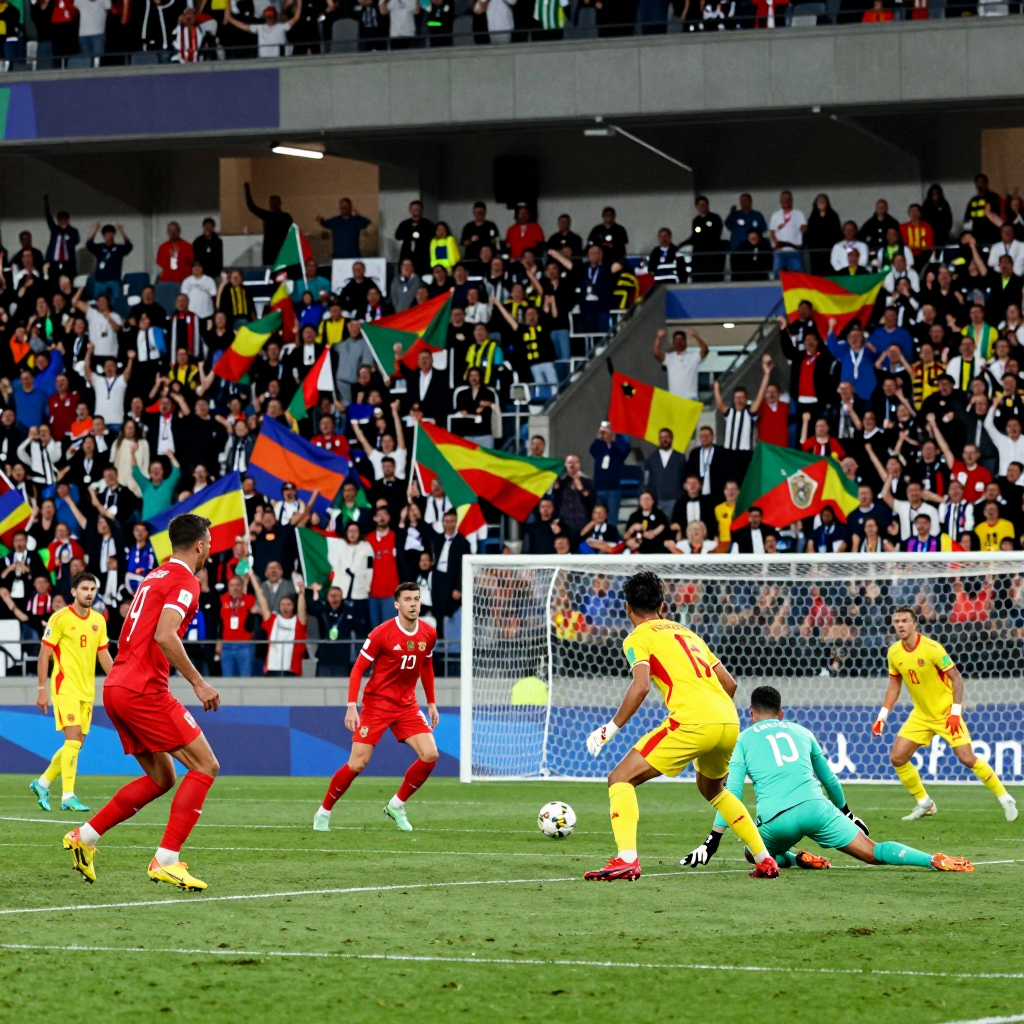
The match between Colombia and RD Congo held near Zapopan, Guadalajara, Mexico, ended with a nail-biting 1-0 scoreline. But the story on the pitch was different. From the start, Colombia unleashed a barrage of shots (14 in the first half, about 20 in total), successfully pinning their opponents near the penalty area, a flow that ultimately led to two consecutive Group K wins and the earliest qualification to the Round of 32.
The Game-Changing Moment in Colombia vs. RD Congo: EPL Fullback Daniel Muñoz’s Winning Goal
In a match where goals were hard to come by, Colombia broke through with an attacking fullback. Daniel Muñoz, playing in the English Premier League, boldly advanced near the box and netted the decisive goal, turning that single moment into the key link between “dominating the game → securing the result.”
In other words, Colombia ended their frustrating scoreless run not through mere possession but by increasing numbers at the final moment to boost scoring chances.
Why Colombia vs. RD Congo Stalled at 1-0: RD Congo’s ‘Low Block’ and Last Stand
RD Congo deployed a classic low block, erasing space and stymying Colombia’s attempts at extending their lead. Their physical blocking and dense defense inside the box held strong for a long time, and near the end, Chancel Mbemba’s header was denied by the goalkeeper, nearly pulling off a scenario to “steal a valuable point.”
Ultimately, this match was a battle of Colombia’s sustained pressure vs. RD Congo’s ironclad defense, decided by just “one moment of sharp finishing.”
The Message Behind Colombia vs. RD Congo Result: Colombia Is No Longer a Dark Horse
The essence of this victory was not in the stats (shot count) but in the significance (early Round of 32 qualification). Colombia was the first in Group K to secure their spot, putting themselves in a commanding position to manage tournament operations like rotations, energy conservation, and matchup strategies.
Though the scoreline read 1-0, this win clearly states one thing: Colombia is not just a team scraping by—they’re the team that read the game first and arrived ahead of others.
Colombia vs. RD Congo: Overwhelming Offense vs. Ironclad Defense – The Hidden Battle Within the Match
With 14 shots in the first half alone and nearly 20 attempts throughout the game, the final result stood at just 1-0. Colombia vs. RD Congo was a classic World Cup showdown where "one side pressured relentlessly, while the other held firm until the end." Understanding the score makes more sense once you see how Congo withstood that relentless wave of assaults with only one goal conceded.
Colombia’s ‘Field Tilt’ Creating a Storm of Shots
From the outset, Colombia pushed up their lines to linger deep inside the opponent’s half and keep the attacks coming. The key wasn’t just possession — it was how frequently the ball entered Congo’s penalty area.
- They consistently produced crosses and cutbacks from the flanks
- Recovered second balls near the box to launch fresh attacks
- Even involved their fullbacks in offensive numbers to amplify pressure
In other words, the 20 shots weren’t from a single burst but the result of sustained territorial dominance—a true field tilt.
Congo’s Low Block: Not Just ‘Blocking’ but ‘Erasing’
Still, Congo didn’t crumble. Their defense was less about aggressively breaking up attacks and more about shrinking space to erase Colombia’s preferred options.
- By dropping into a low block, they shut down central channels inside the box
- Even when crosses came in, they threw their bodies to block shooting angles
- Crucially, the goalkeeper’s saves minimized any truly “dangerous” chances
So, despite the high volume of shots, Colombia’s “clear-cut, goal-bound opportunities” were surprisingly limited—explaining the narrow 1-0 margin.
A Single Goal Deciding the Match: Fullback Run vs. Defensive Focus Shifting
Games like this aren’t usually won on perfect defense but on a split-second lapse in concentration during 90 minutes. Colombia capitalized on that moment with an overlapping run from fullback Daniel Muñoz, crafting the winning goal.
For Congo, it was one small break in their consistent defensive pattern; for Colombia, an unorthodox infiltration that cracked the locked flow.
Why Congo Held On Until the End—and One Last Crucial Moment
Congo was more than just a defensive unit. They chased points till the final whistle through set-pieces and aerial duels, and if Mbemba’s crucial header late in the match hadn’t been denied by the goalkeeper, the story might have ended very differently.
Ultimately, Colombia vs. RD Congo was a battle not of total offensive volume but of who seized the decisive moment that determined the outcome.
The Clutch Moments in Colombia vs. RD Congo: EPL Fullback Muñoz’s Decisive Strike and Congo’s Nail-Biting Late Header
Daniel Muñoz’s winning goal in the second half and Congo’s hair-raising header right before the final whistle alone explain why the Colombia vs. RD Congo match, though ending 1-0, felt like a final in intensity. What were the pivotal moments that decided the outcome?
Muñoz’s One Shot: How a ‘Fullback’ Seals the Game
Throughout the match, Colombia unleashed a barrage of shots, but Congo’s compact low block and tight box defense made scoring paths nearly impossible. The breakthrough came from EPL fullback Daniel Muñoz’s attacking involvement.
- Amid the frustrating deadlock at zero, the overlapping run of a wing defender disrupted the defensive focus, creating the crucial space needed.
- The more Congo packed the center, the more important it became for a surprise scorer to emerge – and Muñoz’s winning goal perfectly embodied that.
- In the end, this was the moment Colombia converted their dominance—in possession, shots, and territorial control—into the scoreboard, marking a turning point toward early qualification for the round of 32.
Mbemba’s Header Just Before the Final Whistle: Congo Nearly Snatched a Point in the Last Second
As the match seemed sealed at 1-0, Congo kept pressing with set pieces and aerial challenges until the very end. The highlight was Chancel Mbemba’s critical header. If not for Colombia’s goalkeeper’s save at that split second, this match would have taken a dramatically different turn.
- Congo’s defensive approach was a “hold steady and flip it all at once” plan throughout 90 minutes, and this header was a moment where that strategy almost came to fruition.
- For Colombia, it was the last test to protect their win, vividly illustrating the ruthless edge of a one-goal game.
In a Nutshell: The Two Moments That Packed the Weight of a 1-0 Scoreline
The clutch points in Colombia vs. RD Congo are crystal clear. Muñoz’s winning goal was the moment that “unlocked the closed door”, while Mbemba’s header was the split second that “shut the door that almost swung open.” Together, these two moments defined Colombia’s early progression to the round of 32 and Congo’s frustrating goalless exit.
What the Shift in Group K and Colombia’s Early Round of 32 Qualification Means: How Colombia vs RD Congo Shook Up the Race
Amid the competition with Portugal, Colombia secured a top spot in the group and became the first team to confirm their place in the Round of 32. What’s especially crucial is that the Colombia - RD Congo match ended with a tight 1-0 scoreline. This victory not only represents a “win” but also reshapes expectations for the rest of the group stage and the upcoming knockout rounds all at once.
Remaining Group Stage Matches: From ‘Points’ to a Battle of ‘Matchups’ and ‘Form’
Colombia’s early qualification opens new strategic possibilities.
- Rotation possibilities arise: By dialing back some of the physically demanding fullback overlaps and high-tempo play, they can reduce injury risks for key players.
- Calculations for securing first place become possible: Having guaranteed advancement, the focus shifts from simply winning every match to targeting a more favorable knockout bracket. In other words, the priority in remaining games is not just on points but on “which opponents to avoid and how to maintain momentum.”
- Room for tactical experiments: Winning narrowly against a team like RD Congo, which set up a solid low block, signals that Colombia will likely encounter similar defensive styles. The remaining matches offer a chance to test finishing patterns and set-piece efficiency.
Knockout Stage Perspective: From ‘Dark Horse’ to ‘Contender’
The biggest impact of this victory is the shift in narrative (framing). With two straight wins and early qualification, Colombia transforms from being perceived as a “volatile team” to a team that consistently secures wins.
However, as seen in the Colombia - RD Congo game, the 1-0 finish despite a shot advantage offers a double-edged insight for the knockout stage.
- Positive sign: Even in a frustrating flow, Colombia showed the “ability to get results” by managing to score that crucial goal.
- Warning signal: Knockout tournaments often hinge on just a few chances. Had RD Congo’s late header gone in, the story would have been very different. For Colombia to aim higher, they need the “ability to quickly extend leads in matches they dominate.”
Overall Landscape of Group K: Remaining Teams Don’t Move Around the ‘Colombia Factor’—They Move Based on Colombia
With Colombia advancing first, the battle for second place and calculations around goal difference and head-to-head results in Group K become much sharper. For RD Congo in particular, the plan of “holding on for a point” fell apart, increasing the pressure to attack more aggressively in the final round.
In summary, Colombia - RD Congo was far more than just a 1-0 win—it was a victory that changes the entire goal-setting approach within Group K. Colombia has now moved beyond merely ‘qualifying,’ and into the stage of strategizing ‘with what bracket and fitness they enter the Round of 32.’
Another Value Behind the Colombia vs. RD Congo Match on the North American World Cup Stage
At first glance, the 1-0 scoreline might simply seem like “Colombia’s early qualification for the Round of 32.” However, the Colombia vs. RD Congo match goes beyond a mere win or loss—it serves as a vivid example of what drives the North American World Cup and where it is headed in terms of expansion. Beyond the final result, what hidden meanings and future prospects does this match hold for the Latinx and African diaspora fans within the United States?
“Who’s Watching” Over “Who’s Winning”: Clues from Colombia vs. RD Congo in the U.S. Market
In a North American World Cup hosted by the U.S., Canada, and Mexico, attendance and viewership are as critical as tactics on the field. The fact that this game was held near Zapopan, close to Guadalajara, Mexico, reveals the authentic movement and cheering culture of Latinx fans, especially given its geographic proximity to the U.S. Southwest.
With Colombia clinching the first-ever Round of 32 berth through two consecutive wins, Spanish-language broadcasts and streaming platforms in the U.S. secured a “solid momentum of viewers carrying through to the knockout stages.”
The Dual Appeal of Latin vs. African Diasporas: The Fan Narrative Created by Colombia vs. RD Congo
What makes this matchup truly distinctive is that its fanbases do not polarize but instead blend seamlessly.
- Colombia stands as a quintessential narrative team that elicits an immediate response from the U.S. Latin community,
- While RD Congo, characterized by a strong underdog spirit embodied in their organization and physicality, serves as a perfect rallying point for African diaspora fans.
The gameplay reinforced this narrative perfectly. Although Colombia unleashed nearly 20 shots, the narrow 1-0 scoreline forged a highlight-friendly, “dominant offense vs. rock-solid resistance” storyline, catering beautifully to the preferred sports media narrative in the U.S.—that even favorites face stiff battles.
The Star’s New Formula: Fresh Heroics Uncovered in Colombia vs. RD Congo
Equally noteworthy is that the game-winning goal came not from a traditional striker but from Daniel Muñoz, a fullback playing in the EPL. For North American viewers, the Premier League is one of the most familiar leagues, and the story of an EPL fullback deciding a World Cup match lowers the barrier for fan engagement.
In other words, this match sharpened a clear formula: player recognition (through league branding) → broadcast appeal → sponsor persuasion.
Looking Ahead: The Content Battle Beyond the Knockouts Foretold by Colombia vs. RD Congo
Once Colombia secured early progression to the Round of 32, they transitioned from a group-stage event into a core asset for knockout-stage content. Meanwhile, despite RD Congo’s defeat, moments like N’Dinga Mbemba’s late-header nearly rewriting history elevated expectations for their upcoming matches.
In summary, Colombia vs. RD Congo was far more than just a 1-0 match—it acted as a trailer for the North American World Cup’s future, spotlighting which fans will be captured (Latinx and African diasporas) and which stories will expand (underdog narratives paired with EPL star power).
Comments
Post a Comment