Complete Analysis of the 2026 FIFA World Cup Bracket: New Format with 48 Teams and America's Strategic Advantages
 \n
\n
The Historic Expansion to 48 Teams in the 2026 FIFA World Cup: How the fifa world cup 2026 bracket Changes the Rules of the Game
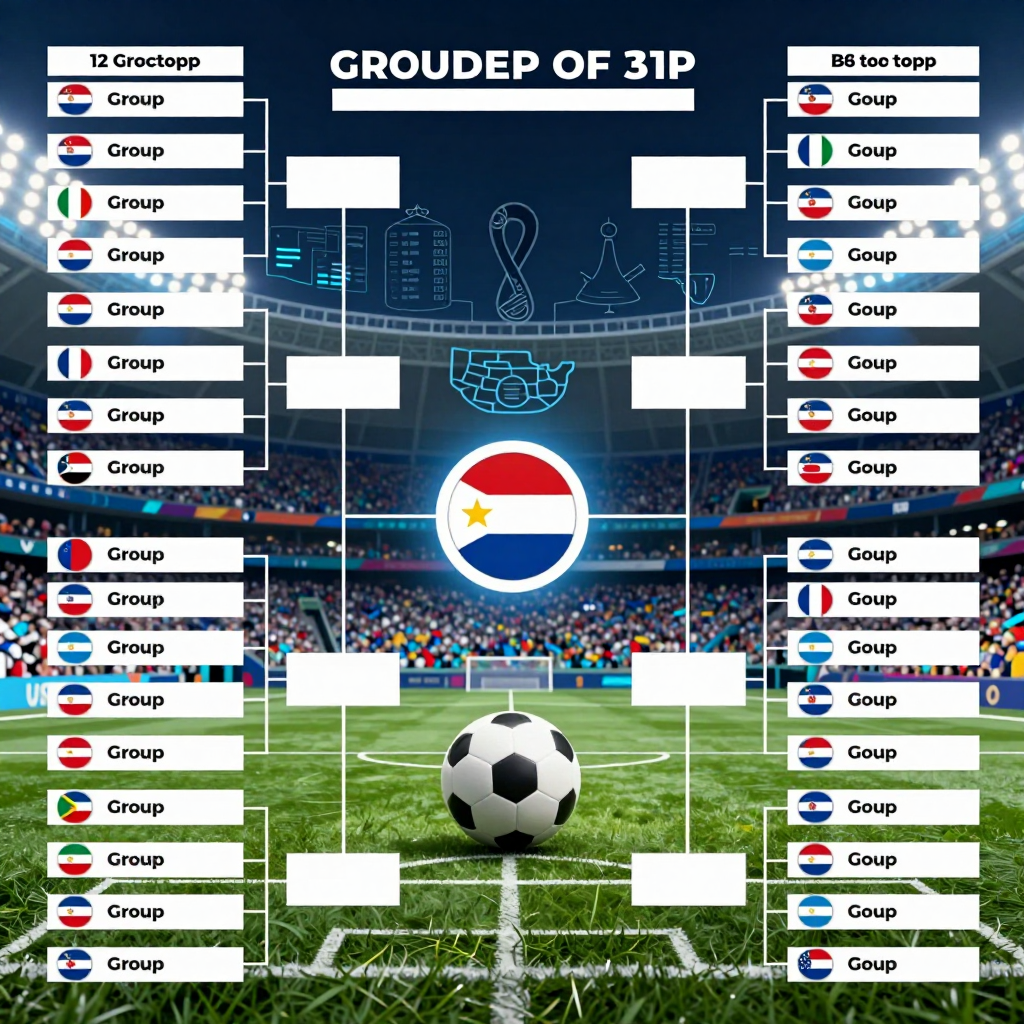
A 48-nation World Cup is not just about adding more teams. Curious how the new bracket structure is rewriting the history of soccer? The 2026 tournament goes beyond “expansion,” fundamentally redesigning how the competition unfolds. At its core lies the fifa world cup 2026 bracket—a revamped tournament roadmap built for the era of 48 teams.
48 Teams, 12 Groups… and the Tournament’s Starting Line Moved Forward
The biggest change? The knockout stage after the group phase is no longer the Round of 16, but the Round of 32.
- 48 teams → 12 groups of 4 teams each (3 matches per team in the group stage)
- The top 2 teams from each group (24 teams) automatically advance
- The remaining spots are filled by the best eight third-placed teams from the groups, making up a total of 32 teams entering the single-elimination bracket
In other words, while the group stage remains crucial, the knockout phase starts wider and earlier. This new format means the “first elimination round” consists of more matches—and even the strongest teams risk elimination with a single slip-up.
The New Tension Created by “Third Places Survive”
Perhaps the most intriguing aspect of the format is the realistic chance for third-place teams to advance. But this is no safety net; it complicates group stage strategies even more.
- Should teams aim for second place, or maximize performance even from third?
- Managing not only points but also goal difference and goals scored becomes critical
- Experts generally agree that earning around 4 points (e.g., 1 win, 1 draw, 1 loss) is often necessary to stay competitive among the best third-placed teams
Ultimately, the group stage transforms from a “3-match qualifier” into a prologue deciding each team’s position in the Round of 32 bracket.
The Bracket Decides the ‘Road to the Final’
Once the group stage ends, teams are placed according to a predetermined bracket matrix, and the question fans love most arises:
“What path will this team take to the final?”
- Some group winners may face relatively easier matches early on
- Some runners-up and third-placed teams could confront powerhouse opponents right away, facing a challenging bracket right from the start
Because of this, the fifa world cup 2026 bracket is far more than a simple draw. It becomes a map of narratives and probabilities shaped by group rankings—a landscape that stretches from the Round of 32 all the way to the final, turning the “real World Cup” into a longer, more dramatic—and unforgiving—battle where just one loss sends you home.
The Battle Unfolds in the Round of 32: Opening the Knockout Stage in the FIFA World Cup 2026 Bracket
The brutal knockout tournament, where a single loss means elimination, now kicks off not at the Round of 16 but at the Round of 32. With a new system that opens the door to third-placed teams from all 12 groups, squads are obsessively calculating how to "simply survive" longer. The heart of the FIFA World Cup 2026 bracket lies right here—once the group stage ends, the length of the bracket becomes the very path of destiny.
How the Round of 32 Redefines ‘Group Stage Objectives’
With 48 teams divided into 12 groups, the tournament advances 24 teams finishing first and second in their groups + the top 8 third-placed teams into the knockout rounds. On the surface, the threshold seems lower—but the reality is tougher. The competition for third place intensifies, pushing many teams to set a minimum of 4 points (1 win, 1 draw) as their ‘safe zone,’ strategically managing goal difference and goals scored to fine-tune their tactics.
- Top Teams: Aim to top their group for favorable matchups while carefully rotating players
- Mid-Tier Teams: Prioritize “not losing any of the three matches” over solidifying second place to minimize risk
- Underdogs: Set a realistic target of securing third place, focusing all efforts on specific matches where matchups are favorable
The Psychological Warfare of the FIFA World Cup 2026 Bracket’s ‘Matchup Matrix’
Once the group stage concludes, each team’s standing slots them into the Round of 32 according to a predetermined bracket matrix. That means the choice made in the final group game (a risky push for victory vs. a pragmatic draw) actually reshapes the entire path to the final. Narratives like “finishing second means facing a powerhouse” stop being mere memes—they become critical decisions etched into the coaching staff’s game plan.
The Price of a Single Mistake: The Tournament’s Pace Quickens
With the introduction of the Round of 32, the tournament turns “all or nothing” earlier and more frequently. The intense pressure once felt only from the Round of 16 on is now palpable from the Round of 32 in every match. As a result, teams focus more intently on:
- Set-piece efficiency (corners and free-kicks): A single goal can now decide a team’s survival sooner than ever
- Early concession risk management: “Keeping a clean sheet early” emerges as a pragmatic survival strategy
- Substitution tactics: Managing stamina with potential extra time in mind, while prepping kicker plans for penalty shootouts
The Round of 32 isn’t just one more knockout round—it reshapes group stage goals, redefines the stakes of ranking, and marks the starting point that transforms the entire FIFA World Cup 2026 bracket into a “longer, harsher survival game.”
Home Ground Advantage and the Unique Power of U.S. Host Cities: Why the FIFA World Cup 2026 Bracket Favors the United States
Playing on home soil until the very end is more than just luck. With the FIFA World Cup 2026 bracket expanding to 48 teams and the introduction of the new Round of 32, home advantage now acts as a tangible factor that elevates both bracket outlooks and actual performance on the field—far beyond mere atmosphere.
How Does Home Advantage Translate into ‘Results’?
Simply reducing travel burdens stabilizes performance
The joint North American hosting, spanning three countries, involves long-distance travel and varied climates. The U.S. benefits from familiar infrastructure (training facilities, accommodations, medical support) and lower adaptation costs, making conditioning easier from the group stages onward. This directly leads to enhanced late-stage focus in a tournament packed with close contests.Setting group stage goals becomes clearer
With 12 groups and eight of the third-placed teams also advancing, the key strategy is “securing safe points + managing goal difference.” Playing more matches at home makes achieving minimum targets (e.g., one win and one draw) more achievable, which boosts the odds of qualifying for the Round of 32.It’s not that the bracket’s ‘path’ gets easier—it’s that ‘uncertainty’ decreases
Upsets are common in knockout stages, where non-tactical elements like form, environment, and fan support decide outcomes. The pressure from a home crowd, familiar routines, and better recovery time might be subtle compared to tactics but can make a crucial difference match by match in the unforgiving survival battle of the FIFA World Cup 2026 bracket.
When U.S. Host Cities Turn the Bracket from an ‘Event’ into a ‘Weapon’
The United States will hold games in multiple cities—including Atlanta, Boston, Dallas, Houston, Kansas City, Los Angeles, Miami, New York/New Jersey, Philadelphia, San Francisco Bay Area, and Seattle. This isn’t just about the number of venues; it signals an explosive synergy of fan mobilization, media exposure, and immersive spectator demand.
Distinct ‘game atmospheres’ by city create psychological pressure on certain teams
Even within the U.S., conditions vary dramatically across East, South, and West coasts in both climate and crowd culture. This diversity challenges visiting teams with extra adaptation hurdles while offering home teams strategic options. Once the bracket is finalized, “which city is likely to host each round” becomes a key part of game planning.Hosting the final itself crafts a ‘narrative’ that heightens focus
The final scheduled at MetLife Stadium in East Rutherford, New Jersey, pulls American fans and media attention in one unified direction throughout the tournament. Here, every round is not just a match but a “step toward the final,” transforming the team’s motivation and pressure in a way few settings can replicate.
Ultimately, the FIFA World Cup 2026 bracket elevates U.S. host cities beyond mere venues—they become a comprehensive ‘platform’ offering the home team advantages in recovery, travel, support, and media control. And that edge can be the decisive difference between a single knockout slip and survival in the World Cup’s unforgiving knockout drama.
Sports Media and the Betting Market: The Exploding Culture of the FIFA World Cup 2026 Bracket in the U.S.
Unlike previous World Cups, the 2026 tournament will feature a “win or go home” knockout stage starting immediately from the Round of 32. With this accelerated “death tournament” phase, the U.S. sports market is likely to reinvent the World Cup not just as a broadcast event, but as a seasonal content cycle revolving around bracket predictions, debates, and betting. The key is simple: from the moment the group stage ends, the FIFA World Cup 2026 bracket becomes the very ‘map of the story.’
The American-Style “Bracket Narrative” Created by the Round of 32
American sports fans are already well-versed in the culture of filling out brackets, hoping for upsets, and analyzing paths thanks to the NCAA tournament (March Madness). With 48 teams competing in 2026, and 32 teams entering the knockout stage, the “bracket-based storytelling” will explode earlier than ever before.
- The qualification structure—with the top two from each group plus the 8 best third-place teams—adds bonus drama centered on “which third-place teams will survive.”
- From the Round of 32 onward, one mistake means immediate elimination, making every game far more compelling than before.
As a result, brackets evolve beyond simple game schedules into frames and templates that fans share on social media and broadcasters repeatedly reference.
What Broadcasting and Streaming Gain: More ‘Highlight-Worthy Matchups’
From a media perspective, introducing the Round of 32 is not just about adding more games—it’s a structural shift toward more high-stakes matchups. Even if the group stage features cautious “calculator soccer” talk, once the knockout phase begins, the content instantly simplifies: only the winners advance.
This change offers U.S. broadcasters and streaming platforms several expansions:
- Continuous ‘bracket updates’ in pre- and post-game shows: What’s next, who they face, and which city they move to become central storylines—often more important than winner interviews.
- Enhanced data-driven commentary: Because group compositions and rankings affect bracket difficulty, the “easy path vs. tough path” framing naturally emerges.
- Optimization for clip consumption: Dramatic knockout stakes mean every goal, mistake, or penalty kick instantly triggers elimination, magnifying the impact of short highlight videos.
Why Betting and Fan Engagement Games Grow: The ‘Bracket’ Becomes a Product
With the legal sports betting market booming in the U.S., the expanded knockout format significantly widens the variety of betting products. Brackets are especially intuitive for fans: participation kicks off with a single question—“Which team will follow this line all the way to the final?”
- Pick’em brackets: Starting the tournament at the Round of 32 lets more people jump in “now and start picking.”
- Round-by-round survival bets: As the field narrows from 32 to 16 to 8, volatility surges, creating tightly spaced betting and promotion opportunities for each game.
- Upset narratives meet commercial appeal: When a favorite slips even once, the entire bracket shakes up, triggering cascading interest and betting demand for upcoming matches.
Bottom Line: 2026 Is Not Just a ‘World Cup Broadcast’—It’s a ‘Bracket Season’
The moment the FIFA World Cup 2026 bracket is unveiled, the U.S. market is set to treat the World Cup not as a mere collection of matches but as a massive storytelling industry centered on the bracket. Early knockout play from the Round of 32 will be the most powerful engine driving this transformation into reality.
FIFA World Cup 2026 Bracket: The Journey to the Final and the Future of Brackets Fans Will Share
How will the USMNT navigate their path to the final, and how will each city in the US embrace the World Cup? The 2026 tournament is not just a “World Cup with more matches” but is highly likely to become an event where fans’ imaginations turn into reality on the “map” that is the bracket.
The Road to the Final: ‘The Real World Cup Begins at the Round of 32’
The heart of this tournament lies in the Round of 32, which kicks off immediately after the group stage. The top two teams from each of the 12 groups (24 teams), along with the eight best third-place teams, join in to create a knockout drama where every match explodes with the narrative of “win and advance, lose and go home.”
For the USMNT, leveraging home advantage and seeding effects means setting making it to the Round of 32 as a realistic baseline goal, with room to design “relatively achievable scenarios” reaching the Round of 16 and Quarterfinals. Ultimately, the group stage goal shifts from mere survival to which position (1st, 2nd, or 3rd) you finish in and who you face next. At this point, the bracket evolves from a simple schedule into a strategic tool that can alter the difficulty of the path to the final.
A World Cup Built by Cities: The Bracket Encompasses ‘Where It’s Held’
The charm of the FIFA World Cup 2026 bracket goes beyond just team matchups. The 11 US host cities (e.g., New York/New Jersey, Dallas, Los Angeles, Miami, Seattle) become more than venues — they transform into key players in the tournament itself beyond the group stage, hosting matches in the Round of 32, Round of 16, and in some cases, Quarterfinals.
Fans plan their journeys by tracking “where the USMNT plays its Round of 32 match and where they move on next,” while local economies react in kind, with accommodations, transportation, and events cascading in response. Especially with the final set to take place at MetLife Stadium, the bracket’s focus naturally converges toward the US East Coast in a compelling ‘final journey’ as the tournament progresses.
Expanding ‘Bracket Culture’ Beyond Fans’ Wildest Imaginations
The 48-team format means more than just an increase in matches. The introduction of the Round of 32 brings the “start of the knockout tournament” earlier, plunging fans into deeper engagement with predicting outcomes, anticipating upsets, and imagining each team’s path to the final much sooner.
The bracket-centered viewing and consumption style, familiar in American sports culture, is highly likely to be effortlessly adopted by World Cup fans. As a result, 2026 promises to be a tournament where the narrative sharpens beyond “which team is strong” to focus on “who reaches the final and by what path.”
In the end, the real change in the 2026 World Cup can be summed up in one phrase: the bracket becomes the ‘official map’ anchoring fans’ imaginations. And from now on, the scenes that the USMNT and the host cities in the United States will create on that map promise to be the most thrilling preview of all.
Comments
Post a Comment