 \n
\n
Copa America 2024: Mexico vs. Ecuador — A Clash That Decided Fate
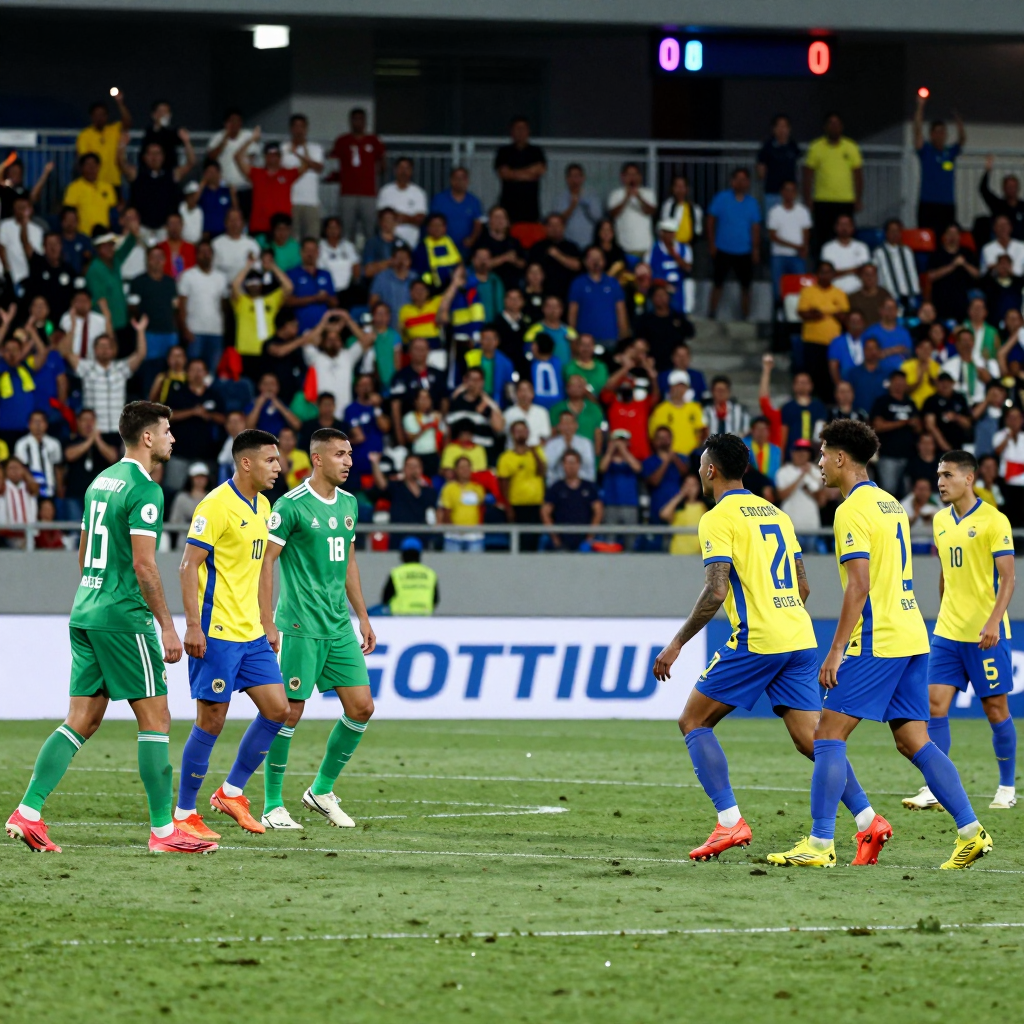
Why did traditional North and Central American powerhouse Mexico end up drawing against Ecuador, a South American mid-tier team, and get eliminated in the group stage? Mexico vs. Ecuador was not “a dull 0-0 draw,” but a symbolic showdown revealing the current state of both nations’ football under cold, unforgiving conditions where one team had to win, and the other only needed to draw.
The reason this match was special is simple. In the final Group B game of Copa America 2024, Mexico needed a win, while a draw secured Ecuador’s ticket to the quarterfinals. The result? 0-0. And that scoreline instantly sealed their fates: Ecuador advanced, Mexico was out.
But what’s more crucial is that the outcome didn’t feel like a mere “coincidence.” Mexico ramped up possession and attacking intent, yet they never found the final touch or finishing answer inside the box. Conversely, Ecuador traded flair for game management, minimizing risks and blunting Mexico’s strengths through midfield pressure and defensive blocks. In other words, this draw wasn’t about “who played better” but about who executed their conditions more precisely.
Psychological warfare layered on top made the dynamics even clearer. As the pressure to score mounted, Mexico’s attacks grew increasingly rushed and predictable. On the flip side, Ecuador played with the crystal-clear aim of just preventing any goals, controlling risks and turning the clock against their opponents. Controversial referee decisions near the end only underscored Mexico’s harsh reality—do they have the structural capacity to break down solid defenses and score?
Therefore, Mexico vs. Ecuador was far more than just a group stage match. It sounded a warning bell for Mexico ahead of the 2026 World Cup and handed Ecuador a certificate proving their emergence as a “realistic strong team.” Though the score was 0-0, the futures of these two teams diverged far beyond that equal result.
Mexico vs Ecuador 0-0: More Than Just the Scoreline – The Flow of the Game and the Hidden Mind Games
Mexico dominated possession, but why did Ecuador ultimately achieve the desired outcome? The Mexico vs Ecuador match was less about "who played better" and more about "who understood their conditions more precisely." While possession tilted towards Mexico, it was Ecuador who controlled the tension and decisions on the field.
Mexico vs Ecuador: Possession Advantage Didn’t Equate to Control
From the start, Mexico pushed forward, owning the ball and creating chances through wing crosses and half-space penetrations. However, key moments mostly ended with a familiar pattern: “reaching the box, but stopping short inside it.”
This aligned perfectly with the framework Ecuador intended. Ecuador dropped their lines and tightly shut down the central areas, making Mexico’s final passes difficult and forcing their attacks to become increasingly ‘faster and more forced.’
Mexico vs Ecuador: The Difference Between “Teams That Must Win” and “Teams That Can Settle for a Draw”
This game was as much a battle of psychology as tactics.
- Mexico’s Pressure: As time slipped away, the goal shifted from “one goal” to “an immediate goal,” causing their attacking choices to become predictable. Pass angles grew rushed, shots hurried, and crosses increased.
- Ecuador’s Composure: Ecuador precisely leveraged their position of “a draw sufficed.” They minimized unnecessary forward plays, avoided risky ventures in dangerous zones, and maintained defensive density and rhythm as their opponents grew desperate.
In the end, Mexico became more predictable when they needed goals, while Ecuador ‘managed’ that predictability and turned time in their favor.
Mexico vs Ecuador: Beyond the Late-Game Controversies
Though controversies over decisions and VAR arose late in the second half, they didn’t alter the essence of the match. From Mexico’s perspective, it’s easy to fixate on “that one moment,” but objectively, Ecuador had designed the entire 90 minutes to prevent Mexico from creating ‘consecutive’ clear chances.
In other words, the disputed moments were not game-changing variables but rather the final burst born from a flow where no goals were scored until the very end.
Mexico vs Ecuador: The Takeaway from 0-0
The scoreline was 0-0, but the message was clear. Mexico possessed the ball, but Ecuador owned the game. Ecuador proved that in tournament football, winning and losing often hinge not on possession but on the ability to read conditions and manage risks.
Tactical Duel: Mexico vs. Ecuador—Smooth Build-up Stalled at the Goal
Why did Mexico, despite circulating the ball with various passes, get stopped right before the goal, while Ecuador became a powerful threat with a low defensive line and counterattacks? Mexico vs. Ecuador was a clash of “attacking intent vs. result-oriented design.” Numerically, possession and shots favored Mexico, but tactically, the game unfolded exactly as Ecuador intended.
Mexico vs. Ecuador: Mexico’s Build-up—Progress Made, but the ‘Last 20 Meters’ Left Empty
Mexico operated from a 4-3-3 (or a 4-2-3-1 variant), repeatedly executing build-up from the back → wide play → half-space penetration. The issue wasn’t the build-up itself, but that attacks “solidified into predictable patterns” near the box.
Good ball circulation but lacking central breakthrough power
- The process of creating passing tempo in midfield and releasing out wide was smooth.
- However, against Ecuador’s low block, there was a shortage of killer passes or individual dribbles to break lines—resulting in reliance on crosses or forced shots.
Limited options inside the box
- After entering the box, many moments hinged on the striker’s finishing ability.
- Crosses against a prepared defense were easily absorbed by Ecuador’s center backs and defensive midfielders, and second balls were blocked by the compact block.
The ‘must-win’ condition rushed the attack
- As time passed, passing angles narrowed and attacks sped up but lost precision.
- Rather than breaking the tactical shape, Mexico was pulled into the match flow that Ecuador orchestrated.
Mexico vs. Ecuador: Ecuador’s Pragmatic Strategy—Low Line, Compact Midfield, and a Sharp Transition
Ecuador translated the conditional “draw is acceptable” into a precise tactical plan. Their focus wasn’t possession battles but risk control, executed in a thoroughly modern way.
Low block + central compression to ‘control traffic in front of the box’
- Dropping their line and blocking passing lanes in midfield, they funneled Mexico’s progression onto the flanks only.
- This denied Mexico’s preferred half-space penetration, guiding their attacks toward low-probability options.
Unleashing the blade only in transition moments
- The moment they won the ball, they quickly connected forward, targeting the space behind Mexico’s advanced line.
- Despite having limited numbers, these counterattacks were threatening. The reason was simple: the longer Mexico’s attacks lasted, the farther their defensive transition distance grew—and Ecuador exploited that precise moment.
Game management as a core part of the tactic
- From the intensity of fouls and tempo control to avoiding reckless challenges in dangerous areas, their “no concede” approach was systematic.
- Ultimately, Ecuador ran down the clock in the way that frustrated Mexico most—even without scoring.
Mexico vs. Ecuador: The Outcome of Style Matchup—‘Frequent Attacks’ vs. ‘Selective Defense’
This was not merely a test of skill but a battle of style matchups. Mexico, a possession and pressing team, turns its “frequent attacks” into “attacks that fail to break through” when the opponent sits deep and locks down the center. Conversely, Ecuador can surrender possession yet still create sufficient threat with just one transition, making the 0-0 closer to a planned result.
In the end, the tactical takeaway from Mexico vs. Ecuador is clear. A team with elegant build-up play needs that final piece to ‘shake’ the low block—a creative spark in the center or clinical finishing inside the box—to secure victory. On the flip side, Ecuador engineered the entire game confidently to prevent that one decisive moment from ever emerging.
The Changing Power Dynamics and the Rising Dark Horse: What Mexico vs. Ecuador Revealed About the Future of Both Nations’ Football
A 0-0 scoreline usually suggests a “match where nothing happened,” but Mexico vs. Ecuador was quite the opposite. Mexico faced a do-or-die scenario, while Ecuador only needed a draw. The outcome wasn’t just a simple stalemate—it clearly signaled Mexico’s fall into a ‘team in need of reshaping’ and Ecuador’s rise as a ‘contender among South America’s top sides.’
After Mexico vs. Ecuador, Mexico Faces the Crucial Question: “How Will We Create Goals?”
Mexico controlled possession and applied pressure. Yet, every attack broke down at the final moment, reaffirming an old weakness—they look dominant but never decisive. The message left by this draw is crystal clear.
- Tactical Ceiling: While possession and buildup were in place, they lacked central creativity (killer passes, 1v1 breakthroughs, and second-line infiltration patterns) to crack down a compact defense.
- Generational Shift Challenges: Even with more European-based talents, without a completed team chemistry, star names mean little.
- 2026 World Cup Pressure: Being hosts only counts if the team is ready. Early elimination at the Copa increases doubts: “Can this structure hold against the big stages?”
In short, Mexico’s problem isn’t just a few players’ form but a complete overhaul of their attacking structure to consistently produce goals. This 0-0 forced that task to the forefront.
What Mexico vs. Ecuador Showed About Ecuador’s Growth: “Becoming a Realistic Strong Team”
Ecuador didn’t dazzle, but they did exactly what was necessary. More importantly, they weren’t just holding on to a draw—they managed the entire game and secured the desired result as a team in control from start to finish.
- Midfield and Defensive Solidity: Key players hardened on European pitches anchored the team, effectively limiting Mexico’s box entries and rhythm.
- Counterattacks and Risk Management: Dropping their lines wasn’t just passive defense; they created threats on transitions and lured Mexico into overcommitting forward.
- Tournament Resilience: Displaying traits of a team that survives tournaments—tempo control, foul management, and risk minimization—beyond just being “good.”
Such a team only grows scarier as the tournament progresses. This is why Ecuador is no longer just a “mid-tier South American side” but a dark horse turned genuine contender.
Conclusion: The Future Signal Sent by Mexico vs. Ecuador’s 0-0
Mexico vs. Ecuador wasn’t just a match result but a crossroads of football trends. Mexico can no longer rely solely on their “traditional powerhouse” status, while Ecuador has entered a phase where “pragmatism and organization” threaten the established elites. The key in their next encounters won’t be possession stats but who can design ‘results’ with their own brand of football.
The Mexico vs Ecuador Rivalry and Psychology: Perspectives You Can’t Miss in Their Upcoming Clash
How will the psychological pressure and confidence that seep into every encounter between these two teams influence the outcome? Mexico vs Ecuador can no longer be explained by a simple comparison of skills alone. The 0-0 draw in Copa America 2024 wasn’t just a “tie”—it was a result that left one team wounded and the other filled with justified confidence.
The ‘Asymmetry of Memory’ in Mexico vs Ecuador
Even in the same match, the memories each team carries are drastically different.
- Mexico’s memory: It’s not a question of “Were we outplayed or just unlucky?” but an uncomfortable conclusion that “We failed to score when it mattered.” This creates a pressure to ‘prove themselves from the start’ that could shake up tactical decisions in the next showdown.
- Ecuador’s memory: They’ve gained the experience that “We can get the result we need.” Their ability to manage the game’s tempo and risks against top teams transforms into even stronger self-belief in the rematch.
As this asymmetry grows, the game increasingly unfolds as a psychological battleground.
The Key to Mexico vs Ecuador Rematch: The Leader Who Turns Pressure into Energy
The crucial point fans must not miss in upcoming matchups is who will convert pressure into the team’s driving force.
- For Mexico, the longer they go without taking the lead, the more their attack may become predictable and rushed. What’s needed is leadership that demands precision over speed—a call for “more accurate” not “faster.”
- For Ecuador, the longer they hold on, the more they feel the “chance is swinging our way.” This sharpens their defensive focus and foul discipline as the match approaches the final whistle.
In short, the next Mexico vs Ecuador won’t just be a battle of skills, but a duel over who can first control the emotional temperature.
The New Narrative Mexico vs Ecuador Will Create: “Revenge Match” vs “Accumulating Conviction”
The point at which this rivalry intensifies is clear.
- Mexico’s upcoming storyline is no longer just “We have to win,” but “We must showcase winning moments.” This narrative can make players either overly cautious or recklessly bold in their choices.
- Ecuador, even with past conditions like “A draw is acceptable” gone, hold onto the faith that “We don’t waver in big games.” The more they accumulate this belief, the more daunting they become for their opponents.
Ultimately, the real drama to watch in their next face-off isn’t the scoreline but whether Mexico will redefine itself as a team that withstands pressure, or Ecuador cements its status as a ‘realistic powerhouse.’
Comments
Post a Comment