 \n
\n
The Untold Story of the World Cup Showdown: England vs Ghana
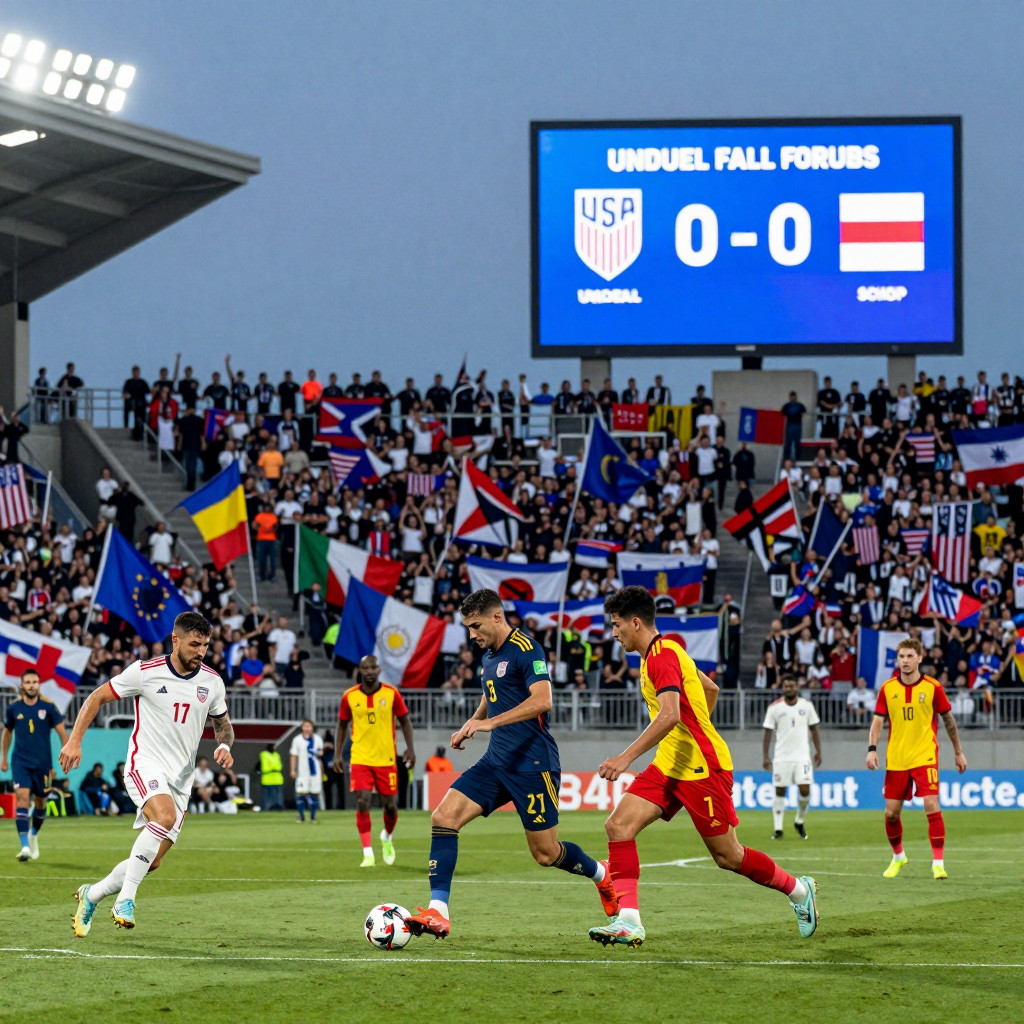
A 0-0 draw might seem ordinary at first glance, but the England vs Ghana match was a high-stakes, intense battle that perfectly showcased why scoring a single goal can be so incredibly difficult. The tension that gripped Foxborough for the full 90 minutes wasn’t just a case of missed chances—it emerged from a clash of tactics locking horns. This tactical standoff shaped a pivotal lock that would ripple through to the final round of Group L, shaking up the World Cup landscape.
England dominated with nearly 79% possession, but this control didn’t translate into goals. Their build-up to the box was smooth, yet their final choices were far too cautious. The constant cycle of “one more pass instead of a shot” piled up possession, but the threat gradually thinned out. The sharp, direct transitions that exploded in the Croatia match softened into a “safe buildup” against Ghana, dulling England’s edge.
In stark contrast, Ghana played a disciplined, defensive game. They set a low defensive block and a dense midfield line to shut down England’s central penetrations and refused to yield space inside the box. Opportunities to attack were limited for Ghana, but their pacey counterattacks kept England’s high defensive line on edge, preserving an even psychological balance. Ultimately, this match felt less like England’s missed chance to win, and more like a deliberate draw orchestrated exactly as Ghana intended.
The personal stories within the game add another layer of intrigue. Harry Kane, who blazed with his tenth World Cup goal in the Croatia match, was mostly quiet this time—except for some key moments. As Kane dropped deeper to help build play, the crucial question arose: who would be there to finish inside the box? That very gap was exploited by Ghana’s disciplined defense time and again.
But the biggest shockwaves come from the scoreboard. Both teams, who could have booked their place in the Round of 16 with a win, now must prove themselves once again in the final match. The England vs Ghana game didn’t just hand each side a point—it injected uncertainty into the entire Group L. In the World Cup group stage, uncertainty equals pressure, and pressure can swiftly rewrite the narrative for even the strongest teams. Whether England will strike with more direct force next time, or Ghana will build an even fiercer attack atop their solid defense—this goalless draw leaves that question hanging largest of all.
A Soccer Drama Inside and Outside the Stadium, Unfolding in Boston: England vs Ghana
Amid the blazing heat of Foxborough, Massachusetts, England vs Ghana became more than just a 90-minute match. Though the score remained 0-0, the atmosphere inside and outside the stadium vividly showcased the arrival of the World Cup in the United States. Thanks to its proximity to Boston, crowds quickly gathered, and the way the World Cup was enjoyed seamlessly merged with America’s own “big game day” culture.
Outside the stadium, the tailgating and sports bar culture transformed soccer into an entirely different experience. Parking lots filled with a mix of jerseys and flags, families and friend groups gathered, chants and conversations poured out simultaneously—this scene revealed how soccer transcended niche communities to become a local festival. The American habit of experiencing the World Cup as a “live sport event” was fully realized in Foxborough.
Inside the stadium, this cultural energy intertwined with tactical tension and amplified it further. England’s high possession met Ghana’s sturdy defense, turning each moment into a “goal or stop” scenario, with the crowd reacting instantly to even the smallest shifts in play. Especially in the closing minutes, when England’s most threatening chance was thwarted, the collective sigh that arose spoke to the fact that this was not merely a draw—it was a match where the emotional stakes endured until the very end.
The media also framed Foxborough not just as a place of “game results,” but as a “phenomenon.” Leading U.S. sports outlets chased the match with live updates and highlights, cementing the approach of treating even a single group stage game as prime content. Ultimately, England vs Ghana, despite its scoreless outcome, stood as a symbolic moment illustrating how the U.S.-hosted World Cup is rapidly weaving itself into the fabric of local economies, fan experiences, and sports consumption habits. Soccer here ceased to be an external event—it became a culture made and owned directly by Boston.
England: The Shadow of Possession, the Absence of Finishing — Questions Left by England vs Ghana
Why did England fail to score a single goal despite holding 79% possession? England vs Ghana revealed how easily the conventional wisdom that “possession wins games” can crumble in short tournaments like the World Cup. Though possession was high, the speed and decisiveness of final actions that lead to goals never materialized.
Possession Becomes a ‘Burden,’ Not an ‘Advantage’ — The Offensive Stalemate in England vs Ghana
England maintained long spells of possession throughout the match, but that time did not translate into threatening shots. The issue wasn’t the quality of build-up play, but the choices made in the final third.
- Repeatedly opting for one more pass near the box delayed the timing,
- Opportunities created from the flanks stalled due to hesitation just before cutbacks, allowing Ghana’s defense to regroup.
In other words, the higher the possession, the greater the “must-break” task became, and Ghana’s defensive strategy targeted that exact point.
The Moment the ‘Number 9 in the Box’ Vanishes — What Kane’s Silence Means in England vs Ghana
Harry Kane dropped deep to link play and initiate attacks, but this came at the cost of losing a fixed target to finish inside the penalty area. This was especially dangerous against Ghana’s deep defensive setup.
- Without a finisher in the center, crosses and cutbacks remained mere “threatening passes,”
- Shots were delayed, giving defenders time to organize.
The fact that Kane’s most dangerous attempt late in the second half didn’t result in a goal symbolizes that England vs Ghana was a match about ‘quality of chances finished’ rather than ‘quantity of chances created.’
Not Ghana’s Low Block, but England’s ‘Lack of Conviction’ Led to 0-0 — The Core of England vs Ghana
Sure, Ghana’s low block and pressing effectively stopped central progress and tightly sealed the penalty area. Yet, to pin England’s scoreless performance simply on “Ghana’s strong defense” only tells half the story. The crucial difference was in the courage and speed to take shots.
High possession doesn’t mean many chances were created—it means there was plenty of time to create chances. And on this day, that time felt less like an advantage and more like a burden for England.
England vs Ghana: Ghana’s Defensive Strategy and the Real Significance of a Practical Draw
Ghana stifled the powerhouse England's offense with a “low block,” earning a valuable point on American soil. But what secrets lie behind this tactical victory? To put it simply, Ghana didn’t just hold on—they played a deliberately controlled game, making the 0-0 not a mere coincidence, but a carefully calculated achievement.
How Ghana Turned England’s “Possession” into Their Own “Space”
England dominated possession, but Ghana wasn’t intimidated by the ball’s presence. Instead, they chose to concede possession and lock down the space, effectively neutralizing England’s attacks.
- Two-line defense cutting through the middle: Ghana formed compact lines in midfield that blocked England’s passes straight into the box. They allowed the ball to circulate, but made sure it couldn’t reach “dangerous zones.”
- Maintaining density near the box: The full-back line dropped deep into the penalty area, shrinking angles for crosses and cutbacks. England’s favored wing patterns were attempted, but the likelihood of scoring drastically diminished.
- Pressure at decisive moments: Rather than blindly sitting back, Ghana applied pressure right before shots or during turns, delaying England’s decisions. Consequently, repeated “one more pass” sequences blunted England’s attacking edge.
Ghana’s Choice to “Leave Space” Rather Than “Mark Kane Tightly”
One striking feature of England vs Ghana was Harry Kane spending significant time dropping into midfield, serving as a link rather than exploding inside the box. Ghana smartly capitalized on this.
- When Kane dropped deeper, England built up play more smoothly, but the pure finishing numbers inside the box decreased.
- Instead of overcommitting to Kane, Ghana prioritized blocking penetration routes into the box and shutting down second runners, eliminating zones where decisive strikes typically come.
- As a result, Kane’s threat was reduced to a single “big moment” rather than creating a flow of continuous chances to change the game’s momentum.
Why This Single Point is Both “Practical” and “Pivotal”
A draw may seem conservative, but for Ghana it was a result that extracted maximum benefit with minimal risk against the toughest opponent in the group stage.
- Securing a point against a top side expands options for the final match: Earning a point from England clarified what Ghana needs to aim for in the last game (win, draw, or goal difference management).
- Defensive success raises the team’s confidence baseline: Building on the momentum from a dramatic win over Panama, the experience of holding firm against England strengthens the belief that “we can execute our plan.”
- Foundation for an upset narrative: In knockout stages, replicable competitiveness matters more than flair—and Ghana proved that replicability through resolute defense.
Rather than confronting England’s attack head-on, Ghana managed the risky zones and allowed for a single variable, controlling the match for 90 minutes. This 0-0 is not a simple draw but a “tactical point” Ghana earned on the American stage.
The State of Group L and the Next Chapter of the World Cup: The England vs Ghana Narrative Continues in the U.S.
As the final match approaches, Group L is no longer a scenario where “winning just one game makes things easier,” but rather one where “one slip-up can unravel everything.” The 0-0 draw between England and Ghana in Foxborough was far more than a simple stalemate; it was a signal demanding tactical, mental, and risk management resilience from both teams. Fans now ask: Who will draw their sword first in the next chapter, and how will the American stage amplify this drama?
The Final Round’s Keyword: Not ‘Confirmation’ but ‘Proof’
The last group stage matches always involve complex calculations, but the essence of Group L is less about math and more about proving.
- England confirmed that high possession doesn’t guarantee dominance, and now must prove they are a team that chooses shots and penetration at decisive moments.
- Ghana gained confidence that ‘enduring the match’ can stop strong opponents, and now must demonstrate they are a team that maintains defensive solidity and strikes sharply only when necessary.
Ultimately, the final round won’t be about “who held the ball more,” but a battle of who makes faster decisions and remains less shaken.
Tactical Highlights: England’s ‘Directness’ vs Ghana’s ‘Reproducibility’
The tactical challenge left by England vs Ghana in Foxborough is clear.
- England: Must reduce excessive buildup near the box and find the solution to “turn possession into goals” with quicker tempo shifts and bolder finishes.
- Ghana: Since a low defensive block and well-timed pressing proved effective, the key is to replicate that intensity with the same strength in the final game. In tournaments, what’s scarier than ‘one great match’ is ‘consistently great matches.’
For fans, even if the next game isn’t a flashy goal-fest, it’s likely to be a high-density match where tactical details decide the outcome.
The Next Chapter Growing in the U.S.: ‘Experience Economy’ Beyond Just Results
What makes this tournament unique is that the tension doesn’t stay confined within the stadium. The U.S. is rapidly absorbing the World Cup as a regional event, a consumer culture, and a fan experience. As seen near Boston in Foxborough, crowds were lively even in a 0-0 draw, and the city fills an entire day—from pre- to post-match—with the World Cup.
Hence, the final round is not just a race for the Round of 16 tickets but a moment that engrains "how soccer is consumed as a major sport" more deeply for American spectators. The story fans eagerly anticipate is simple: a decisive, game-changing moment and a massive, shared celebration of soccer at that instant. The conclusion of Group L will serve as the next clue to gauge how long that festival will last.
Comments
Post a Comment