 \n
\n
The Weight Carried by a Cup of Coffee
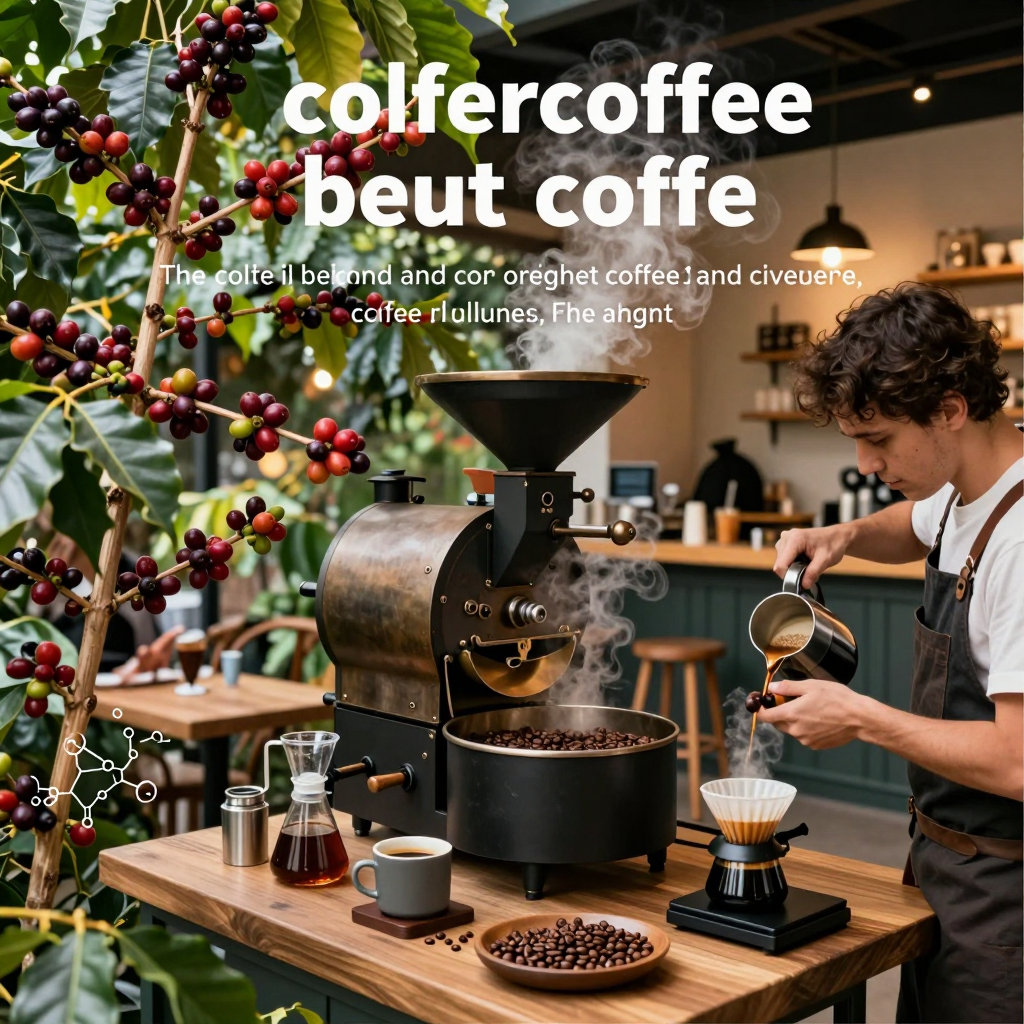
Did you know that coffee is not just a simple beverage, but a vast agricultural and trade commodity that supports the livelihoods of millions of farming households, as well as a symbol of urban lifestyle? The cup you casually choose is not made solely from “flavor.” Behind it lies a complex layering of the climate and labor of the growing regions, international market prices and distribution networks, and the consumption culture and preferences of the city.
First of all, coffee ranks as one of the most consumed beverages worldwide after water, making it a truly global agricultural product. When harvests in a particular region decline or transportation costs rise, the prices on café menus fluctuate accordingly. Conversely, when a single coffee bean’s popularity skyrockets, new investments and cultivation methods flow into the producing areas. In other words, your choice of a cup carries a far-reaching market impact.
At the same time, coffee serves as a cultural signifier that shapes the rhythm of urban life. Whether it's a takeout coffee on the way to work, a meeting table, a focused moment alone, or a conversation with friends—coffee has established itself not as merely “caffeine,” but as a way to organize everyday life. That’s why people inquire about the origin of the beans or the roasting degree, articulate their preferences, and willingly invest time in pursuit of a better cup.
Ultimately, the “weight” spoken of here is the sum of the economic value and cultural significance held by a single cup of coffee. With this understanding, coffee is no longer a light, casual consumption—but a choice rich with background and meaning.
From Coffee Tree to Coffee Cup: The Secrets That Define Flavor
Even though it’s the same coffee, some cups smell light and floral, while others feel rich and chocolatey. This difference can’t be explained by roasting or brewing alone. The starting point lies much earlier—in the coffee tree’s variety (species), the environment in which it grows (terroir), and the post-harvest processing methods. Let’s distill the core elements that shape a cup’s flavor.
Coffee Varieties: Arabica vs. Robusta—How ‘Flavor Personality’ Changes
Coffee is essentially a drink brewed from roasted coffee seeds (green beans), but its fundamental character depends on the variety used.
Arabica
Often offers delicate aromas and relatively bright acidity. This is why most specialty coffees are Arabica. However, it’s more vulnerable to pests and climate stress, making cultivation challenging and prices prone to fluctuation.Robusta
Generally contains more caffeine, featuring a stronger bitterness and heavier body. It’s high-yield and resilient, commonly used in instant coffees and blends—especially to bolster body.
In other words, when you ask, “Why is this coffee so crisp?” or “Why is it so deep and heavy?” the answer starts much earlier with the fundamental structure created by the variety.
Coffee Terroir: The Same Variety Tastes Different Depending on ‘Where It Grows’
Just like in wine, coffee’s flavor direction is shaped by altitude, soil, sunlight, and rainfall patterns. Altitude especially creates noticeable differences.
- High Altitude: Beans tend to be denser → acidity becomes more pronounced, and aromas are often more complex
- Low Altitude: Often results in simpler, rounder flavor impressions
The key point here isn’t “better or worse,” but “style.” Some prefer the bright fruit acidity of high-altitude coffee, while others favor the easy, nutty flavor from lower elevations.
Coffee Processing: How Post-Harvest Treatment Transforms Flavor
How the coffee cherry is separated and dried after harvest decisively changes its flavor. Even on the same farm and with the same variety, different processing methods create entirely distinct profiles in the cup.
- Washed: Pulp is removed, followed by fermentation and washing → clean taste with clear acidity
- Natural: Dried with the cherry intact → intensified fruity and sweet notes, sometimes with wine-like fermented hints
- Honey: Part of the mucilage left on during drying → a middle ground between washed and natural, often highlighting sweetness and texture
So when you see “Washed / Natural / Honey” on a coffee bag, it’s not just a label—it’s a keyword revealing the flavor direction the coffee aims for.
The Easiest Way to Read a Cup: Start with ‘Variety–Terroir–Processing’
To enjoy coffee more precisely, check these three basics before diving into complex tasting terms:
- Variety (Arabica or Robusta focus)
- Origin details (region, altitude—a hint of terroir)
- Processing method (Washed/Natural/Honey)
Once these are clear, roasting and brewing become not about “creating flavor,” but about how far you can unlock the coffee’s already defined potential.
The Science and Art of Coffee Roasting: The Birth of Aroma
Green coffee beans are surprisingly close to being “materials with almost no smell.” Most of the aromas we associate with coffee—such as floral, fruity, chocolate, and nutty notes—are either newly created during roasting (generated) or awakened from dormant compounds (released). In particular, the Maillard reaction and caramelization lay the foundation for flavor, while the roaster (or barista who understands roasting) ‘designs’ the taste direction by adjusting the roasting profile.
The Key Reactions that Create Coffee Aroma: Maillard Reaction and Caramelization
Roasting is not just a process of “baking until brown”; it is a series of chemical transformations where flavor molecules are born in succession.
Maillard Reaction
Amino acids and sugars react under heat to produce hundreds of flavor compounds.
This reaction forms the base of the familiar “toasty, complex aromas” such as baked bread, nuts, cocoa, and malt commonly found in coffee.Caramelization
Sugars break down and transform at high temperatures, enhancing the impression of sweetness and flavors like caramel and toffee.
Even with the same beans, more pronounced caramelization intensifies the sweetness, while overdoing it can blur the line into bitterness.Changes in Acids and Volatile Compounds
During heating, some acids and aromatic compounds decrease or alter their forms, shifting the “bright acidity” to a “smooth acidity” or a “roasty aroma.”
Thus, roasting is not only about adding aromas but also selectively removing certain scents.
Coffee Roasting Profiles: Designing Flavor with Heat, Time, and Airflow
A roasting profile is essentially a blueprint of when, how much, and in what way heat is applied. Slight differences here can lead to significant changes in flavor.
- Heat Control: Applying strong heat early accelerates reactions but may disrupt the balance if the inside doesn’t roast evenly with the outside.
- Time Allocation (Development Phase): Extending a particular phase can emphasize sweetness and body, while shortening it can highlight acidity and brighten aroma.
- Airflow (Exhaust/Convection): Influences smoke and volatile compound removal, and heat transfer style, affecting impressions like “clean aroma” or “weighty roasty notes.”
Changing this combination can drastically alter the same coffee’s outcome. For example:
- Light Roast: Clear floral, citrus, berry aromas with bright acidity
- Medium Roast: Balanced acidity, sweetness, and body with increased nutty and caramel nuances
- Dark Roast: Bitterness and smoky, dark chocolate tones with a focus on body (original bean aromas are comparatively subdued)
Why Coffee Flavors Change: “Good Roasting” Is Not a Single Answer but a Purpose
The key point is simple. The goal in roasting is not to make coffee merely lighter or darker, but to decide how to showcase the potential contained within the bean.
Understanding the layers of aroma created by the Maillard reaction and caramelization naturally explains why some cafes’ coffee smells fruity and bright, while others’ is rich and chocolatey. And this difference is no accident—it is a deliberate result shaped by someone’s intentional roasting profile design.
The Ultimate Coffee Extraction Guide: How Physics Perfects Flavor
Why does the same coffee bean taste sweet one day but bitter and astringent another? It mostly comes down to the balance of extraction variables. Grind size, water temperature, brew ratio, and time—all four intertwine to create “the cup I love.” The key is that changing one factor shakes the others as well. Coffee extraction isn’t a recipe; it’s a carefully designed interaction.
The Goal of Coffee Extraction: Not “How Much,” but “What” to Extract
Extraction is the process of transferring soluble compounds from coffee grounds into water. The catch? Not all compounds dissolve at the same rate.
- At the start, acidity and aroma come forward.
- Midway, sweetness and body develop.
- Toward the end, bitterness and astringency creep in easily.
So “strong” isn’t always better, and “weak” isn’t always clean. The secret lies in precisely capturing the desired flavor zone.
Coffee Grind Size: Surface Area Dictates Extraction Speed
Grind size is your fastest lever to adjust extraction.
- Finer grind: More surface area means more water contact → faster extraction
- Pros: Sweetness and body come through easily
- Risks: Channeling or over-extraction triggers bitter and astringent notes
- Coarser grind: Slower water access to compounds → slower extraction
- Pros: Acidity stays clearer, less risk of over-extraction
- Risks: Flatness or a sour, under-extracted taste may appear
Pro tip: If it tastes muddy and bitter, go one step coarser; if it’s watery, sharp, or hollow, try one step finer.
Water Temperature: The Line Between Solubility and Bitterness
Water temperature controls how well compounds dissolve. Usually between 90–96°C, but more important than the number is the bean’s condition and flavor goals.
- Higher temperature: Boosts solubility for easier extraction and more body, but bitterness can follow quickly.
- Lower temperature: Clarifies aroma and acidity, but sweetness and body might fall short, causing a “thin” impression.
Pro tip: Rough acidity or “underdone” sensations common in light roasts can often be fixed by slightly raising temperature or grinding finer.
Brew Ratio: Crafting Concentration (TDS) and Flavor Density
The ratio is coffee-to-water by weight, shaping the final concentration and texture.
- Strong ratio (e.g., 1:14–1:15): Enhances body and flavor density but can feel heavy or bitter if off.
- Light ratio (e.g., 1:16–1:18): Produces a lighter, cleaner profile but risks tasting diluted without balanced sweetness.
Important: Ratio alone doesn’t determine taste. Changing grind size or time at the same ratio leads to entirely different cups.
Brew Time: The Fine Line Between Enough and Too Much
Time reflects the total accumulation of compound transfer as water contacts grounds.
- Too short: Only acidity appears; sweetness doesn’t fully develop, leaving a “unfinished” feel.
- Too long: Harsh aftertaste with increased bitterness and astringency, making it “tiring.”
Pro tip: To extend time, don’t just pour longer—adjust grind size, water flow, and stirring to optimize contact. Simply lengthening time risks over-extracting late-stage compounds.
The Four Variables Move as a “Set”: Diagnosing Issues Through Combinations
When extraction feels off, don’t blame a single variable. Instead, follow the pattern below for faster troubleshooting:
- Too bitter and muddy
- Likely cause: Over-extraction (grind too fine, temperature too high, or time too long)
- Adjustment: Coarser grind step / slight temperature drop / shorten brew time
- Too sour and weak (sharp or hollow)
- Likely cause: Under-extraction (grind too coarse, temperature too low, or time too short)
- Adjustment: Finer grind step / slight temperature increase / longer contact time
- Good aroma but messy aftertaste
- Likely cause: Excessive late extraction (too long time, too high temp, or too much stirring)
- Adjustment: Cut brew time / reduce agitation / steady water flow
The Easiest Way to Lock in Your Favorite Brew
More than perfect recipes, consistency is king. Fix these two for rapid improvement:
- Lock your brew ratio with a scale (grams of grounds and water)
- Change only one variable at a time (grind size → temperature → time)
This turns coffee extraction from an art into a controllable system. Ultimately, “the cup I love” is no coincidence—it’s the harmony of four balanced variables.
Beyond Coffee: Health, Ethics, and the Culture of Coffee in Our Lives
From coffee’s impact on health to fair trade and the climate crisis, and the social issues faced by Korean coffee culture — we often drink coffee as “a simple indulgence,” but within that cup lie stories of our bodies, the planet, the industry, and daily life all at once. This section offers a broader lens on coffee, providing clues on what to know and how to choose wisely.
Coffee and Health: Questions More Important Than ‘Good or Bad’
Coffee is heavily researched, yet its conclusions are surprisingly simple. The key lies in who drinks it, in what form, and how much.
- Potential benefits (general trends): Moderate coffee consumption is linked in some studies to lower risks of cardiovascular diseases, type 2 diabetes, and neurodegenerative disorders. Discussions become clearer especially when drinking relatively straightforward forms like filtered coffee.
- Points to be cautious of: People sensitive to caffeine might experience insomnia, anxiety, increased heart rate, or stomach irritation. Pregnant or nursing women and those with specific conditions should adopt more conservative intake limits for safety.
- The trap of ‘coffee drinks’: Syrups, whipped cream, and sugary dessert-style menus introduce variables of sugar and calories rather than the coffee itself. To care for health, it’s better to shift the phrase from “I drink coffee” to “I drink coffee with these ingredients.”
Coffee Ethics and Pricing: Fair Trade, Direct Trade, and Hidden Costs
Coffee is a global agricultural commodity and a traded product. Thus, the price of a cup reflects not only taste but also its distribution structure and bargaining power.
- The shock of price fluctuations: International market prices swing wildly, and those shocks often hit farmers’ incomes directly. Consumer prices rise slowly, while producers endure unstable earnings — a cycle that frequently repeats.
- Meaning of fair trade and direct trade: Fair Trade or Direct Trade aim for “better prices,” but standards and methods vary. What truly matters is not the label itself but the transparency about who gets paid what and under which conditions.
- Realistic consumer choices: No coffee can be perfectly ethical. Yet simply checking a roastery’s buying philosophy, whether it discloses trading methods, and how detailed its producer information is can significantly improve the quality of your choice.
Coffee and the Climate Crisis: Will the Diversity of Flavor Survive?
The future of coffee cannot be separated from climate change. Rising temperatures and shifting rainfall patterns are altering viable growing regions, increasing pests and diseases, and ultimately impacting yield, quality, and price.
- Producing regions are responding by moving to higher altitudes or introducing more resistant varieties.
- Consumers need to keep in mind that certain origins and varieties will likely become rarer and more expensive.
- “Sustainability” is not about trendy flavors, but about preserving the foundation that allows us to keep enjoying great coffee.
The Current State of Korean Coffee Culture: Beyond Preferences, Toward Social Issues
Korea boasts a high density of cafes and rapid growth in the specialty market. Yet as coffee grows, so do the tensions and questions within it.
- Franchise vs. independent roasteries: Amid competition on price, rent, and marketing, the standard for “good coffee” is rarely decided by taste alone.
- Labor and operation concerns: Debates about cafe working conditions, long hours, and whether education and skills are fairly valued recur both inside and outside the industry.
- Expansion of ethical consumption: Exploitation controversies and supply chain imbalances are no longer distant stories—they are questions directly tied to the coffee we buy every day.
Ultimately, What We Can Do: Drink Each Cup ‘Consciously’
Coffee doesn’t have to be complicated. If you want to enjoy your next cup a bit smarter, this is enough.
- Observe how your body reacts to caffeine
- Recognize sugary, creamy menus not as “coffee” but as dessert drinks
- When buying beans, check if producer, processing, and trading information is specifically disclosed
- Occasionally remember not just the flavor notes, but the environment from which the coffee comes
Coffee is not a world you learn more about by drinking more — it’s a world you enjoy better the more you understand. The moment you grasp that the flavor of a cup connects to your condition, ethical choices, and climate change, coffee transcends taste to become a language of life.
Comments
Post a Comment