Everything You Need to Know About the Boarding Experience: A Complete Guide from Digital Transformation to Safety Issues
 \n
Why Is Boarding Now the Key Keyword in Travel and Mobility?
Since the explosive growth of travel and movement post-COVID, why has the ‘boarding experience’ come to mean so much more than just “getting on”? The answer is surprisingly simple. Today’s boarding is not just the start of a journey; it has become a ‘gateway of experience’ where travel, urban life, technology, safety, and fairness intersect all at once.
Why Boarding Experience Is Hot Again: The Return of Bottlenecks Created by Reopening
As demand for airlines, trains, and buses rapidly rebounds after the pandemic, people have realized once again: the real hassle of travel isn’t the flight time but the waiting and procedures before and after boarding.
When you add up airport security checks, boarding gate lines, transfer routes, and finding seats, “moving” quickly turns into “stress.” That’s why the industry has competitively started improving boarding flows to be faster and less inconvenient.
Digital Transformation of Boarding: ‘Verification’ Becomes More Important Than Tickets
With paper tickets disappearing and mobile boarding passes becoming the default, boarding is shifting from merely showing a screen to proving who you are.
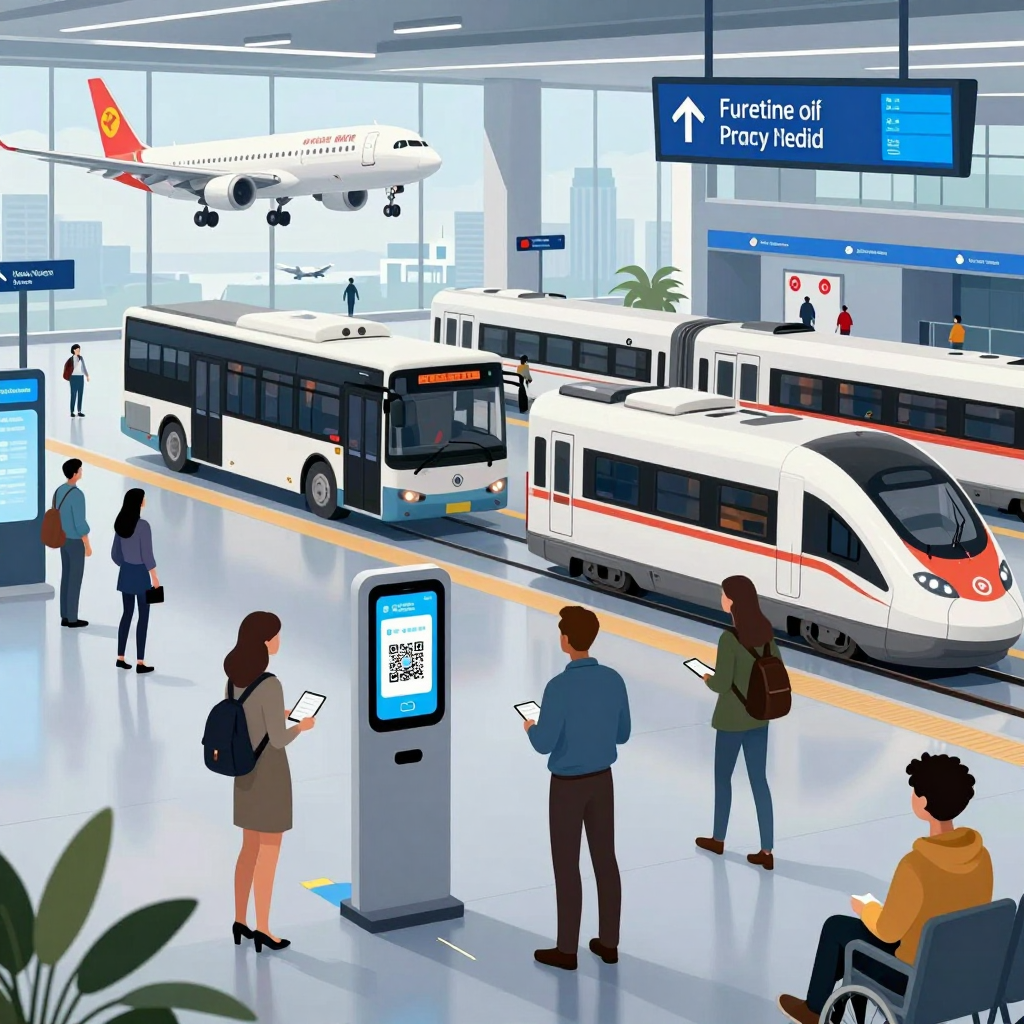
From QR and barcodes to digital IDs and facial recognition, check-in, security, and boarding are now linked in one seamless verification chain. Boarding is no longer just a transportation step but the fastest way users feel digital transformation in experience (UX).
The Competition Surrounding Boarding: “How Fast Can You Get On?” Becomes the Brand
Airlines design order through boarding groups and priority boarding, while urban mobility services are judged by “the time from call to boarding.”
Even for the same mode of transport, a smooth boarding experience makes the service memorable as “good,” but any disruption can spoil the entire journey. That’s why boarding becomes a brand experience itself.
New Standards for Boarding: From Speed to ‘Safe and Fair Boarding’
Finally, boarding is being reinterpreted through the lens of safety and inclusion. The same approach isn’t always best for everyone. For vulnerable groups like the elderly, women, children, and people with different physical conditions, boarding environments and safety designs can truly change the risks they face.
So the key question is shifting from “How fast did you board?” to “Can everyone board safely and without anxiety?”
In summary, today’s boarding is not just a phase of movement but a key indicator evaluating the entire travel and mobility experience. From the next sections, we will delve deeper into how this boarding experience is actually digitalized and becomes a competitive point in everyday transportation.
Boarding Revolution: Goodbye Paper Tickets, Welcome to the Digital Ticketless Era
From mobile boarding passes to facial recognition, a world without paper tickets is rapidly becoming a reality. The key isn’t just that it’s “more convenient,” but that the entire boarding process is being redesigned as a ‘digital experience.’ Are you already feeling this transformation?
Mobile Boarding Passes: The New Norm for Boarding
In the past, your journey began the moment you printed your ticket. Now, it starts the moment you open an app and display a QR/barcode. The disappearance of paper tickets brings more change than you might expect:
- Reduced risk of losing tickets: No need to worry about carrying paper tickets or separate reservation details.
- Shorter queues and smoother flow: More passengers self-check-in and head straight to the gate without stopping at counters.
- All essential info on one screen: Updates like seat changes, gate info, and boarding times arrive instantly via app notifications.
In other words, boarding is no longer just about “showing a ticket” but about riding a real-time stream of information.
Beyond Boarding Passes: How One ID and Facial Recognition are Transforming Airports
The next step eliminates even the need to pull out your phone. The global airline industry aims to link check-in, baggage, security, and gate boarding seamlessly through digital identity (One ID) and biometric authentication (facial recognition).
The core idea is simple:
- Cut down repeated ‘proof’ moments: Instead of presenting your passport or boarding pass at every step, your registered identity carries you through the process.
- Turn waiting lines into a user experience challenge: Fast boarding isn’t just convenience—it’s a crucial edge in airport operations.
- Create a divide in the boarding experience: Those comfortable with digital flow move effortlessly, while others might find it increasingly difficult.
Alongside convenience, critical questions arise: Where is your facial data stored, and who manages it? Trust will be the next big hurdle in this boarding revolution.
Journey Starts Before Boarding: Auto Check-In and ‘Pre-Boarding UX’
Today, less happens outside before your flight or train—it’s increasingly done inside the app. Automatic check-in, seat recommendations, upgrade offers, and pre-selecting options (like baggage or meals) are becoming standard.
What does this mean?
Boarding doesn’t start at the gate anymore. The app guides your decisions hours before departure, making your movement smoother and more data-driven than ever.
Your ‘Ticketless Boarding’ Checklist to Try Today
- Store your mobile boarding pass (or QR code) in your lock screen widget or wallet app
- Check if you can save passes offline in case airport or terminal networks falter
- If a service uses identity verification (passport data, facial recognition), read up on consent scope and deletion policies
The disappearance of paper tickets isn’t just a trend—it signals a fundamental change in what boarding means. The real question now: How ‘invisible’ will your next boarding experience be?
The Moment Boarding UX Penetrates Everyday Life: The Secret Behind Convenience from Subways to Kickboards
Boarding is no longer just an airport story. Whether it’s the 1 second passing through subway gates on your way to work, 2 seconds scanning a QR on the bus, or 3 seconds unlocking and hopping on a kickboard—today’s boarding is redefined not as merely "getting on a vehicle" but as a seamless user experience (UX) connected by digital authentication and payment. Every day, we navigate far more ‘boarding procedures’ through apps than we realize.
The Universal Formula for Boarding UX: Authentication → Payment → Entry Must Happen Instantly
The moments when people feel their everyday mobility boarding experience has improved usually share three common traits:
- Authentication is brief: Just “show or tap” with QR, NFC, or barcode
- Payment is invisible: The ‘checkout process’ disappears via apps, mobile payments, or deferred billing
- Entry is immediate: Gates, boarding points, or locks open without delay
The smoother these three steps flow together, the more users forget the “procedure” and remember only the “journey.” Great boarding UX ultimately means design that erases friction.
Boarding on Subways and Buses: Shift from Transit Cards to ‘Smartphones’ at the Core
For a long time, transit cards dominated boarding in public transportation, but now the lead is shifting to smartphones (apps/wallets/OS).
Mobile transit cards, QR-based boarding, and seamless payment integration all share one thing—they bundle your identity, payment method, and fare into one, making boarding shorter.
- Users handle everything with a single phone tap instead of fumbling for a card.
- Operators leverage real-time data to monitor congestion and transfer patterns, then feed those insights back to improve service.
In other words, subway and bus boarding are no longer just simple pass-throughs—they are the starting point of valuable urban data.
Boarding Taxis and Ride-Hailing: UX Hinges on ‘Where You Get In’
In ride-hailing platforms, the heart of boarding is not the payment but the meeting point. Even if the distance is the same, vague pickup locations can drastically ruin the experience.
- Clear pickup point directions reduce boarding failures.
- Less phone calls or chats between driver and rider shorten boarding time.
- Accurate license plate, car model, and arrival notifications ease anxiety.
Here, boarding UX hinges more on on-ground logistics design than just technology. Most complaints like “the app is great, but I still couldn’t board” stem from this.
Boarding Shared Kickboards and Car-Sharing: Unlocking Is the Brand Experience
For shared mobility, boarding isn’t about verifying a ticket but about unlocking. Users are most sensitive to:
- How many taps it takes to unlock after opening the app
- Whether there is a fallback if QR scanning fails (like manual code input)
- Whether battery status, fare, and drivable range are clearly visible before boarding
Ultimately, the shorter the time to board, the more the service is remembered as convenient; the longer, the more it’s marked inconvenient and avoided.
The Flip Side of Convenience: As Boarding Goes Digital, ‘Exception Handling’ Becomes Crucial
While embedding boarding procedures into apps brings many benefits, it also raises important questions:
- What happens if your battery dies or the network is unstable at boarding time?
- Where should users go when apps malfunction or QR scans fail?
- Is boarding equally fair for those less familiar with digital tools?
Hence, truly great boarding UX goes beyond a fast happy path to include structures that quickly resolve blockages. The new battleground for everyday mobility lies increasingly in handling these ‘exception’ scenarios.
Boarding Safety Has Changed: The Hidden Truths and Gender Gap in Boarding for Women and Seniors
Why do some people get more seriously injured even though they boarded the same car and experienced the same accident? There is uncomfortable but crucial data to consider. Some studies report that women face a higher risk of injury than men, suggesting that this isn’t due to “bad luck” but rather that safety designs and usage conditions have likely been optimized around certain body types. Boarding is not simply the moment you get into the car; it is also the process of your body aligning with the safety systems.
The Structure Behind the ‘Gender Gap’ in Boarding Safety: Safety Has Been Designed Around Averages
Car safety has long evolved based on “standards” such as crash tests, dummies (human models), and seat, belt, and airbag settings. The problem is that these standards may not represent the diverse real-world bodies (gender, height, weight, muscle mass, bone structure, pregnancy, physical changes from aging) accurately.
In other words, even the same safety devices offer different protection depending on the passenger’s body shape and posture, and these differences have started to appear in statistics.
Boarding Posture Changes Safety: Belts and Airbags Are About ‘Alignment,’ Not Just ‘Wearing’
Many people think “just buckling the seatbelt is enough,” but in reality, where the belt lies, the distance from seat to steering wheel (or dashboard), and the recline angle of the seatback all influence the outcome.
- Shoulder belt position: If it touches the neck or rides over the arm, impact forces may be distributed abnormally during a crash.
- Pelvic belt position: If it rides over the stomach, it can be hazardous; it’s critical the belt lies low over the strong bones of the pelvis.
- Seat distance: Sitting too close can increase impact from airbag deployment, while sitting too far can cause the belt to fail at restraining the body properly.
Ultimately, boarding safety extends beyond “having safety devices” to whether your body is precisely aligned with those devices.
Senior Boarding Safety: The Body’s ‘Resilience’ Differs Even in the Same Crash
Older adults have differences in bones, muscles, reflexes, and joint mobility, making them more likely to suffer severe injuries even in the same accident. Two common risks during boarding stand out.
- Belt pressure and chest injury risk: Changes in body shape can prevent the belt from positioning correctly, increasing chest strain.
- Fall risk during boarding and alighting: Even before any accident, the act of getting in and out of the car poses safety issues (such as threshold height, handle placement, visibility at night).
For seniors, boarding is not just “the start of the journey” but the very first gate of safety.
Boarding Safety Checklist You Can Start Using Today: 5 Easy Steps Anyone Can Follow
The solution isn’t only high-tech. There are simple details you can change starting the very next time you board.
- Keep the pelvic belt low: Adjust so it sits over the pelvic bones, not the stomach.
- Avoid reclining the seat too far: Excessive recline can increase the risk of sliding during a crash.
- Adjust seat distance to be ‘just right’: Find a position comfortable for pedal/steering control without being too close to the airbag.
- Remove thick coats: Bulky outerwear prevents the belt from fitting snugly, reducing protective effectiveness.
- Set each occupant’s seat individually: Using the driver’s preset for all passengers can disadvantage those with different body types.
The Next Step in Boarding Safety: Moving Toward “Safety That Fits Everyone”
Reducing the gender gap in boarding safety cannot rely on individual caution alone. Key future changes will include:
- Test standards and data reflecting greater body diversity: Safety evaluations segmented by gender, age, and build are essential.
- In-car ‘personalized boarding settings’ UX: Enhanced sensors and software will guide and adjust seats, belts, headrests, and airbag conditions tailored to each occupant.
- Expanding the definition of safety: Beyond crash protection, ease of boarding and alighting for seniors and vulnerable users (handles, footrests, door opening angles, lighting) should be considered part of boarding safety.
Boarding is not just a step in travel—it reveals whose body is set as the ‘standard’ in design. And the question we should be asking now is simple: “Am I boarding safely today, aligned properly with my own body?”
The Future of Boarding: From Sky Taxis to Spaceships, Where Imagination Meets Reality
How different will future boarding be, from urban air mobility (UAM) in 2030 to commercial space tourism? An even more fascinating question is this: the moment you actually step on board, what will you see, check, fear, or get excited about?
The Core Change in Boarding: It’s Not Just the Vehicle, But the Procedure That’s Being Reinvented
The biggest shift in future mobility isn’t just speed or design. The boarding procedure itself is being redesigned.
Somewhere between airport-style and subway-style boarding
UAM might be considered aviation because it flies, but since it’s used frequently within cities, it resembles public transit more.
That means long airport-like security checks for every ride won’t work, but neither can it be as effortless as hopping on with no checks at all.Pre-boarding authentication becomes the key experience
Steps like identity verification (digital ID), safety consent, and boarding conditions (weight, luggage, seat arrangement) will be completed beforehand via an app to create a system where you only “can board” once ready.
In the future, boarding won’t simply mean “opening the door,” but the process of preparing that door to open will likely be more important.
Boarding an Urban Sky Taxi (UAM): The Experience Starts 10 Minutes Before Takeoff
UAM boarding will likely follow this flow:
1) Confirm boarding slot (time) via app: Since flights are subject to more variables than road transport (weather, airspace), “booking time” will be stricter.
2) Arrive at the vertiport → automatic check-in: Access opens with QR/NFC or facial recognition, and people move not in lines, but in a continuous flow.
3) Ultra-condensed safety briefing: Mandatory for first-timers, minimized to a short video + confirmation button for repeat riders.
4) Passenger psychology design: The biggest hurdle just before boarding isn’t technology, but tension caused by “height” and “noise.”
Lighting, announcements, pathways, and seat guidance will make or break the boarding UX.
The key here is reducing anxiety through the boarding experience rather than simply getting people on quickly. For first-timers, a 30-second hesitation can define their impression of the entire service.
Boarding a Self-Driving Shuttle: The Rules the Moment You Enter the ‘Driverless Space’
Technically simple, boarding a self-driving shuttle can feel stranger for users.
Who’s responsible?
At boarding, people instinctively ask, “Who owns this vehicle now?” Clear, intuitive info about operator (municipality/company), monitoring, and emergency buttons must be visible.How the door opens builds trust
The smoother the flow—app authentication, automatic door opening, seat guidance, and seamless disembarkation—the stronger the feeling of safety.
Ultimately, boarding in autonomous vehicles is the first gateway to experiencing trust in the technology.
Boarding Commercial Space Tourism: Not Check-In, But a ‘Ritual’
Boarding a spaceship isn’t a race against time, but an experience of meaning. Unlike ordinary travel, it’s closer to an event.
- Schedule starts the day before: Health checks, training (zero-gravity posture, safety procedures), and equipment fitting will likely be bundled together.
- Transparency in process builds trust: Communication explaining “why each step is necessary” is essential.
- Sitting down is the highlight moment: It’s not like hopping into a car and done—the entire sequence from sitting to strapping in safety gear becomes part of the content.
Boarding in space tourism turns into the key scene of the brand experience, not just a service.
In the End, Future Boarding Moves from ‘Fast’ to ‘Reassuring’
Whether it’s a sky taxi, autonomous vehicle, or spaceship, one thing is clear:
Future boarding will be more automated but also more “explainable” to users. Authentication may become simpler, but anxieties and questions of responsibility will only grow.
Thus, the real battleground won’t be the technology itself, but the UX in the 3 minutes before boarding—guidance, flow, checks, and psychological design.
Comments
Post a Comment