 \n
\n
Mexico: The First Female President and a Turning Point in US–Mexico Relations
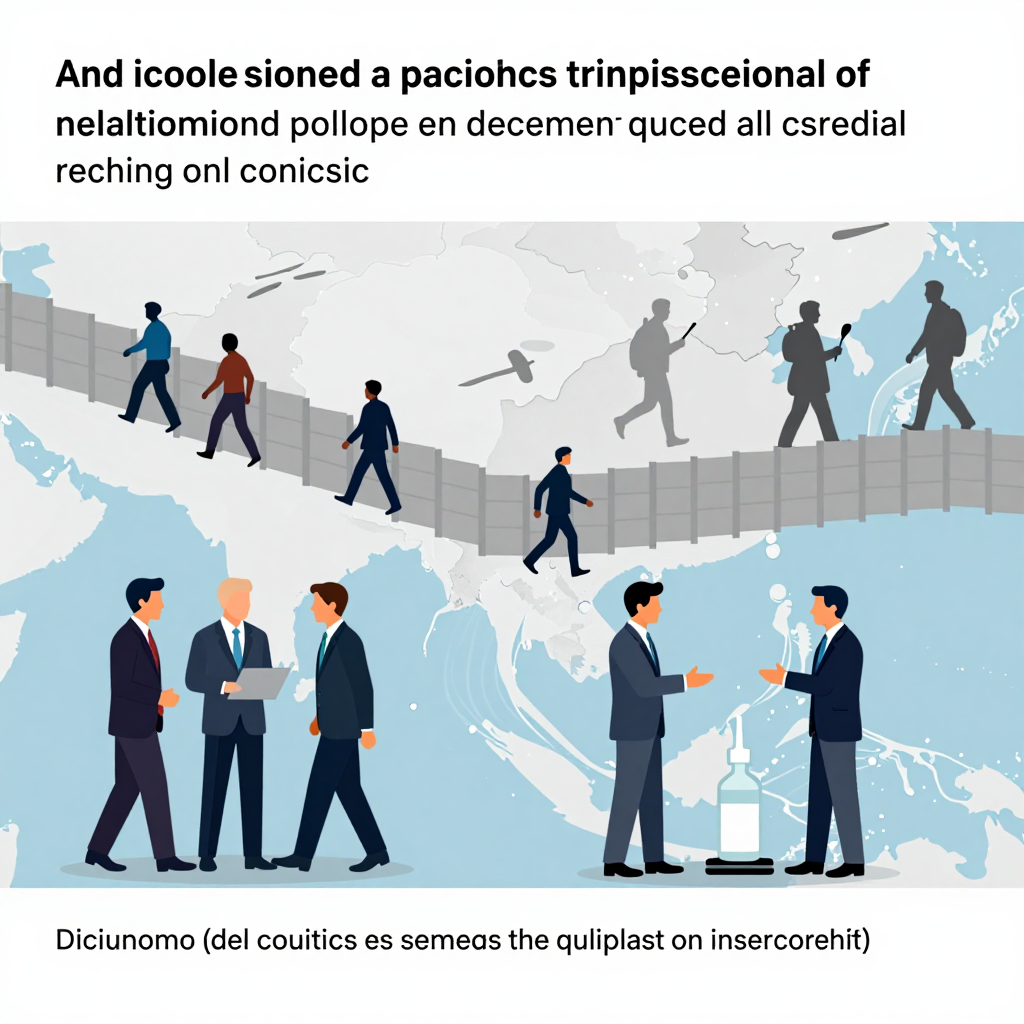
The rise of Mexico’s first female president, Claudia Sheinbaum, is far more than just a “symbol.” Her background as a scientist and the left-wing ruling party’s policy direction establish a new benchmark for what to change and what to maintain in the relationship with the United States. The core issue is this: the lens through which the US views Mexico is largely one of domestic politics (immigration, border, drugs) rather than diplomacy. To change the temperature of US–Mexico relations with Sheinbaum’s arrival, this very structure must be addressed.
The ‘New Face’ from Mexico’s Perspective: Simultaneous Symbolism and Continuity
Sheinbaum has drawn international attention as Mexico’s first female president and as a left-wing leader with a Jewish scientific background. Yet Washington’s real curiosity lies less in her gender or biography and more in “how much her policies will actually change.”
- On one hand, there is an evident continuity with the previous administration’s approach. Frames like state-led industrial policies, expanded welfare, and energy sovereignty remain steadfast.
- On the other hand, Sheinbaum’s distinctive technocratic style raises expectations. If data and administrative competence take precedence over emotional rhetoric, conflicts may be downscaled into ‘manageable disputes.’
In other words, this transition is not a simple “pro-American or anti-American” dichotomy but rather a question of whether the existing trajectory will be operated in a more refined way.
The Three Major Issues Shaping US–Mexico Relations: Border, Trade, and Security
The perceived closeness or tension in the US–Mexico relationship ultimately boils down to three factors.
1) Immigration and the Border: Mexico is often the easiest target in US domestic politics. During election seasons, the “border crisis” narrative intensifies, and Mexico’s government cooperation is immediately translated into a diplomatic report card.
2) Economy and Trade (USMCA and Nearshoring): Mexico has emerged as a key partner in the reshaping of US supply chains. However, the faster growth accelerates, the more clashes over rule interpretations—such as origin regulations, energy policies, and agricultural restrictions—tend to occur.
3) Security and Drugs (Fentanyl): As America’s synthetic drug crisis worsens, Washington pressures Mexico for harsher crackdowns. At the same time, Mexico counters with the argument of “US-supplied firearms inflow,” resulting in a recurring blame game.
Sheinbaum’s government is likely to engage in a delicate balancing act that secures practical cooperation on these three pillars while maintaining sovereignty without wavering.
What Difference Does Mexico’s ‘Scientist Leadership’ Make in Diplomacy?
Sheinbaum’s scientific background is less about turning diplomacy into drama and more about transforming negotiation styles and priorities. For example:
- Shifting the language of conflict from ‘politics’ to ‘administration’: Instead of “principle vs. principle” clashes, there is room to break down issues into data, procedures, and policy packages for negotiations.
- Elevating non-traditional topics like climate, air quality, and urban infrastructure: Expanding cooperative areas once overshadowed by security and border issues creates buffer zones in the relationship.
- But clear limitations remain: The US’s consumption of Mexico as a domestic political issue will not change overnight, no matter how ‘rationally designed’ Mexico’s approach is.
Ultimately, the turning point is not about “favorability” but how the US integrates Mexico into its domestic politics. Within that framework, Sheinbaum is poised to write the next chapter of US–Mexico relations by securing gains without escalating conflicts.
The US Presidential Election and the Politics of “Blaming Mexico”: What Does It Really Mean?
Why does Mexico become a political scapegoat every US election season? The answer is simple. Mexico is the perfect target for American voters to encapsulate their “immediate anxieties” in one word. Complex issues like the number of people crossing the border, drugs (especially fentanyl), public safety concerns, and job competition all get compressed into the image of the “southern border,” with Mexico at the heart of that frame.
Republicans: The “Border Crisis” as a One-Strike Attack Button
Republicans usually bring Mexico into the fray in a straightforward manner. The core message boils down to “the federal government can’t control the border.”
In this narrative, Mexico isn’t treated as an independent diplomatic partner but summoned as the backdrop proving America’s internal safety and order debates.
- They simplify immigration into alarming terms like “invasion” to heighten the sense of crisis
- Push for defining cartels as terrorist organizations (or similarly tough stances)
- Use this rhetoric to frame the contest as ‘strong leader vs. incompetent government’
The real complexity of policy—such as asylum systems, labor markets, and international cooperation—takes a backseat during elections. What counts for winning votes is not the details but a single sentence that organizes anger.
Democrats: The Dilemma of Balancing Humanity and Control “At the Same Time”
Democrats can’t push with simple slogans like Republicans. Their basic approach is to manage the border while respecting procedures (asylum) and human rights, but that balance often becomes a vulnerability during election seasons.
- Structural approaches like addressing “root causes” of migration are correct but time-consuming
- Institutional reforms (clearing asylum backlogs, expanding legal immigration routes) require complex negotiations
- It’s tough to immediately calm the rising sense of insecurity felt on the ground
So as elections near, Democrats also ramp up “management” language like enforcement, cooperation, and streamlining deportation procedures, pushing Mexico back into the role of a negotiating partner responding to internal US political pressures.
Mexico’s Pragmatism: “Speak Strongly, But Don’t Break Ties”
An intriguing point is Mexico’s response. The more heated the US election gets, the more Mexico’s government raises a tone of sovereignty and patriotism in its external messaging. Yet underneath it all lies strong pragmatism.
- The US remains a survival partner in trade and investment (USMCA, nearshoring)
- Border and immigration issues are tough to manage without cooperation
- Security issues (drugs, guns) are fields where confrontation and collaboration coexist
Ultimately, Mexico adopts a dual strategy: “strong words, continued deals.” It shows a tough stance domestically while maintaining the negotiation table in practice.
Conclusion: “Blaming Mexico” Is Not Diplomacy—It’s America’s Election Rhetoric
The Mexico debates during election seasons are often read as a “worsening of US-Mexico relations,” but more precisely, they reflect how the US organizes its internal anxieties. And the quickest symbol to explain those anxieties is the border—with Mexico as its name.
Understanding this frame equips you to distinguish the flood of sensational statements in the news from “real policy changes.”
‘Made in Mexico’: The Emerging New Hub of U.S. Manufacturing
What’s driving Mexico’s rise as the largest trading partner of the United States? The answer goes beyond simply “close and cheap.” It’s the convergence of the “China+1” strategy triggered by U.S.-China tensions, the realignment of rules under USMCA (the United States-Mexico-Canada Agreement), and the nearshoring boom, rapidly redrawing the map of North American manufacturing. Today, “Made in Mexico” is no longer just another name for low-cost assembly; it’s become a symbol of supply chain reshoring aimed squarely at the U.S. market.
The ‘China+1’ Strategy Turning to Mexico: Risk Management Creates a New Manufacturing Landscape
The pandemic, tariff wars, and geopolitical risks posed one question to companies: “Does a more distant production base not just increase costs but uncertainty?”
At this moment, Mexico’s geographic advantage—a manufacturing hub sharing a border with the U.S.—turned into a strategic asset.
- Shortened lead times: Repeated shipping delays from Asia have reignited the value of a “make fast, deliver fast” system
- Rethinking inventory strategies: Shifting from just-in-time to “shock-resistant supply” heightens the importance of nearby production sites
- Navigating U.S. political and regulatory environments: Growing pressure to reduce dependency on China enhances Mexico’s appeal as an alternative
USMCA and Mexico: How ‘North American’ Rules Anchor Supply Chains
While USMCA aims to boost trade, it functions more as a set of rules that ‘lock in’ production within North America. Especially in the core automotive and parts sectors, the rules of origin play a strong role, prompting companies to reconsider sourcing and assembly locations from the perspective of “rules and certifications” — not just taxes and tariffs.
The resulting shifts are clear:
- Re-centering the parts ecosystem: Supply chains pull back into North America to meet regional value-added requirements
- Elevating Mexico’s role: Beyond simple assembly, Mexico is absorbing testing, quality control, and some high-value processes
- Persistent disputes ahead: Conflicts over energy policies, GMO corn, and automotive origin definitions point to recurring “rule battles”
In short, the reason “America is buying more from Mexico” is not just price—it's the structural incentives built by the agreement.
The Nearshoring Boom Unfolding in Mexico: From Border Cities to Monterrey and Bajío
Nearshoring becomes clearer when visualized on the map. Production isn’t relocating to a single point but rather to clusters connected like a belt across Mexico.
- Nuevo León (Monterrey): Rising as a symbolic hub for advanced manufacturing and automotive parts clusters
- Border cities (Tijuana, Ciudad Juárez, etc.): Rediscovered for their logistics accessibility and “just across the border” supply chains
- Bajío (Guanajuato, Querétaro, etc.): Existing automotive belts are expanding, spotlighting these regions as prime targets for global corporate investment
Industries benefiting from this trend are equally clear: automotive and parts (including electrification), electronics and appliances, logistics and warehousing, and industrial park development are growing together, crafting a scene better described as “industrial ecosystem expansion” rather than mere “factory relocation.”
The Next Variables for ‘Made in Mexico’: Opportunities and Bottlenecks Arise Simultaneously
However, rapid booms inevitably bring bottlenecks. As Mexico solidifies its role as the hub of North American manufacturing, companies and policymakers face unavoidable challenges:
- Power and energy policies: How the state-dominated framework and investment climate for renewables will align with manufacturing expansion
- Security and logistics stability: The risk of cartel violence and regional threats transforming into supply chain vulnerabilities
- Infrastructure and workforce: Whether industrial parks, roads, railways, and skilled labor supply can keep pace with demand
Ultimately, ‘Made in Mexico’ is not merely a passing phrase; it is a live experiment in the U.S. economy’s chosen supply chain realignment, and that experiment is still unfolding.
Politicized Border of Mexico: A New Front Created by Texas’s Independent Policies
The scenes of Texas enacting policies that amount to “its own diplomacy” around the border with Mexico, clashing with the federal government, are not just simple news items. Beneath it lies a complex web of a tussle over authority between state and federal governments, a clash between human rights and security, and how U.S. domestic politics consumes Mexico as a subject. The border is not just a line on the map but a “frontline” where cracks in American politics are most vividly exposed.
The Core Question Around the Mexico Border: Who Has the Authority to Control It?
Immigration and border control have traditionally been understood as federal government responsibilities in the U.S. However, Texas has pushed hardline measures such as building barriers, installing barbed wire and floating walls, and deploying the National Guard, boldly advocating the logic of “If the federal government can’t do it, the state will.”
What’s at stake in this clash is not merely a difference in policy preference but the constitutional boundaries of authority.
- Federal government’s perspective: Border control, immigration, and foreign affairs are federal matters; unilateral state actions risk fracturing national policy.
- Texas’s perspective: The large influx is deemed a “state of emergency,” and maintaining law and order is also the state's responsibility.
Ultimately, the term “border crisis” functions not only to describe actual mobility but also as a frame to justify the competition for authority.
Growing Issues When Speaking in the Language of Mexico’s ‘Security’
The Texas-style border discourse heavily emphasizes security and order. This is why tough measures gain support. Genuine concerns like local residents’ anxieties, safety worries, and administrative burdens exist, and politicians want to translate these feelings into immediate, visible actions.
However, the more the language of security grows, the more problems arise simultaneously.
- Humanitarian risks: Physical barriers like barbed wire and waterway walls often push migrants into even more dangerous routes instead of stopping movement.
- Law enforcement confusion: When federal and state agencies operate under conflicting goals, responses on the ground clash and accountability becomes blurred.
- Diplomatic friction with Mexico: Especially actions around rivers and waterways escalate into issues of “sovereignty and security,” sparking diplomatic protests from the Mexican government.
At this juncture, the border ceases to be merely a space for “control” and becomes a complex battlefield where human rights, security, and diplomacy collide simultaneously.
Aftershocks Left by Texas’s ‘State-Level Diplomacy’ on Mexico
Texas’s independent moves don’t end with a fight against Washington. The border directly touches Mexico, and U.S. domestic political gestures can quickly escalate into tensions in bilateral relations.
From Mexico’s perspective, each U.S. presidential election season or surge in border issues repeats the experience of becoming a target of U.S. domestic politics. While official rhetoric often hardens into tones of sovereignty and patriotism, in reality, trade, investment, and security cooperation remain dilemmas that cannot be easily abandoned.
In other words, Texas’s hardline measures send a signal that disrupts not just border management but also Mexico’s domestic political climate.
The Reality of the Mexico Border: It’s Not a “Wall” but a “Political System” Problem
The core lesson from the Texas-federal conflict is this: the chaos surrounding the border is not just a matter occurring at the borderline but a condensed outcome of the U.S. federal structure, political polarization, and the clash between humanitarian concerns and security.
And the primary—and most heavily impacted—target of this condensed outcome is Mexico.
To truly understand the border, we need to look not at “who is tougher” but why this issue is repeatedly politicized, and along the way, consider the costs borne by people (those on the move), institutions (authority), and nations (Mexico and the U.S.) together.
Mexico’s Fentanyl Crisis and Energy Hegemony: The Dilemma of Mexico–U.S. Security and Climate Cooperation
How far can the “security frame” shaped by the Mexico cartel and the U.S. fentanyl crisis extend? When combined with Mexico’s resource nationalism, this creates a dilemma that bundles border enforcement with trade, investment, and climate transition into one complex puzzle. From disputes over firearm smuggling responsibilities to debates on the pace of renewable energy adoption, the hottest nexus in North American relations right now is “guns, drugs, and electricity.”
Mexico’s Security Frame: How Fentanyl is Reshaping the Diplomatic Agenda
In U.S. politics, fentanyl is no longer just a public health issue. As the narrative solidifies—tracing the supply chain from China-sourced raw materials → processing and distribution within Mexico → entry into the U.S.—Washington treats Mexico simultaneously as a “cooperative partner” and a “pressure target.” Consequently, hardline options are repeatedly discussed:
- Deliberations on designating cartels as terrorist organizations
- Strengthened economic pressure tactics including financial sanctions, remittance tracking, and asset freezes
- Even the possibility of expanded military and law enforcement operations on Mexican soil
The problem is that the stronger this frame becomes, the more wariness grows inside Mexico about “sovereignty violations,” turning cooperation with the U.S. into a complex test on the domestic political front.
Mexico’s Gun Trafficking Debate: “Drugs Come from the South, Guns from the North”
Mexico’s common rebuttal against fentanyl pressure is straightforward: the cartels’ firepower comes from the influx of U.S.-made firearms. This argument goes beyond moral blame games and becomes a leverage card that shifts power dynamics in actual policy negotiations.
- U.S.: “Stopping drug inflow is the priority”
- Mexico: “Unless gun trafficking and money flows are also stopped, enforcement is merely a ‘symptom treatment’”
Ultimately, both nations exchange messages of “start fixing your side first,” engaged in a tug-of-war between a shared goal (security stability) and political calculations (domestic public opinion).
Mexico’s Energy Hegemony and Climate Transition: Where Resource Nationalism Slows Cooperation
Ironically, as security conflicts intensify, the incentives for economic and energy cooperation grow stronger. The U.S. aims to solidify North American supply chains, while Mexico seeks investment, jobs, and an industrial base. Yet, clashes emerge in the energy sector.
- Mexico emphasizes its state-led system (PEMEX, CFE) and energy sovereignty, exercising caution toward foreign capital dominating electricity and renewable markets
- The U.S. and Canada advocate expanded renewables, electric vehicle supply chains, and decarbonization goals, demanding regulatory predictability and market access
Here lies the dilemma. The more the fentanyl crisis necessitates security cooperation, the more the U.S. tries to broaden its negotiating leverage. Conversely, as security pressure mounts, Mexico tends to amplify resource sovereignty rhetoric to consolidate domestic unity. Security and climate issues cease to be separate agendas and instead transform into bargaining chips against each other.
Mexico’s Practical Conclusion: Moving Toward “Conditional Integration,” Not Decoupling
In the medium to long term, it is difficult for North America to envision supply chains, borders, and energy transitions without Mexico—and Mexico struggles to sustain its growth model without the U.S. market. Therefore, the future scenario resembles conditional integration rather than decoupling.
- Security: enforcement and intelligence sharing expand, but sovereignty debates persist
- Economy: integration strengthens through nearshoring and USMCA, yet energy and regulatory disputes become routine
- Climate: cooperation becomes more necessary, yet conflicts arise over pace and leadership
The core takeaway of this section is clear: Fentanyl acts as a catalyst that both binds North America closer and sharpens divisions simultaneously. The debate around Mexico begins at the “border” but ultimately ends at the intersection of power grids, industrial policy, and the boundaries of sovereignty.
Comments
Post a Comment