 \n
\n
Rediscovering 2026 Through Livelihood Support Funds: Why Are They Gaining Attention Now?
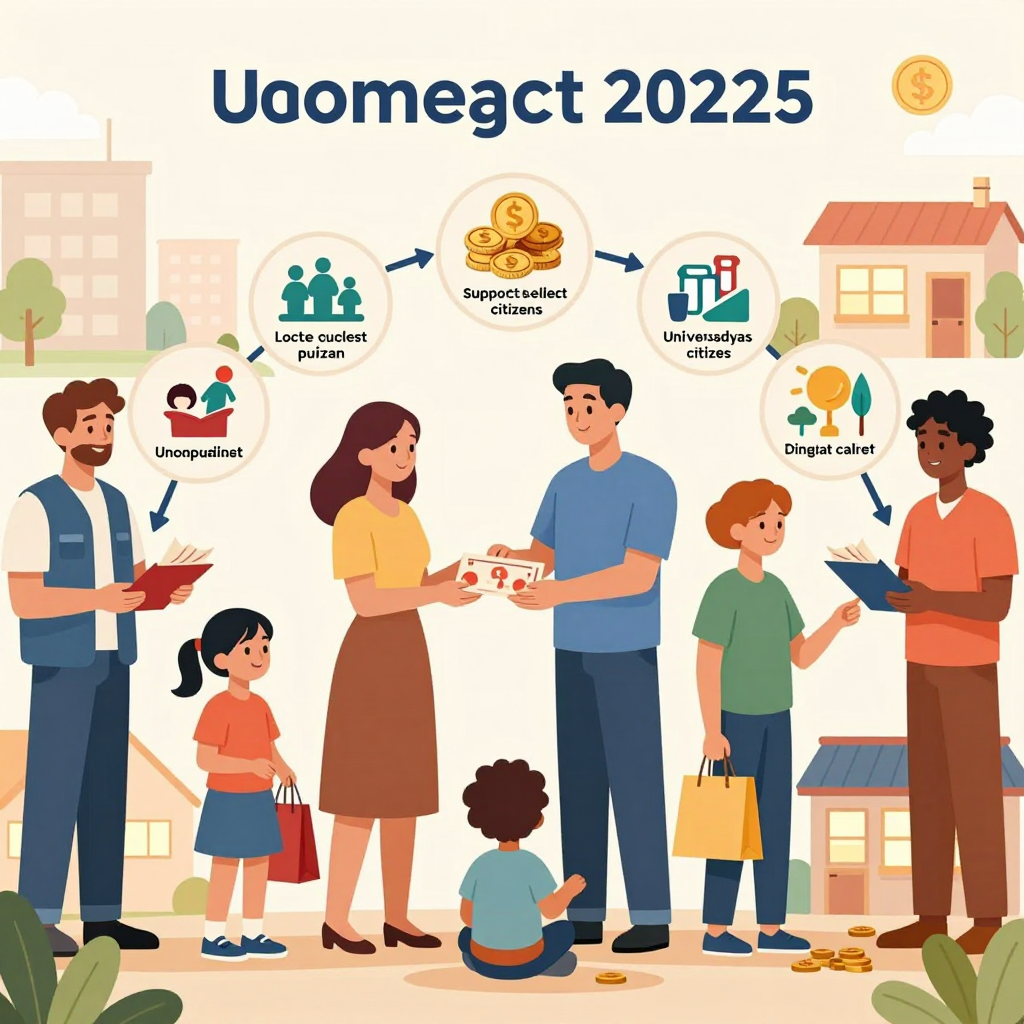
Amid the triple hardships of high inflation, soaring oil prices, and a strong foreign exchange rate, are the livelihood support funds offered by the government and local authorities simply “handouts”? On the surface, they may look like cash (or coupon) payments, but recent trends reveal that this policy is being redefined as a “livelihood prescription package” that eases household burdens, revitalizes consumption, and breathes new life into local economies.
The Background Behind the Return of Livelihood Support Funds: The Rising “Cost of Endurance”
Households today face more than just one or two problems. Rising living costs combined with oil price surges pushing up transportation, heating, and essential goods prices—and added exchange rate volatility—create a strong sense of shrinking real income. Against this backdrop, the key policy target isn’t just simple income compensation, but rather providing immediate relief to revive spending and the flow of local commerce.
Changing Nature of Livelihood Support Funds: Blurring the Line Between Welfare and Economic Stimulus
While previous support funds focused on “helping vulnerable groups,” 2026’s livelihood support funds are embracing a broader purpose.
- In some places, they maximize impact by offering universal payments to all citizens or all county residents,
- elsewhere, they take a more targeted approach with financial, guarantee, and insurance support aimed specifically at small business owners,
- and the central government seeks balance by broadening eligibility while differentiating amounts by region.
In other words, today’s livelihood support funds function simultaneously as welfare measures, local economic policies, and consumption stimulators during times of crisis.
The Changes Livelihood Support Funds Will Bring: Beyond Just Your Wallet to the Neighborhood Economy
The effect of livelihood support funds doesn’t stop at “money going into individuals’ hands.” The more policy designs include mechanisms that encourage local consumption—such as coupons and usage restrictions within designated areas—the stronger the likelihood that money will translate into recovered sales for neighborhood businesses. Ultimately, livelihood support funds aim to hit three targets at once:
- Buffer household living expenses,
- Boost consumer sentiment and revive local commerce,
- and serve as a signal of livelihood stability for governments and municipalities.
The crucial question is no longer just “how much to give.” The who, how, and where the funds are designed to be spent make a huge difference in the perceived impact and debates surrounding livelihood support funds. From the next section, we will explore these differences more concretely through real-world examples.
Livelihood Support Funds: From Universal Cash Payments to Customized Consumption Coupons – Why They Take Various Forms
Sokcho City plans to provide 200,000 won per person to all residents, while Gijang County is pushing for 1 million won per person. Meanwhile, the central government has introduced a method of differentiated payments ranging from 100,000 to 200,000 won for 70% of the population, depending on the region. Why do these so-called ‘livelihood support funds’ take such different forms despite being the same concept?
Why Livelihood Support Funds Have Become a ‘Package’ Rather Than a Single Policy
Recently, livelihood support funds have expanded beyond simple cash aid to a broader goal of easing living expenses + stimulating consumption + protecting local economies all at once. This shift comes as high inflation, soaring energy prices, and exchange rate fluctuations overlap, making it difficult to summarize policy objectives in a single line.
- Households need “immediate, tangible relief”
- Small businesses and local shops require “consumption that translates into sales”
- Regions demand “measures to ease the concentration in the metropolitan area”
With these three needs intertwined, livelihood support funds have naturally diversified into various forms.
Why ‘Universal Cash’ Is Making a Comeback: Fast, Significant, and Clearly Felt
Universal payouts like Sokcho’s (200,000 won) and Gijang County’s (1 million won) send a clear message:
- The burden of application and screening is relatively low
- The simplicity of “everyone receives it” ensures quick and widespread public recognition
- When designed to lead to local spending, short-term economic stimulus effects can be expected
For local governments, such livelihood support funds serve as a powerful card to instantly galvanize the regional economy and often become a new leader’s signature policy.
Why the Central Government Opts for ‘Regional Differentiation’: Balancing Universality and Equitable Development
The central government’s fuel price compensation targets a wide audience (70% of the population) but varies the payment amount by region (100,000 to 200,000 won). This approach pursues two goals simultaneously:
- Broadening the “social safety net” at the national level
- Concentrating support more heavily on “non-metropolitan and depopulating areas” to maximize policy impact locally
In other words, nowadays livelihood support funds are not just about “welfare” but have begun to encompass the nature of regional policy as well.
Even with the Same Livelihood Support Fund, the Key Design Question Is ‘Who, How Much, and How to Spend’
In summary, the diversity of livelihood support funds is no coincidence but a result of complexified policy goals. To better understand livelihood support funds going forward, it’s more helpful to check these three aspects first rather than just the name:
- Target: Is it universal for all residents or focused on specific groups or industries?
- Amount: Is the payment equal or differentiated by region/conditions?
- Spending Design: Is it a cash payment or usage-restricted support like consumption coupons?
As these three elements vary, livelihood support funds inevitably take on more and more varied “faces.”
Universal or Targeted Livelihood Support Payments? The Policy Design Dilemma
Is giving support to all residents truly fair? The core of the current livelihood support payment debate focuses less on “how much to give” and more on “to whom and by what method” the payment is distributed. While places like Sokcho and Gijang opt for blanket payments to all citizens, others like Cheonan design their support around guarantees, insurance, and mutual aid aimed specifically at small business owners. Even under the umbrella of ‘livelihood,’ the approaches can be polar opposites.
The Strengths and Pitfalls of Universal Livelihood Payments
Universal payments can be summed up in one sentence: fast, simple, and highly tangible.
Without screening income or assets, administrative costs are relatively low, and payments can be delivered quickly. The widespread experience of “I got it too” boosts the perceived impact of the policy and can even accelerate short-term consumption.
However, the bigger universal payments grow, the sooner equity debates arise.
- When the same amount is given equally to those who need it most and those who need it less, questions arise: “Shouldn’t more be spent on those in greater need?”
- As local governments increase the scale aggressively, a policy inertia can develop for expecting the same level of support in following years, which leads directly to concerns about sustainability (financial capacity).
Advantages and Uncomfortable Truths of Targeted Livelihood Support
In contrast, targeted support takes a different direction. It focuses on groups most affected or clear policy goals. For example, specialized guarantees or insurance premium support for small business owners make it possible to design aid that directly addresses business continuity and risk mitigation, rather than just “handing out cash.”
Still, targeted support carries practical dilemmas.
- How to define who is ‘worse off’? As more criteria stack—income, region, sector, assets—disputes and blind spots inevitably emerge.
- The more complex the administrative process, the slower the payment speed: In urgent livelihood crises, delays can sharply undercut perceptions of policy effectiveness.
- Psychological costs like stigma (“being seen as a ‘recipient’ of aid”) also can’t be overlooked.
The Key to Designing Livelihood Support: Not ‘Universal vs. Targeted’ but the Art of Combination
Ultimately, the 2026-style livelihood support payment is not about choosing one or the other. Actual policies are evolving toward widening universal coverage while differentiating amounts based on region and circumstances, or blending cash (immediate impact) with financial support (sustainability).
When evaluating such policies, two questions must be asked simultaneously:
1) Equity: When distributing the same pool of funds, is fairness best achieved by treating everyone equally or by tailoring support according to need?
2) Sustainability: Is the system built to endure not just a one-time payout but to withstand repeated crises?
How this dilemma is resolved will determine whether livelihood support payments remain “a feel-good short-term fix” or become “a reliable safety net for the everyday economy.”
Will the Livelihood Support Fund Be Effective? Hidden Expectations and Concerns
While the goal is to stimulate short-term consumption and revitalize local economies, can this support fund truly provide substantial help for long-term economic growth and social stability? The livelihood support fund excels at easing the “immediate felt hardship,” but experts’ opinions diverge because repeated use may amplify side effects as well.
Three ‘Immediate Effects’ Expected from the Livelihood Support Fund
Easing Perceived Inflation (Stabilizing Household Sentiment)
In times of high inflation and soaring oil prices, real purchasing power shrinks even if income remains unchanged. The fund fills this gap by temporarily relieving the financial pressure of daily living expenses. From a policy perspective, it is “a tool with instantly visible effects.”Pull-Forward Effect on Consumption (Advancing the Timing of Spending)
Since the support money or coupons often have to be used within a set period, they are expected to stimulate demand by bringing forward delayed expenditures. Especially with local currencies and consumption coupons, the designs can boost demand in neighborhood businesses.Local Economic Circulation (Defending Local Sales)
One reason why local governments opt for universal distribution is the calculation that “as long as anyone spends it locally, it’s effective.” Even if it’s the same amount of money, circulating it within the community during an economic downturn can act as a sales shield for small businesses.
Four ‘Hidden Concerns’ with the Livelihood Support Fund
Limitations of One-Off Remedies
Even with support amounts ranging from 100,000 to 200,000 won or more, if structural burdens such as inflation, rent, and interest rates remain unchanged, the effect fades over time. Experts agree that the fund cannot replace fundamental solutions for income and employment.Sustainability of Public Finances (Especially for Local Governments)
Universal payments have strong perceptual effects, but repetition causes fiscal pressure to accumulate rapidly. The more aggressively local governments propose generous amounts, the more questions arise about whether this can be a one-time measure and what happens next, raising concerns about sustainability.Equity Debate (Universal vs. Selective Distribution)
Universal distribution is straightforward and low in administrative costs, but providing equal support to high-income groups can trigger political legitimacy debates. On the other hand, selective distribution is more precise but complicated recipient criteria can breed dissatisfaction.Possibility of ‘Substitution Effect’ in Consumption Boost
Increased spending from the fund might not reflect “new consumption” but merely replace planned expenditures. In such cases, short-term statistics may look favorable, but the link to long-term growth momentum weakens.
Conditions for the Livelihood Support Fund to Become an ‘Effective Policy’
The success or failure of the livelihood support fund depends more on its design details than the amount disbursed.
- Design spending locations and usage periods to firmly bind consumption within the local economy
- Consider differentiated structures that provide greater support to vulnerable and affected groups, and lighter support to general populations
- Develop a package that includes not only cash support but also guarantees, insurance, and financial aid for small businesses to build resilience
Ultimately, the livelihood support fund should not be “a policy that causes anxiety if absent” but a policy designed to operate more efficiently when available. Leveraging the strengths of short-term remedies while managing financial, equity, and sustainability risks will become the core of debates beyond 2026.
Where is the Livelihood Support Fund Policy Heading? The Approaching Future
The line between ‘universal support for all citizens’ and ‘region-specific tailored support’ is rapidly blurring. Now, with the fusion of digital coupons and local currencies, livelihood support funds are clearly evolving from “who to give it to” toward “where and how it will be spent.” By anticipating future directions, we can also identify the key issues that will determine the success or failure of these policies.
The Next Stage for Livelihood Support Funds: Coexistence of Universal Distribution + Differentiated Benefits
Going forward, it is highly likely that policies will be designed to cast a wide net on recipients but deliver benefits with precision.
- On the surface, support may appear to be nearly universal.
- But in practice, payment amounts and usage conditions will vary by region (metropolitan vs. non-metropolitan vs. depopulating areas), industry (small business clusters), and vulnerability (impacts from inflation and oil prices).
This structure strives to balance political acceptability (broad coverage) with policy efficiency (targeted resource allocation). Yet, as criteria become more complex, debates over perceived fairness—like “why do I get less?”—are bound to intensify.
Changing Form of Livelihood Support Funds: Digital Coupons + Local Currencies Become the Norm
Livelihood support funds are likely to shift further away from cash toward coupons, local currencies, and mobile vouchers. The reason is simple: these tools make it easiest for policymakers to achieve their goals (stimulating consumption, promoting local circulation) through technology.
- Restricted usage: Designed to concentrate spending in neighborhood businesses, traditional markets, and specific sectors
- Set expiration dates: Encourage accelerated spending to boost short-term economic stimulus
- Data-driven operation: Track which regions and industries benefit most, feeding back into future policy design
However, digitalization enhances convenience while introducing new challenges such as accessibility for digitally vulnerable groups and privacy and data governance concerns.
Core Issue for Livelihood Support Funds: Sustainability Over Immediate “Effect”
While the short-term impact of livelihood support funds is clear, repeated rounds shift the question from “how much more can we give?” to “can we maintain this continuously?”
- Financial sustainability: The larger the universal payouts, the quicker the financial burden on central and local governments accumulates
- Policy dependency: Regular payments risk conditioning private consumption cycles around support disbursements
- Interregional conflicts: Greater regional differences may spark “support competition” and claims of reverse discrimination
Ultimately, future livelihood support funds will struggle to survive on political symbolism alone and will increasingly demand a performance-focused evaluation system, asking, “Where has consumption truly increased?” and “Have small business revenues actually improved?”
The Conclusion Livelihood Support Funds Are Approaching: From Giving Money to Designing Consumption
The essence of the upcoming era of livelihood support funds isn’t simple cash handouts—it’s a “policy wallet” designed to steer spending with the goal of boosting regional economies. Balancing universality with customization, leveraging the strengths of digital coupons and local currencies while setting clear standards for fairness and sustainability—this juncture is likely to become the battleground for future policy competition.
Comments
Post a Comment