 \n
\n
At the Forefront of LLM Innovation: What Is Anthropic’s Global Workspace Research?
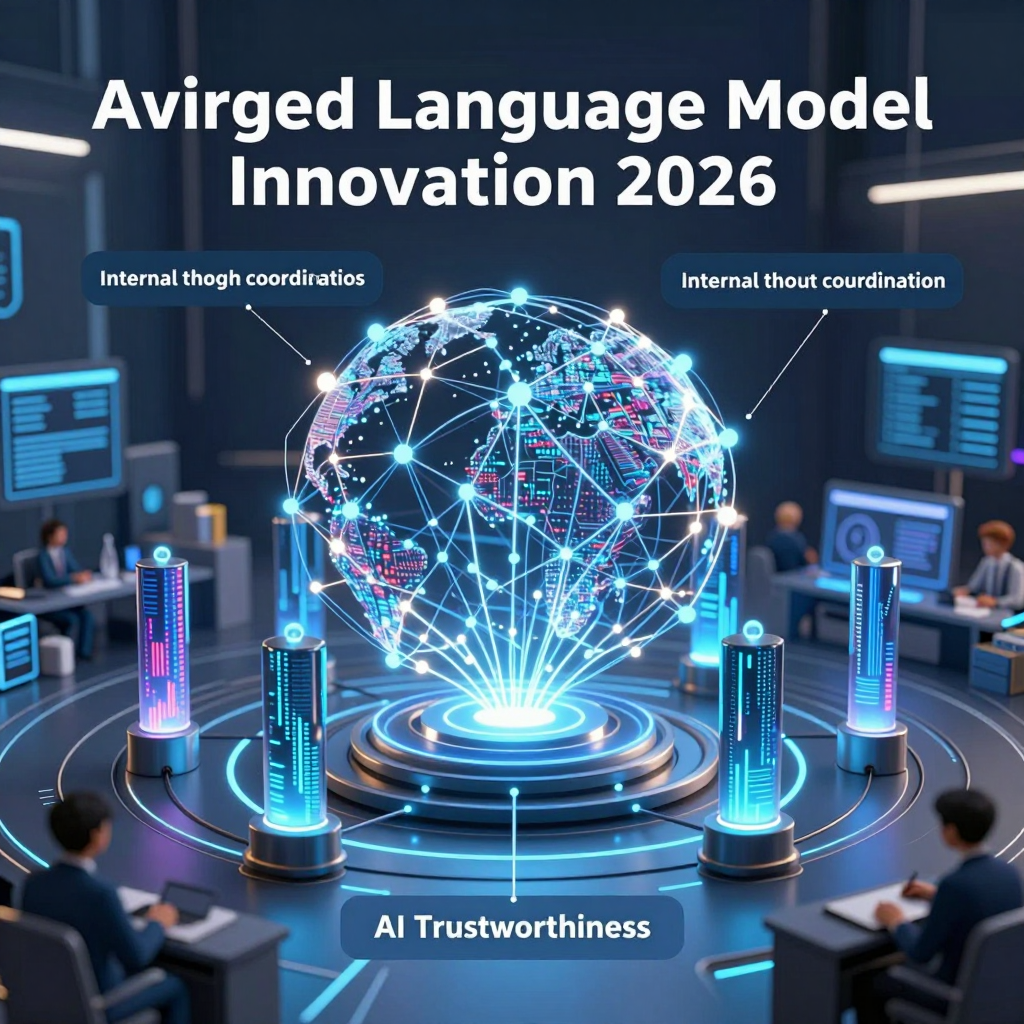
As top-tier LLMs have become so similar that people say, “These days, all LLMs feel alike,” the real battleground has shifted from mere accuracy to how a model internally ‘coordinates and shares its thinking.’ Anthropic’s recent study analyzing and designing LLM internal architectures from the perspective of a Global Workspace perfectly symbolizes this shift. Rather than competing on just making models bigger, this opens the door to competing on making them more interpretable and trustworthy.
What Does ‘Global Workspace’ Mean in LLMs?
Originally a concept in cognitive science, the Global Workspace theory envisions the human brain as follows:
- Various “specialized modules” like vision, language, and memory each perform their own computations,
- But when critical information surfaces to a ‘shared public bulletin board’ of sorts,
- That information is globally broadcast, enabling coordinated judgments and actions.
Anthropic applies this idea to LLMs, asking whether something similar happens inside the model. In other words, is an LLM more than just a machine producing tokens sequentially? Does it have—or can it be designed to have—an internal structure where crucial reasoning information is gathered in specific internal representations or layers, then “globally broadcast” within the model?
Why Is This Research Crucial Right Now? The LLM Competition Is Shifting from ‘Performance’ to ‘Trustworthiness’
Recent flagship LLMs have become tightly clustered in benchmark scores. What industries and products now demand is:
- Explainability: The ability to trace “Why did the model produce this answer?” in a convincing way
- Error Suppression: Detecting where hallucinations or illogical jumps originate and how they spread
- Operational Feasibility: Enabling auditing and governance in enterprise and regulatory contexts
The Global Workspace perspective reframes the challenge from controlling or verifying “prompts or outputs” to identifying, controlling, and validating shared internal coordination points (workspace candidates) within the model itself. Simply put, the most direct path to improving trustworthiness may be structurally managing where ‘consensus emerges’ inside the model.
What Is the Technical Goal? Reading LLM ‘Internal Representations’ Rather Than Just ‘Outputs’
Traditionally, evaluating LLMs relies heavily on final answers or external signals like chain-of-thought reasoning. But this approach has limits—it can produce plausible surface explanations that don’t align with actual internal reasoning.
Anthropic’s Global Workspace research targets the core of this problem:
- Analyzing activations and representation vectors at the layer or token level to discover
- Where information is aggregated (integrated),
- Where it is globally broadcast (shared), and
- How these processes lead to stable and consistent final outputs.
If this perspective holds, it opens the door to directly tackling internal issues like calibration and faithfulness: understanding at which step the model was confident, and where it hesitated, beyond just “Did it get the answer right?”
Taking It a Step Further: The ‘Central Coordination Hub’ in Reasoning Scaling and the Agent Era
If a Global Workspace exists—or can be designed—the benefits for LLM system design are immediate:
- Reasoning Scaling (increased computation per token): Instead of uniformly spreading computation, focusing processing power within the workspace allows for more stable execution of complex reasoning.
- Agent Orchestration: The workspace can serve as a “meta-layer” gathering plans and rationales from multiple agents or tools, enabling comparison, evaluation, and refinement. This becomes a crucial debugging point in multi-agent systems.
Ultimately, Anthropic’s research poses a fundamental question:
“Is making future LLMs just smarter enough, or must they also have an internal structure to ‘organize and reach consensus in their thinking’?”
By confronting this question head-on, the Global Workspace study is redefining the next generation of LLMs—not by performance alone but through architecture and trust.
What Is the LLM Global Workspace: Understanding the Internal Shared Memory
For a massive LLM to go beyond simply "stringing plausible sentences together" and actually perform complex reasoning and self-correction, it requires a central coordination point inside where information gathers and conflicting signals get resolved. The Global Workspace theory from cognitive science offers a powerful framework to explain this critical point. The idea is simple:
- Inside the brain (or model), multiple “specialist modules” compute in parallel
- Important information is brought up to a shared workspace
- That information is then globally broadcast and dominates subsequent judgment
Applying this perspective to LLM layers and internal representations reframes the question as: “Which layer or representation actually acts as shared memory and becomes the core of reasoning?” This question becomes a key design factor governing trustworthiness (suppressing lies and hallucinations) and reasoning quality.
The Global Workspace from the Perspective of LLM Internal Representations: The "Hub Layer" Hypothesis
LLMs process input tokens through layers, updating internal vector representations (activations/embeddings) at each step. From a global workspace viewpoint, the model can be seen like this:
Local computation (distributed processing)
- Early to middle layers handle forms, context, knowledge clues in a relatively distributed fashion.
- Each attention head, MLP, and substructure captures “partial” features differently.
Global sharing (integration point)
- Within a certain layer range, information is sharply merged and summarized, clarifying “what the core of the problem is.”
- This representation bundles multiple cues (knowledge, constraints, objectives, prohibitions, intermediate conclusions) influencing the next token generation and tool usage decisions.
Broadcast and execution
- The integrated representation is passed to subsequent layers, deciding execution strategies like answer formatting, logical development, and verification (or lack thereof).
In short, the global workspace does not mean “there is literally one memory chip,” but rather a domain of representations where information collects and gets reused globally. In LLMs, this often manifests as a particular layer segment’s representation pattern or a centralized “hub-like activation” appearing at specific token positions (e.g., summary tokens, prompt tokens).
Why the LLM Global Workspace Is Directly Linked to Trustworthiness: Hallucinations Grow from ‘Integration Failures’
LLM hallucinations or logical leaps are often not just due to “lack of knowledge,” but more critically from poor decisions about which cues to promote into the shared workspace amid competing signals.
When plausibility outcompetes evidence to dominate the workspace,
- statistically smooth sentence patterns overwhelm the core representation,
- verification signals (e.g., “weak evidence,” “potential contradiction”) arrive late or get buried,
- leading to confidently wrong outputs.
Conversely, when verification and uncertainty cues stably make it into the workspace,
- more conservative strategies like “I don’t know/more checks needed” can be chosen,
- or reasoning can drive further computation,
- reducing false outputs.
From this viewpoint, improving trustworthiness is not solved by “bigger models” alone. The crux lies in what information is shared globally and how this sharing is regulated.
Designing the LLM Global Workspace: Techniques for Focusing Computation
Interpreting the global workspace as an internal model structure opens concrete design and research challenges:
Identifying candidate workspace layers
- Analyze per-layer activations, attention patterns, and feature directions to
- locate the “integration zones” where diverse cues converge.
- Pinpointing these zones helps track precisely where errors arise (distortions, overconfidence, evidence loss).
Injecting control signals into the workspace
- Signals like safety policies, factuality verification, and tool results
- can be connected not at the output but directly at the integration site for greater effect.
- This works because altering the centrally broadcast representation changes the generation strategy of later layers.
Combining with inference scaling (increased compute per token)
- For hard problems, allocating more computations (extra steps, rechecks, comparisons) specifically to the workspace becomes possible.
- This is not “just think longer,” but an approach to raise quality efficiently by focusing compute on central integration mechanisms.
Summary: The LLM Global Workspace Is the "Traffic Control of Thought"
From the global workspace viewpoint, LLM reasoning is not just token generation but a process of gathering information, prioritizing it, and sharing it globally. Ultimately, next-gen LLM competitiveness hinges not merely on “knowing more,” but on what to promote into the shared workspace to dominate decision-making—and how well that internal coordination structure is designed and analyzed.
Beyond Equalizing LLM Performance: A New Phase of Competition Evolving Around ‘Reliability’
From GPT-5.x to Claude Opus 4.8, it’s no longer enough to simply “get the right answer more often” to stand out. Top-tier LLMs now cluster within a few percentage points on benchmarks, and the gap users actually feel is widening more around how often errors occur and in what ways. So, how exactly are error rates declining? And why are companies starting to prioritize reliability over mere performance?
Why the Focus in LLM Competition Has Shifted from ‘Accuracy’ to ‘Error Rate’
As performance levels converge, the conversation moves to these new questions:
- If two models give answers of similar quality, which one makes fewer mistakes?
- When mistakes happen, under what conditions do they occur (cause), and how do these errors propagate (process)?
- Can this process be explained and controlled?
Especially in enterprise settings, “occasional mistakes” translate directly into costs and risks. When a coding agent breaks tests, a summary omits mandated phrases, or a retrieval-based answer inaccurately connects the evidence, trust collapses. Thus, the competition in 2026 is shifting to the next layer beyond performance specs—a battle over reliability and internal reasoning processes.
What Claude Opus 4.8’s ‘4x Reduction in Errors’ Really Means (Changing Metrics for LLM Reliability)
One of Anthropic’s focal points is the frequency of failures—for example, a roughly fourfold decrease in errors when writing code compared to prior generations. This isn’t mere marketing; it signals a fundamental shift in evaluation criteria.
Previously, comparisons largely centered on:
- A few-point increase on specific benchmarks
- Percentage improvements in pass rates or accuracy
Now, the key competitive metrics are more direct and nuanced:
- Rates of failure modes (bugs, hallucinations, omissions, distortions)
- Conditions under which failures happen (long context windows, multi-tool usage, multi-step reasoning, etc.)
- Success rates of self-correction and prevention of relapse
In other words, the market is valuing not “a bit smarter” models but models that “make fewer risky mistakes.”
Targeting the ‘Internal Reasoning Process’: The Technical Shift Linked by Global Workspace
Another crucial change is emerging: boosting reliability can no longer rely solely on adding more data or fine-tuning. The latest trend is about analyzing the model’s internal representations to uncover why it produces certain answers rather than judging output alone.
Anthropic’s Global Workspace research is gaining attention precisely because of this. The core questions are:
- Does the LLM have a hub-like “shared workspace” within its internal computation where separate functions—memory, context integration, planning, verification—converge and coordinate?
- If such a workspace exists, can it serve as a crucial control point determining reasoning quality and hallucination?
From a Global Workspace perspective, the reliability race isn’t about “bigger models,” but about building better-organized thinking architectures. For example:
- Identifying which layers or token regions aggregate global information to draw conclusions
- Strengthening verification signals in those areas (evidence alignment, constraints, tool outputs)
- Redesigning pathways to block error propagation
This approach matters because it treats hallucinations not as flaws only in outputs but as failures in internal coordination. This means reliability isn’t just about post-generation filters but designing the generation process itself to be inherently trustworthy.
Summary: Future LLMs Will Be “Models That Don’t Just Get It Right, But Explain and Control How”
In a market where performance is comparable, the deciding factors are:
- How structurally the error rate is reduced (especially in code, reasoning, and tool use)
- Whether the internal reasoning process can be observed, explained, and controlled (reliability and governance)
Ultimately, the new frontier in LLM competition won’t be “who scores a few points higher,” but “who can trace why errors happen and design models that make fewer errors.” Global Workspace stands as a symbolic keyword for this paradigm shift.
A Challenge to the LLM Industry: How the Global Workspace Impacts Practice and Products
A mere few points difference in benchmarks no longer explain product competitiveness. The key question today in the industry is, “Why did this LLM produce this answer, and where did the error arise?” The perspective of the Global Workspace directly targets this very point. It’s not just about boosting performance—it serves as a design clue that simultaneously strengthens internal error tracing, safety, and regulatory compliance.
Why LLM Product Value Is Shifting from ‘Accuracy’ to ‘Error Traceability’
The problematic failure in practice is not “occasional errors,” but "plausible errors." Especially in high-risk domains like customer support, legal/financial summaries, or medical/safety documentation, it’s more critical to be able to retrace the path of failure than to rely on average accuracy.
The practical benefits of the global workspace approach include:
- Localizing the source of errors: Moving beyond debugging that only inspects outputs, it tracks the model’s internal representations—specifically the “hubs where information converges (workspace candidates)”—to discover at which stage the error crept in.
- Enabling correction loops: By introducing a meta-level (verification/refutation) that reevaluates hypotheses, evidence, and tool call results within the workspace, it becomes easier to design structures that block hallucinations before they spread in the workspace.
- Securing observable confidence signals: Instead of knowing correctness only after the fact, internal signals such as activation patterns or consensus levels in the workspace open up ways to detect risky answers proactively.
In short, the global workspace acts as a catalyst shifting LLM product requirements from being “smarter LLMs” to “LLMs capable of detecting, explaining, and fixing problems.”
How the Global Workspace Becomes a ‘Debugging Interface’ in LLM Agent and Tool Orchestration
Real-world products rarely rely on a single LLM call; instead, they often involve orchestration with retrieval (RAG), code execution, external APIs, multi-agent collaboration, and more. Failures here often stem less from “the model was wrong” and more from the opaque decision-making process around:
- Which tool results were ignored
- Which agent suggestions were adopted
- How conflicting information was resolved
Interpreted as a product architecture, the global workspace gathers multiple inputs (agent proposals, search rationale, policy constraints) into a central decision-making layer for selection, adjustment, and verification. In practice, this translates into:
- Workspace log design: Instead of saving only the final answer, structuring and storing reasons, tool outputs, conflict points, and reasons for final adoption within the workspace
- Reproducible failure analysis: By basing re-executions and replays on “which evidence entered the workspace,” debugging time is dramatically reduced
- Clear governance units: Enforcing policy filters, PII masking, and safety constraints at the workspace stage (rather than as post-processing prompts) stabilizes control even as the system scales
In essence, the global workspace becomes the observable and controllable design centerpiece for LLM products in the multi-agent era.
The Real Need for ‘Explainable Structures’ in LLM Safety and Regulatory Compliance
In regulated and audited environments, what matters is not “We have safety policies” but the ability to show precisely where those policies were applied. The global workspace fits this requirement perfectly.
- Explicit policy application points: Designing rules that block or adjust risky requests as soon as they enter the workspace makes it easy to demonstrate at which stage safety mechanisms were triggered
- Auditable chains of evidence: Logging how external document references enter the workspace and influence final conclusions produces records close to the “trace of reasoning” auditors and regulators demand
- Improved incident response speed: Instead of tweaking prompts by guesswork post-issue, teams can check which signal malfunctioned in the workspace and structurally fix the system
Ultimately, the global workspace is a method to bring safety from “policy documents” into the engineering architecture inside the product.
Practical Points Every LLM Industry Developer Must Know Now
The global workspace is not just a research topic—it’s already reshaping product development checklists:
- Expand observability from outputs to internals: Solely relying on input/output logs has clear limits. Experimental design must enable the observation of internal representations and the central hub layer.
- Expand evaluation metrics from ‘accuracy’ to ‘confidence process’: Metrics like self-verification frequency within the workspace, handling of conflicting evidence, and tool result integration rates often align better with actual quality than final accuracy alone.
- Product design equals safety design: Safety no longer means applying separate filters but designing what is included or excluded in the workspace.
In the post-performance plateau era, the battleground is no longer about higher scores but fewer failures and faster recovery. The global workspace has emerged as a core concept turning LLMs from mere “systems that speak well” into “systems whose internals can be understood and controlled” — making it an essential standard in today’s industry.
Practical Guide to LLMs: Global Workspace Implementation Strategies for LLM Teams and Developers
From internal logging to agent orchestration design and inference reliability evaluation—by adopting Anthropic’s ‘Global Workspace’ perspective, you can go beyond merely analyzing “why the model answered that way” after the fact and instead build an LLM development routine that is reliably designed and operated from the start. Below is an actionable checklist you can begin using today.
LLM Internal Logging: Designate ‘Global Workspace Candidates’ and Collect Their Activations
Most LLM operations stop at input/output logs. But from the Global Workspace perspective, the points within the model where information aggregates and coordinates (layers, heads, token segments, etc.) are seen as “workspace candidates,” where you should observe internal representations.
1) What to log (minimum set)
- Fix on 1–2 among per-layer hidden states, MLP outputs, or attention outputs
- Vectors for specific token segments (e.g., user question tokens, tokens just before tool calls, tokens immediately preceding final answer generation)
- If possible, summarize attention distributions (e.g., top-k entropy per head, focus scores toward specific tokens)
2) Where to consider ‘workspace candidates’ (practical selection method)
- Since mid-to-late layers often contribute heavily to information integration in complex reasoning, start by selecting:
- Some middle-to-top layers (e.g., upper 30% layers)
- Tokens immediately before and after tool usage/planning tokens
- Because broadening candidate regions inflates storage and analysis costs exponentially, a “start thin → expand based on metrics” approach is safest.
3) How to analyze (technically meaningful methods)
- Linear probes: measure “whether/when correct answers are represented internally” on a per-layer basis
- Representation similarity/clustering: compare how workspace candidate patterns differ between error cases and normal cases
- Intervention experiments (ablation/patching): replace or add noise to candidate activations and observe how much output changes
- If output fluctuates significantly, that candidate is likely a “global coordination hub.”
Practical tip: Don’t save “everything” in logs—summarize them in debuggable metrics form. For example, instead of preserving raw candidate-layer vectors for every request, compress them into metric-centered summaries like entropy, norm, probe scores, and top-k attention, drastically cutting operational costs.
LLM Agent Orchestration: Make the ‘Workspace Layers’ Your Product Architecture, Not Just Prompts
In multi-agent/tool systems, the bigger risk is not performance but how decision-making is combined. To translate the Global Workspace into product architecture, instead of “mixing results from each agent at once,” explicitly design a step to collect proposals into a shared workspace, then evaluate and adjust.
Recommended architecture (minimal form)
- Generation phase (Agents): agents individually generate proposals (plans, evidence, execution options, tool calls)
- Workspace phase (Workspace): normalize proposals into a unified format and aggregate in one place
- Moderation phase (Moderator/Critic): conflict detection, evidence checks, safety policy enforcement, final selection/merging
- Execution phase (Executor): execute chosen plans with tools and generate final answer
Example workspace format (key: ‘comparability’)
- Claim / Evidence / Uncertainty / Required Checks / Tool Plan
- Structuring this way enables the moderation phase to systematically evaluate which proposal is more convincing.
Why debugging and governance improve
- Logs record which agent proposals entered or were filtered out of the workspace.
- For questions like “Why was this tool called?” you can provide not just the final answer but the reasoning during the selection (moderation) step.
LLM Inference Reliability Evaluation: Measure Using Workspace-Based Metrics, Not Just Accuracy
When performance plateaus, what truly affects user trust is not “how many answers were correct,” but how the model errs and how quickly it self-corrects. Global Workspace evaluation doesn’t simply grade outputs—it also considers internal and intermediate decision traces.
Recommended evaluation metrics (ready to deploy)
- Self-consistency: rate at which core claims in the workspace conflict with the final answer
- Verification coverage: whether items marked as “need verification” during planning were actually checked
- Revision quality: not just the count of self-corrections but whether errors decreased after correction (improvement rate)
- Uncertainty calibration: correlation between “don’t know/low confidence” flags and actual correctness
- Hallucination early warnings: correlation between workspace candidate activation signals (e.g., sharp entropy drops/spikes, token focus shifts) and hallucinations
Technically important points
- Reliability evaluation doesn’t end with “correct labels.” You must label (or auto-score) what evidence appeared in the workspace for metrics to function.
- Ideally, separate your test sets into
- Short-answer (accuracy)
- Evidence-based (fidelity to reasoning)
- Tool-based (appropriateness of tool calls)
to isolate where workspace metrics provide particular value.
LLM Adoption Roadmap: Start Small with “Logging → Workspace → Metrics” in Sequence
Instead of pushing Global Workspace design directly into model design, the most fail-safe sequence for your team is:
- Build a minimal internal/intermediate log set: specify candidate layers and token segments, then metricize it
- Add a workspace phase to your agent system: unify formats and introduce moderation to structure decisions
- Define workspace-based reliability KPIs: dashboard consistency, verification, calibration metrics alongside accuracy
- Use intervention experiments to find design levers: identify which layers/rules/moderation logic reduces errors best
The core of this approach is one thing: treat the LLM not as a “black box output machine” but as an “internally coordinated system,” and make observing, designing, and evaluating its coordination points a standard part of your development routines. Doing so will transform the Global Workspace from a mere research concept into a practical tool that immediately boosts product reliability.
Comments
Post a Comment