 \n
\n
250 Years of Roars: The Prelude to America’s 250th Independence Anniversary Beginning with the Fourth of July
This July 4th is no longer “just” Independence Day. Marking the 250th anniversary—the Semiquincentennial—of the Declaration of Independence in 1776, the entire United States has begun moving as one grand stage. So, how does this special Fourth of July bring together the diverse voices within America and the global gaze fixed upon it?
The heart of this 250th anniversary lies not in a one-off celebration, but in a long-term commemorative campaign like ‘America 250’. Iconic American landmarks such as Philadelphia’s Independence Hall, New York’s Statue of Liberty, and Revolutionary War battlefields are all simultaneously redefined as “living history sites,” while communities nationwide weave these spaces into their own stories. Thus, the Fourth of July has evolved beyond a single holiday into a season for narrative rebranding of the national identity.
Another striking scene unfolds at sea. Events like ‘Sail4th 250’ in New York Harbor, featuring tall ships from around the world, extend the founding moment beyond “internal American history” to showcase it as an event within the Atlantic world and maritime networks. If fireworks and parades represent the “heat bubbling inside,” the tall ships and harbors symbolize the “gaze converging from outside.” This fusion is exactly how the Semiquincentennial pulls both America and the world together.
Moreover, this immense movement is not confined to capitals or major cities. With nearly 400 national parks and historic sites joining the celebration as stages, the atmosphere of the 250th anniversary unfolds through tightly-knit local events. As a result, this year’s Fourth of July has become a nationwide, simultaneous mega-event, spawning countless versions of the celebration depending on where you witness it.
Fourth of July on the National Mall in Washington D.C.: A Stage for Politics and Spectacle
Fiery, lengthy speeches, military bands and massive airshows, and fireworks aiming for a Guinness World Record. This year, the National Mall in Washington D.C. is set to transform the Fourth of July from a simple “celebration” into an overwhelming “stage” of spectacle. What’s at stake is not just the grandeur of the festival itself. As the spectacle grows larger, so too does the tension beneath the surface.
The Three Major Scenes of the Fourth of July Spectacle: Military Bands, Airshows, and Gigantic Fireworks
At the heart of the National Mall is a full mobilization of national symbols. Between the Lincoln Memorial and the Washington Monument, military bands and honor guards will perform while the skies above host formation flying and airshows. Marking the Semiquincentennial (250th anniversary), the production aims to vividly showcase patriotic sentiment and national strength in one grand scene.
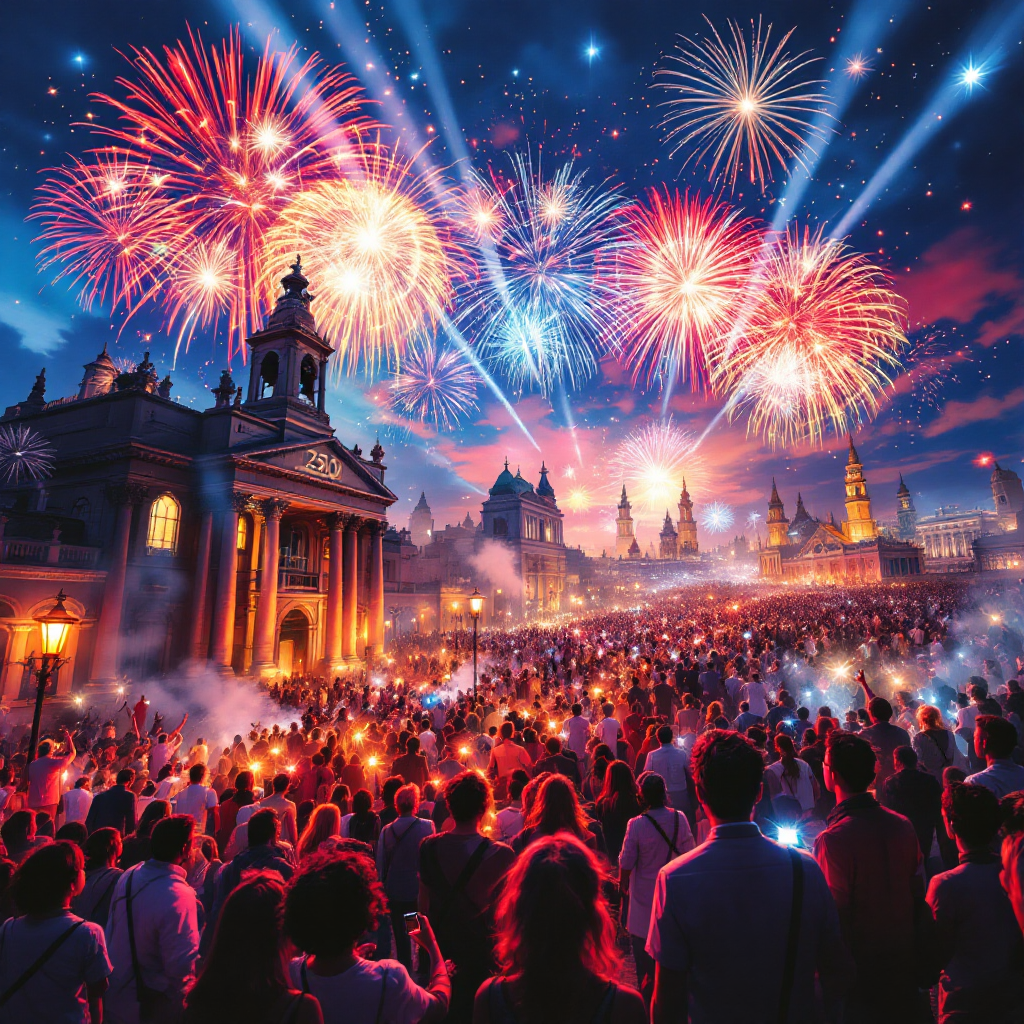
And the grand finale: fireworks. Plans have been announced to launch approximately 850,000 to 860,000 fireworks over 40 minutes, challenging the record for the world’s largest display. This year’s Washington Fourth of July transcends “celebration” to become a fierce “record competition.”
The Political Weight of the Fourth of July’s ‘Lengthy Speech’
What makes this Washington event especially controversial is that at the center of the colossal performance lies the president’s speech. With a “very long speech” anticipated, the symbolic space of the National Mall naturally becomes a stage where “national commemoration” and “political messaging” overlap.
Add a forecast for a heatwave, and the scene is poised to ignite with double intensity—both literal heat and heated political atmosphere. The crowd’s physical risks (dehydration, heatstroke) and the political tension (the tone and framing of the message) must be managed simultaneously in one space.
The Tension Revealed by the Fourth of July: Patriotic Festival or Military Display?
The staging on Washington D.C.’s National Mall always balances “public commemoration” and “powerful spectacle.” This year, that line seems especially fragile. For some, the military bands, airshows, and massive fireworks serve as a majestic tribute; for others, they may come across as an over-militarization of imagery or as reinforcement of a specific political brand.
Ultimately, this Fourth of July on the National Mall is not just about “how dazzling the event was.” It is a place where questions arise about who stands at the center, what is being said, how the nation is portrayed, and whose discomfort and concerns are pushed aside—a direct collision of politics and spectacle.
Fourth of July: Nationwide Celebrations and New Commemorative Trends
Amid the traditional drumbeats of parades and waves of the Stars and Stripes, the night sky is now illuminated by waves of light painted by drones. Marking its 250th anniversary, this year’s Fourth of July is moving decisively away from “the old ways” toward each city crafting its own unique commemorative language by blending technology with values like the environment and safety. So how are local festivals rewriting the 250th anniversary through ‘local stories’?
Fourth of July Trend 1: Maintaining Parades, Ending with a ‘Drone + Fireworks’ Hybrid Finale
Many communities continue their classic parades by day. But the nighttime highlight has evolved:
- Drone light shows create “paintings” in the sky—depicting symbols such as the Declaration of Independence text, historic local figures, or state outlines,
- followed by fireworks choreographed for experience rather than scale, elevating the spectator’s enjoyment.
This combination is becoming a sensible compromise for local celebrations that want to honor tradition yet showcase something truly new for the 250th anniversary.
Fourth of July Trend 2: Leading with ‘Eco-Friendly’ Celebration Messages
Amid climate crises, wildfire risks, and rising urban noise complaints, some regions are reducing fireworks or replacing them with alternative performances that emphasize environmentally friendly commemoration. Drone shows, laser lights, and synchronized music are not just tech showcases but expand the message to:
- lessen the festival’s carbon and noise footprint, and
- consider noise-sensitive groups such as pets and the elderly.
In other words, this year’s Fourth of July novelty starts from asking which kind of celebration places less burden on the community rather than chasing pure spectacle.
Fourth of July Trend 3: Translating the 250th Anniversary through ‘Local Storytelling’
While the 250th anniversary may seem like a grand national narrative, on the ground, communities translate it into local historical experiences. Examples include:
- historical walking tours connecting sites related to the Revolutionary War, museums, and monuments,
- accessible family-friendly interactive and educational events like guided tours, citizen readings, and historical reenactments.
A growing trend is transforming Independence Day from “a day to enjoy and move on” into a platform for public history education.
Fourth of July’s Key Viewing Question: “What Does Our Neighborhood Celebrate?”
When watching this year’s local festivities, questions become more important than scale:
- If drones replace fireworks, which concerns—environment, safety, or urban regulations—most influenced that choice?
- Is the parade theme about the ‘nation,’ the ‘local area,’ or ‘diversity’?
- When speaking of the 250th anniversary, does the community emphasize pride, or does it include reflection?
Ultimately, the 2026 Fourth of July celebrations, while sharing the same date, become stages where each community asks in its own way: “What kind of community are we?”
The Shadow of Fourth of July Fireworks: Safety and Environmental Controversies
Behind the dazzling fireworks lie mounting safety accidents, wildfire risks, and opposition from Indigenous communities. How are the shadows cast by large-scale fireworks threatening the joy of Independence Day? As the excitement for the 250th ‘Semiquincentennial’ grows, so too do the controversies surrounding safety, environment, and rights.
Safety: The Moment a “Festival” Turns into an “Accident”
Every Fourth of July season, warnings are repeatedly issued, with the biggest dangers arising from personal and illegal fireworks. In California, a tragic incident where an 8-year-old girl died after illegal fireworks exploded in a chain reaction has been spotlighted, showing how a “single choice at a home party” can lead to devastating consequences.
The more ‘record-breaking’ the event hype becomes, like this year, the more people are psychologically driven to seek “slightly bigger fireworks.” But reality is simple: the size of fireworks correlates with the risk, and one malfunction can trigger a chain reaction, amplifying the damage across nearby fireworks.
Environment: Fireworks Return Amid Wildfire Risks
Beyond air pollution and noise issues, fireworks are closely linked to wildfire hazards. The resumption of fireworks at Mount Rushmore is packaged as a “return of a spectacle,” but it reignites debate because large-scale fireworks are being forced in a region highly susceptible to wildfires.
In an era where the climate crisis is the norm, fireworks can no longer be justified by ‘tradition’ alone. If the day of independence becomes remembered as a day that endangers nature, the very message of the celebration is at risk of unraveling.
Rights and Remembering: Questions Raised by Indigenous Opposition
Mount Rushmore is not just a tourist spot; for Indigenous people, it is a symbolic space entangled with historical wounds and territorial issues. The fireworks’ return goes beyond environmental debates, intensifying the question: “Whose holiday is it, and in whose space is it being celebrated?”
In other words, while the Fourth of July fireworks bring joy to some, for others, they can be read as a signal of exclusion. As the ‘national narrative’ of the 250th anniversary grows larger, so do the voices it fails to hear.
The Temptation of “Bigger” vs. The Reality of “Safer”
This year in Washington D.C., a Guinness World Record-level fireworks show is anticipated, putting the ‘scale race’ front and center. Yet, mega fireworks significantly increase burdens on safety management, evacuation, and air quality. The challenge of Independence Day now is not about “making it explode bigger,” but about celebrating more safely and less destructively.
- Always check local rules before using personal fireworks and avoid illegal products
- Support alternative displays like drones and light shows in wildfire-prone areas
- The more events push forward “in the name of tradition,” the more safety, environmental, and community perspectives must be considered
Fireworks remain a powerful symbol. But for the 250th Fourth of July to truly be monumental, choices that reduce the shadows as much as the light that brightens the sky are equally necessary.
Fourth of July: The Light and Shadow of Freedom, Conflicts over Immigration, Identity, and Politics
Is it the freedom immigrants enjoy, or is it fear? This year’s Fourth of July, marking the 250th anniversary of American independence, cannot be explained by the word “celebration” alone. Fireworks grow more dazzling, speeches become longer, and symbols of patriotism shine more brightly—but behind the scenes, the question of “Who is truly welcomed as part of this country?” cuts ever more sharply.
Cracks in the Phrase “A Festival for All”
America’s Independence Day has long been intertwined with the immigrant narrative. It has clearly been a day representing “becoming the new American,” blending diverse languages, foods, and family stories. Yet this year, amid harsh immigration crackdowns and growing unease in communities, the same date reads as a festival for some and a day when simply going out requires caution for others—an intensifying irony.
Ultimately, the Fourth of July is no longer merely a “day to celebrate freedom,” but a day to debate to whom freedom truly applies in practice.
The Significance of the 250th Anniversary: A Battle over the Frame of “Identity”
The Semiquincentennial is far more than just a number. The nation uses this anniversary to redefine “Who are we?” The problem is that this definition tends to flow in only one direction.
- One side champions strong borders and strict order as what it means to be “American,”
- while the other asserts that being a nation of immigrants and expanding citizenship define “American-ness.”
This clash transcends policy disputes and spills into emotional realms—patriotism, belonging, and citizenship. Thus, this year’s Fourth of July is filled with as much political messaging as with fireworks.
How Can These Conflicts Be Healed? Return to “Principles,” Not “Events”
There is no quick fix to end this clash. But the path toward healing is clear. The moment the heat of celebration turns into a stage for beating the opposing side, the 250th anniversary becomes a day of division rather than unity. Conversely, if discussions alive today strive to apply the principles declared in the Independence Declaration—rights, dignity, equality before the law—then the Fourth of July can once again become a shared language.
In the end, the key is one: not loud patriotic slogans marking the 250th, but the honest courage to examine whom that patriotism includes and whom it excludes.
Comments
Post a Comment