 \n
\n
Serverless Innovation: What Are AWS Lambda MicroVMs?
The stereotype that “serverless means short function executions” is being shattered. Now, with AWS Lambda MicroVMs capable of running up to 8 hours, Serverless is evolving beyond simple event processing (FaaS) to encompass long-running workloads.
Why Serverless Compute Goes Beyond “Functions”
Traditional Lambda was optimized for short-lived tasks such as webhook handling, image resizing, and sending notifications. This model is simple and powerful but had limitations for workloads like:
- Batch/ETL jobs running for hours
- AI agents that maintain sessions to repeatedly infer, plan, and call tools
- Streaming processes with long pipelines
- Multi-tenant environments with strict regulatory/security demands
Lambda MicroVMs directly address these challenges. They preserve the “no server management” advantage of Serverless while expanding the runtime nature from “short container functions” to “ultra-light VM sessions.”
Core Shift in Serverless Architecture: Isolation Based on MicroVMs
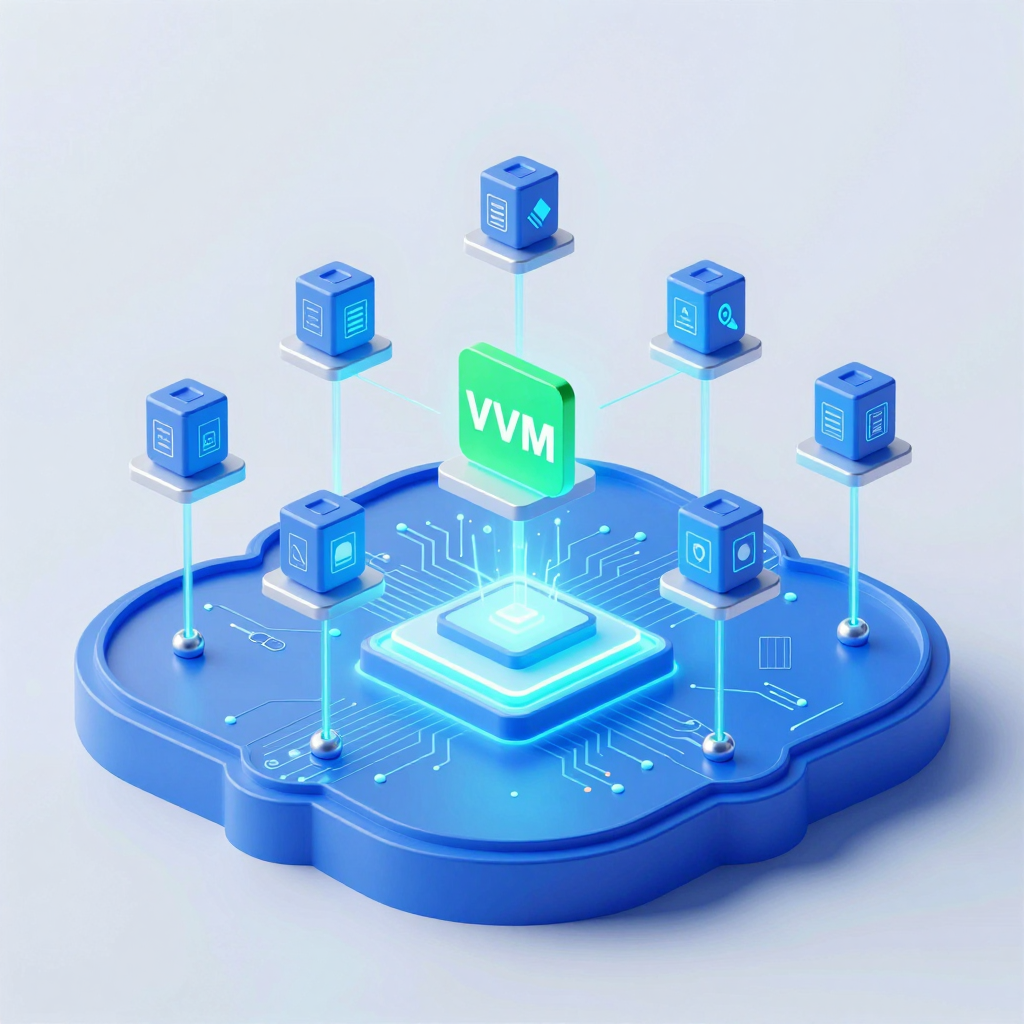
The key structural feature of Lambda MicroVMs is isolating execution units within microVMs. AWS describes this as a VM-level sandbox that does not share kernels or resources between sessions. This provides stronger boundaries than traditional container-based isolation.
Technically, the important points are:
- VM-level isolation: Minimizing sharing between sessions strengthens security boundaries in multi-tenant environments.
- Lightweight microVMs: More lightweight and faster to start than traditional VMs, preserving Serverless agility.
- Maintaining the Serverless operating model: Event-driven execution, automatic scaling, and usage-based billing remain intact.
As a result, Lambda MicroVMs offer a “more strongly isolated Serverless runtime,” broadening choices for workloads with high security, compliance, and tenant separation requirements.
Game-Changing Aspect of Serverless: Up to 8 Hours Extended Runtime
The biggest technical and business breakthrough is the up to 8-hour execution time. This single change vastly expands the scope of systems that can be designed using Serverless.
- Long-running batch jobs: Overnight settlements, large-scale transformations, and extensive data processing can be reimagined as “Serverless jobs.”
- Agentic workloads: AI agents performing loops of planning → tool invocation → validation → retries can operate within a single execution context for extended periods.
- Streaming/pipelines: Simplifies long-lived pipelines that are hard to break into short function chains.
In summary, Lambda MicroVMs stretch the definition of Serverless from “short function calls” to “event-driven compute that works as long as needed.”
Conclusion from a Serverless Perspective: Lambda Closely Approaches “Serverless VMs”
Lambda MicroVMs are not just an added feature; they signal a shift in the boundaries of Serverless computing. Architects and developers will start asking:
- Not “Should this workload run on containers/EKS?” but
- “Can this workload be redesigned as a Serverless microVM session?”
In other words, Lambda MicroVMs expand Serverless to larger workloads while blurring the lines between VMs, containers, and serverless, creating new design possibilities.
A Serverless Technology Beyond Traditional Lambda: MicroVM-Based Serverless Runtime
If you thought of traditional Lambda merely as “short-lived, ephemeral functions (FaaS),” Lambda MicroVMs shatter that premise. The core innovation lies in the Firecracker-based ultra-lightweight virtual machines (microVMs) that deliver VM-level sandboxing, coupled with long-running execution times of up to 8 hours. This powerful combination fundamentally expands the scope of workloads Serverless can address.
A Shift in Serverless Isolation Model: Beyond Containers to “VM-Level Sandboxing”
The technical breakthrough of Lambda MicroVMs is isolating execution units not as containers, but as microVMs. AWS highlights these defining characteristics:
- Isolation without kernel/resource sharing across sessions: Each execution runs inside a sandbox equivalent to a VM, with no kernel sharing among sessions.
- Lightweight microVM footprint: Much smaller than traditional VMs, designed for Serverless’ need for rapid startup and high density.
This architecture is especially significant in multi-tenant environments. Because Serverless “densely runs many customers’ executions on the same infrastructure,” the strength of isolation directly impacts security and compliance. MicroVMs offer a stronger boundary than container-style isolation—minimizing the attack surface—while preserving Serverless operational models like auto-scaling and event-driven execution.
Redefining Serverless Runtime: From “Short Functions” to “Long-Running Jobs”
One of the biggest constraints of conventional FaaS has been the assumption of short execution times. While simplifying architectures, this assumption pushed these workloads outside Serverless domains:
- Long-running batch/ETL jobs
- Stateful, long-window processing in streaming
- AI agents (agentic) maintaining long-lived sessions
- Extended stages in model pipelines (preprocessing, evaluation, iterative runs)
By enabling up to 8 hours of execution, Lambda MicroVMs demolish the notion that “Serverless is only for short event processing.” Now, workloads that run for a long time can stay within Serverless without forcing a shift to EC2 or EKS, fundamentally transforming Serverless design patterns.
Architectural Implications As Serverless Begins to Look ‘VM-Like’
The microVM-based runtime ultimately evolves Serverless into something like:
Event-driven execution units akin to VMs
Although triggered by calls/events, they process more complex workloads internally with VM-level isolation and extended runtimes.Increased importance of state design
Long-running processes create and maintain state, making “where to store state (external storage, Serverless data layers, checkpoints)” a critical design decision—not just optimization.Surging observability demands
Short functions simplify failures via retries, but long-running executions require tracking mid-progress, partial failures, and restarts. Operational systems now must visualize logs, metrics, traces, event flows, and cost per execution unit on a unified dashboard.
The “Technical Secret” From a Serverless Perspective: Why MicroVMs Surpass FaaS Limits
In summary, Lambda MicroVMs overcome FaaS limitations not merely by extending execution time.
- By raising the isolation unit from container to microVM level, they reinforce trust boundaries in multi-tenant serverless.
- By adopting a runtime model that supports long-lived executions, Serverless expands its problem domain to include batch jobs, streaming, and AI agents.
This marks a clear signal: Serverless is no longer “just a short-lived function platform” but evolving into a new compute primitive built on lightweight VMs.
The Blurring Boundaries of Serverless: Meeting AI, Data, and Streaming
From agent meshes for AI agents to large-scale data processing—Lambda MicroVMs are now the key to AI-native infrastructure, moving beyond “simple event functions.” The core lies in two factors: up to 8-hour execution and microVM-based VM-level isolation. This combination shifts Serverless’s reach into AI, data, and streaming domains.
Serverless + AI: Execution Units That Can “Run an Agent Mesh”
Traditional FaaS, optimized for short tasks, often struggles architecturally with workloads requiring relatively long sessions like agents. Lambda MicroVMs enable longer runtimes and realize the following patterns:
- Operating agent nodes as Serverless execution units
Spin up agents (or tool runners) as microVMs for extended execution, scaling automatically as needed. Compared to always holding servers, this dynamic agent scaling reduces operational overhead. - Stronger agent isolation with VM-level sandboxes
MicroVM isolation means kernels and resources aren’t shared between sessions, helping clearly define agent-level permissions and data boundaries in multi-tenant environments. This toughens security even when agents call external tools or handle files/libraries.
In short, while the “mesh” in an agent mesh handles governance, routing, and communication layers, Lambda MicroVMs serve as the elastic compute layer that actually runs the agents.
Serverless + Data/Search: The Longer Computation Runs, the More Critical the “Data Layer” Becomes
With long-running capabilities, the next natural question arises: Where should state live?
Scattered agent memory, task progress, search indexes/vectors, logs, and traces quickly complicate the system.
- Serverless search/analytics layers like OpenSearch Serverless can serve as knowledge, log, and search backends that agents call directly.
- Serverless architectures that separate compute and storage make it easier to ensure “compute spins up only when needed, while data persists reliably.”
Put simply, as Lambda MicroVMs support long-running tasks and connect with serverless search, analytics, and vector stores, AI applications increasingly converge on fully serverless architectures.
Serverless + Streaming/ETL: From “Short Triggers” to “Long Pipelines”
Streaming and ETL inherently run for extended periods. Historically, container orchestration or always-on clusters were necessary, but Lambda MicroVMs drive this shift:
- Long batch/ETL jobs start event-driven, run up to 8 hours, and trigger downstream pipelines upon completion.
- Coupled with maturing data and streaming platforms (like Databricks Serverless), workload roles split: “processing on serverless compute, state and data on serverless data layers.”
This modularizes pipelines and clarifies fault domains and operational ownership.
Changing Checkpoints from a Serverless Design Perspective
As boundaries widen, design benchmarks evolve.
- Cost models: Charging per invocation alone isn’t enough. With longer runtimes, comparing total cost of ownership (TCO) versus EC2/EKS is essential.
- Observability: When agents, streaming, and batch mix, failing to connect logs, metrics, and traces into a “single flow” sharply raises operational difficulty.
- State management: For long-running compute, externalizing state (search/DB/object storage, etc.) and designing retry, pause, and resume strategies are vital to harness Serverless benefits.
Ultimately, the change driven by Lambda MicroVMs isn’t just “longer execution times.” Serverless is expanding to embrace AI, data, and streaming workloads at scale, shifting the heart of serverless architecture from “short function calls” to a runtime that supports AI-native workloads.
Into Real-World Serverless Applications and the Innovation Ecosystem: Running AI Agents and Data Analytics “Fully Serverless”
With the maturation of cutting-edge components like OpenSearch Serverless and Databricks Serverless, serverless has evolved beyond “short-lived functions” to a phase where AI agent execution + search/vector + streaming/ETL + analytics are bundled as a cohesive whole. The key is that compute (Lambda MicroVMs), search (OpenSearch Serverless), and data/AI analytics (Databricks Serverless) each scale independently and can scale down to zero when idle. This evolution enables creating AI systems that “appear always-on” without operators constantly managing servers.
Serverless AI Agents: Creating “Long-Lived Agents” with Lambda MicroVMs
While traditional FaaS excelled at event handling, Lambda MicroVMs’ up to 8-hour runtime enable the “long session” needed for AI agents.
Agent Execution Model
- MicroVM spins up on user request (or on schedule/queue events)
- The agent repeatedly loops through planning → tooling → validation for tens of minutes to several hours
- The session ends, shutting down compute and stopping costs (pay-per-use billing)
Practical Benefits of VM-Level Isolation
- The “no kernel/resource sharing between sessions” approach establishes clear security boundaries in multi-tenant environments
- It provides design choices for workloads needing “stronger isolation than containers” from a compliance and audit perspective
Common Real-World Patterns
- Agent Mesh Nodes: Multiple agents run in individual MicroVM sessions, collaborating via messaging and events
- Long-Running Jobs: Serverlessly absorbing tasks with unpredictable end times like research agents, codebase analysis, and large-scale document curation
The core takeaway: serverless now embraces session-based compute, harmonizing better with AI execution models beyond merely “collections of short functions.”
Serverless Search/Vector/Logs: Attaching Agent ‘Knowledge and Memory’ via OpenSearch Serverless
To become truly capable, AI agents need more than LLM calls—they require integrated search and memory (vector/documents/logs). Here, OpenSearch Serverless seamlessly serves as the serverless backend invoked by agents.
Why Serverless Search Matters for Agents
- Agent request volumes fluctuate wildly—some days see surges, others almost zero
- Serverless search is built for this variability, focusing on automatic scaling/shrinking (down to zero when idle) to reduce operational burdens
Example Architecture (Fully Serverless RAG/Observability Hybrid)
- Lambda MicroVMs: Agent execution (tool orchestration, long sessions)
- OpenSearch Serverless: Document search + vector search + indexing agent logs/events
- Agents thus perform “knowledge retrieval (RAG) + self-improvement based on execution history (log analysis)” smoothly within a single flow
This combination shines in AI products where “features keep expanding but traffic is unpredictable,” enabling on-demand scaling right when users arrive without reserving servers in advance.
Serverless Data/Streaming/AI Analytics: Running ETL and Analytics Without Always-On Operation via Databricks Serverless
For AI agents to function effectively, fresh data must be ready. Traditionally, ETL/streaming/feature generation required always-on clusters. Databricks Serverless transforms this into “data pipelines that spin up compute only when needed.”
Typical Flow (Data → Knowledge → Agent)
- Databricks Serverless processes data via batch/streaming ETL, including change data capture (CDC)
- Cleaned data flows into search/vector pipelines stored in OpenSearch Serverless
- Lambda MicroVM agents respond to events, performing analysis/answers/automation based on the latest data
Technically Important Highlights
- Streaming’s core is “state” management; advancing serverless compute now better absorbs state handling (repartitioning, etc.) within the platform layer
- This lets data teams focus less on cluster tuning and more on data quality, schema design, and pipeline logic
Design Checklist for Making Fully Serverless Architectures a Reality
As fully serverless stacks become achievable, design criteria shift:
- Cost Model: Long-running (up to 8-hour) sessions look more like VMs. It’s essential to recalibrate when serverless is cheaper than EC2/EKS based on invocation patterns (peak vs. idle)
- Observability: With compute, search, and data all serverless, failure points manifest as “distributed event flows.” Without correlating logs/metrics/traces into a unified view, debugging becomes drastically harder
- State Location: Although agent sessions have grown longer, runtimes still shut down. Externalizing state to OpenSearch (search/log/vector) or data layers (Databricks, etc.) remains a robust design choice
The innovation in serverless ecosystems now transcends “convenience of managed services.” It’s about rearchitecting AI agents and data systems entirely around event-driven serverless primitives. Lambda MicroVMs push compute runtime boundaries, while OpenSearch Serverless and Databricks Serverless provide knowledge and data foundations, making fully serverless AI systems a practical—not experimental—option.
Rethinking Serverless Architecture and Future Strategies: Key Checkpoints Developers Must Focus On
With the advent of long-running executions and VM-level isolation, Serverless is no longer just about “short-lived, ephemeral functions.” Runtimes like Lambda MicroVMs that operate for up to 8 hours enable shifting batch, streaming, and AI agent workloads—traditionally handled via EC2/EKS—into the Serverless realm. However, “being able to migrate” is not the same as “benefiting from the migration.” Now is the time to redesign architecture from cost models to observability, state management, and multi-cloud strategies.
Redefining Serverless Cost Models: From ‘Short Calls’ to ‘Session-Based’ Billing
Traditional Serverless often justified cost efficiency around invocation counts and brief running times. But as MicroVM-based long-running runtimes become common, the cost evaluation criteria shift dramatically.
- The axis of TCO comparison changes: The accumulated cost of long-running sessions outweighs per-function invocation charges. Costs must be compared across EC2 reserved/spot instances, EKS autoscaling, and Serverless MicroVMs under the same runtime duration, performance, and failure/retry conditions.
- Workload suitability check: Even if long-running, event-driven workloads requiring sporadic scaling (e.g., streaming transformations that spike only during peaks, intermittent large-scale ETL) remain Serverless sweet spots. Conversely, always-on steady workloads may favor VMs or containers.
- Avoid “billing bomb” surprises: Long-running executions mean small leaks can balloon costs. Treat timeouts, concurrency limits, retry policies, and backoff strategies as cost guardrails.
Making Serverless Observability Essential: Long-Running is Not a ‘Black Box’
As runtimes stretch to MicroVM-scale durations, failure patterns evolve from “short failures” to complex issues like gradual performance degradation, memory leaks, and external dependency delays. Observability shifts from optional to an operational imperative.
- Unified logs, metrics, and traces: Correlate function/session-level data seamlessly. Especially with distributed calls (agents chaining multiple tools), tracing becomes the essential debugging tool.
- Design from the perspective of event flows: Events are the “lifeblood” of Serverless. Without defining end-to-end metrics (SLOs) across message queues, streams, API gateways, and workflow orchestrators, pinpointing failure points during incidents is nearly impossible.
- Health checks and watchdogs for long sessions: Manage 8-hour runtimes like servers. Prepare periodic health signals, external dependency timeouts, mid-task checkpoints, and forced shutdown/restart strategies.
Serverless State Management Strategy: Where to Store Matters as Duration Lengthens
Once state accumulates inside Serverless processes, scalability and recoverability collapse. The temptation grows with long-running capabilities, but architectural discipline must tighten.
- Externalize state, assume ephemeral execution: Even for long sessions, always assume they “can be terminated at any time.” Checkpoint intermediate results periodically to storage, databases, or streams.
- Serverless-friendly data layers: Combining with serverless search/analytics layers like OpenSearch Serverless, or serverless processing layers like Databricks serverless, makes it easier to uphold the principle of “compute is ephemeral, data is persistent.”
- Idempotency design: Long jobs incur high retry costs. Design keys for deduplication, duplicate filtering, and stepwise commit strategies so repeated event processing won’t corrupt outcomes.
Reviewing Serverless Security and Isolation Models: Opportunities and Challenges with VM-Grade Sandboxes
MicroVMs provide VM-level isolation without shared kernels or resources between sessions, bolstering security needs in multi-tenant environments. But security goes beyond isolation.
- Reassess least privilege: Long-running execution increases exposure impact when tokens/credentials leak. Enforce short-lived credentials, granular IAM, and strict network boundary policies.
- Supply chain security: Even with MicroVMs, execution images are collections of code and dependencies. Make SBOM, signing, and vulnerability scanning standard in build pipelines.
- Data boundaries: Agent and data processing workloads often mix personal and regulated data. Encryption at rest and access controls must be established at design—not later.
Serverless Vendor Lock-In and Multi-Cloud: Prevent ‘Convenient Now’ from Becoming ‘Costly Later’
Powerful capabilities like Lambda MicroVMs boost productivity but tightly tie you to specific runtimes, event models, and managed services. Future strategies should not make “multi-cloud” a goal itself but focus on consciously designing portable boundaries.
- Standardize core logic interfaces: Boundaries based on standards like HTTP/gRPC, messaging, and OpenTelemetry reduce rewrite scope even if clouds change.
- Portability of event schemas and workflows: Overreliance on proprietary event formats or state machines locks you in. Plan for event schema versioning and workflow abstraction.
- Calculate “escape costs” upfront: Don’t merely compare features on adoption; realistically estimate code, data, and operational tooling reimplementation costs at 1- and 3-year marks as a budget factor.
Lambda MicroVMs broaden Serverless applicability but raise architectural responsibilities. By proactively addressing cost, observability, state, security, and portability checkpoints, you can build resilient, future-proof designs that withstand the “serverless VM” era.
Comments
Post a Comment