 \n
\n
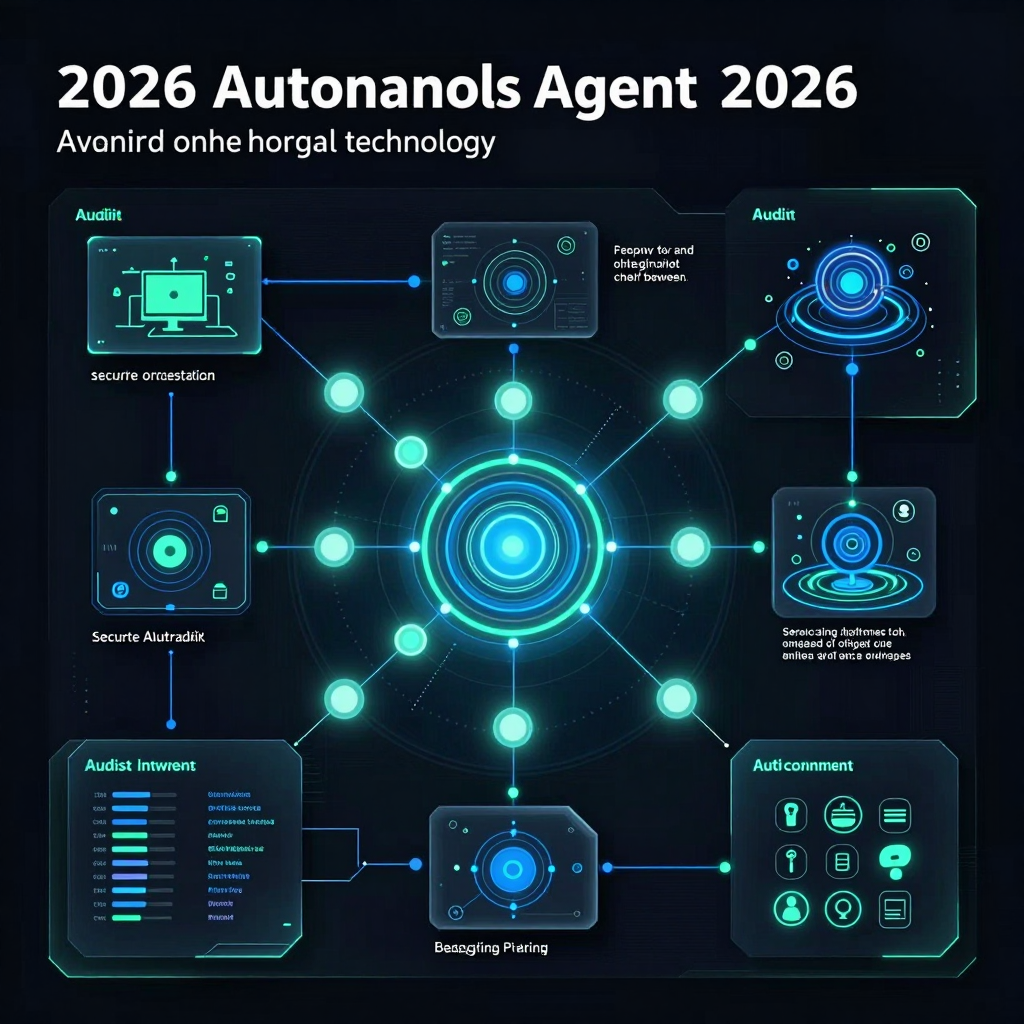
Chapter 1. Agents Are No Longer About Conversation—they’re About Execution
At one time, LLMs were closer to conversational models that answered questions, summarized text, and suggested ideas. Users provided input, the model responded in text, and people handled the next steps in the actual work.
But AI in 2026 is different. Agents no longer stop at generating answers. They find the information they need, read files, execute code, and call external APIs. They break complex requests into smaller tasks, coordinate multiple execution steps, and even ask for human approval when necessary.
In other words, the key question is no longer, “How well can the model answer?”
When AI performs real-world work, how safely and controllably can its execution process be operated?
This shift has moved the center of agent technology away from prompt engineering and toward execution runtimes and orchestration.
How Agents Changed the Unit of Work
Traditional chatbots generally end with one request and one response. Agents, by contrast, receive a goal, create an execution plan, select tools, verify the results, and then decide what to do next.
Consider a request such as, “Analyze this month’s customer inquiries and organize recommendations for improvement.” A simple conversational model might stop at explaining how to perform the analysis. An executable Agent, however, would move through a process like this:
- Access the file or database where the customer inquiry data is stored.
- Check personal information and access permissions.
- Classify the data and identify recurring issues.
- If necessary, run analysis code to calculate figures and trends.
- Organize the results into a report.
- Request approval from the person in charge when an important action—such as changing customer policies—is required.
Throughout this process, the LLM is no longer just a language generator. It becomes a task coordinator that understands goals and state while calling the necessary tools.
Execution-Based Agents Need More Than ‘Intelligence’
The more closely an agent is connected to real systems, the greater the risks become. It may be able to modify files, call internal APIs, and affect data or infrastructure by executing code.
That is why production Agents need the following elements in addition to the model’s reasoning capabilities:
- Clear workflows: You must define the conditions under which the Agent moves to the next step.
- Tool permission management: Not every Agent should have access to every file and API.
- Sandboxing: Code execution and file operations must be controlled in isolated environments.
- Logs and traceability: It must be possible to reconstruct who used which tool, and why.
- Human-in-the-loop: Important decisions involving payments, data deletion, or changes to customer policies require human approval procedures.
- Multi-Agent collaboration: Complexity must be managed by separating roles such as research, planning, execution, and verification.
Ultimately, a strong agent system cannot be completed with “the most powerful model” alone. It requires an operational execution environment that combines the model, state management, a tool registry, security policies, and audit logs.
The Key Answer in 2026: OpenAI Agents SDK
One of the most closely watched options in 2026 for reliably managing this complex execution process is the OpenAI Agents SDK.
The OpenAI Agents SDK goes beyond traditional conversational application development. It is a framework for operating GPT-based Agents in real production environments. Its most important feature is that it treats agent behavior not as a simple prompt flow, but as a workflow with state and transition conditions.
The reasons this SDK is attracting attention are clear:
- Graph-based orchestration structures execution steps and branching conditions.
- Native sandboxing manages code execution and tool usage in isolated environments.
- Sub-agent support makes it possible to separate roles such as research, planning, execution, and verification.
- File system tools allow developers to design workflows that read and modify code, documents, and configuration files.
- MCP-based integrations provide a consistent way to connect with databases, internal systems, and external services.
- Human review and approval flows can be built into workflows to control high-risk operations.
An Agent is no longer a feature that simply requires “writing good prompts.” It is an execution entity connected to an organization’s data, systems, and customer experience. That is why, when building agents, organizations must design not only what they can do, but also what they must be prevented from doing—and how every action will be recorded.
This is precisely where the OpenAI Agents SDK matters. It is not merely a tool for assigning more work to AI. It is operational infrastructure that enables AI to perform its assigned work safely, explainably, and auditably.
How to Graph an Agent’s Invisible Reasoning Process
When an Agent fails, the hardest question is simple:
“Why was the result wrong?”
But finding the actual answer is anything but simple. If all that remains is the prompt and the final response, it can be difficult to tell whether the Agent retrieved incorrect information, called the wrong tool, attempted an unauthorized action, or failed to stop at a step that required human approval.
The key to solving this problem is graph-based orchestration. Instead of designing an Agent’s work as one long conversation, you model it as an explicit task graph with state and transition conditions.
Why Prompt Logs Alone Aren’t Enough
Typical logs usually show only the following:
- The request entered by the user
- The prompt sent to the model
- The response generated by the model
- Some tool-call results
This information is certainly important. However, in Agents handling complex tasks, the context behind each decision can easily be lost. Suppose, for example, that an Agent handling customer refunds provides the wrong amount. The cause could lie in several different places:
- It may have selected the wrong account while retrieving the customer’s information.
- The policy search tool may have returned outdated regulations.
- The calculation Agent may have applied the discount conditions incorrectly.
- The final approval step may have been bypassed.
Looking only at the final answer makes it difficult to determine where the error began. By contrast, when the workflow is preserved as a graph, you can reconstruct the failure path by linking the inputs, outputs, tool calls, and reasons for each transition.
Structuring an Agent Workflow as a Graph
In graph-based design, a node represents a unit of work, while an edge represents the condition for moving to the next step. These are combined with state, which contains information about the current task.
Consider the following example of a simple customer-support Agent:
[Receive Request]
   ↓
[Verify Customer Information]
   ↓
[Search Policies] ── No policy found ──→ [Transfer to Support Agent]
   ↓
[Determine Refund Eligibility]
   ↓
[Calculate Amount]
   ↓
[Human Approval Required?] ── Yes ──→ [Request Approval]
   ↓ No
[Generate Customer Response]
The advantage of this structure is that the flow becomes visible. Each step can record not only “what was done,” but also “why the workflow moved to the next step.”
For example, the Determine Refund Eligibility node could preserve the following state:
- Order number and purchase date
- Version of the refund policy applied
- Source of the policy search results
- Conditions used in the decision
- Confidence score
- Reason human review is required
With these records, the operations team can move beyond the vague conclusion that “the model was wrong” and specifically determine whether an outdated policy document was retrieved, a conditional branch was designed incorrectly, or the tool was granted excessive permissions.
State Is Both the Agent’s Working Memory and Its Audit Trail
In a graph, state is more than a simple variable store. It is an operational record that preserves what the Agent has verified, what it has decided, and which constraints apply to it.
In practice, it is useful to divide state into at least the following categories:
| State Category | What to Record | Operational Value | |---|---|---| | Request State | User request, task ID, priority | Tracing the starting point of a task | | Fact State | Search results, database values, file contents | Verifying supporting evidence | | Decision State | Classification results, routing reasons, confidence | Auditing the decision-making process | | Execution State | Tool calls, execution time, error codes | Analyzing the causes of failures | | Permission State | Access scope, approval status, restrictions | Managing security and compliance | | Result State | Final response, processing result, transfer status | Quality evaluation and reprocessing |
The important point is not to indiscriminately accumulate every piece of data in the state. Personal information and sensitive internal data should be masked or replaced with reference IDs. In particular, for Agents that interact with external tools and file systems, you should record separately which data was accessed and with what permissions the action was executed.
Explicit Transition Conditions Clarify the Boundaries of Responsibility
The core of graph design is not creating a large number of nodes. It is defining clear transition conditions.
Suppose you design a flow in which the Agent answers when the search results are sufficient and conducts additional research when they are not. If you do not define what “sufficient” means, the Agent may act according to a different standard every time.
Good transition conditions should be measurable, such as:
- Whether the retrieved documents come from reliable sources
- Whether the documents reflect the latest policy version
- Whether there are at least two pieces of evidence that directly answer the core question
- Whether the model’s confidence exceeds a defined threshold
- Whether human approval has been completed for high-risk actions
When these conditions are connected to the graph’s edges, the scope of responsibility becomes narrower when a failure occurs.
- Search node issue: Supporting data is inaccurate or outdated
- Decision node issue: Classification rules or model reasoning is inaccurate
- Tool execution node issue: API errors, permission problems, or sandbox restrictions
- Approval node issue: Human-review rules were omitted or bypassed
- Response-generation node issue: Verified facts were not properly reflected in the final wording
In other words, a graph is not merely a visualization tool. It is a mechanism for designing the boundaries of an Agent’s responsibility.
Human Intervention Is a Design Element, Not an Exception
There is no need to fully automate every task. In fact, for high-risk operations such as processing payments, modifying customer accounts, reviewing contracts, or providing medical or legal guidance, the graph should include a Human-in-the-loop review step.
Typical intervention points include:
- Before writing data to an external system
- Before sending definitive guidance to a customer
- When the interpretation of a policy is unclear
- When the model’s confidence falls below a defined threshold
- When a tool call outside the permitted scope is required
What matters here is not an ambiguous rule such as “hand the issue over to a person if something goes wrong.” You must define, through state and transition rules, under what conditions approval should be requested, from whom, and with what information.
A Graph Is the Operational Language That Makes Agents Trustworthy
This is also why frameworks that support graph-based orchestration, such as the OpenAI Agents SDK, are attracting attention. They allow an Agent’s work to be handled not as a single model response, but as an operational flow connecting tools, state, permissions, approvals, and logs.
A well-designed graph cannot eliminate failures entirely. But when a failure occurs, it enables you to answer the following questions:
- At which node did the error begin?
- What evidence and state formed the basis of the decision?
- Which tool was executed, and with what permissions?
- Was there a moment when human review was required?
- Which transition condition should be modified to prevent the same failure from happening again?
Ultimately, a trustworthy Agent is not one that “always produces the correct answer.” It is an Agent that can explain its own workflow, trace the cause when it fails, and safely turn that failure into the next improvement.
Sandboxes and Sub-agents: Turning Agents into a Team
Imagine an Agent accessing files containing customer data, calling internal APIs, and executing code. In this situation, the Agent’s capabilities are not the only thing that matters. The more important questions are:
How far can this Agent reach, and which actions must it be prevented from taking under any circumstances?
An Agent in a production environment is not simply a chatbot. It is an execution entity that reads files, retrieves data, calls business systems, and sometimes runs code. Therefore, real competitiveness comes not only from “what it can do,” but also from “what it has been designed not to do.”
This is one reason the OpenAI Agents SDK is attracting attention. Through sandboxes and Sub-agents, it enables organizations to build a secure team with separated roles and permissions, rather than creating one powerful but difficult-to-control Agent.
Sandboxing: A Safety Mechanism for Designing an Agent’s Reach
Sandboxing isolates the execution environment an Agent uses when working with tools. Instead of granting the same level of access to code execution, file-system access, network requests, and external API calls, it divides the permitted scope according to the task.
For example, imagine an Agent responsible for handling customer inquiries. It may need to look up customer information, but it does not need permission to directly modify the customer database. It may also be allowed to create report files, but it should never be able to delete configuration files on a production server.
A sandbox enforces these boundaries at the technical level.
- Restricting file access: Limits the Agent to reading and writing only within a designated working directory.
- Controlling network access: Configures the Agent to connect only to approved internal APIs or external domains.
- Separating permissions: Distinguishes actions such as viewing, modifying, deleting, and deploying through different permission levels.
- Limiting resources: Restricts execution time, memory, and request volume to prevent infinite loops and excessive costs.
- Recording audit logs: Keeps track of which Agent used which tool and when.
In this structure, a sandbox is more than a simple security feature. It is an operational risk management layer that prevents an Agent’s mistake from escalating into a system-wide incident.
Code execution is especially powerful—and therefore especially dangerous. A script generated by an Agent could unintentionally read sensitive files, send excessive API requests, or execute an incorrect command. In a safe production environment, “the Agent can execute code” matters far less than “the Agent can execute code only within a defined, isolated environment.”
Sub-agents: A Clearly Defined Team Instead of One Giant Agent
When a single Agent is assigned every aspect of a complex task, the prompt becomes longer, its permissions become broader, and tracing the cause of errors becomes more difficult. The Sub-agent approach in the OpenAI Agents SDK addresses this problem by dividing responsibilities.
The core idea is simple: one top-level Agent manages the overall objective, while specialized sub-agents handle the detailed work.
For example, a workflow for creating an internal market analysis report could be divided as follows:
| Role | Responsibility | Example permissions | |---|---|---| | Research Sub-agent | Search external sources and internal documents | Read-only search access | | Analysis Sub-agent | Summarize and compare data, derive insights | Access to analysis tools and limited data | | Writing Sub-agent | Draft the report | Write access to a designated document folder | | Verification Sub-agent | Check figures, sources, and policy violations | Read-only review access | | Top-level Agent | Decide the workflow, integrate results, request approval | Permission to call sub-agents and perform final orchestration |
The advantage of this structure is clear. A Research Agent does not need deployment permissions simply because it investigates documents. Likewise, a Writing Agent has no reason to access the original customer data merely because it creates a draft.
In other words, Sub-agents provide a structure for dividing both work and permissions.
The Key to Designing an Agent Team Is Boundaries, Not Just Expertise
When introducing Sub-agents, people often focus on how finely responsibilities should be divided. In practice, however, the boundaries of each role matter more than the role names themselves.
A well-designed Agent team should be able to answer the following questions clearly:
- What inputs can this Agent receive?
- Which tools can it use?
- What data is it prohibited from accessing?
- Under what conditions should it hand judgment over to the top-level Agent or a human?
- How will its execution history be recorded and reviewed?
For example, in a workflow that handles payment cancellation requests, it may be risky to let a general customer-service Agent call the refund API immediately. A safer design would have the customer-service Agent organize the request, have a policy-verification Sub-agent confirm the refund conditions, and require human approval for high-value payments or exceptional cases.
Human-in-the-loop—the stage involving human review—is not a mechanism built on the assumption that an Agent will fail. It is an operational design that connects human responsibility and judgment to high-impact decisions involving money, personal information, contracts, and deployments.
How File-System Tools and MCP Increase Connectivity
Modern Agents do not operate solely inside a chat window. They read documents, modify configuration files, query databases, and connect internal systems with external services.
The file-system tools in the Agents SDK allow Agents to work with code, documents, and configuration files. However, this capability must always be paired with a restricted workspace. The following principles, for example, are essential:
- Use a separate working directory instead of the root directory of the production environment.
- Work from copies or branches rather than modifying original files directly.
- Send changes through a review stage before applying them automatically.
- Exclude sensitive configuration files and secret keys from the Agent’s accessible resources.
Standardized connection methods such as MCP also help Agents access databases, APIs, search services, and internal tools through consistent interfaces. This is useful for connecting tools quickly, but more fundamentally, it provides a foundation for centrally managing tool-access policies.
As the number of tools grows, so does an Agent’s capability. At the same time, the importance of permission management, access logging, and error response grows as well. Connectivity should therefore be treated not merely as a convenience feature, but as a governance issue.
Practical Principles for Safe Agent Workflows
To make effective use of sandboxes and Sub-agents, it is advisable to adopt the following principles as defaults:
- Apply the principle of least privilege. Provide each Agent only with the tools and data absolutely necessary to perform its work.
- Separate reading from writing. Distinguish between Agents that retrieve data and Agents that modify it.
- Add approval steps for high-risk operations. Connect human confirmation to payments, deployments, deletions, and the handling of personal information.
- Isolate execution environments. Allow code execution and file manipulation only within a restricted sandbox.
- Record the path of each task. It should be possible to trace which Sub-agent used which tool, and on what grounds.
- Design for failure. Ensure that incorrect calls, incomplete data, or tool failures do not put the entire system at risk.
Ultimately, a powerful Agent is not an entity capable of doing everything. It is an entity that understands its role, operates within its permitted tools, and can hand uncertain or high-risk decisions to the appropriate person or team.
Sandboxes control an Agent’s range of action, while Sub-agents separate responsibilities and permissions. When these two elements come together, Agents evolve beyond simply being intelligent models and become secure teams capable of taking on real work within an organization.
Not All Agent Frameworks Have the Same Answer
When evaluating agent technologies, you quickly arrive at one question: “Which Agent framework is the best?”
But there is no single right answer. The real decision depends on factors such as the model provider, cloud environment, regulatory requirements, workflow complexity, and available operations staff.
The options are expanding rapidly, from LangGraph and Microsoft Agent Framework to CrewAI and Google ADK. Among them, the OpenAI Agents SDK is a strong contender—but it is not automatically the best choice for every organization.
When the OpenAI Agents SDK Shines
The OpenAI Agents SDK is particularly well suited to teams looking to deploy GPT-centered Agents in real-world production environments. It goes beyond simply passing prompts to a model, enabling teams to design tool execution, state management, sub-agents, permission controls, and audit logs as part of a unified operational structure.
It is especially worth considering when the following conditions apply:
- The organization already uses GPT-family models and the OpenAI API as core parts of its technology stack.
- Sandboxing is required for code execution, file access, and external API calls.
- Research, planning, execution, and review need to be divided among multiple sub-agents.
- Logs and approval procedures are critical, as in customer service, finance, healthcare, and internal workflow automation.
- Databases, internal tools, and external SaaS platforms need to be connected consistently through MCP.
- Existing Agent Builder- or Evals-centered workflows need to be migrated to an SDK-based architecture.
The key is operational stability. Rather than focusing only on whether the model produces good answers, the OpenAI Agents SDK emphasizes managing which tools an agent used, under what permissions, and at what stage it made each decision. This makes control and traceability—both essential for productization—a major strength.
When Another Agent Framework May Be the More Rational Choice
In certain environments, another framework may be more efficient. Technology choices should be aligned with an organization’s existing assets and operating model, not simply based on the number of available features.
| Framework | Best suited for | Core strengths | |---|---|---| | OpenAI Agents SDK | GPT-centered systems, hosted operations, secure tool execution | Sandboxing, sub-agents, MCP, operational convenience | | LangGraph | Complex state management, regulated industries, open-source-first organizations | Fine-grained graph control, high traceability, flexible workflows | | Microsoft Agent Framework | Enterprises centered on .NET and Azure | Natural integration with the Microsoft ecosystem | | CrewAI | Rapid experimentation, role-based collaborative automation | Intuitive multi-Agent configuration, fast prototyping | | Google ADK | GCP-based environments and multimodal workloads involving images and video | Integration with Google services and multimodal processing |
For example, if you need to design every state transition and exception-handling path in great detail, LangGraph may be more convenient. For enterprises already deeply integrated with Azure, .NET, and Microsoft security policies, Microsoft Agent Framework can reduce adoption costs.
CrewAI can also be a strong starting point for teams that want to quickly validate clearly defined roles in tasks such as content creation or market research. On the other hand, if video analysis, image understanding, and GCP data pipelines are central to the work, Google ADK may be the more natural choice.
The Deciding Factor Is Not the ‘Model,’ but the ‘Operating Structure’
When comparing frameworks, it is not enough to ask only, “Which models does it support?” In real Agent systems, more problems arise in the surrounding structure than in the model itself.
Start by asking the following questions:
- What is the full scope of the data and tools the agent can access?
- Can code execution and API calls be isolated and restricted?
- Can you design flows that retry failed tasks or hand them off to a human?
- When multiple Agents collaborate, can you track their state and responsibilities?
- Can you reconstruct activity logs during an audit or security review?
- Does the framework integrate naturally with your existing cloud, models, and authentication systems?
Viewed through these criteria, the position of the OpenAI Agents SDK becomes clear. It is the most compelling option for teams that want to build GPT-based Agents quickly while also securing sandboxing, tool management, multi-agent orchestration, and auditability.
That said, the “latest framework” is not necessarily the “best framework for your organization.” A good choice does not begin by following trends. It begins by evaluating the responsibilities and risks an agent must handle in real-world work.
The Future of Agents Lies Not in Autonomy, but in Accountability
The more decisions an Agent makes, the more the questions businesses ask begin to change. The key question is no longer, “What can this Agent do?” The standards for production adoption are now: “Who approved it, under what authority was it executed, and how can the outcome be proven?”
Early Agent development focused on performance and autonomy. The ability to handle longer tasks, call more tools, and achieve goals without human intervention was seen as a competitive advantage. But the moment real business authority becomes involved—whether accessing customer data, processing payments, deploying code, or reviewing contracts—autonomy alone is no longer enough.
Three Questions for Responsible Agent Operations
An Agent operating in an enterprise environment must be able to answer the following questions about every action it takes.
Who approved this task?
High-risk tasks require human review and approval stages. For example, an Agent may propose a refund approval, the processing of personal information, or a change to an operational system, but whether such actions can be executed automatically must be governed by separate policies.Under what authority was it executed?
Granting an Agent broad administrative privileges is dangerous. Least-privilege access should be configured by tool and by task, with access permitted only for the necessary period and within the required scope.
For example, a customer-support Agent may be allowed to look up an order’s status, but it should not automatically have the authority to change a payment method or finalize a refund.Can what happened be reconstructed?
When something goes wrong, the final answer alone is not enough. It must be possible to trace which prompts and context were provided, which sub-Agent called which tool, and what results external APIs returned. This is the essence of auditability.
Expanding Autonomy Requires Expanding the Scope of Control
With a single chatbot, the primary concern was answer quality. An Agent that uses tools, however, can modify real systems. It can edit files, query databases, call APIs, and delegate tasks to other sub-agents.
As a result, the risks associated with Agents cannot be explained by model hallucinations alone. They also introduce operational risks such as:
- Misinterpreting an incorrect request as a legitimate business task and calling an external system
- Being manipulated through prompt injection into using tools beyond its authorized permissions
- Creating ambiguity around the roles and responsibilities of sub-agents
- Automatically executing high-risk decisions without approval
- Failing to reconstruct the execution path after an incident occurs
This is why the latest Agent architectures are designed around not only smarter models, but also permission management, state tracking, sandboxing, approval procedures, and logging systems.
The Technical Foundations of Accountability
To build a responsible Agent, the workflow itself must be structured in a way that can be controlled. Key design principles include the following:
Graph-based workflows
Define task stages and branching conditions explicitly. Structuring the path asrequest classification → data retrieval → risk assessment → human approval → execution → result logging, for example, makes it easier to explain why an Agent took a particular action.Human-in-the-loop
Involving people in every task is inefficient. Instead, establish clear conditions—such as transaction amount, data sensitivity, and system impact—and add approval steps only for high-risk actions.Sandboxing and the principle of least privilege
Code execution, file access, and network connections should be handled in isolated environments. Limiting the files, APIs, data ranges, execution time, and cost ceilings accessible to each Agent can reduce the potential impact of an incident.Immutable logs and traceability
Inputs, model selection, tool calls, permission checks, approval records, and execution results must be recorded in a consistent format. These records are not merely debugging tools; they form an evidentiary system for regulatory compliance and incident analysis.Role-separated sub-Agent design
Separating research, planning, execution, and verification can help mitigate the risk of a single Agent holding excessive authority. For example, an execution Agent may carry out only approved plans, while a verification Agent independently reviews the results.
This is also why frameworks such as the OpenAI Agents SDK, which support sandboxing, tool integration, sub-agents, and state tracking, are attracting attention. What enterprises want is not simply a powerful Agent, but a runtime that allows powerful Agents to be operated in a controllable manner.
The Next Competitive Advantage Lies in “Proving Actions”
In the competition to adopt Agents, the differentiator will not be only how long a task a model can handle in a single run. More important will be how clearly the Agent can explain and prove the decisions it made and the execution process that followed.
In particular, industries where regulation and trust are critical—such as finance, healthcare, the public sector, manufacturing, and enterprise SaaS—are likely to treat the following as basic requirements:
- Approval records before and after important actions
- The scope of permissions and a history of tool usage
- The basis for accessing and processing data
- Reproducible execution logs in the event of an error
- Human intervention and a clearly identified party with ultimate responsibility
Ultimately, the future of Agents does not lie in unlimited autonomy. It lies in a structure that enables rapid action when necessary while leaving authority, approval, records, and accountability behind every important action. An Agent enterprises can trust is not the system that executes the most—it is the system that can explain itself most clearly.
Comments
Post a Comment