Andrew Tate's Miami Arrest: The Saga of 42 Charges Including Rape and Human Trafficking, and His Extradition to the UK
 \n
\n
The Shock of Andrew Tate’s Arrest in Miami: Why Was He Apprehended in the U.S.?
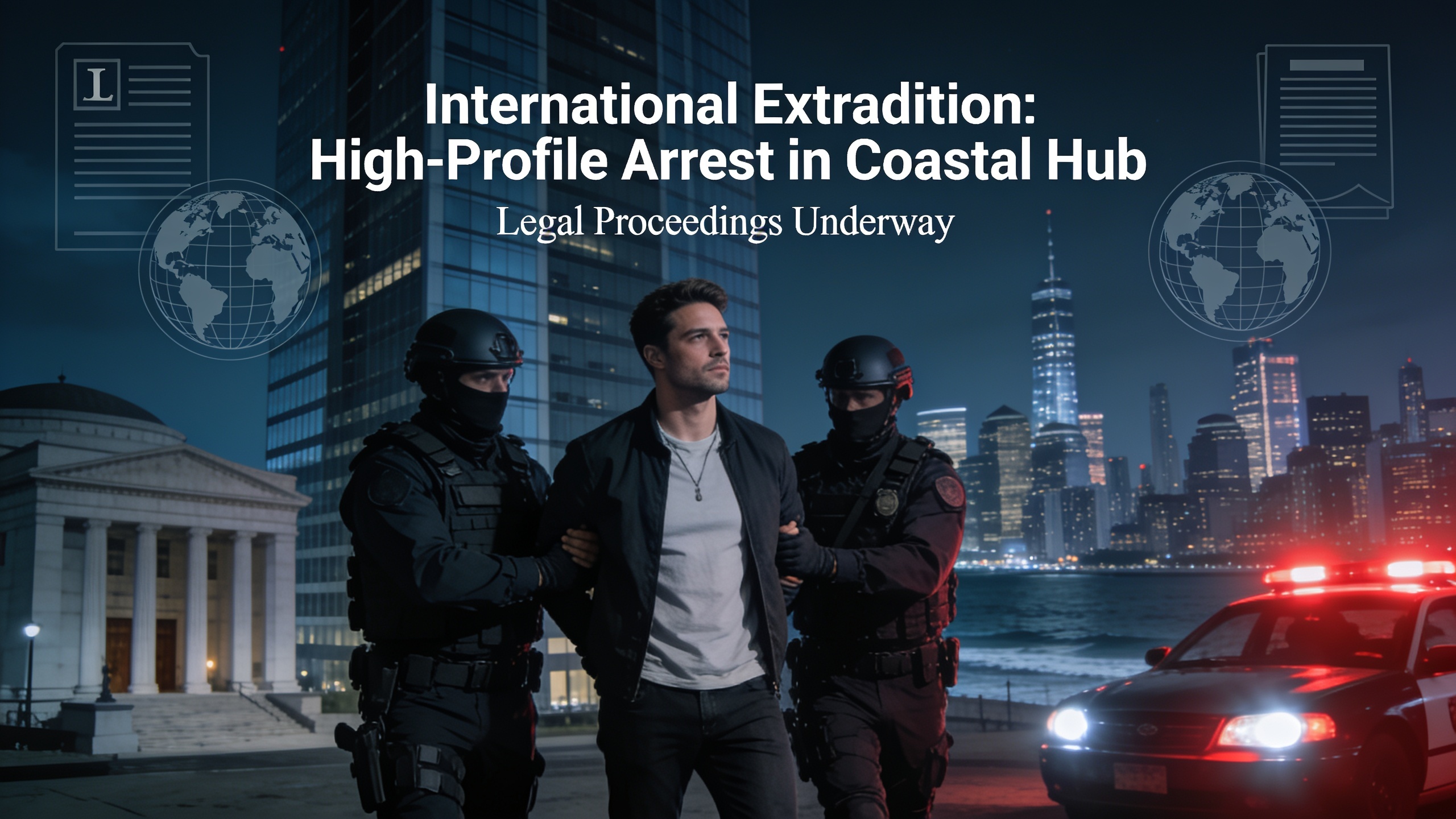
Famous influencer Andrew Tate and his brother were arrested in Miami by the U.S. Marshals. While reactions like “Suddenly in the U.S.?” are flooding in, the core of this case isn’t about a flashy lifestyle or online controversy. The key point is that the extradition process based on serious criminal charges—including rape and sex trafficking—brought by the UK was carried out in Miami.
This arrest wasn’t just about detaining suspects; it was quietly executed as part of an international cooperation effort under a sealed warrant. The U.S. Department of Justice confirmed the arrest was “in connection with the extradition process,” effectively making the United States the new stage in this case.
The Real Reason Behind Andrew Tate’s Arrest: Not a U.S. Case, But the UK’s Extradition Process
To clarify the biggest misconception, Andrew Tate and his brother weren’t arrested in Miami because “new crimes were uncovered in the U.S.,” but rather because the UK’s extradition request is being enforced through the American judicial system.
The UK Crown Prosecution Service (CPS) charged (or initiated charges against) the brothers with allegations related to rape, human trafficking, and sexual exploitation purportedly occurring between 2010 and 2017 in the UK, and requested their transfer to the UK. Once this request met legal requirements, U.S. federal enforcement agencies executed the arrest.
Andrew Tate’s Next Chapter in the U.S.: Key Issues Expected at Miami Federal Court
The arrest marks just the beginning. Typically, cases like this move forward with a hearing at the Miami Federal Court, where key issues will be addressed rapidly:
- Whether to agree to extradition: The process differs significantly depending on whether extradition is voluntary (consented) or opposed (contested).
- Detention versus bail: Factors like flight risk, identity and passport concerns, and seriousness of overseas charges will influence this decision.
- Claims of procedural rights: Legal arguments may arise contending “extradition criteria are not met,” alongside possible procedural violations or human rights issues.
It is crucial to note that at this stage, everything is still an ‘allegation’, and the individuals involved have denied these charges.
Why Andrew Tate’s Case Became an ‘International Battle’: The Clash of UK, Romania, and U.S. Jurisdictions
The reason Tate’s arrest in Miami is creating such a ripple effect is that this case intertwines with ongoing legal risks in Europe that have been developing for some time. The Tate brothers have faced investigations in Romania on allegations including human trafficking, sexual exploitation, and money laundering, while the UK has separately sought their custody based on other charges.
Ultimately, this arrest reflects not some grand conspiracy, but rather the realization of international criminal justice cooperation tracking a famous influencer across borders. The involvement of sealed warrants and extradition procedures adds layers of mystery to the situation for the general public.
New Charges by the UK Prosecutor: What Do a Staggering 42 Allegations Mean? (Andrew Tate)
From rape to child pornography and human trafficking. The additional 42 serious criminal charges related to the Tate brothers indicate that this case goes well beyond mere online controversy, placing them at the center of a complex web involving multiple victims, multiple crime types, and multiple jurisdictions. However, one key premise at this stage is clear: these are allegations brought by the prosecution, not convictions, and the accused parties deny all charges outright.
Composition of Charges: The Key is the “Wide Spectrum of Crimes” (Andrew Tate)
Based on reports and statements from the UK Crown Prosecution Service (CPS), the scope of the British concerns is not limited to a single crime but represents a broad spectrum spanning sexual offenses, violence, exploitation industries, and illegal recordings/images.
- Additional Rape Charges: These include 7 new rape allegations related to incidents alleged to have occurred between 2010 and 2017 in the UK.
- Human Trafficking for Sexual Exploitation: Central accusations include controlling victims and funneling them into abusive exploitation schemes.
- Assault and Bodily Harm: Physical violence charges linked to the context of sexual offenses are also highlighted.
- Child Pornography and Extreme Pornography (‘indecent images’, etc.): The scope extends into online content crimes, amplifying the gravity of the case.
The “42 Charges” Controversy: Why Do Media Outlets Report Differently? (Andrew Tate)
Where readers often get confused is over the total number of charges (21 vs. 42, etc.). This discrepancy usually arises from two factors:
- Adding together existing ongoing charges and investigations plus newly added allegations all at once.
- Combining charges against both Andrew Tate and Tristan Tate in one count versus tallying them separately.
In other words, the figure “42” serves as a symbolic number reflecting the case’s severity, but practically, it varies depending on which sets of charges are included in the count. The crux of the matter is less about the number itself and more about the fact that multiple types of crimes are being simultaneously alleged, signaling the case’s growing complexity and expansion.
What This Indictment Means: Not Just an ‘Influencer Scandal’ but an ‘International Criminal Procedure’ Matter (Andrew Tate)
The message behind this indictment is far from a mere “celebrity downfall.”
- The combination of multiple victims, a lengthy span of years, and diverse charges suggests the UK prosecution views this as an issue of systemic exploitation.
- With arrests and extradition proceedings underway in the US, the case becomes a test of international cooperation involving the US, UK, and Romania.
- Given Andrew Tate’s significant online influence, the trial’s process and ultimate verdict could leave a lasting impact on debates about ‘influencer accountability’ and platforms’ responsibilities for the spread of harmful content.
Finally, it must be emphasized again: this remains a stage of prosecutorial claims and ongoing legal procedures. Yet, the weight carried by these “42 charges” is undeniably enough to ignite explosive societal interest in what will unfold in court.
From Romania to Civil Lawsuits: The Multi-Layered Legal Crisis Facing the Andrew Tate Brothers
What began as a human trafficking investigation in Romania has expanded to new criminal charges in the UK and civil lawsuits filed by British women. The international community now views one controversial influencer not as a “single-country case” but as part of a complex legal network spanning multiple jurisdictions. The current predicament of the Andrew Tate brothers vividly illustrates how this network operates.
Romania: From ‘Webcam Business’ Suspicion to Human Trafficking Investigation
After the Tate brothers relocated to Romania, local authorities launched criminal investigations involving human trafficking, sexual exploitation, and money laundering. A repeatedly highlighted allegation in reports is that women were lured and incorporated into a business structure aimed at sexual exploitation.
Although the Romanian case moves independently from the UK extradition issues, it ultimately forms one pillar of the “international legal risks” surrounding the Tate brothers. In other words, even if the outcome in one country doesn’t directly affect proceedings elsewhere, parallel investigations in multiple countries accumulate pressure over time.
UK Civil Lawsuits: A Second Track Holding Accountability Apart from Criminal ‘Guilt’
While criminal proceedings represent the state-led domain of ‘punishment,’ civil lawsuits are driven by individuals seeking ‘accountability.’ In the UK, four women have filed civil suits against Andrew Tate, alleging rape and physical and sexual violence. According to the claims, some of the women were romantically involved with him, while others worked in his webcam business.
Two key points stand out here:
- Criminal and civil cases operate under different standards: Even if criminal cases yield no conclusion—or even if they do—civil courts can issue separate judgments.
- The ‘influencer accountability’ framework is strengthening: When a public figure with massive influence faces legal battles, these disputes rapidly permeate platforms, fandoms, and public discourse, turning the case itself into a social arena of debate.
The Tate camp denies all allegations, maintaining that any sexual acts were consensual. Therefore, the crucial focus at this stage is not on “final judgments,” but on the fact that multiple layered processes are unfolding simultaneously.
Not Just ‘One Arrest’ but a ‘Chain of Procedures’: The International Net Tightening Through Cooperation
While media attention centers on the Miami arrest and UK extradition process, the bigger picture is broader. With the Romanian investigation, UK criminal charges, and UK civil lawsuits coexisting, the Tate brothers face not a single case but a series of intertwined proceedings exerting simultaneous pressure through multiple legal systems.
Ultimately, the question emerging from this scenario converges into one: the influence of global-scale influencers crosses borders, but can legal accountability also be assembled across borders in a coordinated way? The Andrew Tate case has become the most controversial yet emblematic testbed for answering that question.
The Andrew Tate Case Through an American Lens: Law Enforcement, Politics, and Cultural Clash
The case of Andrew Tate, who rose from a Trump supporter to an iconic influencer in right-wing online culture, is far more than a simple overseas criminal charge—it mirrors the political and cultural conflicts simmering within the U.S. His arrest in Miami marks the legal start of the extradition process, but public discourse has already pulled the matter deep into the heart of American platforms, political identities, and the gender culture war.
What Andrew Tate’s Arrest Reveals About U.S. Law Enforcement: More “Allied Cooperation” Than “Domestic Case”
The arrest on U.S. soil carries significance not as a courtroom battle over the facts, but as America’s role as an executor of U.S.-U.K. extradition cooperation.
- The involvement of the U.S. Marshals and the Department of Justice (DOJ) in confirming procedures requested by the U.K. paints a picture of the U.S. as a hub of international criminal judicial collaboration, rather than the primary investigator or prosecutor.
- The core issues likely to dominate before American courts won’t center on guilt or innocence but rather on extradition feasibility, conditions, and detention/bail—procedural battlegrounds. From there, domestic debates evolve into questions of procedural rights, international jurisdiction, and diplomatic responsibilities, separate from the underlying criminal allegations.
Andrew Tate and the Fusion with U.S. Political Culture: Trump Support, Right-Wing Online Ecosystem, and Identity Wars
That Andrew Tate is openly known as a Trump supporter intensifies the case’s heat within the U.S. public sphere. The American audience often interprets such cases not merely as legal matters but through the lens of identity politics: “Which side does he belong to?”
- Supporters are inclined to frame this as political targeting or an “attack on a figure disliked by elites and the mainstream.”
- Opponents link Tate to a misogynistic online culture and portray the issue as a dangerous product of “platforms and politics colluding to amplify harm.”
Ultimately, regardless of what is proven in court, this case risks becoming a symbol of America’s ongoing culture wars.
The Cultural Clash Sparked by Andrew Tate: ‘Freedom of Expression’ vs. ‘Online Radicalization’ and Platform Accountability
Despite bans on multiple platforms, Andrew Tate has maintained vast influence across other channels—reviving a longstanding American debate.
- Where is the boundary between freedom of speech and the spread of harmful content?
- Within the manosphere narratives aggressively targeting young men, can platforms claim they’ve fulfilled their responsibilities solely by “blocking” content while leaving recommendation algorithms and monetization structures intact?
This arrest brings into sharp relief not just the individual allegations but the recurring societal conflict surrounding online misogyny, radicalization, and content moderation in the U.S.
A Crucial Premise When Interpreting the Andrew Tate Case: Separate ‘Allegations’ from ‘Impact’
Finally, it’s essential to remember this remains at the stage of criminal allegations, and Tate denies all charges. However, the influence that Andrew Tate’s online empire has wielded—and its reverberations within American society—exist as a distinct reality.
At its core, the debate buzzing across America comes down to one pivotal question:
“Is influencer power that crosses borders a force that becomes uncontrollable unless law, platforms, and politics work together to manage it?”
Andrew Tate: The Convergence of Pop Culture and International Scandal — What Lies Ahead?
From a reality show influencer to the icon of ‘hypermasculinity,’ and now the central figure in a global legal battle — where is this story headed? The current controversy surrounding Andrew Tate transcends the mere “fall of an influencer.” It has evolved into a phenomenon where online culture, platform power, and international criminal judicial cooperation intersect within a single case.
How a Pop Culture Figure Becomes an ‘International Incident’
Andrew Tate’s public persona has long operated as a “brand fueled by controversy.” Reality TV exposure, provocative statements, and narratives of luxury and dominance all combined to both galvanize a devoted following and ignite fierce backlash. But this time, the arena of dispute is not social media comment sections—it’s the judicial system. Facing serious charges in the UK, extradition requests, investigations in Romania, and arrests in the US, his personal scandal has solidified into an international legal process spanning three jurisdictions (UK–Romania–US).
The Real Point of Interest Is Not Fame But Procedure
At this juncture, the key issue is less about liking or disliking Tate and more about the procedural realities involved. In the US, detention, bail, extradition conditions, and defense rights during the extradition hearings will come under scrutiny. Should the case move to the UK, expect intensive disputes over evidence and trial strategies by individual charges. Meanwhile, with the Romanian proceedings running concurrently, it’s critical to observe how the outcome in one country might influence the legal processes in the others.
One vital ground rule: at this stage, most are still allegations, and Tate’s camp denies them entirely. This fact marks the starting point for any future conclusions.
Platforms and Fandom: Does Influence Persist After Being ‘Banned’?
What makes the Andrew Tate case exceptional is the massive social impact generated outside courtrooms. Being sanctioned by major platforms didn’t signify an “end” to his influence. On the contrary, bans and controversies were consumed almost as a martyrdom narrative on some channels, paradoxically helping spread his reach. Therefore, the future focus shifts from a simple “guilty or not” to questions like:
- How do platform sanctions and algorithms amplify or suppress controversial figures?
- In male youth-oriented communities, how is the ‘hypermasculinity’ narrative repackaged and reshaped?
- How do criminal allegations against influencers affect their business models (subscriptions, paid communities, coaching products)?
The conversation is moving to these broader structural issues.
What’s Next? The Aftermath Beyond the ‘Courtroom Verdict’
Wherever this case goes, the conclusion likely won’t end with a single judgment. Successful extradition could make the UK trial a pivotal moment, followed by clarifications regarding the Romanian proceedings. Simultaneously, if civil lawsuits are filed alongside, they will apply different standards (degree of liability, damages), potentially prolonging the ‘influencer accountability’ debate over the long term.
Ultimately, the biggest question the Andrew Tate saga leaves us with is this: When a character crafted online clashes with real-world law, where does society draw the line between protected expression and accountable conduct? The ongoing search for this answer is why the story continues to unfold and expand.
Comments
Post a Comment