 \n
\n
Winter 2026: The Fate of the MCU Hangs on the Return of Avengers Doomsday
The Avengers are coming back—after 7 years since ‘Avengers: Endgame’, now carrying the title of MCU’s fifth Avengers film. The US release date is set for Friday, December 18, 2026. As soon as the first official trailer dropped, promotion kicked into high gear, especially in the North American market, sparking the same burning question among both the industry and fandom alike: Can this film truly reverse the slump since ‘Endgame’?
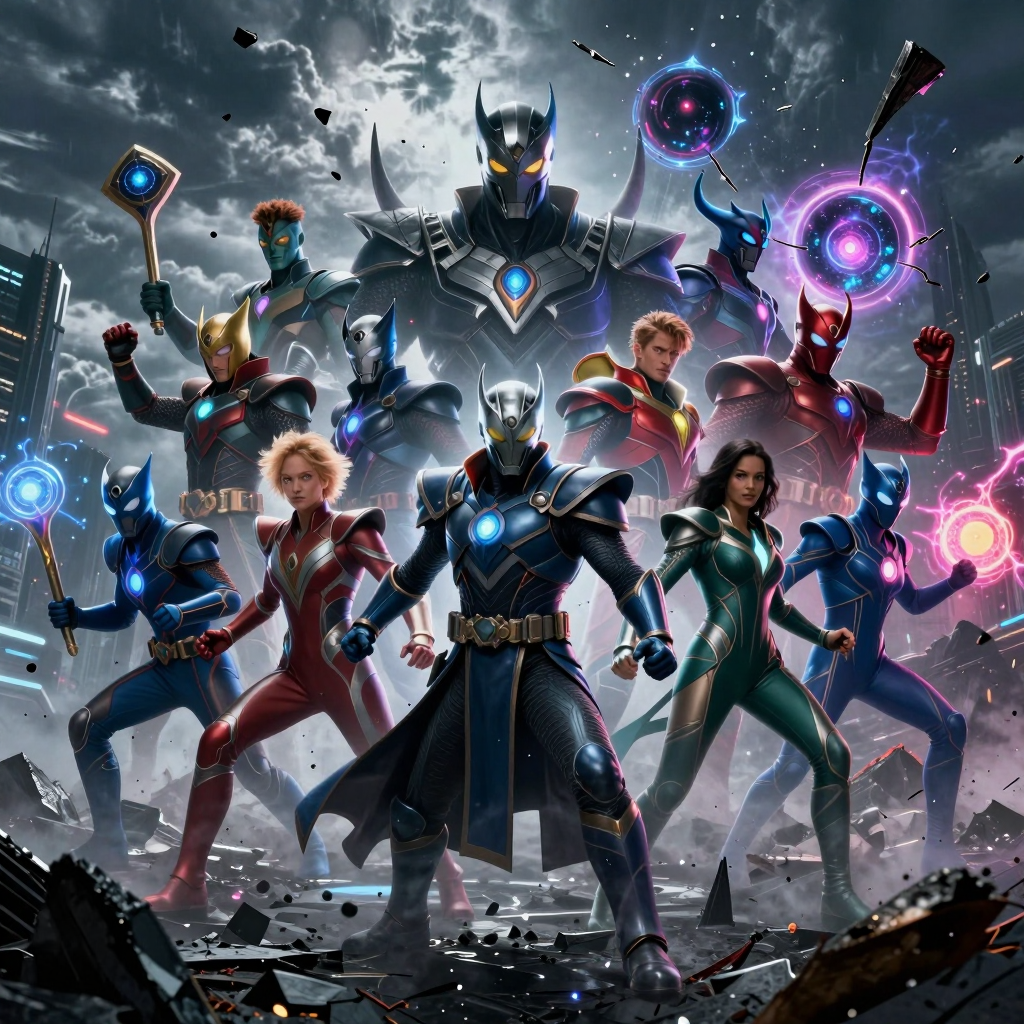
What makes Avengers Doomsday special isn’t just the long-awaited return of the Avengers. Marvel has made it clear that heroes from three different universes will collide, placing this film at the heart of a multiverse war uniting the Avengers, X-Men, and Fantastic Four all in one epic event. The trailer’s tone unmistakably reveals Marvel’s intention to converge and realign the multiverse narrative that has been scattered across various dramas and movies over the past few years.
And most critically, Marvel is playing their “final boss card”: Robert Downey Jr. as Doctor Doom. Casting the actor who symbolized the MCU’s beginning as Iron Man as the villain reads like a declaration of “this time, we absolutely must win.” International media are echoing this sentiment, calling the film a make-or-break blockbuster that will decide the post-Endgame landscape, acknowledging that Marvel has set the bar at its highest difficulty yet for brand rebuilding.
In short, Avengers Doomsday is far more than just the next chapter; for the MCU, it’s an event close to hitting the reset button. Come winter 2026, Marvel must prove that “the Avengers are still the answer.” Now, all eyes focus on one key question: Will this return spark nothing more than nostalgia-driven ‘comeback,’ or will it mark a ‘fresh start’ that opens the next decade of the MCU?
The Dawn of the Multiverse War: Three Universes Collide — Avengers Doomsday
From the main MCU to X-Men and Fantastic Four, calling this crossover “the first this massive since Endgame” is no exaggeration. The Avengers Doomsday trailer and Marvel’s official description pose one burning question: How on earth do heroes from three different universes end up on the same battlefield?
What “Three Distinct Universes” Really Means — Avengers Doomsday
Marvel sets the stage with the premise that "heroes from three different universes are hurtling toward a catastrophic collision course.” This phrase is crucial—it signals not just a cameo-laden spectacle but a structurally intertwined war movie featuring three factions locked in epic conflict.
- Main MCU: The current core of Avengers and Disney+ storylines (like Loki), building the multiverse foundation
- X-Men Universe (Fox legacy): Iconic characters like Professor X and Magneto, representing “a team from another world”
- Fantastic Four Line (the new canon centerpiece): Led by Reed Richards, directly tied to the formidable Doctor Doom
The key question isn’t “who joins” but “why do these universes clash?” Joining forces is the effect; the collision is the cause.
How They Converge on One Battlefield: ‘Separate Fronts → One Intersection’ — Avengers Doomsday
The trailer hints at a classic yet powerful narrative path. Heroes battling on separate fronts and timelines are inevitably drawn into a single convergence point.
This setup delivers two thrilling sensations for the audience:
- A Sense of Scale: The phrase “multiverse war” is backed up with immense scope right from the start.
- The Thrill of Convergence: As scattered forces unite onscreen, the engine of the story roars to full power.
In other words, Avengers Doomsday builds suspense early on through high-stakes, “every hero for themselves” survival fights, then gradually shifts gears into an all-out, full-scale war.
Why Doctor Doom Is the Magnetic Center of This War — Avengers Doomsday
To mobilize three universes at once, the villain can’t be a mere world-level threat—it must be an existential danger to reality itself. The trailer places Doctor Doom squarely in that role.
- When the threat isn’t just a city or Earth, but the collapse of the entire multiverse,
- heroes transcend allegiance and universe to stand on the same battlefield for survival.
Here lies the true spectacle of Avengers Doomsday: it’s not just about “joining forces”; it’s about the very fabric of existence depending on their unity.
Avengers Doomsday: RDJ’s Villain Transformation and the Return of Legendary Heroes
The news that Robert Downey Jr., the iconic face of Iron Man, is returning as Doctor Doom boldly declares this film is not a “safe sequel” but a game-changing reboot. The trailer asks a simple yet gripping question: Why has the symbol of heroism we knew become the face of the MCU’s greatest threat? This unsettling tension is precisely the first twist that Avengers Doomsday aims to deliver.
RDJ as Doctor Doom: Reframing a Legend from ‘Nostalgia’ to ‘Threat’
What American media universally highlights is not “RDJ’s comeback” but RDJ’s subversion. He is no longer the savior of the team but stands at the heart of an existential catastrophe threatening to collapse the multiverse itself.
This choice reads as Marvel’s strategy to stir emotions by transforming familiar nostalgia into a villainous aura, shifting the audience’s trust and affection for RDJ into feelings of unease and vigilance within the film.
When ‘Cap and Mjölnir’ Gain New Meaning
Captain America’s return and the reappearance of Mjölnir, glimpsed in the trailer, are more than mere fan service—they hint at the nature of the coming conflict.
If Mjölnir was once a symbol of “worthiness” in Endgame, it now functions as a warning that “the battlefield has reopened.” Cap’s arrival not only boosts team morale but likely redefines what it means to be a hero in a world where RDJ stands as the villain.
Thor as ‘Leader’: The Pivot in the Multiverse War
Thor takes center stage in this film. The narrative of a wandering Thor post-Endgame stepping back into leadership fulfills the storytelling need for a unifying focal point amid clashing heroes from multiple universes.
Ultimately, Avengers Doomsday isn’t about “who’s stronger” but about who can hold this shattered team together—and the trailer clearly signals that this responsibility falls on Thor.
The Twist This Ensemble Predicts: Not a ‘Heroic Return’ but a ‘Universe Reset’
The combination of RDJ’s Doctor Doom, Captain America’s comeback, and Thor’s leadership points decisively in one direction. The film’s core twist is not “legends return,” but that the way these legends return changes the very rules of the MCU.
In other words, the more familiar faces appear, the stranger the story becomes—pushing this paradox to its limits is the movie’s boldest gambit.
Infinity Vision and Avengers: Doomsday Season 2: The Ultimate Theater Experience and Box Office Clash
The moment Marvel unveiled its new premium screening format, ‘Infinity Vision,’ the year-end 2026 box office shifted from simply showcasing new releases to a full-scale competition for upgrading the viewing experience. Adding fuel to the fire is the simultaneous release of ‘Dune: Part Three,’ setting the stage for a blockbuster showdown reminiscent of ‘Oppenheimer vs. Barbie.’ Ultimately, the question becomes: Will audiences choose a movie, or an experience?
Infinity Vision: Avengers: Doomsday Ignites the ‘Marvel-Style PLF’ War
‘Infinity Vision’ is Marvel’s very own PLF (Premium Large Format) certification label. By bundling bigger screens, enhanced sound, and premium seating into a package branded as “Infinity Vision certified,” Marvel sparked early buzz with exclusive advance ticket sales limited to this format.
What does this strategy mean?
- Not just relying on IMAX or Dolby Cinema: Marvel is taking control of premium seating and formats under its own brand.
- Elevating the event movie experience: For an all-star multiverse battle like Avengers: Doomsday, the sensation of “being part of the event” takes precedence over just “watching a movie.” The premium format amplifies immersion through price and exclusivity.
- Fueling early box office momentum: Limited-format sales stir a ‘seat-snatching’ frenzy that quickly turns ticket purchases into trending news ahead of release.
Dune: Part Three on the Same Day: Why This Could Be Avengers: Doomsday’s Season 2
The intriguing part? This race for the ultimate theater experience doesn’t stop within one film. The simultaneous release of ‘Avengers: Doomsday’ and ‘Dune: Part Three’ naturally invites audience comparisons.
- Mass-appeal all-star blockbuster vs. serious sci-fi epic finale
- Premium format dominance battle (which film deserves the bigger screen?)
- Cultural buzz around viewing bragging rights (“I’ve seen both!” becomes a social game)
Just like the ‘Barbie vs. Oppenheimer’ battle in 2023, this pairing creates a mix of rivalry and mutual marketing boost. When audiences who planned to see just one movie decide to catch both, the whole year-end market expands exponentially.
Conclusion: Avengers: Doomsday Isn’t Just Selling a Movie — It’s Selling a Theater Choice
In summary, Avengers: Doomsday’s Infinity Vision is more than a new format launch—it’s Marvel’s marketing play to make theaters destinations once again. Meanwhile, ‘Dune: Part Three’ isn’t just competition; it’s a partner in heating up that destination and growing the market together. The year-end 2026 box office is shaping up to be less about film versus film, and more about experience versus experience.
Avengers Doomsday: Is ‘Doomsday’ the MCU’s Reset Button? The Apex of a 7-Year Multiverse Saga and Beyond
After seven years, the multiverse narrative finally converges at a single point. Avengers Doomsday is not merely "the Avengers are back," but can be seen as an attempt to redefine the scattered post-Endgame settings and the meaning of the team. More importantly, this film is not the end but the beginning of a grand narrative that leads into ‘Secret Wars’. Even with the information revealed so far, the structure of how Marvel will reshape its future is clear.
Wrapping Up 7 Years of Multiverse: Uniting Scattered Universes into One Battlefield
Recently, the MCU has scattered multiverse clues widely through movies and Disney+ series. The problem was that the more clues appeared, the more viewers wondered, “So where exactly is the core storyline now?” Doomsday consolidates this confusion into a single ‘war’ scenario.
- Marvel’s own description of “heroes from three different universes” means the main MCU + X-Men branch + Fantastic Four branch will all collide in a single event.
- This setup goes beyond mere fan service; it’s a design to rearrange multiple IPs under one consistent rule set at once. The multiverse, which was once a tool for “expansion,” now becomes a tool for “organizing.”
The Reset Trigger is ‘Doctor Doom’: How a Villain Reshapes the World
The trailer pushes a clear message: the ultimate boss is Doctor Doom, and the nature of the threat is not a simple invasion but an existential crisis causing multiverse collapse.
- Especially, the casting of Robert Downey Jr. as Doctor Doom works like a narrative device in itself. The moment Iron Man’s face becomes the ‘villain of a new era,’ the MCU cleverly uses familiar faces to stir both anxiety and tension in the audience.
- This choice feels like Marvel’s declaration to “shake up the board once again.” Rather than merely increasing the number of heroes, when a villain changes the rules, the franchise successfully resets.
Both the ‘Apex’ and the ‘Starting Point’: A Bridge to Secret Wars
The industry views Doomsday + Secret Wars as twin peaks because this film is not a concluding event but an event that sets the premise for what comes next.
- The Russo brothers directing two consecutive films signals a familiar “two-part epic” rhythm to the audience.
- Therefore, the core question of Doomsday is not “Who wins?” but rather, “What shape will the world take after the clash?” This reorganization sets the stage for Secret Wars.
So, Will the MCU Reset Succeed?
There is ample reason to believe Avengers Doomsday could be the MCU’s reset button. The reasons are simple:
- It translates the complex multiverse setup into an intuitive genre framework of a ‘grand gathering’
- It brings in X-Men and Fantastic Four, reorienting the core axis of the universe
- Above all, it has a clear purpose of “restructuring for what’s next.”
Ultimately, the key point to watch is this: Will Doomsday end the 7-year multiverse apex with a ‘bang,’ or will it link to a ‘new order’ that continues into Secret Wars? This choice will determine Marvel’s next decade.
Comments
Post a Comment