 \n
Messi’s Last Dance in New Jersey: The Final World Cup and Its Bittersweet Ending
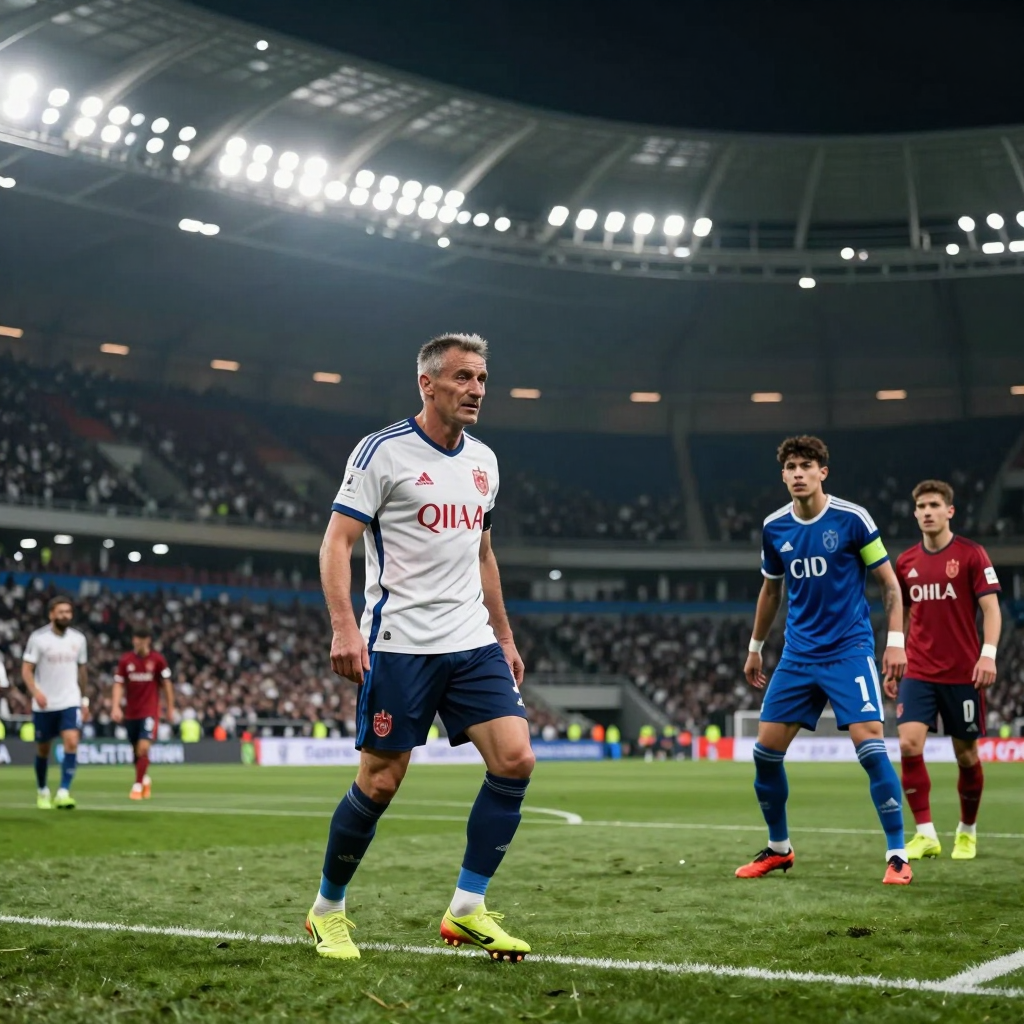
Why did Messi’s final World Cup stage end with the shocking record of ‘zero shots on goal’? The 2026 North American World Cup final took place at the New York·New Jersey Stadium (MetLife Stadium) in East Rutherford, New Jersey, and the legendary saga known as the ‘Last Tango’ came to a sad conclusion with a 0–1 defeat to Spain.
Messi Final Summary in One Line: Spain 1–0 Argentina, the ‘Last Tango’ Stopped
The outcome alone was cruel, but the real sting came from how the game unfolded. Argentina managed zero shots in the regular 90 minutes, and by the end of extra time had only two shots, none on target, revealing a helplessness unworthy of the defending champions. In the final, where every desperate effort counts, the disappearance of even an “attempt” to attack made the ending all the colder.
Why Messi Was Shut Down: Spain’s Pressure Erased Every Forward Pass
Messi’s silence on the field wasn’t simply a matter of form. Spain tightly connected their front, midfield, and flanks to apply double and triple pressure the moment the ball was received, suffocating Argentina’s buildup right from the start.
Without forward passes, the ace couldn’t touch the ball, and without the ball, the final couldn’t be changed by individual will. On this day, Messi was less “the player with the ball” and more a figure enduring the game from spaces where the ball never came.
Why Messi’s Last Moment Was Special: A ‘GOAT Ending’ in American Primetime
This final was not just a loss—it was the moment of a ‘last World Cup’ completed right in the heart of America. Held in New Jersey and airing during the prime viewing hours for American audiences, the match transformed into a narrative event beyond merely a sports spectacle.
Perhaps that is why, even in defeat, people long remember not just the victory or loss but “how it ended.” Tears, the silver medal, and the long pause etched on Messi’s face—the night in New Jersey captured the shift in Messi’s career from monumental triumphs to a profoundly human moment of loss.
Emotions Left by Messi’s ‘Last Dance’: A Match Marked by Both Inspiration and Loss
From a football standpoint, the final was frustrating; narratively, it was brutal. Yet, ironically, that is exactly where the ‘Last Dance’ finds its completion. The final chapter of the greatest player need not always be the most beautiful.
The defeat in New Jersey left Messi not with a winner’s trophy, but with a long-lasting question: “A story of reaching the very end, yet never quite grasping the prize.”
Messi: The Symbol of a Generational Shift - The Epic Clash Between 39-Year-Old Messi and 19-Year-Old Yamal
At the World Cup final, 39-year-old Messi set a record as the oldest player ever to appear in a final, while 19-year-old Ramin Yamal stood as the representative of Spain’s future. This final was about more than just the 0-1 scoreline; it was a moment when everyone witnessed the end of one era and the rise of the next simultaneously.
The Weight Behind Messi Standing as the ‘Oldest’
Messi’s mere presence on the final stage was already symbolic. It’s rare for a player to reach three World Cup finals, and rarer still for one to remain the team’s core until the very end. Yet in this match, Argentina was stifled by Spain’s relentless pressure, cutting off forward passes, and Messi himself faced double and triple team presses whenever he touched the ball—forcing him into not “creating football,” but “resisting football.”
The outcome was brutal. While the entire team was stuck at zero shots during regular time, Messi’s final World Cup final became a battlefield where will and symbolism clashed with and ultimately yielded to speed and energy.
Yamal Speaks the Language of the ‘Next Era’
Yamal was more than just a young player; he embodied how Spanish football will express itself in the coming decade. His wide-ranging activity, bold forward moves, and fearless choices under pressure delivered a clear, intuitive message to the audience:
“Football is now faster, more relentless, and more intricately connected.”
Unlike Messi, who unlocked the game with football IQ and timing, Yamal transformed the match’s atmosphere through sheer movement. This wasn’t simply a showdown of individual skill—it was a scene capturing the very moment the grammar of an era shifts.
The Story This ‘Generational Battle’ Leaves for Fans
What made this final resonate so deeply with fans worldwide was that beyond win or loss, it posed profound questions for the future:
- What will we remember from Messi’s final act: not victory, but his narrative weight and legacy?
- What did Yamal gain from this match: an introduction as the face of a new era, bigger than any trophy?
- And why is the World Cup so special: because it’s the stage where generational transitions unfold in the most dramatic way?
In the end, this match was a collision between the ‘last challenge of a GOAT’ and the ‘debut of a rising star.’ One symbolized an ending, the other a beginning—and that very contrast turned this final into a story worthy of the World Cup.
A Narrative Beyond Messi’s Last Dance: Records, Missed Opportunities, and Career Legacy
12 attacking points (8 goals and 4 assists). Looking at the numbers alone, Messi was still the player single-handedly dragging the “finish line” in this tournament. Yet, the weight of just one final match was brutal. The Golden Boot went to Mbappé, with 10 goals and 4 assists, and the trophy found its way to Spain, culminating in “the greatest tournament, but the most bittersweet ending.”
Messi’s records were striking, but the conclusion was ruthless
Messi’s 12 attacking points in this World Cup proved his undeniable presence throughout the knockout stages. Up until the final, scenarios like an ‘all-kill’ sweep of individual awards—Golden Ball, Golden Boot, Ballon d’Or—were genuinely within reach.
However, in the final, Argentina fell silent with zero shots in the regular 90 minutes, and just two shots (with zero on target) including extra time. At that moment, Messi’s stats stopped representing “numbers leading to a victory” and instead became “figures explaining defeat.”
What Messi lost wasn’t the Golden Boot, but the ‘perfection of the final act’
Losing the race for top scorer was more than just missing out on a personal award. What fans truly hoped for was “once again, the most cinematic finale.”
Ultimately, Messi left the last World Cup final without a goal or a single shot on target. This tournament paradoxically became “a story of dazzling records but a blurred finale.” The harshest truth in sports is often that the final 90 minutes overshadow all seven previous games.
Messi’s legacy was cemented beyond the numbers
Yet, the conclusion remains clear: ending this tournament without a trophy does not diminish Messi’s career. He has already built unprecedented milestones, including eight Ballon d’Or awards, one World Cup victory, two World Cup Golden Balls, four Champions League titles, and ten La Liga championships.
If anything, the ‘sad ending’ in 2026 only strengthens his legacy in a different way. It adds a deeply human narrative of a legend not because he had it all perfectly, but because he became a legend even though he didn’t quite have it all in the end. Records explain; legacy endures. And Messi left behind both with this World Cup.
Messi Beyond Football: The Malvinas Ceremony and the ‘Salary Comment’ That Sparked Political and Social Reverberations
Moments when sports clash with politics are always uncomfortable yet powerful. The controversy surrounding Messi at the 2026 World Cup shattered the long-standing rule of “no stories beyond the pitch,” revealing once again the social power of the World Cup as a platform. This section breaks down what the Malvinas (Falklands) ceremony and the economic remark about “not making it through the month on a salary” each triggered—and why these resonate more strongly now.
Messi and the Malvinas Ceremony: When the ‘No Politics’ Rule Meets Reality
Right after the victory against England, Argentina’s team staged a ceremony with the message “The Malvinas Islands belong to Argentina,” instantly becoming the epicenter of controversy. South Korean media dubbed it “Argentina’s Dokdo ceremony” for a clear reason: the moment when the emotional energy of the World Cup melded with territorial dispute narratives, transforming football into an arena for national identity and historical memory in a flash.
Two core issues stood out:
- Conflict with FIFA regulations: FIFA strictly prohibits political messages during tournaments. This act was immediately classified not as “freedom of expression” but as a violation of tournament rules, triggering disciplinary review.
- Responsibility of collective action: As the act was a team-level ceremony, the symbolic weight disproportionately landed on the star—particularly Messi—regardless of his personal intentions. In the World Cup, the biggest face inevitably bears the heaviest responsibility.
The clear takeaway is this: the call to “separate politics and sports” veers toward idealism, confronting the reality that mega events like the World Cup inevitably intersect with international political sentiments.
Messi’s ‘Salary Comment’ and the Argentine Government’s Rebuttal: The Social Ripple Caused by a Hero’s Words
Another clash targeted the present lives of people more directly. Messi remarked in an interview that he understood “people struggling in tough times, unable to make it through the month on their salary,” linking the joy of match results to the everyday livelihoods of the public. What made this comment unusual was Messi’s normally cautious stance on political and social matters.
The debate here shifted from “right or wrong” to questions of:
- Where does a star’s ‘opinion’ end and ‘politics’ begin?: Discussing economic hardship—even without endorsing a party—carries an inherently political undertone by calling out reality.
- The government’s countermove backfire: The Argentine government (Millie administration) responded by questioning “how much can a footballer understand about the economy,” which reinforced the frame but simultaneously intensified the hero-versus-power conflict, amplifying the controversy.
This episode highlights how fragile the injunction “just play football” really is. The World Cup is a stage where even a single word from a player becomes a loudspeaker shaking domestic and international public opinion alike.
What the Messi Controversy Means: Not About ‘Sporting Purity’ but About ‘Sport’s Influence’
Though different in nature, the Malvinas ceremony and salary remarks share a key trait. Both dismantle the phrase “football is just football,” exposing the immense power the World Cup wields.
- The World Cup is both a game and a platform for expression: Representing the national jersey is not merely donning a team color but wielding a microphone heard by hundreds of millions.
- Messi’s legacy isn’t defined by records alone: Beyond wins and trophies, what he said at certain moments will shape the final chapter of his career.
- Controversy is not something to shy away from, but to interpret: More than the fact that politics entered, understanding why and how it unfolded in that moment is essential.
Ultimately, this World Cup’s Messi cannot be explained by goals and assists alone. He did not avoid—or could not avoid—the intersection between football and society, making the World Cup once again a mirror reflecting global conflicts and realities.
Messi’s Shining Final Chapter in the U.S.: MLS, the World Cup, and Trump’s Political Love Call
In the history of American soccer, it’s rare for a single player to simultaneously shake up the league’s stature and the atmosphere of a World Cup host nation. Yet in 2026, the name Messi connected the everyday rhythm of MLS (weekly league matches) with the extraordinary global spectacle of the World Cup in one seamless thread. What’s even more fascinating is how this dynamic includes a former U.S. president’s ‘cheerleading remarks,’ turning the question “Can soccer remain just a sport?” into a vivid reality.
Messi’s One-Sentence Summary of ‘MLS × World Cup’: “Soccer is beginning to speak the mainstream language in America”
Messi’s American career goes far beyond a mere star acquisition; it has transformed how the U.S. sports market consumes soccer.
- MLS is no longer just a league where global stars make brief stops; it has become a strategic outpost for the World Cup narrative, and
- Conversely, the World Cup generates an emotional bond by spotlighting players from our own league reaching the final, drawing host country fans deeper than ever before.
What this structure means is clear: soccer in America is no longer the “fourth major sport” but has grown into a stage where politics, culture, and business converge and converse.
What Trump’s Love Call around Messi Reveals: The Growing ‘Political Utility’ of Soccer
Trump’s comments about Messi and Argentina might seem like casual praise at first glance, but through the lens of American political tactics, a different signal emerges.
- Mega-events like the World Cup final serve as natural gateways to connect with the Latin community, immigrant cultures, and young voters, and
- Messi is the most powerful symbolic asset that instantly unlocks these connections.
In other words, regardless of Messi’s personal performance, who talks about Messi is increasingly consumed as political positioning. As soccer grows in the U.S., the incentive for politics to ‘harness’ soccer will only strengthen.
The Future After Messi: Will ‘Soccer and Politics’ Draw Even Closer?
The future this combination predicts is simple: Soccer in America is likely to evolve into a platform not just for neutral entertainment but for social messaging and symbolism.
- Star players’ statements will more frequently become targets of political interpretation, and
- Events like the World Cup will penetrate deeper into the domestic political attention economy.
Ultimately, the question remains: as America truly embraces soccer as a ‘mainstream’ sport, will we remember superstars like Messi as players only—or will they also be consumed as cultural and political icons of their era?
Comments
Post a Comment