 \n
\n
David Jonsson Emerges as the New Black Panther in the MCU
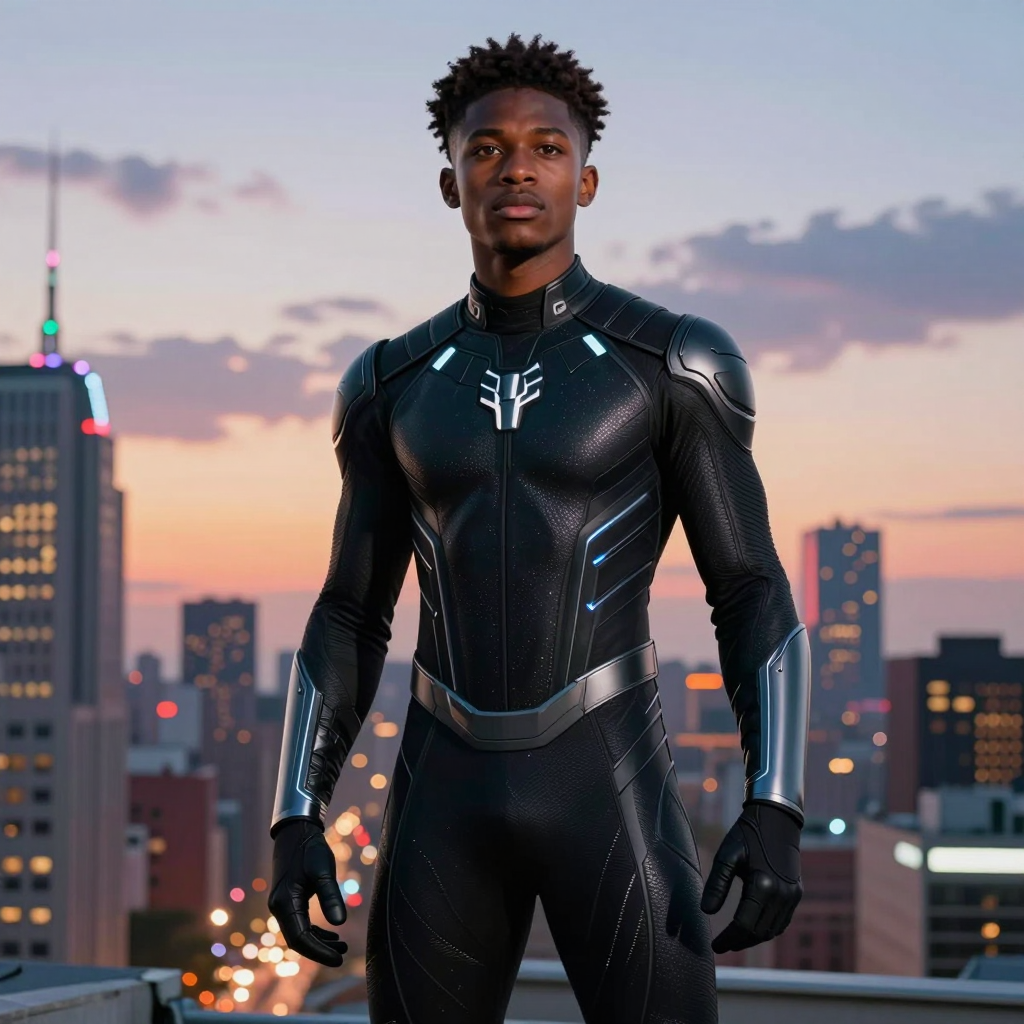
At San Diego Comic-Con Hall H in 2026, Marvel dropped a bombshell that turned the venue upside down. Alongside the official announcement of 〈Black Panther 3〉 (set to release on December 15, 2028), David Jonsson was revealed as the new Black Panther, stepping into the role of adult T’Challa II. Amidst a standing ovation from the audience, director Ryan Coogler introduced him as “our new Black Panther,” a moment that transcended a mere casting reveal and felt like a definitive passing of the torch.
This choice carries even greater weight for a clear reason. Since Chadwick Boseman’s passing, Marvel steadfastly maintained they would not recast T’Challa — instead, they’re now embracing the narrative of T’Challa’s son, T’Challa II, coming of age. In other words, 〈Black Panther 3〉 isn’t just about who wears the suit, but a story about honoring legacy while forging a bold new symbol. And standing at the story’s core is none other than David Jonsson.
The tone from American media was swift and decisive. Outlets like ScreenRant and Collider dubbed him “a key face of MCU Phase Six,” emphasizing the powerful emotional depth he showcased in 〈Alien: Romulus〉 and 〈The Long Walk〉 as solid proof he can carry the immense weight of the Black Panther mantle. Yet, fans remain divided, with many voicing support for Damson Idris instead, though public endorsements by the existing Wakandan cast — Letitia Wright (Shuri) and Winston Duke (M’Baku) among them — have helped ease tensions.
At the heart of it all lies the ultimate question: Can David Jonsson become the new symbol of Black Panther after Chadwick Boseman? The anticipation and debate sparked at Comic-Con will be the defining drama leading up to 〈Black Panther 3〉 — will it triumph as a story of legacy and succession, or be trapped in the shadow of comparison?
The Comic-Con Scene and Marvel’s Strategy: From Secret Meetings to Official Announcements — The Significance of Casting David Jonsson
The moment at San Diego Comic-Con Hall H when Kevin Feige and Ryan Coogler personally introduced the "new Black Panther" was far more than just a casting reveal. What’s even more fascinating is that this emotional stage presentation was not an impromptu act but the result of a ‘decision made 5 to 6 months in advance.’ Understanding why Marvel took that time to internally select David Jonsson and unveil him on such an iconic stage gives the announcement a whole new level of impact.
What David Jonsson’s ‘Secret Meeting’ Reveals: Casting Based on Trust, Not Stardom
According to reports, Marvel and Coogler held secret meetings months before the announcement to finalize their vision for the next Black Panther, during which David Jonsson was effectively locked in. This timeline carries a clear message:
- A character-focused casting over a safe box-office bet: Instead of choosing a widely famous actor, they opted for someone who has proven his acting chops and presence through his previous roles.
- Maintaining the franchise’s tone: T’Challa II is a “new lead” yet also a “heir to a legacy.” Marvel appears to have prioritized an actor’s ability to carry the narrative forward, even if it meant courting controversy rather than simply avoiding it.
- Continuity within the Coogler universe: The Black Panther series is strongly defined by its director’s vision. Pre-selecting the actor signals an intent to firmly establish the creative core desired by Coogler throughout production.
Why the Hall H Introduction Was Designed to Be Emotional: Marvel’s Official Narrative
When Coogler personally declared, “This is our new Black Panther,” met with a standing ovation from the audience, it transcended fan service and became an official rite of passage. The fact that Feige and Coogler appeared together to make the announcement achieved several goals at once:
- Combining studio endorsement (Feige) + creator approval (Coogler) in a single frame, maximizing the legitimacy of the casting
- Emotionally bridging the past promise of “We are not recasting T’Challa” with the present direction of “But the Black Panther legacy continues”
- Delivering a consistent message through social media official phrasing (“David Jonsson is your new Black Panther”), extending beyond mere news into a full-fledged branding campaign
The Takeaway From How David Jonsson Was Revealed: This Is How Phase Six’s ‘Face’ Is Made
Ultimately, Marvel placed this reveal at Comic-Con for one reason: to ensure the role of the “new Black Panther” wouldn’t be consumed as just another casting headline, but would be cemented as a landmark moment heralding the MCU’s next era. The sequence from secret pre-selection → emotional Hall H introduction → succinct official statement embodies Marvel’s signature star-making strategy that elevates David Jonsson overnight into a “next-generation leading star.”
Who Is the Real David Jonsson Amid Divided Reactions from Fans and Fellow Actors?
The phrase “fans divided” perfectly captures the varied response following the new Black Panther announcement, where reactions didn’t lean entirely one way. For many longtime fans who had imagined other actors in the role, this choice introduced an unfamiliar face. Yet, the truly intriguing point lies elsewhere. The figure at the center of the debate is actually a multicultural actor who grew up in East London, earning strong trust from industry peers. What’s truly needed now isn’t “why he was chosen,” but a clear look at how he has built his career as an actor.
What ‘Fans Divided’ Really Means: Unfamiliarity vs. Proven Talent
As U.S. media have noted, the reasons behind the split are relatively clear.
- Hesitant/Opposed: His popularity hasn’t yet skyrocketed to lead MCU star status, and there’s psychological resistance to a result different from prior fan castings.
- Supportive: Through works like Industry, Rye Lane, Alien: Romulus, and The Long Walk, he’s demonstrated emotional acting across genres and tones, showing a steady presence even within major franchises.
Ultimately, this division reflects more of a “comfort with familiarity” issue than a “talent debate.” While blockbusters often capitalize on established stars, Marvel sometimes opts for making “proven emerging talents” into stars—and this feels like another step in that ongoing approach.
From East London to New York and RADA: The Starting Point of His ‘Global Sensibility’
David Jonsson was born in London in 1993 and raised in the East Docklands area. His family background is notable: his father worked as an IT engineer at Heathrow Airport, his mother served in the London police force, and he grew up as the youngest of four siblings. Adding to this, his Nigerian and Sierra Leonean Creole lineage, along with Caribbean and Swedish roots, makes him impossible to define with a single label.
After completing his GCSEs, he spent some time living in New York before returning to London to receive formal training at RADA (Royal Academy of Dramatic Art). This trajectory reveals he is not just a “new face,” but an actor with a cultivated sense born where cities and cultures intersect. It’s no surprise U.S. outlets describe him as a “global next-generation Black actor” for these very reasons.
Why Fellow Actors Were the First to Declare Their ‘Trust’
The more divided fan reactions become, the clearer the impact of support from those closest to the production.
- Winston Duke (M’Baku) stated, “I trust him as an artist, and I trust those who chose him.” This is more than a casual congratulation; it signals that the team welcoming a new leader has already confirmed both skill and attitude.
- Letitia Wright (Shuri) has also publicly embraced him through social media and interviews, creating an impression that the Wakandan cast is welcoming their new core member like family.
This moment is crucial. Franchises function more like a team sport maintained by chemistry and trust than by individual characters alone. The open endorsements from fellow actors strongly hint that “the strengths of David Jonsson, still unknown to some audiences, are already recognized on set.”
What Is David Jonsson’s ‘True Appeal’? How He Becomes the Face of the Next Generation
His appeal can’t be summed up simply, but there are clear common threads:
- Emotional nuance: Whether in romantic comedies or intense psychological dramas, he pushes emotions persuasively without exaggeration.
- Genre versatility: His experience spans indie vibes (Rye Lane) to franchise tones (Alien: Romulus), making him naturally suited for “scaling up” in scope.
- Alignment with a new legacy narrative: T’Challa II’s story—torn between ‘his father’s legacy’ and ‘his own identity’—is likely to resonate authentically with Jonsson’s multicultural background and urban experiences.
The fandom’s split is only the beginning. What audiences will ultimately focus on is singular: how humanly and vividly he breathes life into T’Challa II on screen. His career trajectory and colleagues’ reactions suggest this answer may be proven far sooner than expected.
The Acting Spectrum of David Jonsson: From HBO’s 〈Industry〉 to 〈Alien: Romulus〉
David Jonsson is not labeled as the “next-generation MCU lead” merely for buzz. Tracing his filmography reveals a uniquely honed blend of the power to command the screen with intensity and the delicacy to layer emotions with subtlety. In other words, he is the prepared type, possessing both the stamina demanded by blockbusters and the nuanced touch essential in dramas.
David Jonsson in 〈Industry〉: Portraying the Fine Fractures Between Ambition and Morality
In HBO/BBC’s 〈Industry〉, he immediately stands out. Set against the cold, high-speed world of finance, his character is not just a “smart young man” but someone where ambition, anxiety, and ethical conflict collide simultaneously.
David Jonsson’s strength here lies not in emotional excess, but in revealing inner depth through small shifts—expressions, breathing, and speech tempo. This style of acting directly connects to a must-have for an MCU lead: “the ability to remain unmistakably human amid monumental events.”
David Jonsson in 〈Rye Lane〉: Mastering the Rhythm of Romance with Lighthearted Sincerity
〈Rye Lane〉 proves he’s not only strong in serious drama. In romantic comedy, timing of lines, chemistry with co-stars, and credible emotional arcs are critical—and he convinces with both charm and genuine feeling.
This experience is especially vital in superhero franchises. The MCU doesn’t thrive on action alone; moments when characters laugh, falter, and love keep audiences glued. David Jonsson has already mastered these essential “tone shifts.”
David Jonsson in 〈Alien: Romulus〉: Leaving an Impact Amid Franchise Pressure
Major franchises present actors with another test: the weight of the universe, genre tone enforcement, and effects-driven sets often risk reducing actors to mere background.
Yet in 〈Alien: Romulus〉, he breaks through by maintaining the genre’s dark, tense atmosphere while crafting a character that transcends functional roles to reveal emotional surface. This is exactly how an actor “supports the world yet remains memorable as a person” — a huge advantage in colossal systems like the MCU.
What David Jonsson’s ‘Perfect Preparation’ Means
In sum, David Jonsson’s career isn’t a chance leap but a deliberate process of building the muscles needed for each genre:
- Proving introspective acting and sustained narratives in 〈Industry〉
- Securing pop appeal and emotional rhythm in 〈Rye Lane〉
- Validating presence within a franchise environment in 〈Alien: Romulus〉
This spectrum overlaps perfectly with the demands of an MCU lead, who must embody “strong impressions and subtle emotional expressions.” His upcoming roles are not just casting news—they are the culmination of an already accumulated, well-crafted filmography.
David Jonsson: The Narrative of T’Challa II, MCU Phase Six, and a New Chapter in Black Hero Storytelling
The core of 〈Black Panther 3〉 goes beyond “Who is the new Black Panther?” to focus on what kind of king and hero T’Challa II will become. Though he inherits his father’s name, he cannot simply follow the same path. It is precisely at this point that David Jonsson’s casting symbolically signals the direction of MCU Phase Six.
David Jonsson as T’Challa II: A Story of ‘Redefinition’ Rather Than ‘Succession’
T’Challa II was a character whose mere presence caused emotional ripples in the ending of 〈Wakanda Forever〉. The adult T’Challa II to be portrayed in 〈Black Panther 3〉 is not just a successor to the mantle, but a generation charged with redefining what ‘Black Panther’ means in a post-Boseman world.
- The Weight of Legacy: “The void left by the father” extends from personal narrative into Wakanda’s political and identity struggles.
- Identity Conflicts: The tensions between royal authority, responsibility, diasporic perceptions, and Wakanda’s place in the global order are likely to collide within one individual.
- The Need for New Charisma: Audiences expect the ‘familiar T’Challa’ but simultaneously crave ‘a new leader.’ This dilemma will be the emotional engine of the film.
David Jonsson and MCU Phase Six: A Choice at the Moment of Needing a ‘Next Face’
MCU Phase Six marks a critical juncture where the franchise must redefine its core. By putting T’Challa II front and center at this time, Marvel is signaling more than just the success of a single film—it is a bold declaration to reorient MCU’s leadership and symbolism.
Notably, David Jonsson has already built a track record as “an actor ready to handle major IP” through his character-driven work in TV (〈Industry〉), his mass appeal in 〈Rye Lane〉, and franchise experience in 〈Alien: Romulus〉. As a result, 〈Black Panther 3〉 is not a mere debut for a new lead but a pivotal scene in MCU’s generational shift with a prepared actor stepping into the spotlight.
David Jonsson Opens a New Chapter in Black Hero Narratives: Representation and Vision
〈Black Panther〉 is more than a successful superhero movie in American pop culture. It proved the symbolic power of a Black-led blockbuster, raising the inevitable next question: “Is this narrative sustainable?”
T’Challa II may well be Marvel’s answer.
- From ‘Memory’ to ‘Future’: With respect to Boseman as a foundation, the story must move beyond tribute and advance a new vision for the era.
- A New Generation’s Emotional Language: Beyond heroism and strength, there is a greater space to honestly explore the fears and responsibilities of becoming a leader in an uncertain world.
- Franchise Expansion: Should T’Challa II firmly establish himself, 〈Black Panther〉 evolves from “a symbol of an era” to “a chronicle spanning generations.”
Ultimately, the key point of interest converges on one question: Can David Jonsson’s T’Challa II embrace his father’s legacy without replicating him? The answer will not only reshape MCU Phase Six but may also influence the future currents of American popular culture.
Comments
Post a Comment