 \n
\n
A Goal-Fest at Hard Rock Stadium: The Curtain Rises on the France vs. England 2026 World Cup Third-Place Match
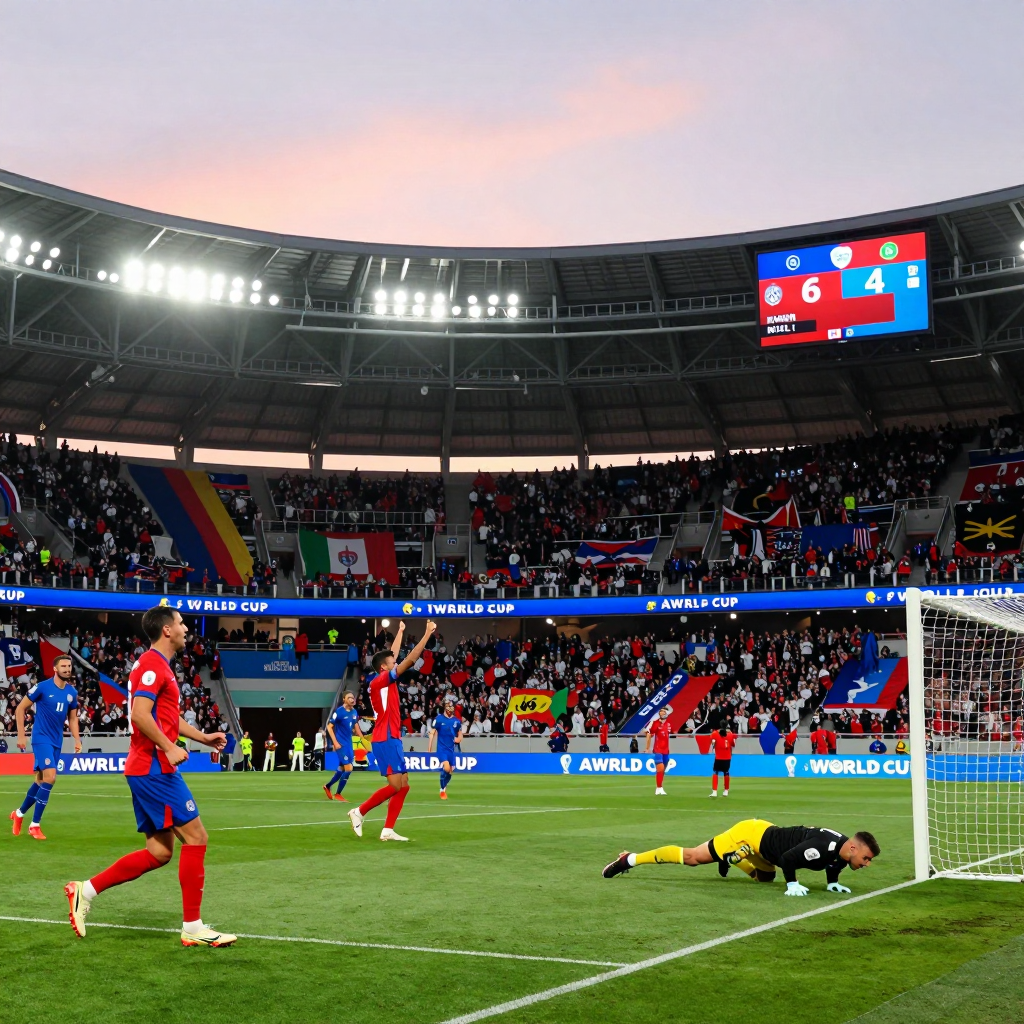
Who came out smiling in this unbelievable showdown that saw 10 goals flying in? The dramatic story behind the 6–4 scoreline begins here. The 2026 FIFA World Cup third-place match took place at Florida’s Miami Gardens Hard Rock Stadium, ending with England clinching the bronze medal. But to remember this game as just a ranking-decider would be an injustice—every moment was daring and unforgettable.
From kickoff, the atmosphere was electric. England, despite rotating their squad, pushed the pace from the start and dominated the first half with a commanding lead. Yet France refused to collapse easily. As the second half unfolded, they fiercely chased back the score, enveloping the stadium in a strange tension as the seemingly decided contest roared back to life.
The highlight of the day wasn’t just the sheer number of goals. France, fighting under the banner of Didier Deschamps’ final game as manager, never gave up, and Kylian Mbappé etched his name deeper into history by scoring to reach a new World Cup landmark of 22 goals on a record-setting night. Meanwhile, England managed to seal the deal amidst the goal-fest by scoring crucial strikes to halt France’s momentum, completing an almost surreal 6–4 victory.
Ultimately, this France vs. England clash was a showcase proving that "a third-place match can be just as fiery as the final.” On a summer evening in Miami, Hard Rock Stadium compressed in 90 minutes exactly why the World Cup is content consumed passionately by audiences across the globe.
England's Offensive Storm and France's Final Fight
Despite a massive rotation involving seven player changes, England remained unshaken. On the contrary, as if to prove "even stronger with changes," they dominated the atmosphere with Declan Rice's long-range opening goal just three minutes into the match and hammered in four goals in the first half alone, effectively deciding the main course of the game. Such a choice may have seemed like a gamble in a physically demanding 3rd-4th place match, but England proved the destructive power that emerges when squad depth and tactical plans work in harmony.
The key was not just a simple "substitution," but substitutions with clear roles. The newcomers raised the attacking tempo, penetrated spaces swiftly, and continuously unsettled the French defense. Bukayo Saka repeatedly created moments that changed the game’s flow, and when France’s late surge intensified in the second half, Jude Bellingham’s clinching goal cut off any hope. England’s six goals were no mere coincidence but the result of maintaining their attacking mechanism even amidst rotation.
On the other hand, France never gave up until the very end, even as they crumbled. Trailing 0–4, they regained scoring rhythm in the second half and launched a fierce comeback, led by Kylian Mbappé. With his goal in this match, Mbappé reached 22 World Cup goals, becoming the all-time top scorer. Regardless of the outcome, the France-England showdown will be remembered as a game that held a "moment rewriting history."
Above all these moments lay the emotional undertone of Didier Deschamps’ "Last Dance." The relentless chase shown by the players in the coach’s final game after 14 years felt less like a result and more like a tribute through attitude. If England stamped their dominance through tactics and firepower, France responded with records and fighting spirit. The unbelievable 6–4 scoreline is, therefore, not just a wild shootout but feels more like the closing chapter of an era and a trailer for the next.
France vs. England: The Explosion of Soccer Fever in the U.S., TV Ratings, and On-Site Enthusiasm
A European rivalry played out at the NFL Miami Dolphins’ home, Hard Rock Stadium. What’s more, FOX and Telemundo simultaneously broadcast the third-place match, which turned into a 10-goal thriller (England 6–4 France). In response to the question, “Can soccer really become mainstream in the U.S.?” this game offered a remarkably direct answer.
Why NFL Stadiums Have Become the Perfect Stage for Soccer Content (France vs. England)
Although Hard Rock Stadium was originally designed for American football, this France vs. England clash proved that its massive scale is more than capable of capturing the emotional intensity of global soccer. The crowd composition was impressive: local fans, European immigrant communities, and visiting tourists blended together to fill the venue with the dense atmosphere unique to a “European-style rivalry.” This demonstrated that hosting the World Cup in the U.S. is not just about securing the tournament but about exporting and importing the live experience.
FOX and Telemundo’s Simultaneous Broadcast Broadens Reach: Capturing Distinct Language Markets at Once (France vs. England)
The symbolic impact of this match in the U.S. is even clearer when looking at the broadcast structure. FOX (English) and Telemundo (Spanish) aired the game simultaneously, meaning it tapped into two of America’s largest viewing markets at once. Add streaming platforms like Fubo, and you create a seamless flow that naturally draws in viewers who have cut the cable cord.
Ultimately, high-stakes, story-rich matches like France vs. England become catalysts that shift American soccer consumption from a league-based model to an event-based model.
The Message to the U.S. Soccer Market: “Soccer Is a Highlights Industry” (France vs. England)
American sports consumption favors short, intense moments, star-centric narratives, and shareable highlights—all perfectly embodied in this match:
- A 10-goal “goal fest” extravaganza
- Mbappé’s record-setting achievement (all-time top World Cup scorer) that’s instantly understandable
- The drama of Deschamps’ final game
- A clear, explainable framework of European rivalry
The powerful takeaway from this France vs. England match is clear: in the U.S., soccer can become content that’s constantly discussed rather than a sport watched only over the long haul. Mega-events like the World Cup are the fastest proving ground for this potential.
The Future of the France-England Rivalry: A Crossroad Between a Golden Generation and Generational Shift
With England’s young blood netting six goals and boosting their confidence, and France ushering in tactical innovation as the Deschamps era concludes, where is the rivalry heading in the next France-England showdown? This 3rd-place match wasn’t just a goal fest—it felt like a pivotal moment where the two teams diverge into very different futures.
England: The Conviction That “We Can Win with This Squad”
England’s biggest takeaway from this match goes beyond the 3rd-place finish—it’s the expanded repertoire they displayed. Despite rotating the squad right after the semifinals, their attacking tempo never faltered, and goals came through varied means: long-range shots, set pieces, quick transitions like Rice’s opener.
This sends a clear message: this is a team no longer reliant on a single star. Centered around a generation symbolized by Bellingham and Saka, with options like Eze and Tony blending seamlessly, England can unveil a more aggressively designed big-match strategy in upcoming tournaments.
- Key change: Squad depth proven not just on paper, but as actual strength
- Point of excitement: The young core (Bellingham, Saka, etc.) gaining experience to stabilize finishing and game management
France: Beginning Tactical ‘Reengineering’ Post-Deschamps
On the flip side, France faces challenges revealed by conceding many goals, overshadowing Mbappé’s dazzling records. The stability once seen as a hallmark of the Deschamps regime has wavered, and with a coaching change looming, France needs to overhaul defensive structures, pressing styles, and build-up philosophies.
But there’s no need for despair. Young talents like Barcola and Zaire-Emry are emerging, and Mbappé remains an undeniable offensive ‘engine’. The critical question: how swiftly the next regime finds a modern balance—preserving Mbappé-centered firepower while reducing defensive risks.
- Key change: With a new coach’s “stamp,” the team’s very style of play could transform
- Point of excitement: Growth of young resources + maintained attacking threat; the challenge lies in reshaping defensive organization quickly
The Next France-England Rivalry: “Speed vs. Structure” at the Heart
The future France-England rivalry will be far more than an emotional clash—it promises to hinge on a battle of football philosophies. England is gearing up to sharpen transition speed and multi-goal strategies around its youthful core, while France will likely respond by rebuilding sturdier structures under new leadership (defense-midfield balance).
Ultimately, the decisive factor in their next encounter is crystal clear. Will England strike faster and heavier? Or will France control that pace within a more solid framework? The 6–4 scoreline in Miami wasn’t an end but a teaser for the next thrilling chapter of two great rivals.
The Immortal Story Left by France vs England’s ‘Night of Football’: From Miami to the World
A 6–4 scoreline with 10 goals—yet numbers alone cannot capture the true intensity of this match. The France vs England third-place playoff at Miami’s Hard Rock Stadium was no exaggeration when called a ‘dreamlike game.’ Goals rained relentlessly without pause, records were rewritten, an era came to a close. Above all, on the grand stage of the United States, the very reason football captivates the world was proven in one remarkable night.
The Goal Storm Revealing Football’s Instinct: Leads and Comebacks Become Epic Narratives (France vs England)
What made this match special wasn’t just the sheer volume of goals. The early goal gap, France’s fierce late surge, and the nail-biting uncertainty until the final whistle crafted the entire game into a dramatic saga. Football carries the tension of “anything can flip in 90 minutes,” and this fixture pushed that instinct to the extreme. This was a match where every moment built on the last, impossible to summarize in a few highlights.
Records Become Legends, Legends Call the Next Generation (France vs England)
France’s night ended in defeat, but the spotlight belonged to Mbappé. With 22 World Cup goals, he didn’t just mark a personal record—he completed the heroic narrative that the World Cup stage creates. Meanwhile, England’s attacking power exploded even amid rotation, revealing the squad’s depth and future talents. Within a single match, the birth of new records and the signal of a generational shift rang out together. This is why football is so powerful: the moment current superstars become history collides with the emergence of the next generation all on one screen.
One Truth Proven on American Soil: Football Is a Sport That Becomes ‘Content’ (France vs England)
Miami symbolized this tournament’s backdrop perfectly. In the U.S. style of consuming soccer—with English and Spanish broadcasts plus streaming combined—European rivalries transform into the most compelling ‘story products.’ Rivalry (France vs England), stars (Mbappé, Bellingham, Saka), records, farewells (Deschamps’ final game), and ten-goal entertainment. When compressed into a single match, football stops being a “difficult sport” and becomes an irresistible ‘narrative-driven show’ for everyone.
The Bottom Line in One Sentence (France vs England)
France vs England 6–4 was not just a bronze medal match; it was a ‘Night of Football’ that proved from Miami to the world why football is the sport that creates the greatest emotions on the planet.
Comments
Post a Comment