 \n
\n
Husbands on the Digital Edge Between Fandom and Infidelity
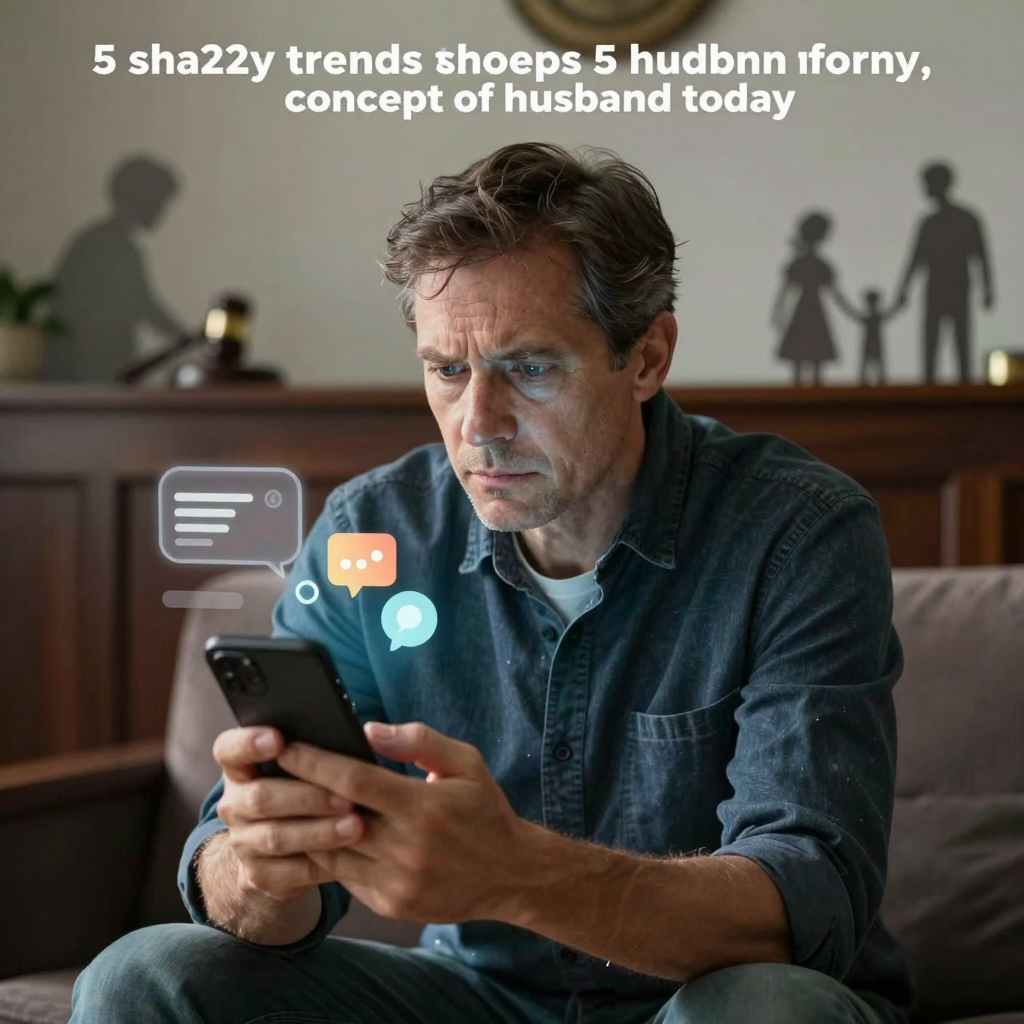
How should we interpret it when a husband makes large donations to an internet streamer, arranges to meet her in person, and even books a hotel? Labeling it as “just fandom” no longer suffices—in the digital era, relationships transcend mere hobby consumption. A husband’s private life now sharply clashes between ‘personal freedom’ and ‘marital trust.’
The Traces Left by Data: Why a Husband’s ‘Fan Activities’ Spark Disputes
While past affairs focused on “Did they actually meet? Was there physical contact?” the standards have changed today. Online platforms intertwine emotions, money, and promises—all recorded. Consider these factors that push beyond simple fandom into the heart of the infidelity debate.
- The scale and frequency of large donations (one-time fan spending or ongoing relationship maintenance?)
- The intensity and frequency of messenger conversations (expressions of affection, meeting proposals, evidence in deleted messages)
- Records of hotel payments and travel logs (does the reservation itself imply intent?)
- Concrete plans leading to offline meetings (time, place, cost)
In digital spaces, the key issue shifts from “What did the husband watch?” to “With whom and how did he build a relationship?”
A Wife’s Perspective: When a Husband’s ‘Fandom’ Threatens Family Assets and Trust
The wife’s sense of betrayal is not mere jealousy. Large donations immediately impact the family’s finances, and secretive messages plus meeting attempts are easily seen as emotional infidelity. Especially once hotel bookings surface, the question “Fan or lover?” becomes not an emotional suspicion but a practical judgment.
Ultimately, marital conflicts in the digital age transform as follows:
- Not whether it can be hidden, but whether there is a record left behind
- Not mere curiosity, but whether a relationship was planned
- Not simply resolved by an apology, but whether it escalates to trust, property, and legal consequences
At this crossroads, a husband’s digital private life ceases to be a ‘personal domain’ and becomes a matter of setting boundaries with mutual agreement between spouses.
Husband and Law & Trial: Responsibility and Fault Principle as the Standards That Determine Divorce
“My husband had an affair but was the one who demanded a divorce. Yet, the court rejected his claim?”
Even in an era when divorce is common, court decisions hinge not on emotions but on responsibility (fault). Korean courts still strongly tend to base their judgments on the fault principle. In other words, the party bearing the greater responsibility for breaking the marriage bond (the at-fault spouse) is, in principle, generally unable to file for divorce first.
Why a Husband’s Divorce Request Is Blocked If He Is ‘At Fault’
This is where the most conflicts commonly arise in practice.
For example, when a husband who caused the marriage breakdown through running away from home, having an affair, or abusive language files for divorce first. However, the court doesn’t merely look at “Has the marriage already ended?” but first examines who caused the breakdown. Therefore, if any of the following circumstances stand out, the husband’s divorce claim can be dismissed:
- When the main cause of the marriage breakdown lies with the husband (e.g., affair, unilateral abandonment)
- When the other spouse does not want a divorce, and the husband’s action appears to aim at evading responsibility
- When claiming assault or mistreatment but there is insufficient objective evidence
The core is simple. In trial, it is not enough for the husband to express “I want a divorce”; he must pass the responsibility criteria required by law.
How Far Is a Husband’s ‘Infidelity’ Problematic: The Realm of Proof
Civil law defines infidelity as one of the grounds for divorce. The issue is that trials proceed not on “suspicion” but on proof.
Recently, the scope of affairs has extended beyond offline contact to include relationships traceable through messages, payment records, hotel bookings, and other data that remain, making divorce lawsuits increasingly a “battle of evidence.”
The points the court mainly considers are:
- Whether the relationship is a simple acquaintance, or broken trust within the marriage
- Whether, judging by repetition, secrecy, financial spending, etc., it is effectively akin to a romantic relationship
- Whether there is objective material evidence like text messages, calls, money transfers, reservations, or records of entering and leaving places
Ultimately, it is not about “he supposedly did it,” but about turning that into a fact explainable in court that decides the outcome.
Reality Husbands Must Know: The Law Looks at ‘Order of Responsibility’ More Than ‘End of the Relationship’
The conclusion of this section is clear. The husband viewed by law and trial is no longer a symbolic figure of the family, but a party judged by responsibility in the face of marriage breakdown.
The key question in divorce lawsuits is not “Who wants a divorce first?” but “Who did what, what were the consequences, and what evidence remains?” As long as the fault principle remains, husbands must remember that the more they assert divorce, the more they enter a structure where their own faultliness is scrutinized first.
The Husband’s New Face: Colleague, Friend, and Companion
As exemplified by actress Moon Geun-young and comedian Kim Hae-joon, today’s “husband” is no longer judged solely as the top economic provider. Instead, the ideal husband is shifting toward being a friend-like figure—someone who “walks alongside you, shares worries, and makes you laugh.” This change is not just an emotional trend but a sign that society’s standards for marriage and family are evolving.
Why Has the Husband Role Shifted from ‘Head of Household’ to ‘Partner’?
While traditional marriage was based on role division (earning money outside, caregiving inside), nowadays couples often share both livelihood and caregiving responsibilities. As a result, marriage stability depends less on the size of income and more on the emotional collaboration skills needed to manage conflict and sustain the relationship.
In other words, the core competency of a good husband has shifted from “the power to earn” to “the strength to live life together.”
Moon Geun-young’s Definition of Husband: A ‘Person Who Walks Together’
When introducing her ideal husband, Moon Geun-young emphasized attitude toward daily life rather than conditions or credentials.
A person who walks the path not alone but together, shares worries once carried alone, and makes each other smile over small moments. This description largely avoids traditional family terms like provider, head of household, or responsibility. Instead, it defines marriage as an emotional alliance. The husband is no longer “a manager responsible for someone” but a colleague who supports each other’s endurance.
What Kim Hae-joon’s Case Reveals: Marriage Changed Not by ‘Conditions’ but by ‘Consensus’
Though initially a non-believer in marriage, Kim Hae-joon chose it through conversation within his relationship, highlighting priorities by saying he “makes an effort to come home early.” The key point here is that ‘husbandliness’ is measured not by grand gestures but by habits of time allocation and participation.
The trust demanded of today’s husbands is built less on “how much they earn” and more on “how much time they have spent together.”
Behind This Change: A Higher Standard for the ‘Good Husband’ Era
Though the partner-type husband seems warm, this comes with new pressures.
As spouses’ expectations of each other grow, the husband is no longer someone who needs only to be earnest but must engage in conversation, empathy, conflict resolution, and caregiving participation. In other words, the economic responsibility hasn’t lessened—it has transformed. In an age where relationship quality determines marriage success, the husband’s ‘family-building skills’ become crucial.
Ultimately, a Husband’s Competitiveness Lies in ‘Relationship Maintenance Ability’
In summary, the husband in modern Korean society is being redefined from “the breadwinner of the family” to “the co-manager of the household.” A friend-like presence who shares worries and laughter, and a companion who jointly takes responsibility for life and caregiving. As this standard spreads, a good husband is proven not by credentials but by choices made repeatedly in everyday life.
Husband Violence and Safety: Protector of the Family or a Threatening Presence?
The era when domestic disputes were dismissed as "a fight between spouses is like cutting water with a knife" is over. Recent studies reveal that husband violence is not just a ‘marital issue’ but can serve as a link that raises the risk of child abuse as well. Ultimately, the question narrows down to one: Is the husband a safety mechanism for the family, or the source of danger?
Why Does Husband Violence Become a ‘Warning Signal for the Entire Family’?
According to domestic violence surveys, men who commit violence against their spouses or partners tend to have a higher rate of perpetrating child abuse as well. In other words, violence is not an isolated incident targeting one person; rather, it can become a repeating pattern of power, control, and anger expression entrenched within the home.
Two crucial points stand out here:
- Violence is not just a relational problem but also an ‘environmental problem.’ Even children who simply witness conflicts learn threats and internalize anxiety.
- When the husband is the perpetrator or, in some cases, when the husband is the victim of violence, family tension intensifies and is more likely to spill over into further violent incidents. This is why disputes over “who hit first” offer no solution.
The Moment a Husband Uses Violence, the Home Ceases to Be a ‘Place of Rest’ and Becomes a ‘Zone of Vigilance’
Violence rarely ends with just one outburst. If the following signs repeat, it should not be treated as a “trivial quarrel” but as a matter of safety.
- Frequent verbal intimidation, insults, or threats like “I won’t let this go”
- Destructive behaviors such as throwing objects or kicking doors
- Heightened control through phone checks, restrictions on outings, or economic domination
- Apologies followed by “I’ll never do it again” that are repeatedly broken
From this stage on, the priority must be the physical safety of the family and the emotional security of the children, rather than restoring the relationship.
What Can Be the Solution to the Problem of Violent Husbands?
There is no one-size-fits-all solution such as “endure it” or “just leave.” The key is to approach it in the order of ensuring safety → blocking risks → verifying the possibility of change.
- Start by making a safety plan: Prepare places to escape to when threatened, contacts to reach out to, emergency funds, and gather evidence (medical records, photos, messages).
- Connect to support systems: Use external resources like counseling centers, local government support, and legal advice to objectify the situation. Isolating it as “family business” only increases danger.
- Judge change by ‘actions,’ not ‘intentions’: Participation in anger management and relationship recovery programs, plans to prevent recurrence, treatment for drinking problems—concrete follow-through is required. Mere verbal remorse cannot guarantee safety.
- Separate and protect the children: Regardless of marital conflicts, adjusting the environment to ensure children are not exposed to violence must come first.
Ultimately, the husband’s role demanded by today’s society goes beyond “being the breadwinner.” It closely aligns with being the nonviolent guardian who enables the family to live without fear. Recognizing violence not as a private quarrel but as a structural event that shatters the safety of the entire family is where this understanding begins.
The Husband’s Public Image and Private Boundaries: In an Era When Controversies Don’t End as ‘Personal Matters’
The controversy surrounding star actor Hwang Jung-min’s private life reveals one clear fact. Today, a husband’s private life is no longer just a ‘personal issue’ confined within the walls of home—it can become a public risk that shakes companies, brands, and content distribution networks. What’s even more ironic is that the spouse’s role is not limited to being ‘a wife.’ When a spouse takes on a ‘public role’ tied to interests—such as acting as the head of an agency—the issues surrounding the husband swiftly escalate into the realm of crisis communication and legal response.
This shift is not limited to the entertainment industry alone. Whether at work, in local communities, or on social media, we repeatedly witness “that person’s private life” being translated directly into “that person’s credibility.” The status of ‘husband’ is increasingly understood not as a mere relational title but as a social position accompanied by reputation and responsibility.
Expanding the Legal Status of Husbands: Questions Raised by the Same-Sex Couple Debate
Meanwhile, in the realm of institutional policy, the definition of ‘spouse’ is fiercely debated. The question of whether same-sex partners can be recognized as spouses under the National Health Insurance dependent system is shaking the very definition of “legally recognized spouses.” Should the system expand, the term husband would no longer be confined to heterosexual marriage but would also emerge as a practical legal status within same-sex couples.
The crucial point here is that this debate is not just about conflicting values—it directly involves rights related to daily life. Whether one’s status as a spouse is acknowledged affects concrete areas such as insurance fees, support, and proof of family status. Ultimately, the husband is being redefined beyond an emotional relationship, as a unit through which rights and responsibilities are allocated by the system.
The Core of the Reconfiguration Surrounding Husbands: Managing Boundaries, Not Just ‘Private Life’
The changes Korean society is witnessing now can be summarized as follows:
- Expansion of public image: A husband’s actions no longer end as personal preferences or mistakes but ripple out to affect the reputation and economy of organizations and families.
- Datafication of private boundaries: Allegations and controversies are increasingly assessed not by feeling but through records—conversations, posts, and context.
- Redefinition of legal status: As the scope of ‘spouse’ recognition widens, the word husband is likely to include more diverse relationships.
In the end, the concept of a husband today cannot be explained by love and marriage stories alone. At the intersection of public image, private boundary management, and legal recognition criteria, its meaning is being rewritten.
Comments
Post a Comment