Lindsey Graham's Death: How Will It Change the U.S. Foreign Policy Landscape and the 2026 Senate Elections?
 \n
\n
The Sudden Death of Lindsey Graham: A Shocking Blow to American Politics
At the age of 71, Senator Lindsey Graham passed away due to an aortic dissection. What’s even more shocking is that he was reportedly functioning normally, preparing for an interview up until a day before his death, and was last reported to have met with President Zelensky in Kyiv. This is precisely why the term "sudden tragedy" is far from an exaggeration.
The senator’s office officially announced on Saturday night, July 11, that he died following a “brief and sudden illness.” His family has requested privacy and prayers during their time of mourning, while major media outlets have reported the cause of death as a fatal cardiovascular condition, aortic dissection. The news sent shockwaves not only through the political world but also across diplomatic and security communities.
The reason this incident not only marks the passing of a single politician but also holds deeper significance is clear. Lindsey Graham was a leading force on foreign policy and security issues within the Republican Party for many years, and his absence is expected to trigger a ripple effect on Washington’s foreign policy landscape and the 2026 Senate election dynamics. In the following sections, we will carefully examine the symbolism behind his final actions and explore the lasting impact this death will have on the American political landscape.
Lindsey Graham: From Trump Critic to Closest Ally—His Political Journey and Transformation
Lindsey Graham transformed from a traditional conservative to a ‘Trump ally.’ What message does his political shift send to the Republican Party and American politics? The core here goes beyond an individual’s transformation—it symbolizes how the Republican Party in the Trump era was forced to choose between ‘principles’ and ‘power.’
The Era When He Criticized Trump in the Language of Traditional Conservatism
In his early days, Lindsey Graham was closer to the orthodox conservative grammar of Washington. He was critical of the Tea Party and Trump-style politics, and was seen within the party as a figure who valued the establishment order of the Republican Party. At that time, his political asset was his identity as an “experienced national security hawk.”
Not a ‘Flip-Flop’ But an ‘Adaptation’: His Shift to Trump Ally
However, after Trump became the center of the party, Graham gradually moved to publicly defend Trump. Eventually, Lindsey Graham reached a stage where the media and colleagues recognized him as a “Trump ally,” and Trump saw him as one of his key defenders in the Senate.
This change was more than a mere improvement in relations; it reflected the reality that the Republican Party’s power center had shifted from policy coalitions to loyalty competitions based on the support base.
Two Contrasting Messages Left by This Transformation
His shift still provokes mixed evaluations today.
- Positive Interpretation: He served as a ‘bridge’ connecting the establishment and populist bases to prevent the Republican Party from fracturing in the Trump era. In other words, he chose to maintain political influence and keep the party’s practical operations running at the center.
- Critical Interpretation: It was a choice closer to power than principles. Especially at times when Trump should have been checked, Graham took a defensive stance, leading to criticism that he weakened the Republican Party’s internal checks and balances.
What the Republican Party Gained and Lost
Lindsey Graham’s trajectory leaves the Republican Party with a critical question: “Can the post-Trump Republican Party return to ‘traditional conservatism,’ or has its very grammar already changed?”
If his lifetime journey clearly showed this, now his absence is likely to accelerate the demand for an answer to that question.
Lindsey Graham: The Hawk of Foreign Policy and a Symbol of U.S. Global Strategy
From Iran to Ukraine to Israel, Lindsey Graham consistently held a tough stance. His death is more than just the obituary of a famous politician; it raises the crucial question of where the Republican Party’s foreign policy line and Washington’s balance of global strategy will move next. Especially given that he remained actively engaged until the very end—traveling frequently to Ukraine and preparing for media interviews—his absence is felt all the more deeply.
Lindsey Graham’s ‘Hawkish’ Doctrine: Deterrence Through Strength
Graham was consistently classified as a foreign policy hawk in the Senate. His core premise was relatively clear: the United States must put military power and alliance networks front and center to deter adversaries and manage threats from afar.
This viewpoint repeatedly surfaced regardless of domestic political gains or changes in administration, which is why he could remain a leading voice shaping foreign and security agendas within the Republican Party.
Lindsey Graham’s Key Battlefronts: Iran · Ukraine · Israel
- Iran: Viewing Iran’s nuclear and missile capabilities as a direct threat to U.S. security, Graham persistently supported heightened sanctions and tough responses. Even recently, he publicly opposed Iran-related proposals for being “not tough enough,” adhering firmly to pressure over compromise.
- Ukraine and NATO: Since Russia’s invasion, Graham has been a pivotal figure advocating strong support for Ukraine, expansive sanctions on Russia, and the preservation of a NATO-centered European security architecture. Allies remember him as a steadfast “friend of the transatlantic alliance.”
- Israel: As a leading hawk backing Israel’s security within the U.S., Graham’s political style has always been about firmly siding with pivotal actors in Middle Eastern issues.
These three issues share a common thread. Graham symbolized a camp that views U.S. intervention and alliance cohesion not as costs but as strategic assets.
What Graham’s Absence Will Change: Republican Divisions Become ‘Policy’
His absence is especially significant because Republican foreign policy was already splitting along the lines of hawks vs. isolationists. Within this divide, Graham served as a “coordinator” who articulated the hawkish logic in establishment terms and bridged Senate agendas with allied messaging.
Future changes can be anticipated in two main directions:
Increasing Political Costs of Supporting Ukraine
As skepticism grows within the party, support may be seen less as “national strategy” and more as a “party controversy.” This could alter not just the scale of aid but its speed, conditions, and justification.Erosion of the Hardline Coalition on Iran and Middle East Issues
With a senior hawk pushing for tough measures gone, it’s not that the hardline stance will immediately weaken, but its momentum and message consistency might falter. This could complicate negotiations between the administration and Congress.
Graham was often at the heart of controversies surrounding U.S. foreign policy, yet he uniquely embodied Washington’s approach to international issues—pressure, alliances, deterrence—in a single, coherent voice. The question that remains now is this: who will redefine the critical question he championed—‘How far will America intervene?’—and in which direction?
Lindsey Graham’s Vacancy Shakes Up the 2026 Senate Race and South Carolina Seat: A Preview of Political Power Shifts
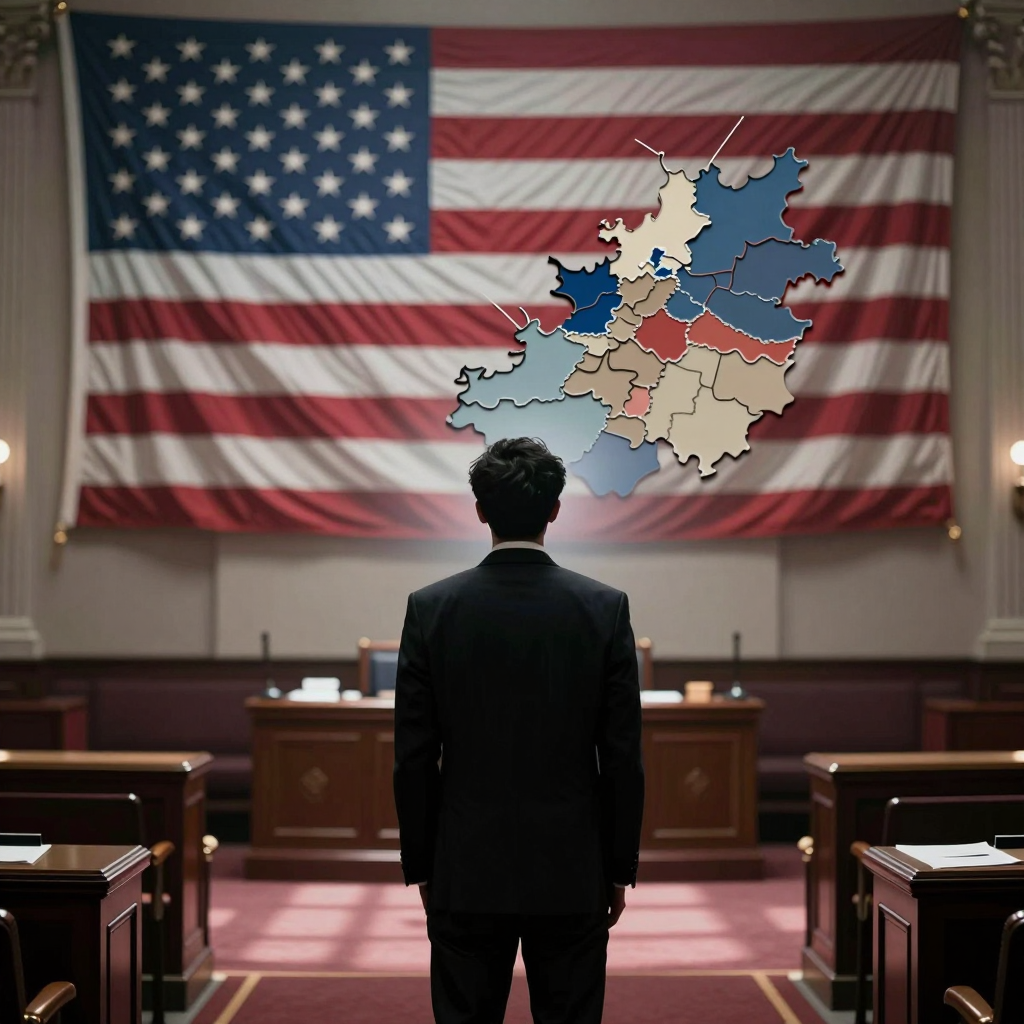
From interim appointments to internal power struggles. There are moments when the absence of one person immediately redraws the “map for the next election.” Lindsey Graham’s sudden death has transformed South Carolina’s Senate seat from a mere regional political issue into a spotlight that simultaneously illuminates the 2026 Senate race dynamics and the Republican Party’s internal ideological battles.
Interim Appointment: ‘Who Sits’ Means ‘What They Represent’
Under South Carolina law, Governor Henry McMaster will appoint an interim senator, who will serve until January 3, 2027.
The key point isn’t just the seat itself, but rather that from the moment of appointment, the question of “which Republican face will lead the charge” is answered. This interim appointment is not a mere placeholder; it effectively becomes the opening salvo of the 2026 election.
The November 2026 ‘Official Election’ Reopens: The Real Battle Awaits
This seat was originally up for election in 2026. In other words, this is not a game decided by appointment alone; the final verdict will come from voters on November 3, 2026.
From here on out, two timelines unfold simultaneously:
- Short-term: What kind of presence will the interim senator establish in Washington?
- Mid-term: How will the Republican primary reshape ideological battles, and who will inherit “Graham’s legacy”?
The GOP’s Internal Old vs. New Guard Showdown: More Than Just a ‘Successor’—It’s an Ideological Contest
South Carolina is a Republican stronghold, which paradoxically signals that the intraparty competition could be fiercer than ever. The first electoral hurdle is often the Republican primary, not the general election.
With the departure of the Graham pillar—representing traditional conservative establishment, hawkish foreign policy, and pragmatic coexistence with the Trump era—the party now grapples with critical questions:
- Who and how will they define the party’s “distance from Trump”?
- Where will the GOP’s voice land in the “interventionism vs. isolationism” debate, especially on issues like Ukraine, NATO, Iran, and Israel?
- Is there a figure strong enough to unite different factions under one umbrella now that the ‘mediator’ Graham is gone?
In short, this seat contest is unlikely to be just a personnel change; it has the potential to become a defining choice about the Republican Party’s next identity.
Why the Whole Nation Watches: The Closer the Senate Majority, the Heavier the Weight of One Seat
Senate majorities often hinge on razor-thin margins, and in such environments, one seat can trigger cascading effects on legislation, budget decisions, and foreign policy directions.
Considering the roles Graham played in foreign affairs and national security, his vacancy is far more than a “South Carolina race”—it directly ties into Washington’s policy trajectory. This is why the 2026 race for this seat is destined for national spotlight.
Lindsey Graham: Controversial Figure, True Patriot – The Complex Legacy Left Behind
“A true American patriot.” This brief praise from Trump perfectly captures one side of the evaluations surrounding Lindsey Graham. Yet, simultaneously, Graham has long stood at the center of heated debate within the United States. Why is it that on one hand he commands respect, while on the other he evokes strong opposition?
Trump’s Praise and the Shadow Cast by Political ‘Flip-Flopping’
One of the most symbolic chapters in Graham’s career is his trajectory from an early critic of Trump to a key ally and defender in later years. To his supporters, this shift read as “pragmatic bridging of party divides and maintaining influence in real-world politics,” while critics saw it as “choosing power over principles.”
In the end, he became a figure embodying the transformations undergone by the Republican Party in the Trump era, drawing polarized reactions that ran deep.
The 'Ally’s Friend' Image Stronger Abroad Than at Home
An intriguing contrast lies in the fact that the more controversial he became domestically, the steadier his reputation among foreign allies grew. NATO, Ukraine, and Israel remember him as a “friend” of the trans-Atlantic alliance and security cooperation. His consistent stance on supporting Ukraine and imposing sanctions on Russia etched him as a figure determined to uphold the pillars of diplomacy and security, even as American politics wavered.
Thus, beyond the factional strife in the U.S., Graham functioned internationally as a symbol of a “predictable America.”
The Hawk’s Clear Course: Respect and Backlash Alike
A defining characteristic in describing Graham is unmistakably his role as a foreign policy hawk. His hard line on Iran, strong preference for military options, and proactive support for Ukraine and Israel painted him to supporters as “a leader who believes in American power.” Conversely, others argue that despite repeated interventions since the Iraq War, he failed to fully reckon with the limits of interventionism and instead perpetuated a politics that intensified tensions.
Ultimately, his legacy leaves the pressing question: “How far should we go in the name of security?”—a question that continues to generate both admiration and criticism.
Conclusion: The American Paradox of a ‘Controversial Patriot’
Summing up Lindsey Graham’s legacy in one sentence is impossible. Like Trump’s praise, he was undeniably a senior Republican figure representing the party’s defense and foreign policy line, and a trusted voice among allies. At the same time, his political shifts and hawkish stances have sparked ongoing debates about “the direction America is headed.”
His complex legacy serves as a mirror reflecting the tensions American politics navigates between principles, pragmatism, alliances, and mass politics.
Comments
Post a Comment