Morocco Secures 3-0 Victory! Africa's First Consecutive Quarterfinals in World Cup, Canada’s Dreams Come to an End
 \n
\n
Canada vs Morocco: Morocco Writes a New Chapter in African Football History
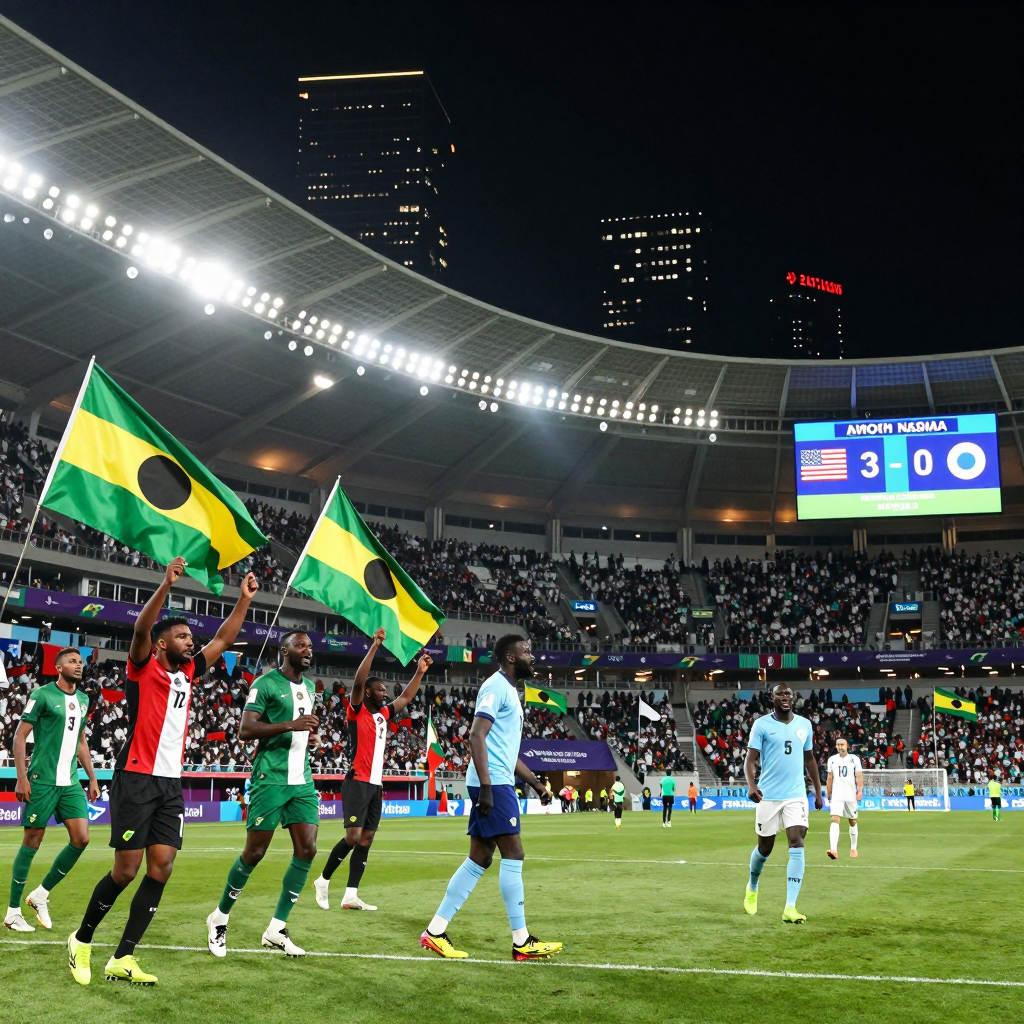
Morocco delivered a stunning 3-0 victory over Canada, making history as the first African nation to reach the World Cup quarterfinals in two consecutive tournaments. But what is the story behind this legendary win?
The recent Canada vs Morocco match carried significance far beyond the final score. Morocco, which created the myth of being the ‘first African team to reach the semifinals’ in Qatar 2022, proved in 2026 that their success was no mere coincidence. This was not a “one-time miracle” but the moment Morocco established itself as a team that consistently delivers results on the world’s biggest stage.
The flow of the match itself was even more impressive. In the first half, Canada dominated the tempo with their energy and pressing but failed to convert crucial chances into goals. On the other hand, Morocco adjusted their tactics to become more aggressive right from the start of the second half. They broke the deadlock with a set-piece strike and then took control of the match:
- 50th minute: Ounahi shook up the game with a stunning set-piece opener
- 82nd minute: Morocco sealed the outcome with a second goal
- In stoppage time: Rahimi added the final blow to complete a 3-0 triumph
What makes this victory even more remarkable is Morocco’s resilience after losing their top scorer Saibari to injury early on. Despite this setback, they relied on smart substitutions and tactical flexibility—clear evidence that Morocco has mastered the “formula of strong teams.”
Ultimately, this match marked the end of Canada’s World Cup journey and the night Morocco redrew the map of African football. The final score was 3-0. Yet the real message was clear: Morocco is no longer a World Cup ‘surprise’; they have become a World Cup ‘constant.’
The Unyielding Tension of Canada vs Morocco’s First Half: Canada’s Frustrating Challenge
Despite Canada controlling the early flow of the game, why did the scoreboard remain unchanged? The first half of Canada vs Morocco can be summed up in one phrase: “Played well, but nowhere to finish.” Canada touched the ball more and moved more aggressively, yet those efforts failed to translate into major scoring opportunities.
Canada’s issue wasn’t a lack of tempo or determination, but rather the quality of the final moments. Their entries into the attacking zone were decent, but their choices near the penalty area became predictable, and they lacked that decisive breakthrough before Morocco’s defense could fully set up. While the momentum seemed to favor Canada throughout the half, those moments to truly “unlock” Morocco’s goal remained elusive.
Another key storyline in the first half was the intense psychological battle. The match was frequently interrupted rather than flowing smoothly from the start, and the physical confrontations quickly escalated. Canada’s pressure was aggressive enough to register 15 fouls in the first half alone, a level of intensity that disrupted the game’s rhythm and made it difficult for the ‘leading team’ to consistently raise the attacking tempo. The half’s stop-start pattern naturally dulled Canada’s usual high activity and quick transitions.
In the end, the first half unfolded in the most disappointing way for Canada. Their superior play didn’t translate into scoring hope, and amid the fierce exchanges, their focus and emotional energy were drained. This “tension without breakthrough” in the first half would ultimately set the stage for Morocco’s tactical shift and explosive finishing in the second half.
Canada vs Morocco Second Half: Morocco's Tactical Magic and a Fiery Scoring Showcase
How did Morocco, switching tactics right at the start of the second half, smash Canada’s dreams with relentless attacking power? The battle of Canada vs Morocco wasn’t decided by the first half’s tight play, but by Morocco’s tactical switch and clinical finishing as soon as the second half kicked off. While Canada controlled the pace with tireless runs and pressing in the first half but couldn’t seal the deal, Morocco was a team that ended the game with just a few decisive moments.
Morocco’s Approach Shifted Immediately After Half-Time
After the break, Morocco pushed their line higher and aggressively targeted Canada’s defense through quick transitions and set pieces. If the first half felt like a stop-and-go battle filled with fouls and cautions, the second half saw Morocco turning that stop-and-go rhythm into a fixed pattern that worked in their favor—set pieces. While Canada struggled to find their rhythm, Morocco adjusted their attack “in exactly the right way at exactly the right moments.”
The 50th Minute: Ounahi’s Set Piece Goal That Flipped the Script
The defining moment came from a 50th-minute free kick. Ounahi’s precise strike from the edge of the box instantly shattered the balance Canada had held onto throughout the first half. This goal wasn’t just a simple 1–0 lead; it forced Canada into their worst nightmare—a game where they had to chase the score. Up until then, Canada had only shown promising play, but from this moment, they were trapped under the pressure of “needing a result.”
The 82nd Minute: Ounahi’s Brace Completing the ‘Clinical Difference’
As Canada pushed forward harder mid-second half, Morocco found wider spaces to exploit. Ounahi’s second goal in the 82nd minute perfectly punished the space Canada left behind. With the score now 2–0, the psychological battle was essentially over. Morocco demonstrated coldly how failing to convert first-half dominance into goals can tip the scales—Ounahi’s brace was the ultimate proof.
Injury Time: Rahimi’s ‘Capsule’ Goal Showcasing the Closing Strategy
While Canada poured every ounce of their energy into the final moments, Morocco remained unshaken. And Rahimi’s injury-time insurance goal (3–0) was not just another marker on the board—it was the culmination of Morocco’s game plan. Instead of sitting back and locking down a lead, Morocco aimed for a decisive counterattack right to the end, sealing the victory with style.
In the end, the second half of Canada vs Morocco was a striking demonstration of the destructive force of “tactical change + set pieces + clinical finishing.” Canada’s dream shone in the process, but Morocco proved themselves in the result.
Canada vs Morocco: Canada’s Dream and Morocco’s Relentless Challenge
The journey of co-host Canada ended with a 0–3 defeat in Canada vs Morocco. But this night is not remembered as just an “elimination.” Canada clearly showed a growth curve in surpassing the Round of 16 for the first time in its history, with the drama always centered on whether Alphonso Davies could change the game at a pivotal moment. On the other hand, Morocco was brutally realistic—they endured crises, seized opportunities, and never let go once they gained momentum.
Canada: Leading Yet Lacking a ‘Period’ in the First Half, and the Lingering Question of Davies
Judging by the flow of the match, many believe Canada was livelier in the first half. However, the problem was familiar: good movements failed to translate into decisive chances, and no definitive strike came in front of the opponent’s goal. The game grew rougher, with fouls and cautions breaking the rhythm, creating a “stop and start” pattern.
At this point, attention naturally turns to Davies. The Canadian star best known on the world stage sparked ongoing debate after the tournament on how much influence he truly had in such a high-stakes match regardless of the result. While Canada undeniably created a ‘dream run,’ facing strong teams revealed the need to level up their finishing ability to complete that dream.
Morocco: An Unshaken ‘Second-Half Answer’ Despite Their Ace’s Injury
Morocco appeared like a team that needed little explanation. Especially around the 20th minute of the first half, when their top scorer Saibari left early with a hamstring injury, yet the team stood firm. This showcased their depth and tactical flexibility. From the start of the second half, they intensified their offensive approach, ultimately rewriting the narrative with a set-piece strike (50’ Ounahi).
What followed was a quintessentially Moroccan “full marathon.” Ounahi’s second goal at the 82nd minute essentially sealed the outcome, while Rahimi’s added time goal served as a final psychological blow. A team that endures crises (injuries), shifts balance through tactics, and proves itself in the finish line—Canada vs Morocco perfectly encapsulated why Morocco is regarded as a ‘sustainable powerhouse’ in this tournament.
The New Power on the World Cup Stage Seen Through Canada vs Morocco, and the Challenge Toward the Future
Morocco did not leave their 2022 semifinal run as "a one-time miracle." With a commanding 3–0 victory over Canada, they made history as the first African team to reach the World Cup quarterfinals in two consecutive tournaments. Now, all eyes naturally shift to Boston. With the quarterfinal against France approaching—and the variable of Saibari’s injury looming—Morocco's ‘sustainable strength’ faces a fresh test.
From ‘Myth’ to ‘Constant’: Morocco’s Competitiveness Revealed in Canada vs Morocco
The significance of this match goes beyond the scoreline. The way Morocco endured the first half and then overturned the game through tactical adjustments in the second half proves they are no longer a team relying on fortunate draws or short-term form.
- Breaking the deadlock with a set-piece strike (50’),
- Widening the gap through clinical finishing (82’),
- And sealing the result in stoppage time (90+’)—this level of execution is the epitome of a true tournament team.
In other words, Canada vs Morocco showcased Morocco’s evolution from ‘a team that can beat strong opponents’ to ‘a team that wins like a strong opponent.’
The Key Point in Boston’s Quarterfinal: Mastering ‘Plan B’ Amid the Saibari Factor
However, optimism alone is not enough. Saibari’s hamstring injury—particularly after his strong scoring form in this tournament—could limit Morocco’s attacking options. Yet, the game against Canada offered clear insights. Morocco has built a system capable of scoring without relying solely on one player.
- Midfield saviors like Ounahi, who scored multiple goals,
- Finishing options like Rahimi,
- And the ability to adjust tactical intensity according to the game’s flow.
Against a fast-pressing, quick-transition team like France, the deciding factor will likely be less about “who is missing” and more about “how smoothly the alternative plans run.”
Conclusion: After Canada vs Morocco, Morocco Has Become a ‘Challenging Power’
Morocco has already made history, and now they aim to repeat it. Canada vs Morocco provided compelling evidence that their success is no accident. The quarterfinal in Boston holds greater significance than just the ‘next round.’ If Morocco can prove tactical flexibility beyond Saibari’s absence, they will no longer be a dark horse but will firmly establish themselves as a new consistent powerhouse on the World Cup stage.
Comments
Post a Comment