 \n
\n
Seattle Shooting: Massive Food Festival Shooting Near Seattle’s Iconic Space Needle
A sudden burst of gunfire echoed right next to the city’s most iconic landmark. How did a peaceful festival turn into a scene of tragedy?
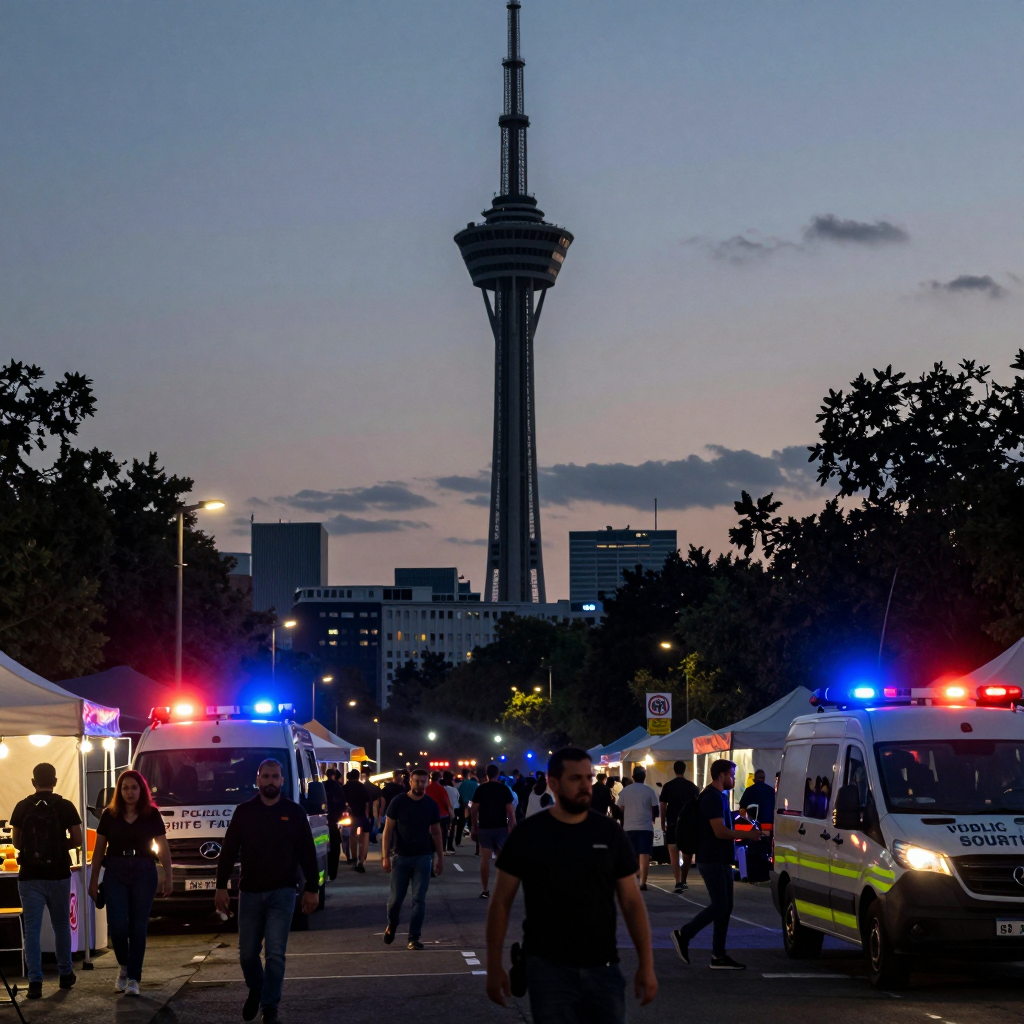
At the Seattle Center near the famous Space Needle—one of downtown Seattle’s top tourist spots—a massive shooting broke out during the weekend’s ‘Bite of Seattle’ food festival. According to local reports, the incident left at least 2 dead and 5 injured, with young children among the wounded. The shock deepens knowing the gunfire rang out in a family-friendly space packed with visitors.
The shooting took place between 6:00 and 6:30 p.m. on Sunday (local time). At the time, attendees were enjoying food, live performances, and the vibrant atmosphere when a sudden rapid series of gunshots sent the crowd into chaos. People scattered instantly as the area erupted into evacuation and confusion. Seattle police declared the situation an active shooter incident, locking down and evacuating the entire Seattle Center while repeatedly urging the public to avoid the area.
Crucially, the motives and background of this Seattle shooting remain officially unconfirmed. Some reports mention the arrest of two suspects, but their identities and specific charges have not been released. As the investigation continues, further details—including the scale of casualties and conditions of the injured—are expected to emerge.
Scene of Tragedy: The Unannounced Seattle Shooting Turns Festival into Instant Evacuation
At a midsummer downtown festival attended by tens of thousands, sudden gunfire transformed a “joyful crowd” into “people fleeing for their lives.” The ‘Bite of Seattle’ food festival, held near the Space Needle at Seattle Center and known for its many family visitors, was rattled by eyewitness reports of rapid gunfire erupting in the very heart of the event. Without even a moment to locate the source of the shots, people dropped down and began to run, plunging the scene into immediate chaos.
According to compiled reports from those present, the crowd dispersed at a pace “close to sheer panic” immediately after the first shots rang out, amid a mix of voices desperately calling for loved ones and cries of terror. Given the festival’s family-oriented nature, scenes of parents momentarily separated from their children or rushing out while holding crying kids were repeatedly witnessed. One witness even reported overhearing someone say, “It looks like a child got hurt,” and subsequent updates confirmed injuries involving toddlers, adding to the shock.
Control of the scene unfolded with urgency. Police quickly declared the Seattle Center an active shooter situation and instituted a sweeping lockdown and evacuation, repeatedly urging the public to “avoid the area.” Police and ambulances surged around the Space Needle, with reports emerging that Harborview Medical Center—an area hospital—went into temporary lockdown, signaling that this was no mere disturbance but a serious incident that heightened tension across the entire downtown area.
Above all, the most striking image this Seattle shooting left behind was that where the sounds of the festival—music, conversations, laughter—had ceased, they were replaced by the pounding footsteps of escape, alert broadcasts, and lines of evacuees. Though motives and details remain undisclosed, the scene vividly demonstrated just how easily the “safety of an ordinary weekend evening” can shatter without warning.
Seattle Shooting: The Investigation Toward the Hidden Truth, Discovery of Suspects and Unknown Motives
Two suspects have been arrested, but their identities and motives remain shrouded in mystery. What is the story hidden behind this incident? Since this Seattle shooting took place in the midst of a large festival, the questions of “who, why, and how” loom more urgently than ever.
Arrests Are Just the Beginning: The Unrevealed ‘Suspect Puzzle’
According to local reports, at least two suspects have been apprehended in connection with the case. However, the police have released limited official information.
The key unknowns so far include:
- The suspects’ identities (age, gender, residence)
- Their relationship to the victims (acquaintance, spontaneous, or third party)
- Whether the incident was a lone act, a conspiracy, or a clash (retaliatory gunfire)
- The charges filed and the level of evidence secured
While the arrests mark progress in the investigation, the fact that clues defining the nature of the case have barely been disclosed leaves a significant ‘information gap’.
‘Random or Targeted?’: The Significance of Concealed Motive
The police have yet to announce the motive. This could simply mean “it is unknown,” but it also reflects the cautious strategy often employed in the early stages of an investigation. Particularly, this case could completely split between two scenarios:
- Targeted Incident: A conflict, revenge, or dispute between specific individuals erupted amidst the crowd
- Random/Spreading Incident: An attack extended toward the crowd or chaos led to increased casualties
Which scenario holds true will shape whether this becomes a matter of “festival security” or “an explosion of personal conflict,” affecting interpretations and future responses. Thus, the undisclosed motive is the crucial signal that the case should not be prematurely judged.
What Drives the Investigation: CCTV, Witnesses, and Onsite Data
The shooting occurred at Seattle Center, a public complex bustling with visitors at the time. The authorities are expected to narrow down their focus along these lines:
- Surveillance cameras (CCTV) and nearby footage: tracing movement paths, pinpointing where the shooting began, analyzing crowd flow
- Witness testimonies: direction of gunfire, suspects’ clothes and behavior, possible escape routes
- Ballistics and scene evidence: firearms used, shell casing locations, firing distances, and the possibility of crossfire
- Communication and social media clues: contacts before and after the incident, uploaded videos from the scene, reconstructing the timeline
In other words, even with arrests made, the case is far from over; the remaining phase involves accurately assigning responsibility and clarifying the structure of the crime.
Lingering Question: “Why That Place?”
‘Bite of Seattle’ is a downtown festival popular with family visitors. The mere fact that a shooting happened there naturally stirs public unease. What is needed now is not sensational speculation but calm attention to official police briefings, medical updates, and follow-up reporting by local media to see how facts are confirmed.
The truth of this case will finally take shape not just by revealing “who fired the shots” but by unveiling the answer to “why those shots rang out at that moment, in that place.”
Seattle Shooting: Questions Raised for Seattle and American Society
Gun violence occurring at the heart of a city’s culture and tourism is never just an isolated incident. The fact that a shooting took place near Seattle Center, close to the iconic Space Needle—a place whose very reason for existence is as a gathering spot and asset to the city—raises sharp questions about public safety and gun regulation.
The Reality of ‘Downtown Festival Safety’ Exposed by the Seattle Shooting
‘Bite of Seattle’ is a large-scale event popular with families. The ringing out of gunshots in such a space forces us to ask: How far can security operations at large public events truly go, and where do they encounter their limits?
- Are measures like entry control, metal detectors, and bag checks genuinely effective?
- Does the deployment of police and security personnel act as a real deterrent or merely provide reactive response?
- Were site flow management, evacuation guidance, and emergency medical access adequately prepared?
Events inherently rely on openness and accessibility. When that openness suddenly becomes a vulnerability, cities are compelled to make tough choices about priorities.
Repeated Debate After the Seattle Shooting: “Regulation” vs. “Enhanced Policing”
Since the motives and circumstances remain undisclosed, drawing conclusions is premature. Yet in American society, incidents like this quickly boil down to two familiar debates:
- Stricter Gun Regulation: Renewed calls to limit firearm access in public spaces through restrictions on carrying, intensified enforcement, and tougher background checks
- Enhanced On-Site Policing: Demands for constant security presence at festivals and tourist spots, deployment of armed officers, and strengthened surveillance systems
The problem is that these approaches are often framed as an either-or choice. Yet the safety of downtown festivals defies simple solutions—it requires a combination of prevention (regulation and conflict mediation) and response (on-site control and emergency systems).
The Larger Impact of the Seattle Shooting: Eroding Urban Trust and Shrinking Public Life
Seattle Center is one of the city’s cultural and tourism engines. A shooting there shakes not only visitors’ sense of safety but also the confidence in local businesses, tourism, the city’s image, and the fundamental ‘right to gather.’
When families with children begin to wonder, “Will it be safe to come again?” public spaces quietly contract. This goes beyond a short-term drop in attendance; it threatens to unravel the communal experience that the city has built through its festivals.
What We Must Confirm After the Seattle Shooting
Regardless of upcoming investigation outcomes, key questions citizens and officials should face are clear:
- Did the pre-event risk assessments and on-site operational protocols truly function as intended at large gatherings?
- During the chaotic early stages with conflicting police statements and hospital reports, was there an adequate system for accurate information dissemination?
- Facing the need to prevent recurrence, who will bear the “cost of safety” and how will it be allocated and managed?
The Seattle shooting is not just Seattle’s problem—it is a question posed to many American cities aspiring to be “open cities.” In balancing festival freedom and public safety, are we ready to choose a path forward?
What We Must Remember and the Path Forward: Questions After the Seattle Shooting
Facing this tragedy, what questions must we ask ourselves? Beyond fear and shock, we examine how we can restore the city’s safety and community trust. The Seattle shooting revealed that safety can crumble in spaces people have long believed to be the most ordinary and peaceful—not just “an incident at a festival.”
The Critical Questions We Must Ask Now After the Seattle Shooting
- What remains unknown?
With motives and circumstances unrevealed, speculation easily breeds division and hate. Now is the time to distinguish clearly between “confirmed facts” and “assumptions.” - How far can we hold responsibility for large event safety?
We need to assess whether crowd flow, on-site security, and crisis response measures (evacuation guidance and information delivery) were sufficient at a downtown festival hosting tens of thousands. - Who supports the recovery of victims, witnesses, and local businesses?
Trauma extends beyond the dead and injured to children, families, merchants, and staff present at the scene. Recovery must go beyond medical care to include psychological and daily life support.
How to Rebuild ‘Urban Trust’ After the Seattle Shooting
- Transparent information disclosure and updates
Trusted channels such as police briefings and hospital reports must organize the information clearly. As numbers and terminology vary, anxiety grows; communications must explain “why counts might differ.” - Reevaluating on-site safety design
Strong controls like metal detectors and bag checks aren’t the only answer. Designs that reduce incidents—managing congestion, guiding emergency evacuation routes, improving lighting and CCTV blind spots, and on-site medical responsiveness—must work in tandem. - A safety culture created by the community together
A festival isn’t the police’s space alone. When organizers, volunteers, local businesses, and citizens share rules for “recognizing danger signals and evacuating immediately,” real response speed accelerates.
On How We Remember the Seattle Shooting
Instead of consuming this event as sensational scenes, we must let it leave us with questions that help people trust public spaces once again. Mourning isn’t about clinging to the past—it must lead to concrete changes that let children walk hand in hand safely at the next festival.
Comments
Post a Comment