 \n
\n
The Innovation of the World Cup Final Halftime Show with Shakira: The Historic Stage Created by ‘Super Bowl Vibes’
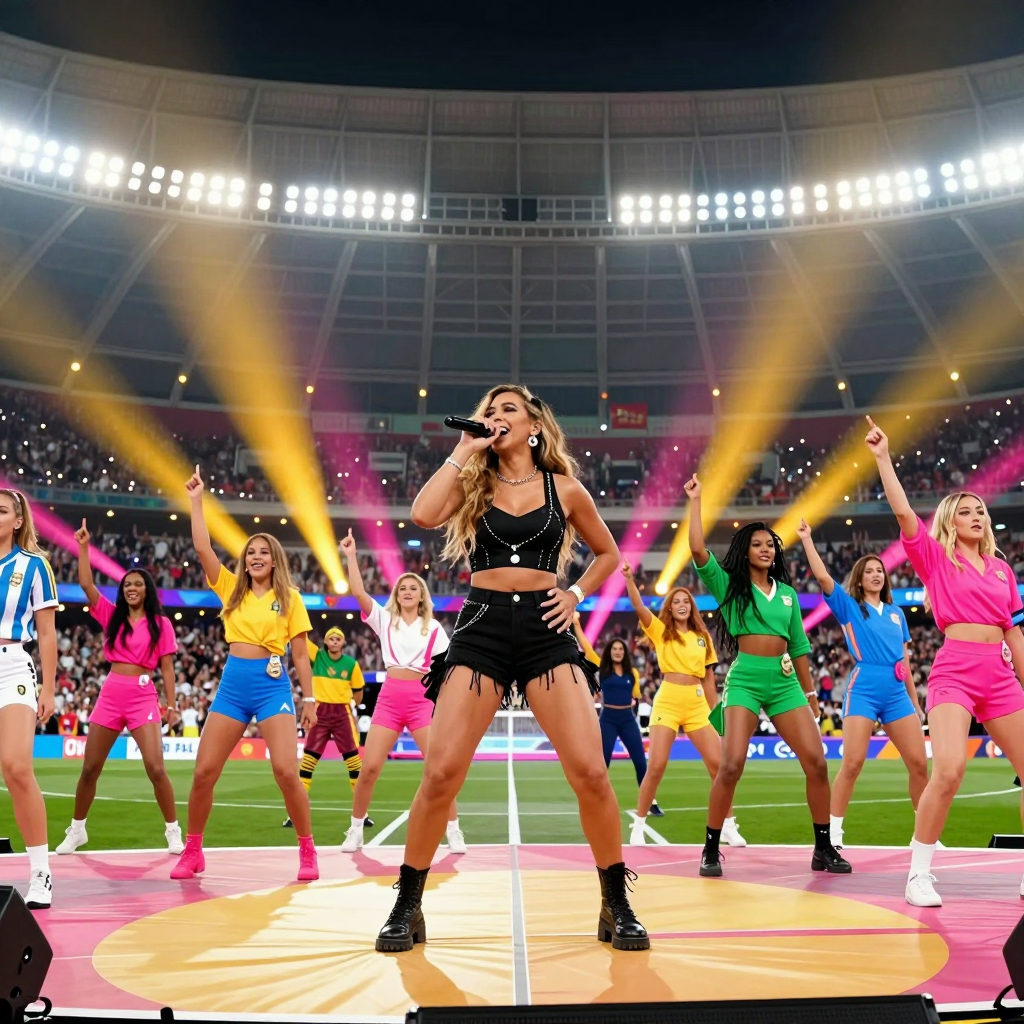
What if Shakira played a key role in the first-ever ‘Super Bowl vibes’ halftime show at the 2026 FIFA World Cup final held at MetLife Stadium in New Jersey? This moment wasn’t just a performance; it was a groundbreaking event that redefined the World Cup final itself as a global entertainment spectacle, shaking up the old formula of “World Cup as a match, Super Bowl as a show.”
The Birth of the ‘World Cup Halftime Show’ Centered Around Shakira
This final was not just a concert—it marked FIFA’s official launch of a full-fledged halftime show system for the World Cup. A star-studded lineup, including Madonna, BTS, and Justin Bieber, delivered a compact yet powerful performance that transformed the field into one enormous stage.
What stood out most was how multiple media outlets identified Shakira, alongside Madonna, as the event’s de facto headliner. While the overall concept was that of a ‘plan,’ it was the performance itself that truly elevated the atmosphere—and Shakira repeatedly emerged as the pinnacle of that energy.
Shakira’s Highlight: The Live Energy Peak of the World Cup Anthem ‘Dai Dai’
During the final halftime show, Shakira delivered a live performance of the official World Cup theme song, ‘Dai Dai,’ together with Nigerian Afrobeats star Burna Boy. This track had become the ‘voice of the World Cup,’ etched into fans’ minds through repeated plays right before every kickoff throughout the tournament, and it made a triumphant return on the final stage, providing the story’s climactic moment.
The direction of the stage was all about “the scene, not just the song.” Numerous dancers—especially Uganda’s Ghetto Kids—flooded the field, creating a vivid explosion of the multicultural energy the World Cup represents. The fusion of ‘Latin pop + Afrobeats’ was inherently global, and for the American audience, that very fusion embodied the true ‘Super Bowl vibes.’
Shakira’s Visuals and Symbolism: Cementing Her Position as a ‘World Cup Icon’
Post-performance reactions repeatedly highlighted Shakira’s commanding stage presence and style. Her bold cut-out look, intense color palette, and the “rhythms long expected on the World Cup stage” reaffirmed why she is so intrinsically linked to the World Cup.
This wasn’t simply a “one dazzling appearance,” but a moment charged with meaning as Shakira became the most convincing face of the World Cup’s embrace of American showmanship. Standing squarely at the turning point where the World Cup evolved from “an event completed by the match alone” to “an event completed by match plus show,” she was right at the heart of it all.
Shakira’s ‘Dai Dai’ Completes the World Cup Soundtrack – A Fusion of Latin Pop and Afrobeats
The official anthem, ‘Dai Dai,’ which energized all 104 match kickoffs worldwide, was far more than just a cheer song. Played repeatedly throughout the tournament, it became “etched” into listeners’ ears and exploded once again during the World Cup Halftime Show in the final, tying the entire World Cup together into one cohesive soundtrack. So, what was the secret behind this song becoming a musical bridge connecting the World Cup and America’s multicultural sensibility?
Taking Over Kickoffs Through Repeated Exposure: Becoming the ‘Official Voice of the World Cup’
The power of ‘Dai Dai’ was crafted not through its message but via its exposure structure. This single theme, ringing out before every match, created a shared rhythm uniting fans regardless of which country they cheered for, helping them collectively vibe with the stadium atmosphere. As a result, the track transcended being merely the “background music of the tournament” and became an iconic sound logo that instantly evokes the World Cup itself.
Latin Pop × Afrobeats: The Sound of Multicultural America in the Present
Blending Shakira’s vibrant Latin pop energy with Burna Boy’s Afrobeats groove, ‘Dai Dai’ fuses two globally mainstream musical currents head-on. In the U.S., where Latin and African diasporic cultures continue to strongly expand through music charts and streaming platforms, this combination serves as the most intuitive language to articulate the “international spirit of the World Cup.”
In essence, ‘Dai Dai’ translates the global IP of the World Cup into an America meets the World sensibility.
Storytelling from Opening to Final: Completing the Tournament with One Song
It’s also crucial that FIFA designed ‘Dai Dai’ to start at the opening ceremony and carry through to the final stage. When the melody returns once again at the final halftime show, audiences unconsciously share the sentiment that “we have come this far.”
Within this structure, Shakira is not a mere guest performer but the voice of the closing credits that completes the narrative threading through the entire tournament.
Reaffirmed on the Final Stage: An Anthem Expanded into ‘Music You Can See’
At the final’s halftime show, ‘Dai Dai’ was elevated with a live performance accompanied by a large-scale dance crew, especially Uganda’s Ghetto Kids, turning it into a visual spectacle. Beyond being a song “everyone sings along to,” it became a rhythm “everyone moves to,” rapidly manifesting the popular unity the World Cup dreams of.
In summary, ‘Dai Dai’ conquered memory through repetitive exposure, translated multicultural sensibilities by merging Latin pop and Afrobeats, and wove the World Cup into a singular story from start to finish. Therefore, this song was not merely a cheer anthem but a modern World Cup soundtrack born at the intersection of the tournament and American-style global pop culture.
The Story of Shakira’s ‘Family’ Blossomed in New York: The Special Friendship Between Ghetto Kids and Shakira
On the finals stage, the Ugandan dance group Ghetto Kids danced passionately alongside Shakira. What made that moment even more special was that they weren’t just “hired dancers,” but rather a ‘family-like team’ that had first built their bond in New York. So how did this unique connection come about?
The ‘Pre-Show’ Episode that Began in New York: Growing Closer Offstage First
Before the finals, Shakira met with Ghetto Kids in New York alongside her two sons, Milan and Sasha, and described them as “our new family.” This wasn’t just a casual collaboration shoutout, but a statement born from spending time together and emotionally bridging the gap between them.
At this point, New York was not just an event stop, but served as an emotional hub for Shakira. As the World Cup, a colossal event, approached, New York was the city that united her family (her children) and her new comrades (Ghetto Kids) in one space, making them all “her crew.”
Why They Became a ‘Chosen Family’: A Framework of Trust Built with the Kids
What accelerated the deepening relationship with Ghetto Kids was the fact that her children were part of the mix. The fact that Shakira herself used the word “family” means this encounter was not a snapshot for career purposes but something woven into the rhythm of her life.
For fans, the message is clear. Shakira is expanding the World Cup stage beyond a “solo star shining alone show,” stepping into the role of a mentor and leader who runs alongside the energy of the next generation.
Reunion at the Finals Halftime: New York’s Promise Fulfilled on the Field
During the finals halftime show, Ghetto Kids appeared alongside Shakira and Burna Boy in the official theme song performance, ‘Dai Dai.’ The bond formed in New York didn’t end as just a heartwarming story—it culminated in a moment on the world’s biggest stage where everyone was watching.
Ultimately, this performance goes beyond “who shined the brightest.” It stands as a memorable moment where the teamwork born in New York was proven on the grandest stage of the World Cup final.
What This Story Leaves Behind: When Shakira’s ‘Rhythm’ Becomes the Language of Connection
Shakira’s strength has always been her rhythm, but this time, that rhythm worked beyond music—as a language that binds relationships. The warm moments in New York, the declaration of ‘our new family,’ and the reunion at the finals—all these created a flow that shows Shakira not just as the voice of the World Cup, but as a global mentor who connects people through the stage.
Shakira: ‘No romance for me for now’: A Narrative of Love, Separation, and Self-Growth
Amidst a flood of celebrity rumors, Shakira chooses to tell her story in her own words. The firm statement “No romance for me for now” stands out. Referring to herself as “husbandless,” her attitude transforms the time of separation not into a loss, but into fuel for creation and healing—the most accurate keywords describing who she is today.
Rumors Abound, but the Message Is Clear: “There’s No Space in My Life Right Now”
Since her breakup with Gerard Piqué in 2022, public attention naturally shifted toward the ‘next romance.’ Various media outlets linked her to multiple figures through rumors, yet Shakira offers a different answer.
She draws a line by citing her schedule and life priorities, declaring that she will not prioritize dating. The core is simple: instead of filling the emotional void with someone else, she keeps to her own timetable.
The Declaration of Being “Husbandless”: Reinterpreting Separation as ‘Focus’ Instead of ‘Lack’
When Shakira says she is “husbandless,” the nuance is closer to a statement of state than a provocative confession. She refuses to fix the end of a relationship as tragedy, and instead reframes it as a condition that allows deeper immersion in her work.
Notably, this expression emerges in the context of creating her album Las Mujeres Ya No Lloran. For her, separation is no longer merely fodder for gossip, but a creative sentence that expands her personal narrative.
‘The Media’s Narrative’ vs. ‘The Narrative I Choose’
This contradiction is the key point to understanding Shakira’s current stance.
- What the media wants: Who she’s dating and who her next romance is
- What Shakira says: Now is the time to focus on her children, career, and growth
Ultimately, the message she sends is not a rejection of romance but a reclamation of control over her life. As rumors grow louder, her way of summarizing with short and clear sentences reveals who Shakira is now. “I write my own story.”
Shakira: The Fusion Icon of Sports and Pop Culture Dominating the U.S. Stage — Present and Future
From the World Cup Final Halftime Show to her East Coast tour connecting New York and New Jersey, Shakira now stands at the heart of the American market far beyond the familiar label of "Latin pop star." She has become a sports-pop culture hybrid icon driving both major sports events and pop culture simultaneously. The key lies not in mere exposure but in weaving the monumental moments created by sports into her musical narrative and tour itinerary.
World Cup Final Halftime Show: The Face That Transplanted the ‘Super Bowl Formula’ into the World Cup
The 2026 FIFA World Cup Final introduced the first-ever full-fledged World Cup Halftime Show, boldly embracing the “Super Bowl vibes” — and Shakira stood right at its center. Among a star-studded lineup including Madonna, BTS, and Justin Bieber, Shakira, alongside Burna Boy, pushed the official anthem ‘Dai Dai’ live, energizing the show’s peak and earning critical acclaim for her performance.
Why is this moment so significant? Because at the historic turning point when the World Cup adopts an American entertainment format, Shakira was not just a performer — she was the artist who made this turning point ‘work.’
At the Heart of the Celebrity Spectrum: Sports Events as America’s New Main Stage for Pop Culture
The World Cup Final transcended the game itself, becoming an “American-style mega event” where political, cultural, and entertainment figures congregated. Consequently, Shakira’s presence leading the halftime show demonstrated how an artist’s brand value can explode beyond music charts.
In other words, she transformed from "the singer performing at the World Cup" into a symbol translating the World Cup into the language of American pop culture. This position isn’t a one-off moment but a launchpad for ongoing expansions through future activities like tours, new songs, and media narratives.
East Coast Tour Route: The Most Realistic Path from ‘Event’ to ‘Market Domination’
If the halftime show elevated Shakira’s symbolic assets, the Las Mujeres Ya No Lloran World Tour’s East Coast schedule is where those symbols convert into tangible market impact. Focused on major venues around New York and New Jersey (e.g., UBS Arena, Barclays Center), the route naturally absorbs the geographical and cultural ripple effects from MetLife Stadium, the World Cup Final’s venue.
To sum up the flow:
- Secure maximum public attention (Top of Funnel) through the World Cup Final Halftime Show
- Strengthen ticket sales and fandom density (Conversion) via the New York-New Jersey tour
- Build sustained exposure (Brand Loop) at the intersection of sports, music, and celebrity culture
Thanks to this structure, Shakira doesn’t stop as merely the “star of the World Cup stage” but establishes herself as an artist seamlessly connected to America’s live entertainment industry and consumer market.
Next Step: Expanding the ‘Sports-Pop Culture Hybrid Icon’ Blueprint
The key watchpoint going forward is how Shakira turns this position into a ‘repeatable formula.’ By expanding the global sports narrative forged by the World Cup anthem and halftime show into tours, collaborations, and subsequent sports events, she becomes one of the rare artists to simultaneously embody both a Super Bowl-level entertainer and a World Cup-level global icon in the U.S. market.
Ultimately, Shakira today is not about “one legendary moment” but is redefining America as an optimized pop star in an era where sports take center stage.
Comments
Post a Comment