 \n
latest news US-Iran Military Clash Shakes Global Security
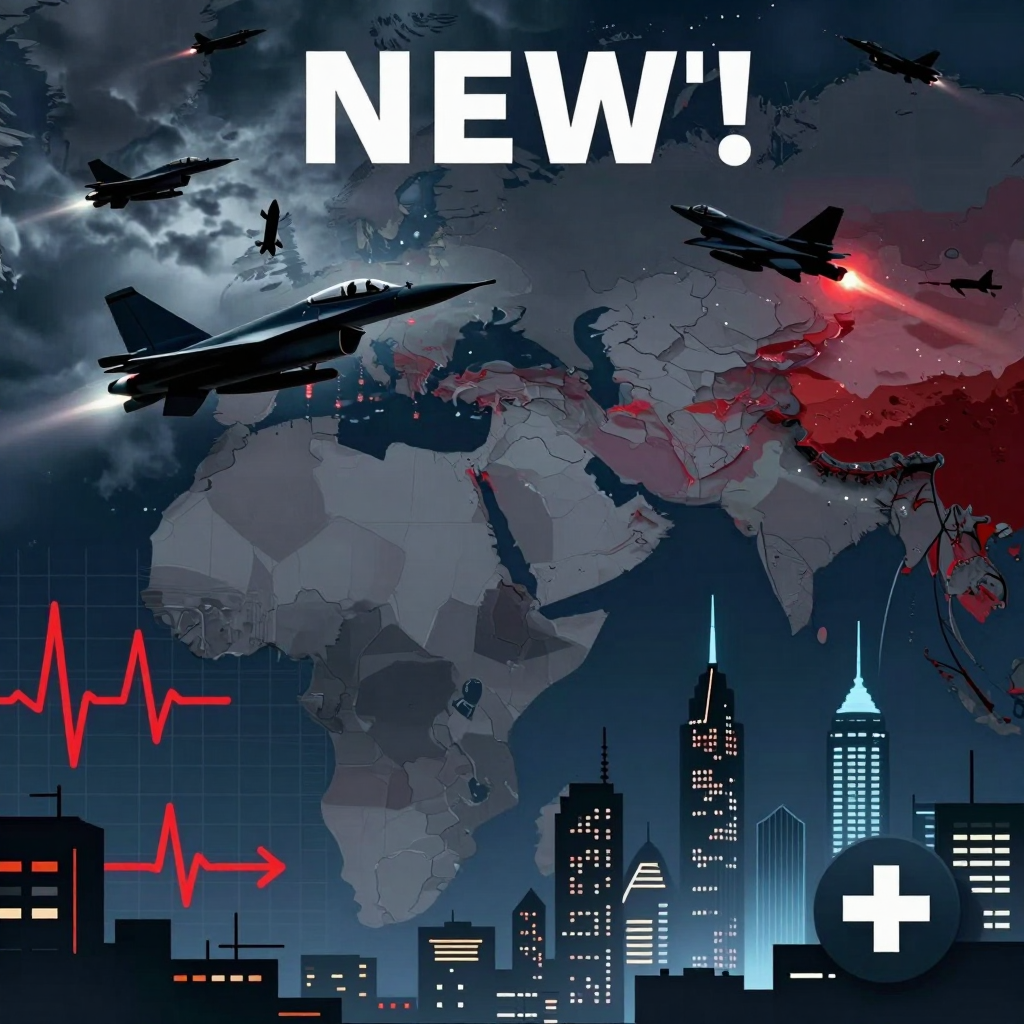
Tensions between the US and Iran have skyrocketed once again following the Trump administration’s declaration of an end to the truce and the resumption of large-scale airstrikes. This is not merely a ‘military skirmish’—the key issue is how instability across the Middle East could rapidly spread to the energy, logistics, and financial markets. Just how far-reaching will the shockwaves from this conflict be?
latest news After the Truce Ends: What Striking “Over 80 Targets” Really Means
With the US Central Command announcing strikes against more than 80 targets inside Iran—including missile and drone bases, radar installations, and air defense systems—the situation has effectively escalated from a ‘limited clash’ to a large-scale aerial conflict.
Coupled with strengthened coordination with Israel, fears grow that the confrontation won’t remain confined but could spiral into a broader regional conflict.
latest news “Retaliate 20-Fold” Warning Fuels Vicious Cycle of Escalation
Despite President Trump’s stern warnings, Iran has responded with three days of consecutive counterattacks, heightening tensions further. Iran’s emphasis on casualty figures appears designed to rally domestic opinion, boosting retaliation momentum over negotiation prospects.
As the cycle of “strike once more, and we’ll respond even harder” entrenches itself, the likelihood of all-out war does not decrease but instead gradually rises.
latest news Sharp Drop in Strait of Hormuz Traffic: Ripples to Oil, Logistics, and Prices
Data showing the number of commercial vessels passing through the Strait of Hormuz plummeting to just 13 within 24 hours after the flare-up serves as a critical market alarm. As a vital chokepoint for global oil and gas shipments, any risk to Hormuz can trigger a cascade of effects:
- Surging international oil prices: Geopolitical premiums immediately priced in
- Rising freight and insurance costs: Route instability drives up shipping expenses
- Renewed inflation pressures: Energy-driven price hikes burden consumption and monetary policy
In short, this US-Iran clash will not remain mere wartime news—it is likely to become a pivotal event forcing a “risk premium repricing” across global markets.
Latest News: Strait of Hormuz, the Lifeline of Global Oil Transport, is Choking
The number of merchant vessels passing through the Strait of Hormuz, once ranging from 30 to 50 ships per day, has plummeted to just 13 ships. This single figure signals far more than a mere "drop in traffic volume"—it is a clear sign that pressure on the global energy supply chain is reaching a critical tipping point. As a key chokepoint for oil and gas shipments, instability in this stretch of water quickly translates into soaring oil prices, disrupted logistics, and rising inflation.
The First Wave of Impact Revealed by the Latest News: Simultaneous Strain on Oil Prices and Maritime Freight Rates
- Concerns over supply disruptions push oil price expectations higher. Even if actual supply doesn’t drastically decline, the risk premium—reflecting the fear of potential blockages—gets baked into prices first.
- The structure is primed for rising shipping rates and insurance premiums. The moment this area is perceived as a conflict zone, vessels either reroute or reduce operations, while insurers raise risk surcharges. Consequently, not only do energy prices rise, but so do the costs of transporting that energy.
The Second Ripple Effect: Supply Chain Bottlenecks Expanding ‘Beyond Energy’
Risks surrounding the Strait of Hormuz extend well beyond oil alone. Since oil and gas underpin the cost base of manufacturing and transportation, the sharp drop in transit vessels sets off a domino effect:
- Increased price volatility for raw materials such as chemicals, plastics, and fertilizers
- Rising costs in air, sea, and land logistics → mounting pressure to pass on higher prices to consumers
- Competitive stockpiling leading to even tighter short-term supply-demand balances
The Watchpoint from the Latest News: Uncertainty Looms Larger Than a ‘Full Blockade’
Markets fear not only a complete shutdown. The bigger problem is prolonged uncertainty over when and to what extent disruptions might occur. As this uncertainty drags on, companies scramble to explore alternative routes, bolster inventories, and renegotiate contract terms—all of which inflate costs that ultimately end up reflected in prices.
In summary, the sharp decline in merchant ship passage through the Strait of Hormuz is not just short-term news. It reactivates a chain of shocks flowing from oil (energy) to freight (logistics) to prices (consumption). The key focus going forward is not whether the strait will be entirely blocked, but how long the instability lasts and how greatly it amplifies the market’s risk premium.
The Current State of U.S. Trade Policy and Global Business Transformation Seen Through the Latest News
As tariff policies tighten and U.S.-Iran risks intensify, companies are actively restructuring investment hubs and diversifying supply chains. But what future will these strategies actually bring? Recent trends show there’s no single answer. We are moving into an era where costs rise, decisions speed up, and ‘security’ becomes the fundamental premise of business.
The New Equation Created by Heightened Tariffs: From “Economies of Scale” to “Economies of Policy”
The U.S. is leveraging Section 301 of trade law to impose tariffs on goods from specific countries under the pretext of forced labor issues, impacting even allied nations. This shift is more than a simple rate increase.
- Restructuring cost structures: Tariffs instantly raise import costs, squeezing both corporate margins and consumer prices.
- Incorporating a ‘policy risk premium’ into contracts and procurement: The potential for tariff fluctuations becomes a baseline in price negotiations, increasing uncertainty costs especially in long-term contracts.
- Amplified friction with allied countries: As economic pressure based on “values” accumulates, companies begin to prioritize regulatory and diplomatic variables over market expansion.
U.S.-Iran Risks Expose Supply Chain Vulnerabilities: Chokepoints Equal Costs
With renewed U.S.-Iran military tensions causing sharp declines in traffic through the Strait of Hormuz, key energy and shipping routes are destabilized, quickly turning supply chain issues into “cash flow” crises. Energy and logistics form the baseline costs of all industries, so the ripple effects are profound.
Companies are grappling with three major responses:
- Exploring alternative routes: Choosing lower-risk paths over the shortest ones, accepting longer transit times and higher insurance costs.
- Expanding inventory and raw material buffers: Reversing the trend of minimizing stock, some goods are returning to ‘safety stock’ levels.
- Diversifying sourcing: Moving toward multisourcing structures that reduce dependence on any single country or route.
While these measures can strengthen supply chains, they also drive a structural change toward higher average costs.
The Dilemma of Adjusting Investment Hubs: Friend-shoring Is Safer but Not Cheaper
Tariffs combined with geopolitical risks push companies to relocate production and investment hubs. So-called friend-shoring—centering supply chains in allied countries—reduces uncertainty but comes with tangible drawbacks.
- Costs arise from facility relocations and duplicated investments,
- Supply chains lengthen or fragment, raising operational complexity,
- Moving to regions with higher labor and regulatory costs may weaken product price competitiveness.
Ultimately, companies are shifting their optimization criteria from “the cheapest location” to “a location that won’t suddenly become inaccessible.”
The Future Ahead: Companies That Can Pass On Rising Costs Through Pricing Will Win
The clear conclusion from the latest news is that tariffs and Middle East risks are no longer temporary events—they have become fundamental variables in corporate operations. The questions that will determine competitiveness going forward are changing.
- Do we have pricing power (through brand strength, monopoly, or essential product nature)?
- Can we maintain delivery and quality despite tariffs, conflicts, or route disruptions?
- Will redesigning supply chains and investment hubs lead not just to short-term costs but long-term survival?
In summary, the corporate battleground is shifting from “risk avoidance” to the ability to calculate risks as costs and control those costs effectively.
A Giant Event in the U.S. Stock Market Seen Through the Latest News: The Significance of SK Hynix’s Nasdaq ADR Listing
SK Hynix’s ADR listing, set to become the largest foreign company IPO ever, immediately raises the question: “Why the U.S. stock market now?” This deal is far more than just a listing—it boldly reaffirms that the U.S. capital market is functioning as the ‘fundraising hub’ of the global semiconductor value chain.
From the U.S. Stock Market Perspective: Why Ultra-Large Liquidity Is Flooding In
Through its Nasdaq ADR offering, SK Hynix plans to raise around $26.5 billion, surpassing previous mega deals in symbolic scale. For American investors, this opens a gateway to bet big on memory—a core component in the AI infrastructure race, directly tied to AI computation and server demand.
Even amid current market turbulence driven by geopolitical, logistics, and energy uncertainties, the U.S. IPO market shows the capital market’s instinct: “big themes attract big money.”
From the Global Semiconductor Market Perspective: The Battleground Expands from ‘Technology’ to ‘Capital’
This listing goes beyond being a company event for SK Hynix—it signals that competition in the global semiconductor industry now hinges not only on process technology and R&D but also on fundraising capability.
- Massive investment capacity could translate into expanded production, next-generation memory R&D, and enhanced negotiation power in supply contracts.
- High visibility in the U.S. market will influence the valuation benchmarks (comparables) across the semiconductor sector, potentially driving competitors and ecosystem players to rethink their investment and listing strategies.
A Question for Investors: What Matters More Than the “Listing” Is What Happens “After the Listing”
While this headline-grabbing mega ADR offering dazzles, the real checkpoints lie beyond the listing day.
- The quality of demand forecasting (long-term vs. short-term capital)
- The volatility of the AI cycle and memory market conditions
- The impact of global risks (tariffs, supply chains, energy prices) on performance guidance
The interplay of these three factors will decide whether this listing will be remembered as a “historic record” or a “turning point reshaping market structure.”
American Social Trust Shaken Through the Lens of Latest News: From Healthcare and Policing Issues to Advanced Surveillance
In the U.S., shocking incidents have come to light: a living baby discovered in a morgue and a police dog left to die in a scorching patrol car. Adding to the turmoil, extensive drone crackdowns during the Independence Day celebrations raise pressing questions—where is American society headed? These recent latest news stories reveal far more than mere “accidents”; they expose where and how the very foundation of American society—trust—is cracking.
Cracks in Trust Within the Healthcare System: The Moment a “Death Sentence” Was Reversed
An 18-month-old baby, declared dead at a hospital and transferred to the morgue, was discovered alive days later, striking at the heart of emergency medical judgment and accountability. Despite the guardians’ warnings that the child was “still breathing,” medical professionals seemingly dismissed these concerns, casting doubt on whether the healthcare system is upholding its most basic standards—verification, rechecking, explanation, and documentation.
These cases aren’t isolated mistakes. The public quickly wonders, “Could this happen to my family?” thereby inflating the overall trust cost borne by medical institutions.
Accountability Controversy in Policing: The Police Dog Incident’s Stark Warning
Two police dogs left in a hot patrol car for about seven hours died, and the officer involved has been indicted. This raises crucial questions: does the law enforcement’s touted discipline and accountability truly apply within its own ranks? Since K-9 units symbolize law enforcement and act as partners on the front lines, this incident transcends mere animal cruelty and invites sharp criticism of the organizational culture and internal control systems.
Moreover, given that the dogs were “on duty,” citizens naturally extend their scrutiny: “If this is how animals in service are treated, how rigorously are human duties of care being upheld?”
The Double-Edged Sword of Drone Enforcement: When Surveillance Becomes Everyday Life
During the Independence Day holiday, heavy use of drones to crack down on illegal fireworks resulted in mass confiscations, proving how technology can genuinely bolster public safety. Yet, concerns grow that “festivals and daily life alike could fall under constant watch.”
The key is not the drones themselves but the operating principles guiding their use. Depending on factors like the scope of filming and tracking, where and how long data is stored, and whether there is a process to challenge false positives or overreach, citizens may view drones either as a safety tool or as a signal of a surveillance society.
The Crucial Question Facing America Today: “Whom Do the Systems Serve?”
Though these three issues appear distinct, they send a shared message:
- Healthcare must be trusted to follow life-and-death procedures reliably,
- Policing must demonstrate responsibility in exercising authority, and
- Technology must be justified not only by efficiency but also by rights and transparency.
The American landscape depicted in the latest news shows that social trust hinges less on the crises themselves and more on the institutions’ attitudes toward managing those crises. The spotlight going forward is not on the outcomes of individual events but on whether these incidents lead to protocol improvements, identification of accountability, and clear codification of surveillance standards.
Comments
Post a Comment