2026 Foldable Smartphone Trends: A Complete Analysis from the Galaxy Z Fold8 to Apple’s Foldable iPhone
 \n
\n
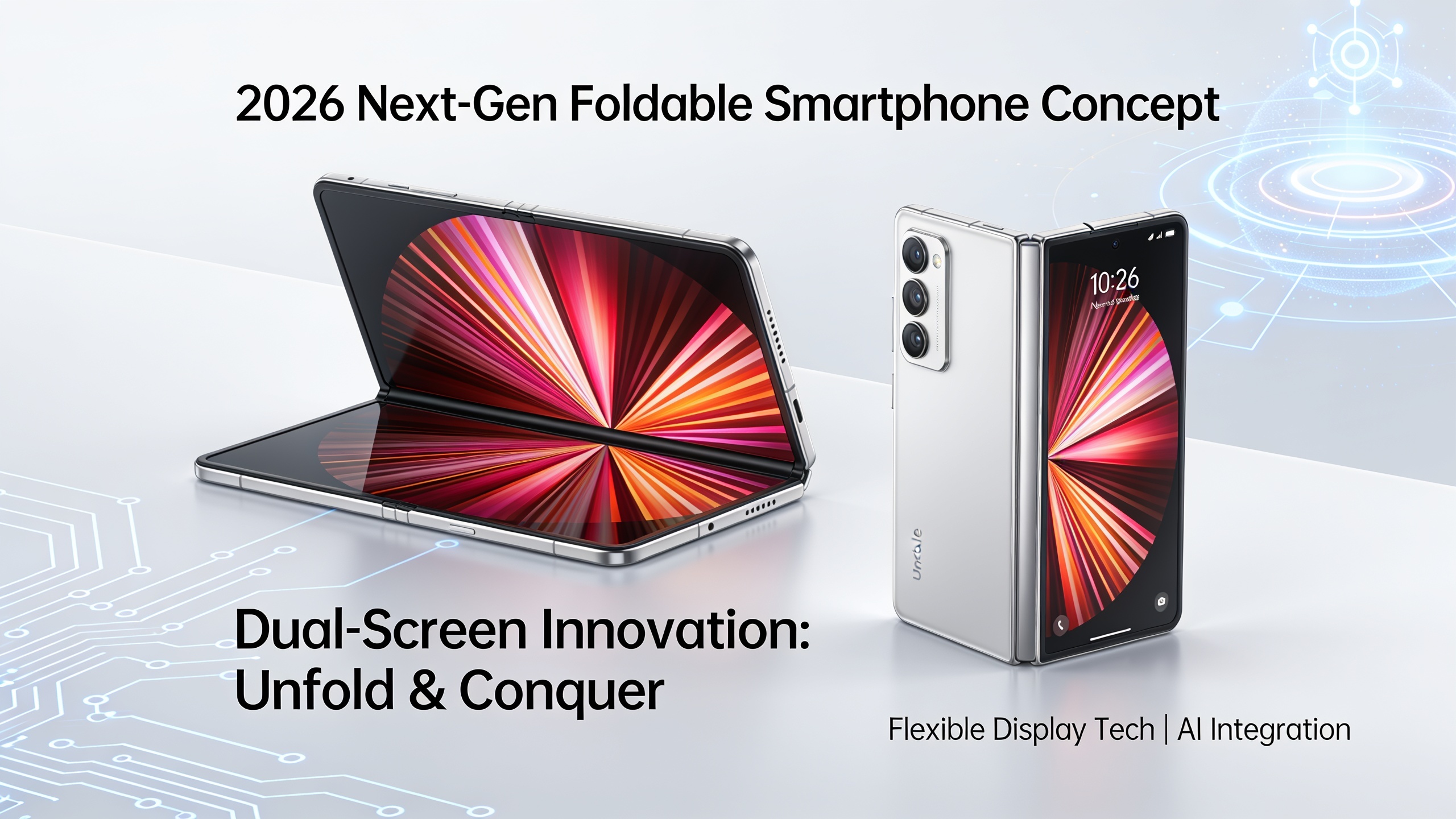
Foldable Smartphones: The Moment You Fold One, Everything You Know About Smartphones Changes
What if the familiar smartphone in your pocket could transform into a small tablet the moment you unfolded it? A foldable smartphone is more than just technology that bends a screen. On the go, you can check messages with one hand; at a café or in a meeting room, you can edit documents and watch videos on a larger display. It introduces an entirely new way to use a mobile device.
Foldables were once closer to “intriguing but inconvenient experiments.” They were often criticized for their thick bodies, heavy weight, narrow cover screens, and concerns about screen creases. But the foldable market in 2026 is different. With wider cover screens, thinner and lighter designs, improved hinges and durability, and AI-powered multitasking, foldables are establishing themselves as a major category of premium smartphones.
In particular, the latest book-style foldables have improved their cover-screen proportions, allowing users to handle social media, messaging, and web searches naturally—even when the device is closed, just like a conventional smartphone. When needed, simply unfold it to access a large 7- to 8-inch-class display. In other words, it is no longer a device that must always be used unfolded, but a hybrid device that shifts between a smartphone and a tablet depending on the situation.
The essence of this transformation is not the screen size itself. It lies in the experience of running multiple apps at once on a wider display, viewing documents and messages side by side, and quickly checking essential information while watching videos. Combined with features such as Galaxy AI, foldables are evolving into all-in-one tools for work, learning, content creation, and entertainment.
Ultimately, a foldable smartphone is more accurately described not as a “phone that folds,” but as a personal large-screen computer that reduces the limitations of portability. If you think about how often you actually need a tablet in your daily life, it becomes easy to understand why foldables are making their way into the premium mainstream.
Foldable Smartphones, From Experiment to a Fully Fledged Lineup: From the 2019 Galaxy Fold to the Fold8
The first Galaxy Fold in 2019 posed an unfamiliar yet powerful question: “Can a smartphone screen really fold?” At the time, the device was thick and heavy, while concerns about its narrow cover screen, visible crease, and hinge durability were impossible to ignore. Even so, the experience of using it as a smartphone when folded and a tablet when unfolded was enough to reveal possibilities that conventional bar-shaped smartphones simply could not offer.
Early foldable smartphones were closer to experiments for early adopters. Samsung, however, continued refining the experience through the Z Fold and Z Flip series, addressing one inconvenience after another. The hinges became sturdier, the screen crease was refined to be less distracting, and water resistance and material durability continued to improve. Above all, Samsung steadily enhanced the cover screen’s size and aspect ratio in an effort to change the perception that a foldable was a phone you had to unfold to use properly.
The changes in 2026 are more than a simple generational upgrade. Samsung is now segmenting the foldable market with a three-model lineup consisting of the Galaxy Z Fold8, Galaxy Z Fold8 Ultra, and Galaxy Z Flip8.
- The Galaxy Z Fold8 is aimed at balancing everyday smartphone usability with the productivity of a large screen. With a wider cover screen and a lighter design, it focuses on making messaging, social media, and web browsing comfortable even when the phone is folded.
- The Galaxy Z Fold8 Ultra is designed for power users and creators who want a larger display, a bigger battery, and top-tier performance. It offers a clearer choice for users looking to use a foldable as a replacement for a work tablet.
- The Galaxy Z Flip8 targets consumers who prioritize portability and design. Its compact form, which slips easily into a small bag or pocket, combined with its stylish appeal, expands the foldable from a piece of technology into a lifestyle item.
How much of the inconvenience of the past has disappeared? It would be difficult to say that it has vanished completely. The higher price compared with conventional smartphones, the structural limitations unique to foldable displays, and the potential burden of repair costs are still factors that must be considered before making a purchase. Compared with the Galaxy Fold of 2019, however, today’s foldables are far closer to being a realistic choice.
The core appeal of foldables is no longer the novelty of a screen that folds. What matters now is whether the device feels as natural as an ordinary smartphone when folded, yet works as broadly and efficiently as a tablet when unfolded. The Fold8 generation comes closer than ever to meeting that standard, demonstrating that foldables have moved beyond the experimental stage and earned their place as a fully established lineup of premium smartphones.
Foldable Smartphones Evolve to Become Wider, Lighter, and Smarter
In 2026, the standard for foldable smartphones is no longer simply whether “the screen folds.” What matters now is how comfortable the device is to use like a regular smartphone when folded, and how much tablet-level productivity and immersion it can deliver when unfolded.
The Galaxy Z Fold8 symbolizes this shift. It features a 5.5-inch cover screen and a 7.6-inch inner display, while its weight has been reduced to just 201g. Add a 4,800mAh battery, 45W wired fast charging, a flagship chipset, and Galaxy AI, and foldables are moving beyond being specialized companion devices to become genuine ‘main smartphones.’
A Wider Display: A Smartphone When Folded, a Tablet When Unfolded
Traditional foldable phones were often viewed as devices whose narrow cover screens were suitable only for quick checks, requiring users to unfold the phone for proper use. However, the Fold8’s 5.5-inch cover screen offers a much more natural size and aspect ratio for everyday tasks such as messaging, social media, searching, navigation, and web browsing.
When more space is needed, users can unfold the 7.6-inch inner display. This makes it possible to write emails while viewing documents, display a video and comment window side by side, or use multiple apps in split-screen mode. In other words, combining the convenience of a folded phone with the expandability of an unfolded display has become a key direction for the latest foldable smartphones.
Lightweight at 201g: A Foldable You Can Carry Every Day
Weight and thickness have always been among the biggest challenges facing large-screen foldables. With two displays and a hinge mechanism built into the design, early models were inevitably less portable than conventional smartphones.
The Fold8 significantly narrows that gap by bringing its weight down to 201g. While the difference may look small on paper, it is clearly noticeable in a smartphone that users carry in their pockets or bags and operate with one hand every day. For foldables to move beyond being “specialized devices used only when needed,” reducing the burden of holding the phone in your hand is just as important as increasing screen size.
Performance and Battery: The Essential Power Behind a Large Display
The larger the screen, the more important performance and battery efficiency become. The Fold8 is equipped with a 4,800mAh battery and highlights up to 26 hours of video playback. It also supports not only 45W wired fast charging, but wireless charging and reverse wireless charging, further expanding its versatility.
A high-performance chipset, generous memory, and ample storage options are also essential. The advantages of a foldable can truly shine only when it can reliably handle demanding tasks such as large-screen multitasking, high-resolution video playback, gaming, and photo editing. Foldables are no longer simply phones with larger displays; they now aim to become mobile workstations powered by flagship performance.
Large-Screen Productivity Completed by Galaxy AI
Hardware changes alone cannot complete the foldable experience. What matters is how efficiently the larger screen can be used—and Galaxy AI is at the center of that experience.
AI-powered features focus on reducing the time spent on repetitive tasks such as searching, writing, translation, summarization, and image editing. In particular, split-screen and multi-window environments make it more natural to check information on one side of the display while writing a document or continuing a conversation on the other.
Ultimately, the key to understanding foldables in 2026 lies not in the ‘foldable display’ itself, but in how the combination of a large screen and AI transforms the way users work. Unfolded, it becomes a powerful productivity tool; folded, it remains a smartphone that is easy to carry and use. This is the most practical evolution that the latest foldables have to offer.
Foldable Smartphones: Who Should Choose the Fold8, Fold8 Ultra, or Flip8?
From the Flip8, priced at around KRW 1.68 million, to the Fold8 Ultra, priced at around KRW 2.57 million. Samsung’s 2026 foldable lineup is not simply a range of products differentiated by screen size or price. Each model targets users with different ways of working, enjoying content, and carrying a smartphone.
The key is simple. If you need a workspace closer to that of a tablet, the Fold is the better fit. If you want the highest possible performance, choose the Fold8 Ultra. If portability and design come first, the Flip8 is likely to suit you best.
Fold8: A Balanced Point Between a Smartphone and a Tablet
The Galaxy Z Fold8 is a balanced foldable that “feels like a smartphone when folded and works like a tablet when unfolded.” Its 5.5-inch cover screen is sufficient for everyday tasks such as messaging, browsing social media, and searching the web. When unfolded, the 7.6-inch main screen provides ample space for documents, videos, and multitasking.
The Fold8’s advantages become especially clear for users who frequently run multiple apps at once. Checking email while editing a document, taking notes while watching a video lecture, or using maps and a messenger side by side feels distinctly different from using a conventional bar-style smartphone.
- Recommended for: People who want to handle work, studying, and video watching on a single device
- Strengths: A larger cover screen, a 7.6-inch main display, and highly practical multi-window functionality
- Price range: From around KRW 2.27 million
- In one line: The most practical foldable option for people who often find themselves reaching for a tablet
Fold8 Ultra: For Power Users Who Refuse to Compromise on Performance or Screen Size
As its name suggests, the Fold8 Ultra is designed for users who want the ultimate “Ultra” experience. With an 8.0-inch main display, a 6.5-inch cover screen, a 5,000mAh battery, and a high-performance configuration based on the Snapdragon 8 Elite Gen 5, it goes beyond being simply a large-screen smartphone.
Users who demand a great deal from their smartphones—whether for video editing, high-end gaming, large-file work, or professional multitasking—are likely to feel the value of the Fold8 Ultra immediately. Its 1TB-class storage option is also appealing to creators who shoot a lot of photos and videos or want to reduce their reliance on cloud storage.
However, its price is the highest in the lineup, at around KRW 2.57 million. Rather than asking whether “having a large screen would be nice,” it is better to decide based on whether the combination of a large display and flagship-level performance can genuinely reduce the time you spend on real tasks.
- Recommended for: Creators, high-end gamers, and power users who rely heavily on their smartphones for work
- Strengths: An 8.0-inch large display, a 5,000mAh battery, and top-tier chipset and storage options
- Price range: From around KRW 2.57 million
- In one line: The ultimate foldable for people who use their smartphone like a work computer
Flip8: The Joy of Folding Small and the Value of Design
The Galaxy Z Flip8 starts from a different premise than the Fold series. It places greater value on portability, design, and personal expression in everyday life than on productivity. Thanks to its vertically folding design, it fits easily into a small bag or pocket, while its folded form becomes a style statement in its own right.
The Flip8 also offers a relatively low barrier to entry for users who want to experience a foldable for the first time. At around KRW 1.68 million, it is more accessible than the Fold8 series and pairs naturally with lifestyles centered around fashion, photography, social media, and life logging.
It may be less suited than the Fold for editing documents on a large screen or running multiple windows at once. However, if your standard is clear—that “a smartphone should be light and beautiful”—the Flip8 may prove to be the more satisfying choice.
- Recommended for: Users who prioritize portability and design, as well as first-time foldable buyers
- Strengths: Compact portability, a stylish form factor, and a comparatively lower entry price
- Price range: From around KRW 1.68 million
- In one line: The model for people who want to enjoy a foldable as a lifestyle statement rather than simply as a piece of technology
The Real Question Is: “Do I Have a Reason to Unfold It?”
When choosing a foldable smartphone, the first question to ask is not about the price, but about your habits.
| Usage pattern | Recommended model | Reason to choose it |
|---|---|---|
| You do a lot of document work, split-screen multitasking, and video watching | Fold8 | It offers an excellent balance between a smartphone and a tablet |
| You frequently edit videos, play games, or work with large files | Fold8 Ultra | It maximizes the screen, battery, and performance |
| Portability, design, and social media use are important to you | Flip8 | It delivers the fun of folding down small along with standout style |
Ultimately, the Fold8 and Fold8 Ultra answer the question of what you will do when the phone is unfolded, while the Flip8 answers how lightly—and how much like yourself—you want to carry it when folded. Choosing a foldable is not merely about picking a smartphone with a folding screen. It is much closer to choosing the way of using a phone that fits your everyday life best.
The Next Battleground for Foldable Smartphones Is Not the Screen, but the Way We Live
The value of a foldable lies in more than simply having a larger screen. The real transformation reveals itself throughout the flow of a day. On the move, you can check messages on the cover screen; on the subway, you can quickly catch up on the news. Once seated in a café or meeting room, you can unfold the device to display documents and messaging apps side by side, moving seamlessly between watching videos, organizing notes, and searching for information.
In this way, a foldable smartphone is becoming more than a device that shifts between a smartphone and a tablet. It is evolving into a tool that changes how we work and relax depending on the situation. The more naturally the immediacy of the folded state connects with the immersive experience of the unfolded state, the more satisfying foldables become.
The Galaxy Z Fold8 series, in particular, appears intent on moving beyond being “a phone you can use only when unfolded,” emphasizing its larger cover screen, multitasking capabilities, and Galaxy AI. By contrast, the Flip8 and Motorola Razr series use compact portability, design, and distinctive user experiences as their key strengths. The competition is no longer limited to screen size; it is expanding into a contest between productivity-focused foldables and lifestyle-focused foldables.
With the possibility of Apple entering the foldable market also being discussed, the tension is rising further. If Apple actually introduces a foldable, the way it connects not only its hardware but also iOS, the Mac, iPad, Watch, and AirPods could establish an entirely new standard. Samsung and Motorola have expanded the possibilities of form factors and design. The next step, however, will depend on how smoothly each brand can shape the user’s everyday life.
Ultimately, the foldable market comes down to one essential question: Do we really want a larger screen, or do we want a more flexible everyday life—one that lets us work, enjoy ourselves, and communicate more freely depending on the place and time? The future of foldables may be determined less by display size than by the answer to that question.
Comments
Post a Comment