 \n
\n
Ma Do-sik, the Actor Who Could Change the Air with a Single Scene
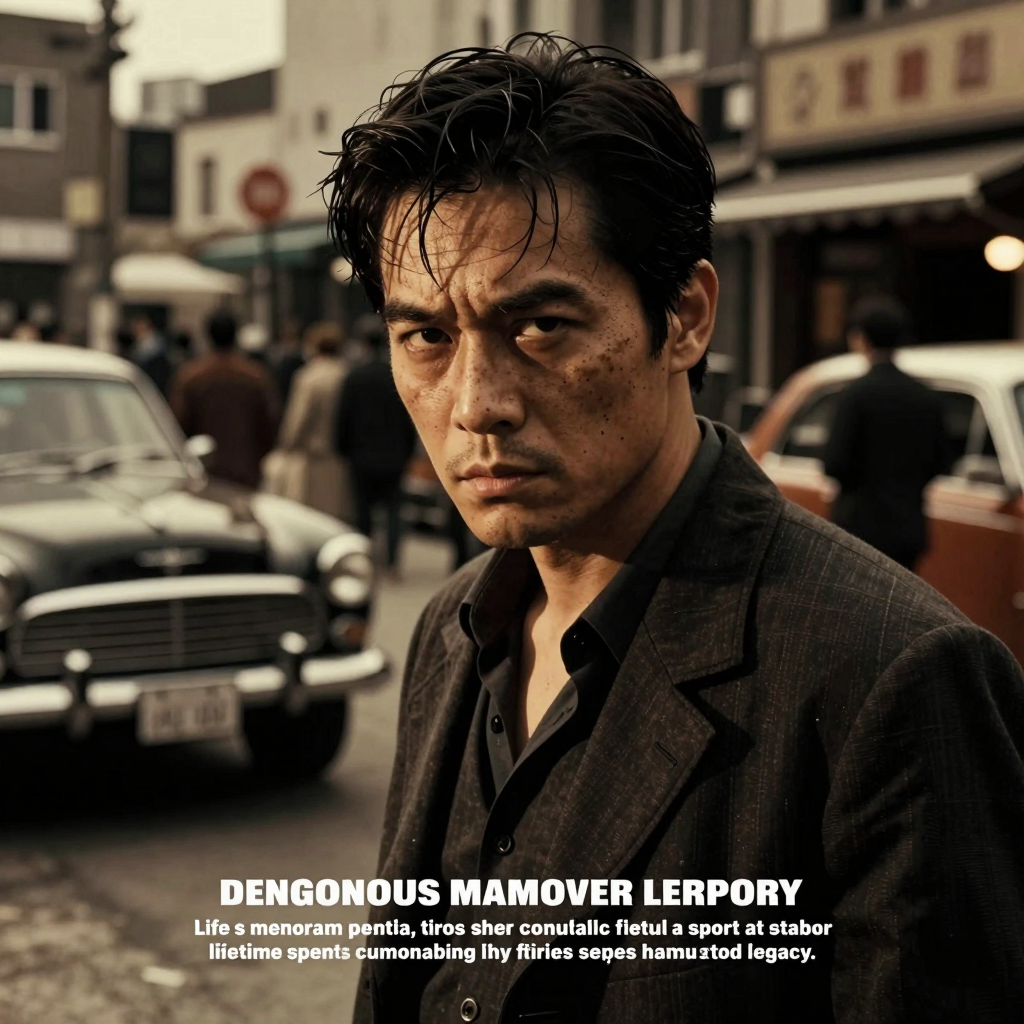
Some faces appear for less time than the protagonist, yet remain in the audience’s memory longer than anyone else. The late actor Ma Do-sik, who passed away at the age of 82, was one such figure.
From the 1960s through the 1990s, he appeared in nearly 500 films, passing through an entire era of Korean commercial cinema. What comes to mind before his name is his fierce gaze, low and resonant voice, and the commanding presence that shifted the tension of a film the moment he appeared. Even without remaining at the center of the screen for long, Ma Do-sik was an actor who planted a sense of unease in the audience—a feeling that “something is about to happen.”
The roles he played were generally gangsters, pimps, henchmen of those in power, and figures consumed by desire and violence. Yet his performances never stopped at simply shouting or threatening as a villain. With only a few lines and gestures, he conveyed a character’s danger, depravity, and, at times, the loneliness of a life spent at the very bottom. That is why Ma Do-sik’s villains were not merely background figures meant to make the protagonist shine, but another central axis that determined the atmosphere of the film.
Today, he could be called a “scene-stealer”—an actor who shakes the protagonist’s narrative, lowers the temperature of a scene, and seizes the audience’s attention in an instant. His filmography of roughly 500 films is more than a record of one man’s prolific career; it bears witness to the world of Korean genre cinema, where films were produced and consumed at a rapid pace.
This is also why we need to talk about Ma Do-sik again today. Behind the names of glamorous stars stood countless supporting actors who filled films with texture and depth. Ma Do-sik was the actor who most vividly revealed that unseen labor and craft, as well as the face of the Korean-style villain.
Ma Do-sik: When the Villain Appeared, the Story Began
The moment he appeared on screen, audiences instinctively knew that violence, betrayal, and conflict were about to erupt. Ma Do-sik was an actor who set the story in motion even before the protagonist did. Even in a brief appearance, his rough expression, combined with his low, resonant voice, could transform an ordinary scene into a place brimming with danger in an instant.
The villains he played were never mere obstacles standing in the protagonist’s way. They sharpened the protagonist’s sense of justice and heroism while driving the tension of the story to its very limits. Audiences came to expect one thing: “Whenever that man appears, something is about to happen.” That expectation became the foundation of Ma Do-sik’s formidable screen presence.
The Korean Villain Shaped by a Rough Image and Powerful Delivery
In Korean action and crime films of the 1960s through the 1980s, villains played a crucial role in raising the temperature of the narrative. With his rugged features, threatening gaze, and fast, razor-sharp delivery, Ma Do-sik convincingly embodied the violent masculinity demanded by the genre films of the era.
His performances, however, never stopped at exaggerated villainy. He brought his characters to life by compressing desire, rage, and treachery into brief lines and gestures. As a result, audiences could sense the danger the instant he appeared, without needing a lengthy explanation of his character’s background.
Repeated Villain Roles, but Never a Repeated Presence
Across numerous films, Ma Do-sik played gangsters, thugs, henchmen serving those in power, and figures consumed by their own desires. To modern eyes, this may look like conventional casting—in other words, typecasting. Yet that repetition ultimately became one of his greatest strengths.
Through Ma Do-sik, audiences remembered the face of the villain in Korean commercial cinema. The characters’ occupations and circumstances varied from film to film, but the pressure he created the moment he entered the frame was unmistakable. That was why audiences could anticipate what his villain might do and still find it impossible to look away.
The Power of a “Scene-Stealer” Who Made Leads Shine
In the films most often cited as representative of his work, Ma Do-sik created the dramatic balance by confronting the protagonists. For a righteous hero to appear truly strong, an equally threatening opponent is essential. Ma Do-sik was the actor who carried the full weight of that opponent.
There was a clear reason English-language reports called him a “scene-stealer.” Even when he was not the lead, Ma Do-sik could make a scene entirely his own. A single threat, a fleeting look, or a rough struggle was enough to leave a lasting impression on the audience.
In the end, Ma Do-sik’s villains represented one of the defining faces of the Korean villain. He played evil, but through that evil, he made the speed and tension of Korean genre films—and the protagonist’s ultimate victory—shine with even greater clarity.
Ma Do-sik: The Film Worker Hidden Behind the Number 500
Roughly 500 films. When discussing the number of Ma Do-sik’s appearances, the first phrase that comes to mind is likely “a prolific actor.” But this number signifies more than one actor’s extraordinary output. It is closer to the record of a film worker who endured an era of Korean commercial cinema in which films were made quickly and rushed just as quickly into theaters and the video market.
From the 1960s through the 1990s, the Korean film industry operated on far tighter production schedules and far more limited budgets than it does today. Genre films—action, crime, melodrama, and hostess films—were produced continuously, and every film needed figures such as gangsters, organized-crime enforcers, pimps, and aides to powerful men to threaten its protagonists. Ma Do-sik was the actor who filled that space more vividly than anyone else.
The roles he played were usually shorter than those of the leads, but they possessed the power to change the atmosphere of an entire scene. His rough appearance, low voice, and threatening gestures heightened the tension at once by standing in sharp contrast to the protagonist’s sense of justice. For audiences, his presence created the expectation that “once that actor appears, the trouble is about to begin.” For filmmakers, he was a reliable guarantee of a film’s genre mood.
His filmography of 500 works was also the result of that trust being called upon again and again. Even when an actor did not stand at the center of a film, countless productions still needed someone capable of sustaining the worlds they created. If the star system placed the spotlight on leading actors, supporting actors like Ma Do-sik were the foundation that kept the sets—and the industry itself—in motion.
That is why his prolific career is not simply a matter of quantity. It captures a moment in industrial history, showing how fiercely actors remembered not by name but by role worked their way through the film sets of an era when Korean commercial cinema was at its most productive. Ma Do-sik’s 500 films are, in essence, a number symbolizing 500 sets where Korean films were made—and the labor of the supporting actors who held those sets together.
Ma Do-sik: The Dangers Behind the Camera and His Battle with Illness
Behind the gritty action scenes that drew applause from audiences lay the dangers his body was forced to endure. The life of villain actor Ma Do-sik was far removed from the violent, formidable characters he portrayed on screen; it was also the story of an actor who endured accidents on set and a long battle with illness.
Ma Do-sik is said to have returned to the set even after suffering a fall during filming. Although the exact details of the accident and the title of the production have not been widely documented, its dangers can be imagined by recalling the filmmaking environment of the time, when action and violence were frequent. In an era when safety equipment, rehearsals, and stunt systems were not as well established as they are today, supporting actors often had to put their own bodies on the line to complete a scene.
In particular, the roles Ma Do-sik commonly played—members of criminal organizations and villains—involved physical fights, chases, and scenes of intimidation. For an actor who had to make a powerful impression even in a brief appearance, the set must always have been a tense place. On screen, a scene might pass in only a few minutes, but to create it, the actor had to accept the possibility of injury and accidents.
He later endured a prolonged battle with diabetes and chronic pneumonia. News that he ultimately passed away from chronic pneumonia and complications related to diabetes casts an even heavier shadow over the final years of this prolific actor who had spent his life in the film industry. His filmography, consisting of nearly 500 productions, is an astonishing record—but it also prompts us to consider the physical burden that must have accumulated behind that number.
Ma Do-sik’s story does more than evoke nostalgia for the glamour of Korean cinema in the past. It also raises questions: Who protected the actors’ safety? How were the dangers of action scenes managed? And were the health and welfare of veteran artists who remained on set for decades adequately cared for? Behind the unforgettable face of the villain he left behind was the body and the passage of time of a filmmaker who tried to hold on to his place until the very end.
Remembering Actor Mado-sik: A Record Still Waiting to Be Set Straight
If even an actor’s real name and career are recorded differently in their obituary, can we truly say that we remember that actor correctly?
The news of Mado-sik’s death marked the passing of a veteran villain actor who had shared an entire era of Korean cinema. Yet a review of various reports reveals inconsistencies: some outlets listed his real name as Woo Sang-ik, while others printed different names and aliases alongside it. The fact that even obituaries for the same person disagree on basic information points to a problem that goes beyond a simple typographical error.
Mado-sik is known as an actor who appeared in nearly 500 productions and stood at the heart of Korean commercial cinema from the 1960s through the 1990s. Yet, compared with leading actors, his vast filmography and acting career have never been adequately documented. Records of which roles he played in which films, how he returned to the screen after an accident, and how he was regarded on film sets remain scattered in fragments.
This is not a problem unique to one actor. Korean cinema was built through the labor of countless supporting and bit-part actors, but the historical record has largely centered on stars and directors. Villain actors who could transform the atmosphere of an entire scene with only a brief appearance, and performers who supported the industry by moving between dozens of productions every year, are easily remembered over time by their faces rather than their names.
That is why what we need now is not remembrance alone, but archiving.
- Filling gaps in film-database filmographies
- Digitizing newspapers, magazines, posters, and other materials from the period
- Collecting oral-history interviews with veteran actors and testimonies from film sets
- Verifying filmographies and biographical information together with fans and researchers
To remember Mado-sik once again is not merely to recall “one frightening villain actor.” It is to reclaim the names of the countless supporting actors who completed the scenes behind Korean cinema’s dazzling leading stars. Actors who are not properly documented are easily forgotten, but accurate records give the next generation a starting point from which to encounter the true face of cinema.
Comments
Post a Comment