 \n
\n
The Sky’s Crossing Point Faced by an Aircraft Pilot: The Carlisle Midair Collision
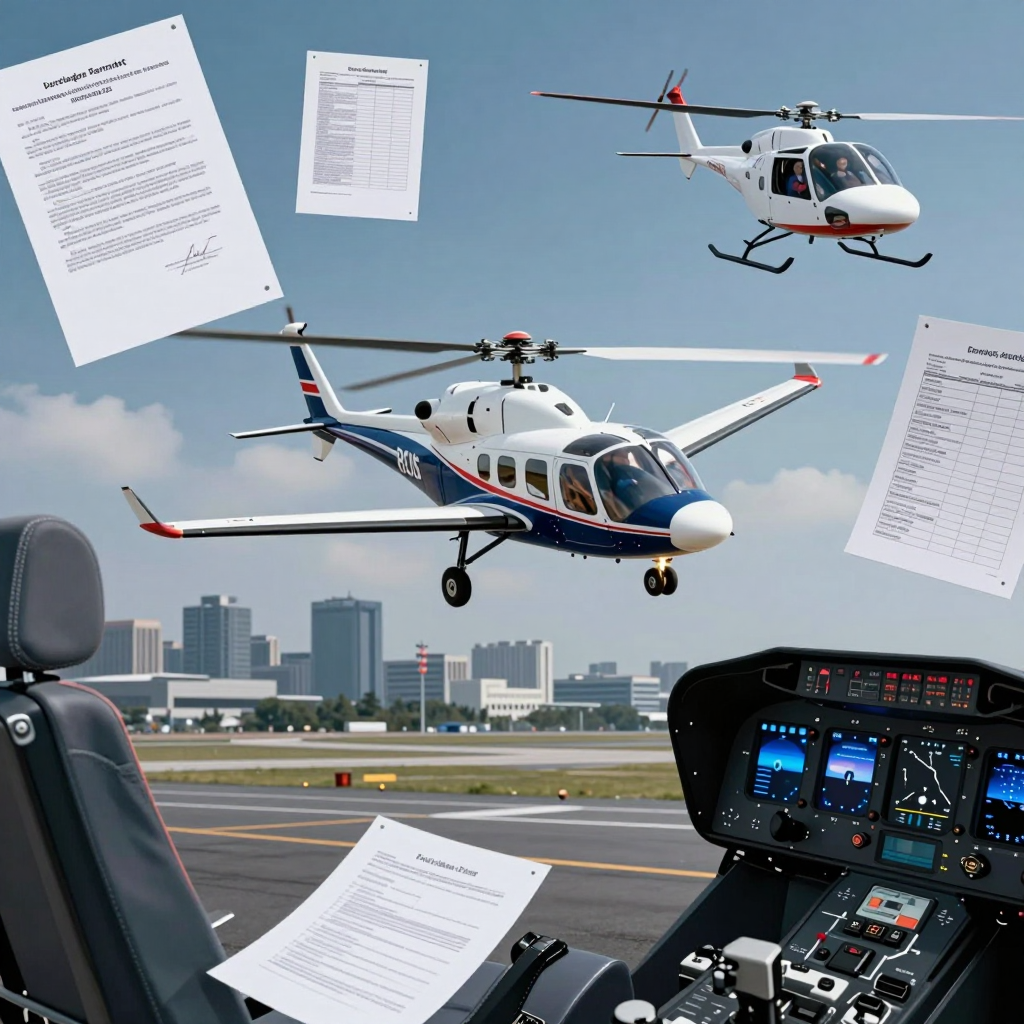
A Cessna 150 light aircraft and a Bell 407 helicopter operated by the Pennsylvania State Police collided in the airspace over Carlisle Airport in Pennsylvania. One civilian pilot lost his life in the accident, while two state troopers aboard the helicopter were injured.
This incident cannot be viewed simply as the tragedy of two aircraft colliding. It shows the risks that can arise when two worlds—with different purposes and flight characteristics—share the same airspace: general aviation pilots operating small aircraft and helicopter crews carrying out law-enforcement missions.
Light fixed-wing aircraft such as the Cessna 150 may operate around an airport at relatively low speeds and with limited visibility. The Bell 407 helicopter, by contrast, can rapidly change altitude and direction depending on its mission, whether rescue, patrol, or search operations. Even when they occupy the same sky, the scenery each aircraft’s crew sees, the way each aircraft maneuvers, and the priorities guiding its operation can be dramatically different.
That is why the “see-and-avoid” principle emphasized in general aviation—having pilots personally identify and avoid nearby aircraft—remains essential. Yet in airspace around airports where different types of aircraft operate together, this principle alone cannot eliminate every danger. Blind spots, differences in approach speed, the status of air-traffic communications, and the unpredictable movements of a helicopter engaged in a mission can all come into play at once.
The cause of the accident is a matter that will be determined through investigations by the FAA and the NTSB. Until the final findings are released, no one should conclude that a particular pilot or procedure was at fault. Even so, this accident leaves every aircraft pilot with a clear question:
Even the familiar skies around a small airport can become an entirely different and far more dangerous environment the moment multiple aircraft converge.
Safety is not achieved by flight experience alone. It requires continuously monitoring who may be sharing the airspace, maintaining rigorous communication and position awareness, and making the effort to understand how other aircraft operate. The tragedy over Carlisle serves as a stark reminder of just how much vigilance and systemic safety protection are required to share the sky.
The Paradox of the Aircraft Pilot Shortage: If Pilots Are in Short Supply, Why Is It So Hard to Become One?
The U.S. aviation industry has long said that there is a “pilot shortage.” Yet the path to becoming an airline pilot is anything but short. It requires approximately 1,500 flight hours, multiple certifications, and, in some cases, training costs of up to $100,000. If the jobs are there, why is entering the profession so difficult?
The key is that the pilot shortage is not simply a matter of “too few applicants.” Airlines need job-ready aircraft pilots—people who already possess both the necessary flight experience and qualifications and can be hired immediately.
The Long Preparation Period Created by 1,500 Flight Hours
In the United States, applicants for airline first officer positions generally need to meet the FAA’s requirements for an ATP (Airline Transport Pilot) certificate. The most well-known requirement is 1,500 flight hours.
Those hours do not simply mean time spent flying an aircraft. Candidates must build experience through multiple stages, starting with a private pilot certificate and progressing through instrument training and commercial pilot certification. Depending on the flight school and training program, reaching the level required to apply to an airline can typically take two to three and a half years.
In other words, airlines want pilots immediately, but it takes years for new entrants to move through the training pipeline and reach an actual cockpit. This is the first reason the labor shortage cannot be resolved quickly.
The Cost of Training Falls on Individuals
The bigger problem is the cost. Flight training can become a massive expense once aircraft rental, fuel, instructor fees, exam costs, lodging, and living expenses are added together. The total cost of completing the full training process is often estimated at around $100,000.
That represents a significant burden for aspiring pilots. They must invest an amount comparable to college tuition upfront, then work through entry-level jobs to build flight hours. Many accumulate experience by working as flight instructors, but it is not easy to cover training loans and living expenses at the same time on an entry-level income.
The aviation industry’s pilot shortage is less a problem of “not enough people” than a problem of
the process of becoming a qualified pilot being too expensive and taking too long.
Airlines Are Not the Only Option for Pilots
When discussing demand for pilots, it is easy to think only of airline hiring. In reality, aircraft pilot jobs are far more diverse. Emergency medical air transport, business jets and charter flights, research and test flying, flight instruction, public safety, and private aviation operations also require skilled pilots.
As a result, airlines compete with regional carriers, charter companies, and flight schools for the same talent pool. When an airline hires an experienced pilot, other sectors must once again search for new people to fill the vacancy. Across the industry, the labor shortage moves through the system in a chain reaction.
How to Narrow the Gap Between “Shortage” and “Barriers to Entry”
To ease this contradiction, the burden of the entire process—from beginning training and building experience to entering an airline—must be reduced for aspiring pilots. That is why airlines and educational institutions are expanding options such as tuition assistance, scholarships, conditional job offers, and cadet programs.
But the solution is not simply to increase hiring. The industry needs a structure that reduces the burden of training costs, early-career earnings, and living expenses while maintaining flight-hour requirements and safety standards. Ultimately, the answer to the pilot shortage lies in opening the first gate to the sky for more people.
There Is No Age Limit for Taking Off: A Second Career as an Aircraft Pilot
The belief that “pilots have to be young” remains deeply rooted. It is easy to see why, given the lengthy training, high costs, and demanding health requirements involved. Yet across the U.S. aviation industry, more and more attention is being drawn to people who learn to fly as adults and take their seats in the cockpit after reaching middle age. So, is age really the greatest barrier to reaching the skies?
Those involved in aviation education in the United States suggest that the answer is not necessarily yes. Flight training professionals in Sedona, Arizona, emphasize that adult learners can “become pilots at any age.” Whether the goal is recreational flying, earning a private pilot certificate, or transitioning into flight instruction or a specialized area of aviation, there are more paths available than many people realize.
That said, it is important to distinguish between the different realities. The path to becoming a first officer at an airline is vastly different from the path to simply beginning personal flight. Those aiming for an airline career must consider ATP certification, flight-hour requirements, as well as the considerable time and expense involved in long-term training. In general aviation, by contrast, people can earn a private pilot certificate and then make aviation part of their lives in ways that suit them—through travel, recreation, volunteer flights, flight instruction, and more.
A late start is not proof that something is impossible; it is closer to a signal that the goal needs to be designed more specifically.
For adults in their middle or later years, what matters more than age itself is time, budget, health, and clarity of purpose. For example, weekend-based training can be easier to balance with a full-time job, but it may take longer to complete the certification. Intensive training programs can offer faster progress, yet they come with greater financial and scheduling demands. For adult learners in the United States who dream of becoming an aircraft pilot, a realistic first step is to determine whether the goal is “an airline career,” “personal flying,” or “a second profession.”
Aviation as a second career can mean far more than simply changing jobs. Learning new skills after years in the corporate world and taking on an environment that demands constant judgment—through weather, navigation, and safety procedures—can transform the rhythm of one’s life. Flying is not the exclusive domain of the young. It is a professional field open to anyone with thorough preparation and the will to keep learning.
Of course, medical examinations, maintaining certifications, and the cost of training are never minor concerns. But rather than deciding first that it is “too late,” it is more important to design a purpose and path of flight that truly fit you. There is no fixed starting line in the sky. What matters is not how old you are when you begin, but what goal you have in mind as you safely prepare for your next takeoff.
The Future of the Aircraft Pilot: How Electric Aircraft Are Transforming the Cockpit
A new kind of sky is opening up—one filled not with the roar of engines, but with the low, smooth sound of electric propulsion. Whisper Aero’s pilot-onboard test flight of the Aeriane Swift 3 glider, equipped with electric ducted fans, signals that electric aviation is no longer confined to laboratories and unmanned testing.
The significance of this shift goes beyond simply replacing fuel with batteries. Because actual pilots were onboard to evaluate the aircraft’s response, vibration, noise, and energy-use characteristics, the industry is now beginning to validate how future cockpits will operate as well.
New Sensations Pilots Will Need to Master
Electric-propulsion aircraft may have operating profiles very different from those of conventional piston-engine or turbine-powered aircraft. For the future aircraft pilot, the following capabilities are likely to become increasingly important, alongside core flying skills:
- Energy management: Pilots will need to consider not only fuel levels, but also battery charge, power-use patterns, and the possibility of recharging.
- Understanding battery safety: Thermal management and emergency response may become central elements of electric-aircraft operations.
- Judgment in low-noise operations: Over urban and residential areas where noise sensitivity is high, pilots will need to understand both aircraft performance and local operating regulations.
- Use of new automation systems: eVTOL and UAM aircraft rely on advanced flight-control technologies, making the ability to monitor automation and intervene appropriately increasingly important.
Electric-propulsion systems may produce less noise and vibration, giving pilots a more precise sense of the aircraft’s movement. At the same time, the reduced intuitive feedback from changes in engine noise—once a familiar clue to power output—highlights the need for new approaches to pilot training.
In the eVTOL Era, the Pilot’s Role Will Not Disappear
As urban air mobility (UAM) and eVTOL aircraft become more widespread, the question “Will pilots eventually disappear?” is likely to grow louder. Yet in the early market, the role of professional pilots responsible for test flights, certification, safety validation, and demanding operations may become even more important.
During the early commercialization of electric aircraft, experienced pilots will be especially needed in areas such as:
- Test flights and performance validation
- Establishing new operating procedures
- Developing emergency-response standards
- Designing pilot-training programs
- Validating the division of responsibilities between automation systems and human pilots
Ultimately, the pilot of the future may be more than someone who simply controls an aircraft. They could become the experts who complete the safety standards of new aviation systems in real-world flight environments.
Whisper Aero’s test flight showcased the potential of quiet aircraft while also offering a glimpse of the aviation industry’s growing demand for a new generation of piloting skills. In the skies of the electric-aviation era, pilots’ responsibilities—and opportunities—are taking flight alongside the reduced noise.
The Future of Pilots Revealed by the Search Term “aircraft pilot”
The sudden rise of “aircraft pilot” cannot be explained by a single accident story. Safety concerns sparked by the midair collision in Pennsylvania, the pilot shortage in the aviation industry, new challenges pursued by middle-aged and older adults, and the emergence of electric aircraft—all these different stories converged in a single search term at the same moment.
The first issue that catches the eye is safety. In airspace shared by small aircraft and police helicopters, air traffic control, visual flight rules, and maintaining adequate separation between aircraft all become critical variables. The cause of the accident can only be confirmed once the FAA and NTSB complete their investigations. Still, the incident has prompted renewed reflection on the complexity of shared airspace used by general aviation pilots and public aviation operations.
At the same time, U.S. airlines continue to face the long-standing challenge of a pilot shortage. Becoming an airline pilot generally requires 1,500 flight hours to qualify for an Airline Transport Pilot (ATP) certificate, while the time and cost required for training are far from insignificant. The industry is looking for people, but aspiring pilots still face major barriers to entry in the form of time and money.
That said, the path to becoming a pilot is not limited to the airlines. Opportunities span medical transport, business jets, flight instruction, research flights, and private aviation activities. For adult learners and middle-aged or older people in particular, a variety of routes are opening up—from recreational flying to becoming a flight instructor or pursuing a second career. Rather than asking whether it is “too late,” the more important question in this era is: “What do you want to fly for?”
Technological change is also adding momentum to this trend. Ultra-quiet electric propulsion systems, eVTOL aircraft, and urban air mobility (UAM) are emerging as key areas in the future of aviation. For now, the role of experienced pilots capable of conducting test flights and demonstration operations remains crucial. In the future, pilots will likely need not only flying skills but also an understanding of battery energy management, new operating procedures, and safe operations in noise-sensitive areas.
Ultimately, aircraft pilot is not merely a search term meaning “someone who flies an airplane.” It represents a profession responsible for protecting safety, a labor market gaining renewed attention amid a personnel shortage, a dream pursued later in life by some, and a future-oriented role opening the door to the age of electric aviation for others. The current surge in searches for this term captures both the ways aviation is changing and the expanding role of the pilot.
Comments
Post a Comment