 \n
\n
Maya Boyd: A New Storm Begins with Three Lightning Bolts
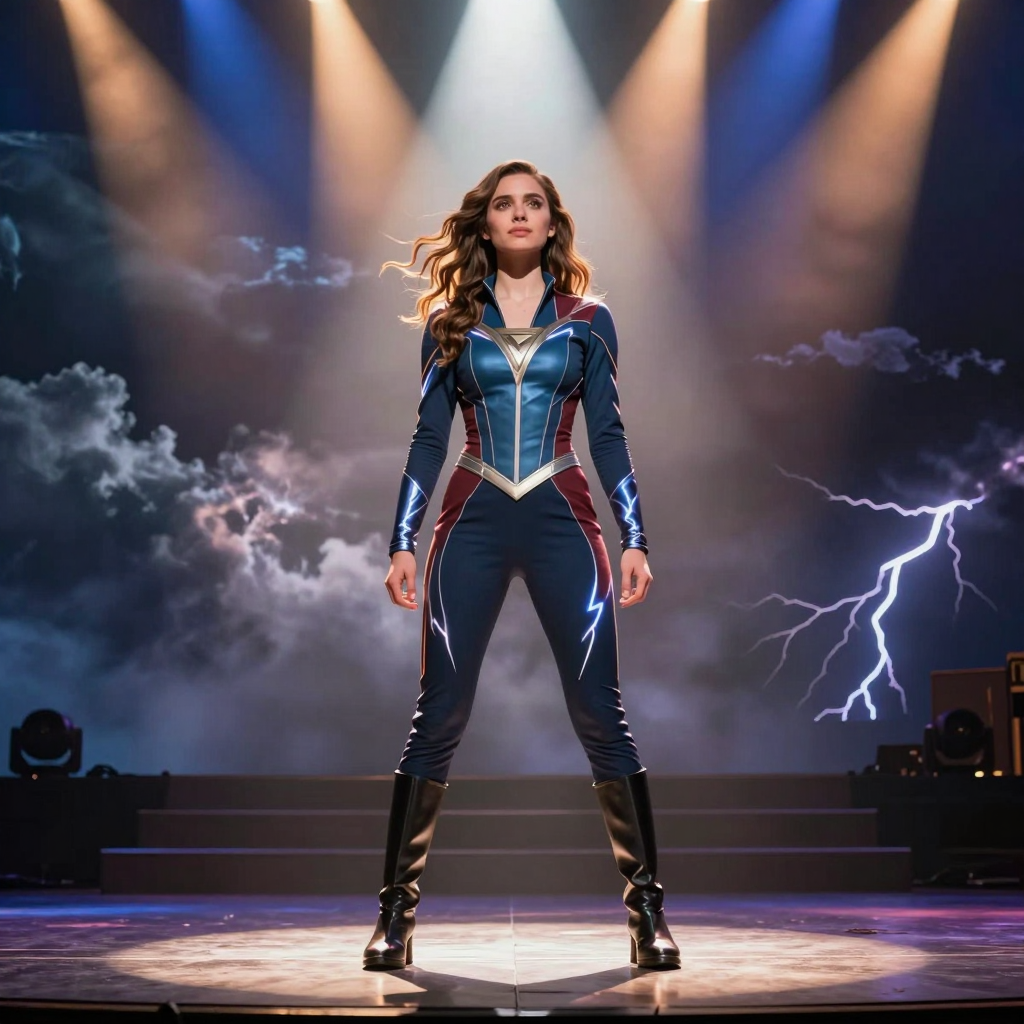
The moment Marvel’s massive D23 stage opened the door to a new X-Men era, one of the names generating the most buzz was Maya Boyd. The 23-year-old Broadway actress was officially announced as the MCU’s Storm—Ororo Munroe. Entrusting the role to a newcomer with almost no film experience means far more than simply casting another superhero.
Storm is an iconic figure in the X-Men universe: a mutant who commands the weather, defined by fierce leadership and an overwhelming presence. Following Halle Berry and Alexandra Shipp, Boyd becomes the first actress to bring Storm to life in Marvel Studios’ new MCU lineup.
Her reaction immediately after the announcement was brief but unmistakable. Maya Boyd changed her Instagram profile to three lightning emojis—“⚡⚡⚡.” Arriving faster than words, the small signal reminded fans of Storm’s lightning and weather-manipulating abilities while also announcing that Boyd’s career had entered an entirely new phase.
What makes Boyd’s casting even more intriguing is that she did not rise through Hollywood’s familiar star system. After majoring in musical theater at the University of Michigan, she built her skills on Broadway in productions including Merrily We Roll Along, & Juliet, and Joe Turner’s Come and Gone. In particular, she played the title character Juliet in & Juliet, leading eight performances a week while proving her vocal ability, acting talent, and star power all at once.
That is why this choice feels less like a “bold casting of an unknown actress” and more like bringing a talent already proven onstage to the screen. Through Maya Boyd, a face still unfamiliar to the general public, Marvel appears ready to give the long-standing character Storm a new starting point and a new energy.
We still do not know what kind of Ororo Munroe she will deliver in the MCU’s X-Men, scheduled for release in May 2028. But one thing is already clear from this quiet declaration marked by three lightning bolts: the new Storm has arrived.
Maya Boyd, a Storm Forged on Broadway
Maya Boyd is not a name that suddenly emerged from a Hollywood audition room. Her journey began on the stages of New York, grounded in musical theater training at the University of Michigan. Her powerful vocals, precise movement, and ability to command an audience’s attention were not built overnight.
During her senior year of college, Boyd made her Broadway debut in Stephen Sondheim’s Merrily We Roll Along. Balancing her studies with professional performances gave her far more than a single line on her résumé. In the demanding Broadway environment—where seamless ensemble work and finely nuanced emotional performances are essential—she quickly developed a keen instinct for the stage.
She went on to firmly establish her presence by taking on the title role of Juliet in the pop musical & Juliet. For a leading actor carrying eight performances a week, singing ability alone is not enough. It takes the stamina to sustain that energy before a different audience every night, the focus to drive the story forward, and the power to make a character’s emotions feel fresh rather than repetitive. Maya Boyd is an actor who has made it through that grueling rhythm.
Her stage career has not been limited to bright, high-energy musicals. In August Wilson’s Joe Turner’s Come and Gone, she appeared as Molly Cunningham, revealing a deeper and more dramatic range. That experience in handling the finer textures of emotion could prove an invaluable asset as she interprets Storm—a formidable leader with a deeply complex inner life.
That is why the MCU’s casting of Storm feels less like the surprise discovery of an unknown newcomer and more like the moment a performer long tested onstage steps onto a much larger screen. Expectations are rising to see what new life Maya Boyd’s Broadway-forged voice and presence will bring to Ororo Munroe, the woman who commands thunder and lightning.
Maya Boyd and the Iconic Storm: The Arrival of the Third Actress
Storm is far more than an X-Men member who can control the weather. With her overwhelming charisma, leadership, and profound inner depth, Ororo Munroe has long stood out as a uniquely powerful presence in live-action films. Now, Maya Boyd will become the third actress to portray Storm in live action, following Halle Berry and Alexandra Shipp.
Halle Berry captured the dignity and star power of an adult Storm in Fox’s early X-Men films, while Alexandra Shipp portrayed the potential of a younger Ororo in the prequel generation. But Boyd’s casting is difficult to view as a simple changing of the guard. She is the first actress to portray Storm within the official MCU canon being built by Marvel Studios.
For the character, this also marks a new beginning. If Fox’s Storm left a powerful impression despite limited screen time, the MCU’s Storm could be reestablished as a central pillar of the X-Men team and a character capable of carrying a long-term narrative. What fans are looking forward to is not merely lightning and visual effects. They want a Storm who more faithfully embodies her identity as a mutant of African heritage, her leadership as the force guiding the team, and the mythic presence she possesses in the comics.
For Maya Boyd, who has proven her vocal ability, acting talent, and commanding stage presence on Broadway, this role represents both her greatest challenge and her biggest opportunity. As she joins the MCU as a fresh new face, the voice and attitude she brings to Storm could shape the very atmosphere of the next generation of the X-Men.
Why Were Fans Surprised by the Casting of Maya Boyd?
When Marvel announced Maya Boyd as Ororo Munroe—better known as Storm—in the new X-Men film, the fandom’s first reaction was surprise. Storm is not simply a hero who can control the weather. She is a central figure in the X-Men universe, defined by powerful charisma, leadership, and emotional depth. Yet Marvel entrusted the role to a 23-year-old Broadway actress with almost no experience in major franchise films.
The Unease Surrounding a “Relative Unknown”
Some fans viewed Maya Boyd as a “relative unknown”—an actress who is still unfamiliar to the general public. Halle Berry and Alexandra Shipp, who previously played Storm, were already recognizable names to movie audiences. By contrast, Boyd’s career has been focused more on the Broadway stage than on television series or Hollywood blockbusters.
That makes the fans’ concerns understandable. Is she lacking the screen experience needed to take on Storm, especially in a massive MCU film and as a character who has been beloved for so long? Since the role had been the subject of countless fan-casting discussions over the years, the fact that an unexpected name was officially announced only intensified the reaction.
But a Broadway Career Does Not Mean “No Experience”
Still, it would be inaccurate to view Maya Boyd as a completely untested newcomer. She led eight performances a week as the title character, Juliet, in & Juliet, and also appeared in Stephen Sondheim’s Merrily We Roll Along. At the center of major commercial musicals, she has already proven her ability to handle vocals, acting, stamina, and direct engagement with an audience all at once.
Her performance as Molly Cunningham in August Wilson’s Joe Turner’s Come and Gone is particularly noteworthy. The play delicately explores its characters’ emotions, relationships, and historical context. What Storm needs is not merely spectacular lightning effects, but also the strength to lead a team and the human depth of someone carrying her own wounds.
Her screen filmography may be short, but the focus and character-interpretation skills she has developed onstage are anything but.
Marvel Chose New Possibilities Over a “Safe Name”
This casting can also be read as a signal that Marvel chose long-term potential over familiar star power. Maya Boyd is young enough to grow alongside the new X-Men team over the course of several years, and above all, she is a fresh face capable of creating a Storm distinctly different from the previous film versions.
Fans’ concerns are still understandable. But seeing how an actress who has already carried the weight of a leading role on Broadway reinterprets one of the MCU’s central characters could become the most intriguing point of interest in this X-Men reboot.
Maya Boyd: Can the Actress Taking the Stage in 2028 Unleash a Storm?
On May 5, 2028, Maya Boyd’s first feature film will be released in theaters worldwide. It will mark the moment the Broadway-honed actress makes her screen-leading debut as Storm—Ororo Munroe—in the MCU’s new X-Men. This is more than the film debut of a newcomer. It is closer to a test of how Marvel plans to redesign the next generation of X-Men—through which faces and with what sensibility.
The new team is clearly young. Sadie Sink’s Jean Grey, Kit Connor’s Cyclops, and Inde Navarrette’s Rogue are part of a generation that can grow together over the long term. Choosing 23-year-old Boyd as Storm likewise reads as casting intended to look beyond a single film. If the MCU plans to expand this team across multiple projects, Storm could become not merely a supporting player, but one of its central pillars.
Storm, in particular, is not a character defined solely by the strength of her powers. In the comics, Ororo Munroe is a leader and a warrior, and at times a figure with an almost mythic presence. Earlier live-action films have been criticized for failing to give Storm’s story and screen time enough room to unfold, making expectations for this reboot all the greater. What audiences want is not simply a mutant who can command lightning and rain, but a Storm with cultural roots, charisma, and inner conflict.
That is precisely where Boyd’s Broadway background takes on significance. After leading the stage in & Juliet and gaining experience in the richly layered drama of Joe Turner’s Come and Gone, Maya Boyd has learned how to command a large space. Film acting and stage acting are undeniably different, but the ability to create a character’s presence through nothing more than a gaze, a voice, or silence is also one of the essential qualities Storm requires.
Of course, there are risks. Entrusting the central character of a major franchise to an actor with little screen experience is far from an easy choice. Fans have long imagined their ideal casting for Storm, and they will hold the relatively unfamiliar Boyd to a high standard. Yet there are moments when a new face is exactly what is needed over a familiar star. The chance to restart the character without preconceived notions may be the greatest strength of this decision.
Ultimately, the question in 2028 will be simple. It is not whether Maya Boyd can play Storm, but whether she can make audiences believe in a new Storm. If the voice that began on Broadway can resonate within the MCU’s vast universe, this casting will be remembered not as an “unexpected choice,” but as the decision that ushered in a new era for the X-Men.
Comments
Post a Comment