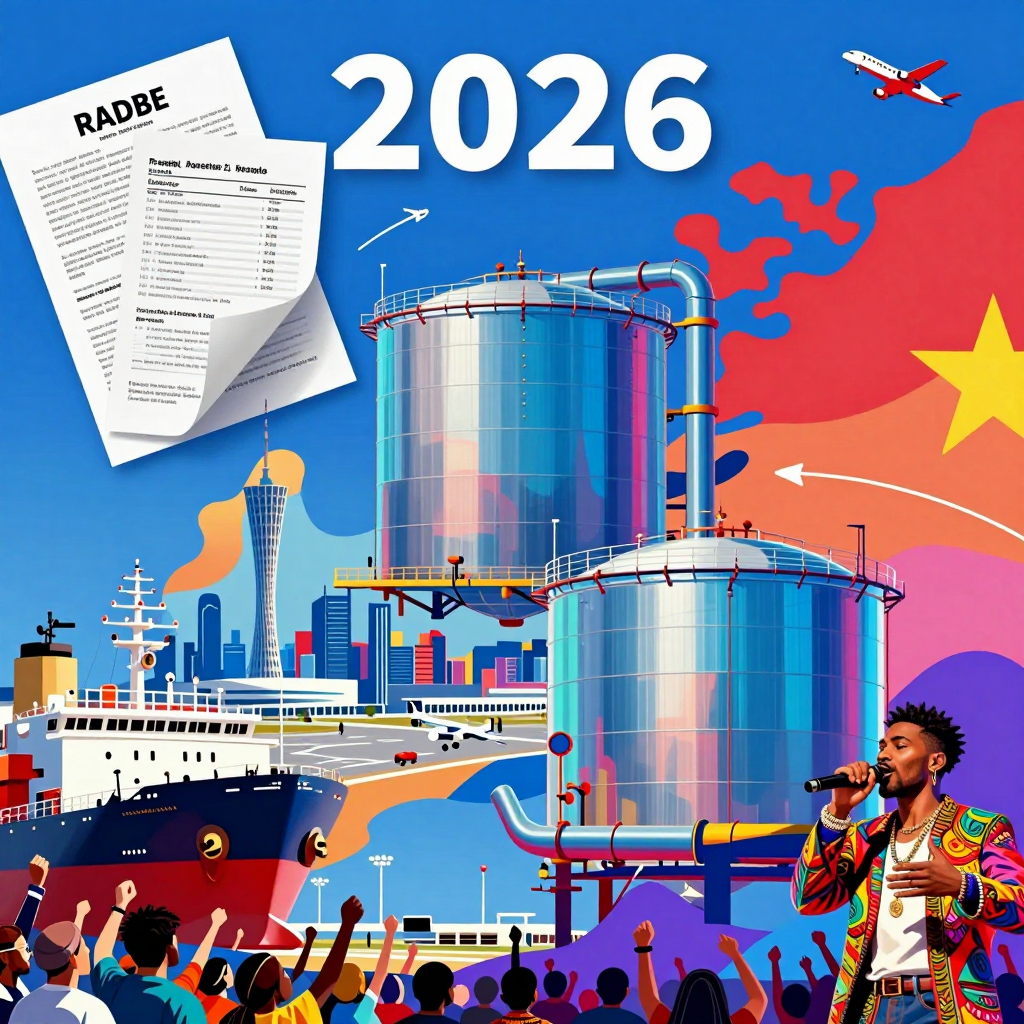
Canada’s Seismic Shift in 2026: A Deep Dive into Five Major Trends, from the Tariff War to LNG and K-Pop
 \n
\n
Canada’s Tariff Bomb Targets Everyday Life—and National Identity
A bottle of wine, dairy products on the dinner table, furniture in the living room, a winter coat, and ice hockey equipment. The targets of the additional tariffs of up to 50% announced by the United States are not merely items on an export list. The measures cut far deeper because they strike at products that symbolize Canadians’ way of life, industries, and cultural pride.
The tariffs cover roughly $20 billion worth of goods—a significant share of Canada’s exports to the United States. More troubling still, unlike previous trade disputes, even goods that meet USMCA preferential requirements could be excluded from tariff exemptions. In other words, complying with the rules of the free trade agreement may no longer be enough to guarantee protection.
The Real Purpose Behind the Tariffs Pressuring Canada
This tariff threat is difficult to view as nothing more than a measure designed to protect American industries. The United States is using the possibility of imposing tariffs as leverage in negotiations, tying it to conditions such as Canada’s withdrawal of its own trade measures against the United States.
At the heart of the dispute is the renegotiation of the USMCA. Through tariffs, the United States appears to be demanding greater concessions from Canada while seeking to redesign the rules governing North American supply chains—including rules of origin, market access, and customs administration—with American interests at the center.
Targeting highly visible consumer goods such as wine, dairy products, and clothing also carries significant political weight. Tariffs may look like a numbers game at the border, but in reality, they place direct pressure on Canadian producers, consumers, and regional brands.
This conflict is less about “how much more people will have to pay” than about who gets to set the rules of North American trade.
Canada’s Choice: Compromise or Hold the Line?
The Canadian government has signaled a tough stance, suggesting that it could walk away from the negotiating table unless there is a meaningful reduction in tariffs. Major provincial governments, including those of Ontario and Quebec, are also urging Ottawa to prioritize a fair agreement over a hasty compromise.
Canada is, of course, heavily dependent on the U.S. market. The longer the dispute continues, the greater the burden on exporters and regional manufacturers will become. Even so, there is a clear reason Canada cannot easily back down. Accepting unfavorable terms now could weaken Canada’s negotiating power itself under the future USMCA framework.
Ultimately, Canada stands at a crossroads: whether to endure short-term economic pain in order to protect its long-term trade sovereignty and the terms of the agreement, or seek an early settlement to reduce market uncertainty. The United States’ tariff bomb now goes beyond product prices—it is asking what kind of economic partner Canada intends to remain in North America.
Goods Routed Through Canada: The Line Between Free Trade and Transshipment Oversight
A White House report stating that Chinese-made products entering the United States through Canada or Mexico could face tariffs that are effectively close to zero strikes directly at a vulnerable point in free trade. So is Canada a trusted U.S. FTA partner—or a transshipment hub that should be scrutinized more closely to prevent the indirect export of Chinese goods?
The U.S. view is steadily moving closer to the latter.
The White House has pointed out that Chinese goods can pass through multiple countries to evade America’s high tariffs. In particular, the United States–Mexico–Canada Agreement (USMCA) region is both the core of North America’s supply chain and, if rules of origin are loosely enforced, a potential channel for tariff circumvention. If Chinese components or finished products undergo nothing more than simple packaging, assembly, and re-export in Canada before being treated as eligible for USMCA preferential treatment, the effectiveness of U.S. trade policy could be undermined.
Canada’s Dual Position
Canada is one of the countries most closely integrated into the U.S. economic sphere. The cross-border flow of auto parts, food, industrial goods, and electronics is already an everyday part of the North American supply chain. Yet that very interconnectedness makes Canada impossible to keep off the U.S. radar for origin verification.
The Canadian government faces two challenges at once:
- It must manage its trade and investment relationship with China.
- It must also cooperate with the U.S. on supply-chain security and measures to block transshipment.
The problem is that balancing these priorities is far from simple. If customs inspections are tightened excessively, logistics costs and clearance times will rise, potentially weakening the competitiveness of Canadian ports, warehouses, and distribution companies. On the other hand, if the perception spreads that oversight is inadequate, the United States may respond with stronger measures, including additional tariffs, import restrictions, and expanded data-submission requirements.
Free trade is powerful because it allows goods to cross borders with ease. But in the trade environment of 2026, proving “where something was made” has become just as important.
For Korean Companies, What Matters Is ‘Substantial Origin’—Not Merely ‘Transit’
Because South Korea is also among the countries whose products have been cited in discussions of transshipment risks, companies pursuing North American expansion through Canada cannot focus only on price and shipping distance. The key questions are where the product was actually made, what level of substantial transformation it underwent, and whether those facts can be documented and proven.
The following points should be reviewed in advance:
- Whether assembly or processing in Canada goes beyond simple packaging or relabeling
- Whether the origins of components, manufacturing processes, and supplier information are being managed consistently
- Whether the product satisfies USMCA rules of origin and U.S. customs requirements
- Whether there are any discrepancies between export documents and the actual production and logistics flows
It is also difficult to rule out the possibility that, during a future renegotiation of the USMCA, the United States may demand stricter rules of origin, greater sharing of customs data, and enhanced tracking of high-risk goods. Logistics routes through Canada remain an attractive option, but they must now be designed not as an “alternative route around the rules,” but as a transparent and verifiable North American supply-chain hub.
Canada is both a free-trade partner and a pressure point where U.S. scrutiny is increasingly concentrated. This contradictory position could reshape Canada’s trade strategy—and the rules governing North American supply chains—in the years ahead.
Canada’s LNG Export Gateway Opens on the Other Side of the Tariff War
Tensions are rising in Washington over tariffs and the renegotiation of USMCA. But shift your gaze to Canada’s western Pacific coast, and an entirely different trend comes into view. In Kitimat, British Columbia, a massive LNG export gateway to Asian markets is becoming a reality.
The Kitimat LNG project, reportedly worth approximately KRW 18 trillion, goes far beyond the construction of a single plant. It signals Canada’s push to move beyond a U.S.-centered energy export structure and strengthen direct connections with Asian demand centers such as South Korea and Japan across the Pacific.
How Canada’s LNG Projects Are Reshaping the Energy Map
Western Canada is strategically positioned to connect Alberta’s abundant natural gas resources with British Columbia’s Pacific ports. Once the gas can be liquefied and exported by LNG carriers, Canada will be able to diversify its export destinations rather than relying solely on market conditions in the United States.
Kitimat, in particular, is a key hub linking Canada to Asian shipping routes. As trade friction with the United States intensifies, expanding its energy export options becomes even more important for Canada. LNG infrastructure is not merely a short-term economic stimulus measure; it is an asset capable of reshaping the nation’s supply chains, diplomacy, and export strategy at the same time.
If trade conflicts amplify uncertainty at the border, LNG terminals are creating a new path to growth across the Pacific.
Opportunities for Korean Companies Beyond EPC
The Kitimat LNG project is also a case worth watching for Korea’s industrial sector. As Korean companies participate in major contracts, their engineering, procurement, and construction (EPC) capabilities are once again coming into focus. But the opportunity extends well beyond a single construction contract.
- Equipment supply: Demand for high-value equipment, including valves, piping, heat exchangers, and electrical and control systems
- Module fabrication and marine transportation: Opportunities to leverage expertise in the fabrication, assembly, and logistics of large-scale plant modules
- Operations and maintenance (O&M): Maintenance, safety management, and digital monitoring services after long-term operations begin
- Clean energy transition solutions: Technologies related to carbon emissions management, energy efficiency, and low-carbon LNG
Canada is a market with stringent environmental regulations and consultation procedures concerning Indigenous rights. However, because it is a rules-based market with relatively clear standards and processes, it can offer predictable opportunities for companies with experience in long-term investment and project execution.
A Strategy Between “Dependence on the U.S.” and “Connectivity with Asia”
Canada’s LNG expansion will not immediately eliminate every trade-related risk. Large-scale energy projects face a complex mix of variables, including permitting, environmental standards, consultations with local communities, and fluctuations in global LNG prices.
Even so, the symbolism of Kitimat LNG is unmistakable. Canada is managing its trade relationship with the United States while simultaneously building an energy export network toward Asia. If the tariff war highlights the uncertainty surrounding the North American economy, the LNG mega-project shows how Canada is responding to that uncertainty.
The message is equally clear for Korean companies and investors. Canada today should no longer be viewed simply as a resource-rich country. It needs to be reassessed as a long-term project market where energy infrastructure, supply chains, and a Pacific export strategy converge.
Canada’s Toronto Air Links and Vancouver’s K-POP Scene Are Creating a Travel and Culture Hub
Canada’s transformation is no longer limited to ports, factories, and LNG terminals. Direct flights from smaller European cities to Toronto are opening up, while Vancouver’s major arenas are filling with K-POP fans. Canada is no longer simply an alternative to traveling in the United States—it is emerging as a North American hub where travel and culture converge on their own terms.
Canada Becomes More Accessible: From Smaller European Cities to Toronto
One notable example is WestJet’s direct service connecting Cardiff, Wales, with Toronto Pearson International Airport (YYZ). With a travel time of approximately seven hours and 20 minutes, the route is significant because it allows travelers to reach Canada without passing through a major hub such as London.
This is more than a simple expansion of air service. It signals that Canada is evolving into a destination capable of attracting not only travelers from European capitals but also demand from regional markets.
For travelers, booking strategy matters as well.
- March is considered one of the periods when airfares are relatively low.
- If traveling in March is difficult, June can be a good alternative.
- In terms of departure days, Mondays are often advantageous on average.
Travel content about Canada must also go beyond introducing famous attractions. In an era when data-driven itineraries take into account the departure city, whether a connection is required, the season, and even the day of the week, travelers can improve both their budgets and overall satisfaction.
Vancouver’s K-POP Stages Reveal Canada’s Cultural Demand
Canada’s cultural market is making Vancouver’s presence increasingly clear. When girl group IVE performed at Vancouver’s Rogers Arena as part of the North American leg of its world tour, SHOW WHAT I AM, it demonstrated that the city is no longer merely a peripheral stop on North American tours.
Vancouver has a strong foundation of Asian communities and a well-established Korean Canadian community, along with a powerful digital fandom among younger consumers. Combined with major concert venues, an international airport, and a well-developed tourism infrastructure, these strengths create an ideal environment for connecting K-POP concerts with fan meetings and pop-up stores.
Toronto and Vancouver are now less like optional stops on global artists’ North American tours and more like essential destinations. The impact extends far beyond concert ticket sales, stimulating a chain reaction of spending on accommodations, dining, merchandise, beauty products, and fashion.
Opportunities for Travelers and Korean Brands
As Canada grows into a travel and culture hub, the points of contact between Korean companies and brands and the Canadian market are expanding as well. Beauty pop-ups timed to coincide with K-POP concerts, collaborations with Korean food brands, and limited-edition merchandise promotions can turn local fandom into real consumer activity.
The changes are equally clear for travelers. Toronto is establishing itself as a gateway connecting Europe and North America, while Vancouver is emerging as a city where visitors can experience Pacific Coast nature, Asian culture, and live entertainment all in one place.
Ultimately, Canada’s competitiveness does not lie solely in a new air route or a single concert. The key is that a structure is taking shape in which people can enter more easily, fandoms stay longer, and cultural spending flows into the local economy.
Five Strategies for Reading Canada
Canada can no longer be explained solely through immigration and study abroad. At a time when tariffs, transshipment, LNG, aviation, and K-POP are all moving at once, what signals should Korean companies and travelers read first?
In trade negotiations, look beyond tariff rates to changes in the rules.
The U.S. threat of additional tariffs and the renegotiation of USMCA are not issues limited to Canadian exporters. If rules of origin, product-specific exemptions, or customs procedures change, the cost structure of Korean companies entering the North American market through Canada could change as well. Before focusing on the outcome of the negotiations, companies should assess the possibility of regulatory changes.Transshipment risk is ultimately an issue of supply-chain trust.
As the United States intensifies scrutiny of the rerouting of Chinese goods and origin laundering, logistics passing through Canada may also face stricter verification. Rather than simply choosing the route with the lowest logistics costs, Korean companies should verify that manufacturing processes, certificates of origin, and customs data are consistently connected.LNG is a key variable redrawing Canada’s industrial map.
The Kitimat LNG project in British Columbia shows that Canada is moving beyond its role as an energy producer focused on the North American domestic market and emerging as an energy hub for exports to Asia. The potential market for Korean companies is broader than it may seem, spanning EPC, equipment, module fabrication, port logistics, and maintenance.When it comes to travel, “when and how” matters more than “where to go.”
The expansion of direct flights linking mid-sized European cities with Toronto signals that Canada is becoming more accessible as a travel destination. Airfares can vary significantly depending on the timing and day of departure—for example, Mondays and the off-season month of March. Travel content also becomes more competitive when it goes beyond emotional itinerary recommendations to present flight data and route information together.K-POP is a powerful on-the-ground gateway into the Canadian market.
Vancouver and Toronto have now established themselves as major concert cities in North American tours, rather than optional stops. K-POP concerts can serve as platforms that connect ticket sales with pop-up stores, beauty experiences, fashion collaborations, and F&B events. A strategy is needed to turn the energy of local fandoms into meaningful brand experiences.
Ultimately, Canada today is less a single market than a strategic intersection where North American trade rules, global supply chains, Pacific energy, and cultural consumption converge. For Korean companies, it is evolving into a market of both regulation and opportunity; for travelers, it is becoming a destination that is more tightly connected than ever.
Comments
Post a Comment