 \n
\n
The Legend of Saturday Night Quietly Takes Its Final Bow: Remembering Tim Curry
A scientist singing in high heels beneath dazzling lights, a clown whose laughter echoed through children’s nightmares, and a butler who commanded every scene with his sardonic humor. Actor Tim Curry, who captivated audiences for decades, passed away at the age of 80 on the night of August 26, 2026, at his home in Toluca Lake, Los Angeles, California.
His longtime manager, Marcia Hurwitz, stated that he died peacefully at home. Although the specific cause of death was not disclosed, he had endured years of rehabilitation and health problems following a serious stroke in 2012. Though he was rarely able to appear in public afterward, he remained connected to those who loved his work through voice acting, messages to fans, and special events.
There is a clear reason American media are not treating his death as simply another actor’s obituary. Dr. Frank-N-Furter from The Rocky Horror Picture Show became more than a movie character—he became a symbol of the midnight-movie culture in which audiences dress up and shout the songs and lines together. That is why one outlet called him “the patron saint of Saturday-night dress-up.”
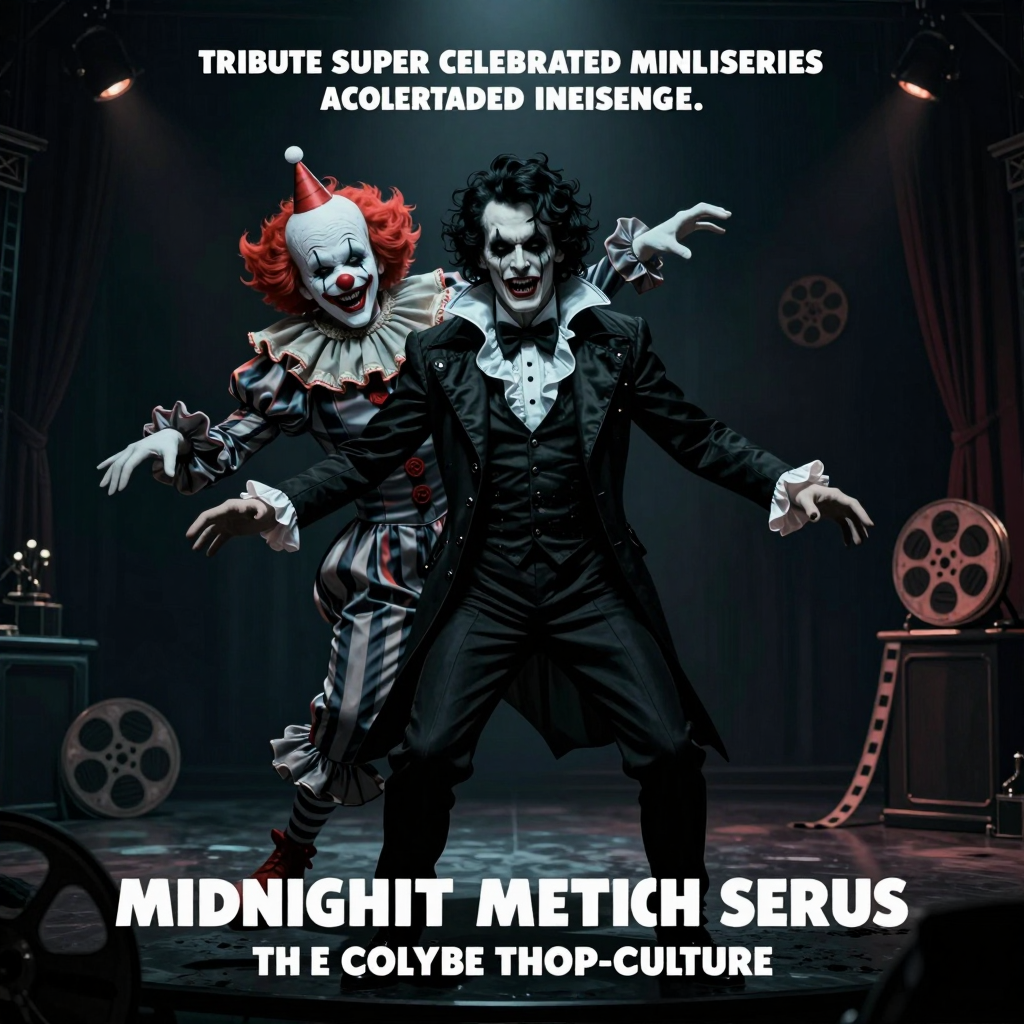
To another generation, Tim Curry was Pennywise in the 1990 television miniseries It. With a performance that concealed unease behind an exaggerated smile and playful voice, he proved that an actor’s presence could be more frightening than special effects. His filmography, spanning Clue, Home Alone 2, and Annie, freely crossed the boundaries between comedy, horror, and family entertainment.
He was always an actor who shattered familiar molds. His daring style, theatrical gestures, and subtle yet dangerous humor gave countless fans a sense of liberation and inspiration. The curtain has fallen on an actor who illuminated both stage and screen, but his songs and laughter will not disappear for a long time—they will continue to echo somewhere in a theater on a Saturday night.
Tim Curry: One Actor, Two Nightmares, and One Revolution
To some audiences, Tim Curry was Dr. Frank-N-Furter, dominating the stage in high heels and a corset as he sang. To others, he was Pennywise, the clown of inescapable horror, smiling from beyond the TV screen. Why did one actor come to represent both liberation and terror, the flamboyance of musicals and the unease of horror?
A Cultural Revolution That Began in High Heels
In the 1975 film The Rocky Horror Picture Show, Tim Curry’s Frank-N-Furter was more than simply a bizarre and alluring character. He was a figure who playfully upended conventional rules about gender expression, fashion, and desire.
Appearing in extravagant makeup and lingerie, with movements charged with confidence, Frank-N-Furter delivered audiences a message: “You are allowed to reveal yourself exactly as you are.” The reason this character remains beloved is not merely the quality of the singing and dancing. It is because he placed the kind of liberated, exaggerated self-expression that mainstream films of the time rarely showed at the center of the screen.
As a result, Rocky Horror became more than a film—it became a defining part of America’s midnight movie culture. On Saturday nights, fans gather in theaters dressed like the characters, shout out the lines, and recreate the film itself as a live performance. This is why American media have called Curry “the patron saint of Saturday-night dress-up.”
When Laughter and Sensuality Turned into Horror
By contrast, Pennywise in the 1990 television miniseries It revealed another side of Tim Curry. Clowns are traditionally figures who make children laugh, but Curry twisted that familiar image into one of the most unsettling forms of horror.
His Pennywise did not rely merely on monster makeup or special effects. A playful voice, sudden shifts in expression, and a gaze that seemed to see straight through his target formed the core of the terror. His performance, in which warmth and menace crossed paths in an instant, struck directly at the anxieties of childhood.
Pennywise remains so memorable—especially in a television production made under limited conditions—because the horror came not from the effects on the screen, but from the actor’s presence. Tim Curry knew what audiences were afraid of. So rather than looking like a monster, he looked like a stranger who had come far too close—an unfamiliar adult standing inside the boundaries of childhood fear.
The Power of an Actor Who Crossed Boundaries
Frank-N-Furter and Pennywise may seem like completely different figures, but the two characters share something in common. Both destroy boundaries society believes it understands. Frank-N-Furter unsettled the rules of gender and desire, while Pennywise shattered the sense of laughter and safety.
Through these radically different roles, Tim Curry made both the liberating spirit of camp aesthetics and the unease of horror his own language. The fact that he also left such a vivid mark on comedy and family films—through roles like Wadsworth in Clue and the hotel manager in Home Alone 2—comes from his ability to transform exaggeration in any genre from mere excess into irresistible charm.
That is why his legacy cannot be reduced to a single cult film or one legendary villain. To some, Tim Curry was the actor who gave them the courage to dress freely and sing. To others, he was the actor who made it impossible ever to look comfortably at a clown’s smile again. Those two nightmares and one revolution are still alive and moving through American popular culture.
Tim Curry Changed the Face of Villainy from Clue to Home Alone 2
If you remember Tim Curry only as the terrifying clown Pennywise, you have seen less than half of his appeal. Whenever the genre changed, he completely redesigned the pitch of his voice, the speed of his movements, and the intensity of his expressions. In horror, he planted unease; in comedy, he amplified confusion; and in family films, he created an irritating sense of tension.
Wadsworth of Clue, the Fast-Talking Butler
In the 1985 film Clue, Tim Curry played Wadsworth, the butler of the mansion. This character is not simply an assistant who explains the case. He constantly tries to keep the situation under control, but as murder and lies become increasingly entangled, he is gradually swept into the chaos himself.
The breathless explanation scene near the end of the film is where his strengths come together. Even while delivering rapid-fire dialogue, he makes it possible for the audience to follow the story, planting the rhythm of comedy beneath his serious expression. Until the very end, it is difficult to determine whether Wadsworth is the villain, the victim, or the cleverest person in the room. Curry brought this ambiguity to life with an unruffled, almost mischievous rhythm.
The Hotel Manager in Home Alone 2, an “Irritating Adult” in a Family Film
In Home Alone 2: Lost in New York, the atmosphere changes once again. He appears as the manager of New York’s Plaza Hotel, playing a character who suspects and pressures the young Kevin McCallister.
Curry’s performance in this role appears far more restrained, but his trademark exaggerated expressions and sharp delivery are still very much alive. The audience knows that he is not entirely a bad person, but rather an adult who is too inflexible and far too suspicious. That makes him both unpleasant and funny—and when Kevin outsmarts him, the payoff feels all the more satisfying.
In a family film, he was not a terrifying presence threatening a child, but an obstacle that made the protagonist’s cleverness shine. Even with the same “face of a villain,” Curry used it at completely different temperatures in horror and family comedy.
An Actor Who Was Never Afraid of Exaggeration
From Rooster Hannigan in Annie and the comic villain in Scary Movie 2 to his voice performances in various animated films and video games, Tim Curry’s characters are generally intense. But that intensity is never repetitive. In one work, he became a sensual and dangerous presence; in another, a butler hiding a secret; and in yet another, an adult who seemed frightening to children but funny to the audience.
The reason he could show a different face in every genre was that he never played “the villain” in just one way. To Curry, a villain was not merely an evil person, but a device that gave a story rhythm, drew out the protagonist’s appeal, and shook the audience’s emotions.
That is why, when we look back at his filmography, the horror of Pennywise, the flamboyance of Frank-N-Furter, Wadsworth’s bewildering wit, and the irritating tension of the Plaza Hotel manager all connect under a single name. Tim Curry was not simply an actor who played villains; he was an actor who expanded the range of faces a villain could have.
Tim Curry: 14 Years Out of Sight, but Never a Voice Silenced
In 2012, a severe stroke dramatically changed Tim Curry’s life. Brain surgery was followed by rehabilitation, and partial paralysis and limited mobility made him a rare sight at red carpets and major events. The actor who had once commanded the stage and screen with his entire physical presence spent a long period quietly stepping away from the public eye.
But he had not disappeared. Curry showed, in his own way, that an actor can move away from the stage without ever moving away from the audience’s memory.
Choosing Smaller Stages to Reach His Fans
After his stroke, Tim Curry changed the way he worked, but he never severed his connection with his fans. He shared messages through videos and fan events, while continuing to take part in projects that relied on his voice, including voice acting and narration.
His presence had never depended solely on facial expressions or physical gestures. His voice—low and grounded one moment, then instantly transforming into exaggerated humor or menace—the rhythm with which he could change the atmosphere of an entire scene with a single sentence, remained vivid to his fans. For audiences who remember Pennywise from It, Wadsworth from Clue, and Frank-N-Furter from The Rocky Horror Picture Show, his voice was a genre unto itself.
Traces of Creativity That Continued to the End
Even in his later years, his career never came to a complete halt. He was credited with a cameo in the 2024 horror film Stream, and in 2025, he published his autobiography, Vagabond. Looking back on a journey filled with flamboyant roles and unexpected choices, the book left fans with something more meaningful than a simple memoir.
The years in which he was unable to appear in public for long stretches were less a void than a period in which he continued striving to remain an artist even after the conditions of his life had changed. Tim Curry may no longer have been able to command the stage as he once did, but he continued to answer the fans who loved him through his voice, his written record, and brief yet precious appearances.
The Deeper Presence Left Behind by Being “Out of Sight”
The reason the American media remembers him as a cult icon lies not only in the number of his signature roles, but also in the long relationship he built with his fandom. There are the audiences who go to see The Rocky Horror Picture Show every Saturday night, horror fans who still fear Pennywise’s smile, and family-film viewers who remember the hotel manager from Home Alone 2—his work continues to live and move across generations.
That is why his final 14 years are difficult to explain simply as “years of silence.” His body may have moved away from the stage, but Tim Curry’s voice, characters, and daring forms of expression never once left the memories of his fans.
Saturday Nights That Will Continue Long After Tim Curry
Tim Curry’s true legacy does not rest within any single film. His most powerful scenes continue to unfold offscreen, inside theaters on Saturday nights. Audiences choose corsets, high heels, and glittering makeup; shout out the lines; sing along to the songs; and become part of the film themselves.
The Rocky Horror Picture Show is no longer a movie meant to be watched passively. Whenever audiences respond, dress up, and cheer one another’s uninhibited self-expression, it becomes a new performance. Frank-N-Furter is a character on the screen, but he is also an invitation—one that transforms an ordinary night into something a little bolder and more playful.
That is also why the American press called Tim Curry “the patron saint of Saturday-night dress-up.” Through flamboyant costumes and exaggerated gestures, he turned established rules upside down, and fans have carried that spirit forward in their own ways. Some find the courage to walk into a theater in costume for the first time; others discover a sense of belonging as they sing with strangers.
His passing is undeniably the end of an era. Yet the message, “Don’t dream it, be it,” remains alive. In the darkness of midnight screenings, countless audiences will continue to break into song. And each time they do, Tim Curry will return to the stage—not merely as an actor remembered, but as a cultural icon who made it possible for audiences to complete the story themselves.
Comments
Post a Comment