Department Store Renaissance 2026: The Future of Shopping, Reimagined Through Pop-Ups, Experiences, and Curated Pairings
 \n
\n
Why Are Department Stores Bringing People Back?
Now that online shopping has become part of everyday life, why do people still line up every weekend outside department store pop-up shops? There are plenty of places where they can buy what they need faster and more affordably. And yet, they still make the trip in person, take photos, discover new brands, and spend time there.
The answer is simple: today’s department stores are no longer just places to buy things.
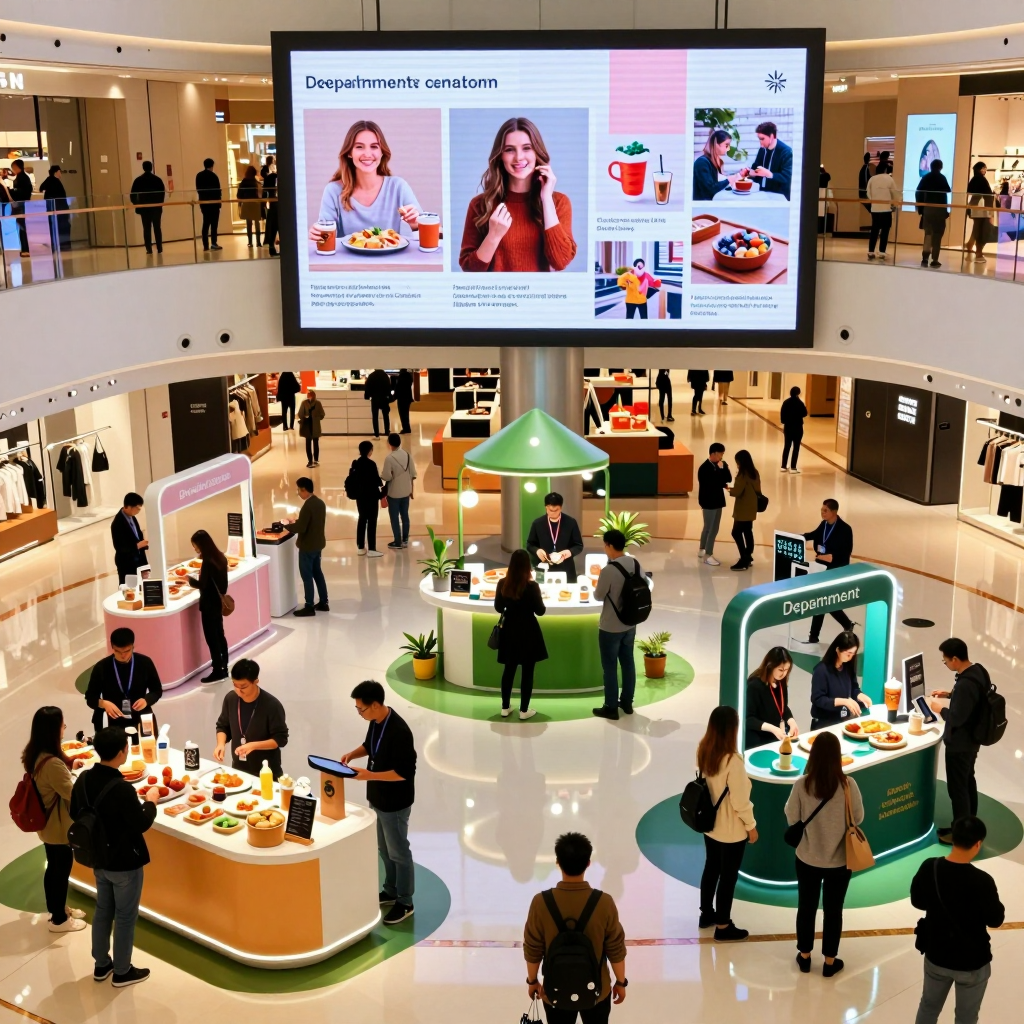
If department stores of the past were primarily retail spaces centered around luxury goods, fashion, and food halls, they are now evolving into urban lifestyle platforms that bring together pop-up shops, exhibitions, dining, classes, and communities. Rather than visiting to purchase a single product, consumers now step through the doors wondering, “What can I experience this weekend?”
In particular, brands that have generated buzz on social media often make the transition to offline pop-ups within a short period of time. Online fandom creates lines at the venue and photo opportunities, while those photos spread across social media once again. Within this cycle, the department store is no longer simply a space for leasing—it becomes a stage where brands can test their visibility and gauge consumer response.
The ways people experience brands have also expanded. Pop-ups introducing eco-friendly lifestyle brands, tasting events connected to food and beverages, brand spaces designed like exhibitions, and workshops built around personal tastes have all emerged. This is the result of the industry’s clear recognition that simply displaying products is no longer enough to compete with online shopping.
Ultimately, people are returning to department stores for more than just discounts. They come for the experience of seeing, tasting, participating, and sharing their tastes with others. A department store’s competitiveness now depends not on how many products it carries, but on how well it creates reasons for people to visit.
How Department Store Pop-Ups Turn Social Media Trends into Reality Within Six Months
It is no longer unusual for a brand you saved on social media yesterday to appear months later in the heart of a department store. Long lines form in front of buzzworthy desserts, character merchandise, and fashion brands—and photos and reviews of those lines spread right back across social media. Online interest leads to offline visits, while offline experiences trigger another wave of online sharing. It is a cycle that continually feeds itself.
At the center of this transformation are pop-up stores. A pop-up is far more than a temporary retail space. It is the most agile laboratory for department stores and brands to quickly test a fandom’s real purchasing power, gauge reactions to a physical space, and assess the potential for a future permanent presence.
Why Department Stores Quickly Bring in “Brands Trending on Social Media”
Not every brand that gains online popularity can generate steady sales. But a short-term pop-up allows department stores to validate a brand’s potential with relatively low risk.
Measuring fandom conversion into visits
They can determine whether likes and views actually lead to visits and purchases.Testing products and price points
They can identify which items—merchandise, limited editions, food and beverages, or fashion products—drive purchases on-site.Pre-launch validation before a permanent presence
Brands that receive strong responses become more likely to expand into long-term stores or other locations.Strengthening the space’s own buzz
By continually introducing fresh content, department stores can create a compelling reason to visit: “This is where I need to go this weekend.”
In other words, social media buzz is only the starting point. What matters at the pop-up is whether people actually line up, whether they simply take photos and leave, and whether they return after making a purchase.
The “Photo-Op Economy” Created by Pop-Ups Worth Lining Up For
The line outside a popular pop-up may be inconvenient, but it is also a powerful marketing tool. A queue signals that a brand is “the most popular one right now,” while visitors photograph the space’s design and limited-edition products and share them on their own channels.
This means department stores do more than simply provide a place to sell. They must design the entire experience—from photo zones that bring the brand’s world to life and carefully planned visitor flows to limited-edition offerings and advance reservation systems. A pop-up’s success depends just as much on how effectively it turns the experience into scenes people want to share as it does on the products themselves.
Limited operating periods and limited quantities are especially effective at making visitors feel they cannot afford to wait. Messages such as “Only available this week” and “Sold exclusively here” prompt fans to act immediately, transforming the store into an event venue.
More Than a Temporary Store: A Testbed for Retail
While department stores in the past operated around fixed brand lineups, they are now evolving by using pop-ups to rapidly change the atmosphere of their spaces and the customers they attract. Their themes have also become far more specialized, ranging from eco-friendly lifestyles and character IP to emerging designers, local favorites, and new beauty products.
In this process, pop-ups serve three key roles:
An offline debut stage for brands
They give online-focused brands the opportunity to meet customers in person and gauge their response to the products.A window into emerging trends for department stores
They allow department stores to assess a brand’s sales potential and the size of its fandom before committing to a permanent presence.A discovery experience for customers
Instead of familiar, predictable shopping, customers get to enjoy encountering new brands and content every time they visit.
Ultimately, the essence of a pop-up store is not to open briefly and simply disappear. It is a retail experiment that reads rapidly changing consumer preferences and connects fandom with actual sales and long-term customer relationships. Today, a department store’s competitiveness depends less on how many brands it carries than on how quickly it can discover the next trend and bring it to life as an irresistible experience.
The Art of Creating Experiences That Keep People in Department Stores—Even When They Aren’t Shopping
Can people leave a department store feeling, “I’m glad I came today,” even if they didn’t buy anything? Today’s department stores are offering a clear answer. They are evolving beyond places that simply display products into spaces designed around experiences—seeing, making, tasting, and relaxing.
As online shopping has raised the bar for price comparison and fast delivery, the value that offline retail must offer has changed. Visitors now expect more than a simple purchase: they want experiences they can have only there.
Exhibition-Style Pop-Ups Turn Stores into Attractions
Brand pop-ups are no longer temporary shops used merely to introduce new products. By combining themed exhibitions, photo zones, and interactive content, they are designed like small galleries. Even without buying a product, visitors can explore the space, take photos, and immerse themselves in the brand’s world.
Through this process, the department store becomes not just a place to shop, but a cultural destination worth visiting on the weekend. Photos and reviews shared on social media create a positive cycle, drawing in the next wave of visitors.
Workshops and Classes Deepen Relationships Through Participation
Workshops hosted by lifestyle brands, flower, fragrance, and home-living classes, as well as cooking and tasting programs, are also at the heart of experiential retail. Customers do more than listen to product explanations—they make and use things themselves, discovering their own tastes along the way.
These experiences stay with people longer than discounts do. That is because purchase decisions are influenced not only by the product itself, but also by “what I experienced in this space.” For brands, there is another advantage: they can observe customer reactions firsthand and use those insights for future store launches or product planning.
Kids’ Content and F&B Create Longer Visits
For families, the quality of kids’ programs, rest areas, and food-and-beverage offerings is especially important. When children have engaging activities to enjoy, parents can shop or dine at a more relaxed pace. Content designed around hobbies, pets, and families works in much the same way.
The metrics department stores focus on are naturally changing as well. In the past, sales and average transaction value were the main priorities. Now, it is also important to know how long customers stayed, which spaces they visited, and whether they returned after an experience. The longer customers remain, the more likely they are to make purchases across multiple categories, including restaurants, cafés, home living, and fashion.
A good experience does not end with an immediate purchase. It becomes a reason to return, helps people remember the brand, and ultimately leads to sales.
In the end, competitiveness lies not in the quantity of content, but in the quality of curation. The goal is not to create just another pop-up that anyone can see, but to give people a reason to make the trip specifically to that department store. That is the art of creating experiences that make people stay—even when they are not shopping.
Department Store Holiday Gifts and Wine Events: Curating Personal Taste
Fruit and dried yellow corvina alone are no longer enough to win consumers’ hearts. Today, holiday gifts have become choices that must reflect not only formality, but also the recipient’s tastes and everyday lifestyle. In response, department stores are broadening their offerings into lifestyle categories—including premium ready-to-eat foods, home café essentials, kitchenware, wines, and liqueurs—while preserving the strengths of traditional gift sets.
The New Standard for Gift Sets: From Practicality to Personal Taste
The changing holiday gift market is first evident in the way gift sets are composed. Long-loved items such as Korean beef, fruit, and dried yellow corvina remain core products. But now, the more important question is not simply “What should I give?” but “Will this fit naturally into this person’s life?”
Lotte Department Store expanded its selection by offering around 190 items across categories including livestock products, seafood, fruit, and groceries through promotional discounts. Shinsegae Department Store also increased its advance-order selection to approximately 370 varieties, responding to a wider range of consumer needs. In particular, advance ordering gives consumers a more reasonable time to purchase while providing retailers with greater stability in inventory management.
- Premium ready-to-eat meals for busy professionals
- Coffee and dessert assortments for home café enthusiasts
- Seasonings and kitchenware for families who love to cook
- Wines and liqueurs for a generation seeking gifts that are light yet distinctive
Holiday gifts are no longer simply bundled products organized by price point. They are becoming more like small lifestyle proposals, each thoughtfully completed around an individual’s tastes.
From Discount Displays to Experiences at the Table
Liquor promotions are moving in the same direction. If large-scale liquor events in the past focused on “how cheaply one could buy,” recent events are increasingly centered on “what to enjoy, and how to enjoy it with food.”
Shinsegae Department Store’s annual large-scale liquor event, Vin de Shinsegae, illustrates this shift. Rather than merely displaying and discounting wines, the event connects them with the department store’s restaurants and introduces food pairings, allowing consumers to experience the beverages firsthand. Instead of focusing solely on the price of a bottle, it suggests the dishes that complement the wine, the atmosphere in which to enjoy it, and even the people to share it with.
We are moving from an era of drinking more to an era of wanting to enjoy each glass better.
Tastings, pairing menus, and sommelier recommendations reduce the burden of choice for consumers. At the same time, they encourage longer visits and boost sales in dining spaces. Consumers experience the flavor and story before making a purchase, while brands naturally generate online buzz through photos and reviews.
Even During the Holidays, What Matters Is Not Just the Gift—but the Reason
There is a clear reason department stores are reinventing their holiday gift and liquor events. Consumers are no longer satisfied with familiar products alone. Even when choosing a gift, they want to express their own tastes and convey why a particular item is right for the recipient.
As a result, future holiday campaigns are likely to become a more sophisticated competition in curation rather than a simple race for discounts. The retailers that win consumers’ choices will be those that preserve tradition and practicality while also proposing food-and-wine pairings, lifestyle products that blend seamlessly into everyday life, and content that consumers can experience for themselves.
The Department Store’s Spectacular Transformation—Is Profitability Keeping Pace?
Pop-up stores and experiential content have clearly succeeded in bringing customers back to department stores. The strategy of quickly introducing brands that are trending on social media and extending customers’ time on-site through exhibitions, classes, and F&B events has given physical spaces a renewed reason to exist.
But it is still too early to declare a “department store renaissance” based solely on visitor numbers and buzz. The more important question now is a simple one: Are these spectacular changes translating into sustainable profits?
Content Success and Sales Are Not the Same Story
Pop-ups can quickly increase foot traffic while generating online exposure through photo posts and reviews. But operating a pop-up also entails costs for space design, staffing, marketing, and brand acquisition. A large crowd does not automatically translate into high profits.
If consumers visit only the pop-up and do not go on to dine or shop at existing stores, the department store may simply have spent heavily to create buzz. Ultimately, what matters is not the number of visitors, but whether that traffic converts in the following ways:
- Do pop-up visitors go on to make purchases in food and beverage, fashion, or living categories?
- Do one-time visits lead to membership sign-ups and repeat visits?
- Can brand testing lead to long-term store placements and stable rental income?
The next stage of the content competition will depend not on “what to show,” but on how to turn experiences into purchases and repeat visits.
The Challenge of New Growth Engines Revealed by Hyundai Department Store
To overcome the growth limits of its core department store business, Hyundai Department Store invested approximately 1.3 trillion won in non-department-store businesses, including fashion brand Handsome and furniture brand Zinus. It was an attempt by a retail company to move beyond simply providing sales space and secure greater competitiveness in brands and products.
The strategy itself is understandable. Owning in-house brands and affiliates can create a range of synergies, including differentiated store offerings, improved retail margins, and online expansion. The challenge, however, is that when the investment is substantial, the expected profitability may not materialize quickly.
Brand acquisitions and business expansion face a number of practical obstacles:
- Sluggish consumer spending and fluctuations in demand across the fashion and furniture markets
- Competition from global brands and online D2C brands
- Uncertainty surrounding synergies between department store locations and acquired brands
- A cost structure in which initial investment and operating expenses put pressure on profitability
In other words, new growth engines are necessary, but being “new” does not guarantee profitability. Department stores must do more than broaden their business portfolios; they must prove how each business connects to and strengthens the core operation.
Shinsegae’s Channel Reorganization: A Strategy of Dividing Roles
Shinsegae has pursued a strategy of separating its department store and E-Mart divisions, then further segmenting its online channels to assign distinct roles to each. Rather than trying to serve every customer and sell every product through a single retail channel, the approach focuses each channel on what it does best.
- Department stores: Premium brands, experiences, and landmark spaces
- Hypermarkets and supermarkets: Everyday essentials and price competitiveness
- Online: Convenience, search, and data-driven recommendations
Under this structure, the department store becomes more than simply “a place that sells goods.” It becomes a high-value channel for creating brand experiences and building customer relationships. An omnichannel strategy that connects pop-up reservations, event information, memberships, and online purchases also supports this division of roles.
However, separating channels does not automatically solve the cost problem. The success of the reorganization will depend on how efficiently inventory, delivery, customer data, and memberships can be connected across online and offline operations.
The Condition for a Department Store Renaissance Is Conversion
Today’s department stores are undeniably becoming more entertaining, faster-moving, and more sophisticated spaces. But for this to become a sustainable renaissance, their profit structures must change along with the buzz.
The metrics to watch going forward will not be limited to visitor numbers. More important indicators will include the purchase conversion rate of pop-up visitors, the impact on food and beverage sales, the repeat-visit rate of membership customers, sales generated through online integration, and profitability per unit of space.
Ultimately, the department store’s transformation is not a finished story. Having succeeded in drawing customers back in, the industry now faces a crucial test: designing those experiences into repeatable sales and profits.
Comments
Post a Comment