Father Leaves 7-Year-Old Child Alone on Mount Fuji to Reach the Summit, Sparking Outrage in the U.S.
 \n
The Small Footsteps That Stopped at 2,000 Meters: boy left on mount fuji
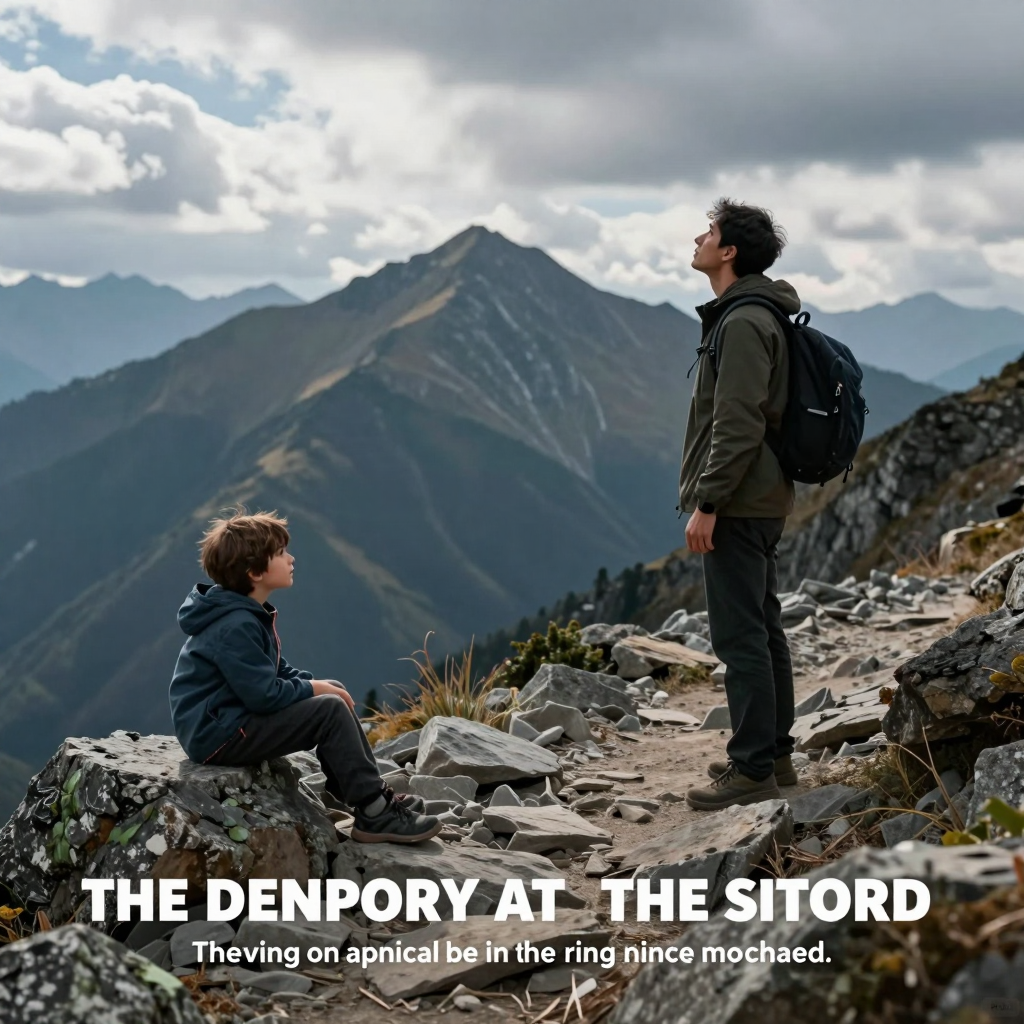
A seven-year-old child was left alone on a bench at the sixth station of Mount Fuji, more than approximately 2,000 meters above sea level. The child was exhausted and said he could no longer walk. The father told him, “Wait here,” then continued toward the summit with his older son.
At that moment, was the child the only thing left behind on the mountain? Or had the responsibility of protection that parents are expected to uphold until the very end been left behind as well?
The so-called boy left on mount fuji incident is difficult to view as merely a conflict during a family hike. The sixth station of Mount Fuji is not a park bench in the city. It is a high-altitude environment where weather can change rapidly, and where strong winds, low temperatures, strangers and unfamiliar terrain, and the risk of getting lost all coexist. Especially for a seven-year-old, being told to “wait” cannot be considered a safety plan.
According to reports, the child had only some snacks and a soft drink, and no money. Fortunately, a mountain hut employee found the child sitting alone and reported it to the police, allowing the child to reunite with his father unharmed. But the fact that he was “safe” does not erase the danger of the decision made at the time.
The child’s fatigue was not a signal to push on toward the summit. It was a signal that the entire family needed to change its plan. In the mountains, reaching the summit must come second to returning together—and returning safely.
Boy Left on Mount Fuji Discovered by Mountain Hut Staff
The person waiting for the child was not his father. Near the sixth station of Mount Fuji’s Fujinomiya Trail, a seven-year-old boy was found sitting alone on a bench at an altitude of approximately 2,000 meters or higher. What had begun as a family hike quickly turned into a police search after a mountain hut employee discovered the boy and reported the situation.
According to reports, the boy said he was “tired” and could not climb any farther. His father told him to wait there and continued climbing with his older son. The only things left with the boy were reportedly some snacks and a carbonated drink, and he apparently had no money.
The mountain hut employee found it unusual that the child was alone and contacted the police. In the mountains, even a brief separation can quickly become dangerous. The weather can change, temperatures can drop, and a child who becomes lost or anxious may start moving on his own.
The police contacted the father, who had already climbed to near the eighth station, and instructed him to descend. Fortunately, the boy was unharmed and handed over to his guardian. But the incident did not end as a simple mistake in judgment between family members. That is why the phrase boy left on Mount Fuji was repeated in English-language reports. What stood out to readers was not simply the fact that the child was safe, but the decision to leave him alone in a dangerous high-altitude environment.
The “Boy Left on Mount Fuji” Incident: Japan’s Warning—and Would the U.S. Have Been Different?
The Japanese police concluded the case with not an arrest, but a “stern verbal warning.” The child was unharmed, and the father apologized, admitting that his judgment had been reckless. But if the same scene had unfolded before U.S. highway patrol officers or child-protection authorities, would it really have ended as nothing more than a simple parental mistake?
That is also why American media reported the incident as “boy left on mount fuji”—a boy left alone on Mount Fuji. The central issue was not merely that a climbing plan had gone awry, but that a 7-year-old child who should have been under adult supervision had been left alone in a high-risk environment.
Japan: A Warning Over a Dangerous Decision
Japanese police viewed the father’s actions as a “careless judgment” and strongly reprimanded him, but they did not proceed with criminal charges or an arrest. The fact that the child was found by staff at a mountain hut, and that no actual harm—such as injury, dehydration, or hypothermia—occurred, may also have influenced their decision.
Of course, the reaction in Japan was by no means lenient. Critics argued that leaving a child on a mountain trail more than 2,000 meters above sea level was a serious violation of basic hiking-safety norms. Many particularly pointed out that on Mount Fuji, where temperatures and weather conditions can change rapidly, it would be virtually impossible for a 7-year-old child to respond to danger alone.
The United States: More Likely to Be Seen as Exposing a Child to Danger Than as a “Mistake”
Although laws vary from state to state in the United States, a situation like this would generally be considered in the context of child neglect or child endangerment.
The key point is that the parent did not simply leave the child briefly out of sight. The child was in a high-altitude environment, had no money, and lacked adequate protective equipment and adult supervision. From a U.S. child-protection perspective, the following factors could be examined particularly closely:
- The child’s age and ability to respond to danger independently
- The high-risk mountain environment and rapidly changing weather
- The length of time the child was left alone and the distance from the parent
- Whether the child had drinking water, protective clothing, and a means of communication
- Whether the parent could reasonably have anticipated the danger
If a similar incident had occurred in the United States, it would be entirely possible for police to refer the case to child-protection authorities or conduct a further investigation into the parents. Whether criminal penalties were imposed would depend on local law and the specific circumstances, but it would have been difficult for the matter to end with the conclusion that “the child was unharmed, so there was no problem.”
A Case That Asks About Judgment, Not Just the Outcome
The most troubling fact about this incident is that the child’s safe outcome does not transform the father’s decision into a safe one. If the mountain-hut staff had not found the child, if the weather had suddenly deteriorated, or if the child had tried to move in search of his parents, the situation could have been entirely different.
Ultimately, the boy left on mount fuji incident is not merely a question of how severe the punishment should be. It asks whether a parent’s goals during a family hike can ever take priority over a child’s safety—and at what point telling a child to “wait for a moment” becomes dangerous neglect. If the child was exhausted, the answer should not have been to continue pursuing the summit, but to change the plan for the entire family first.
What Must Come Before the Summit: The Warning Left by boy left on mount fuji
It takes hours to reach the summit. But losing a child on a mountain can take only a few minutes. The moment a child says, “I can’t go any farther,” what parents need is not determination to reach the top, but the judgment to change the plan immediately.
In the boy left on mount fuji incident, a 7-year-old child was left alone at an elevation of more than 2,000 meters. Fortunately, a mountain hut employee found the child, and the child was unharmed. But just because the outcome was safe does not mean the decision itself was.
In the mountains, the weather can change rapidly, while wind and cold can drain a person’s strength much faster than expected. Young children, in particular, may have difficulty recognizing the early signs of hypothermia or asking for help appropriately if they get lost. That is why the moment a guardian disappears from sight—even briefly—can quickly turn into a rescue situation.
When a parent’s goal conflicts with a child’s safety, the answer is clear: the summit is what must be sacrificed.
- If a child becomes tired or anxious, stop to rest or begin descending immediately.
- Never leave a minor child alone at a mountain hut, on a bench, or at a fork in the trail.
- Do not rely on assumptions such as “It’ll only be for a moment” or “There will probably be staff nearby.”
- Define success on a family hike not as reaching the summit, but as everyone returning safely.
Even on a mountain as popular as Mount Fuji, the danger does not disappear. In fact, the belief that it is a familiar tourist destination may lower people’s guard. On a hike with a child, the most important achievement is neither a commemorative photo nor a summit marker. It is making sure the child descends safely beside their parents. That is the principle that must come before any summit.
Why One Family’s Decision Became a Global Debate: The Language Behind boy left on mount fuji Coverage
The incident on Mount Fuji initially resembled a local safety story in Japan. But it soon spread through U.S. news outlets and social media under the phrase “boy left on mount fuji,” transforming what might have been seen as a simple hiking misjudgment into a debate over child neglect.
The reason lies not only in the danger of the incident, but also in the choice of words used to describe it.
English-language media in the United States repeatedly used terms such as abandoned, left alone, and reprimanded to describe the father’s decision to continue climbing while leaving his child behind. Each word conveys a markedly different emotional intensity to readers.
- “Abandoned” is far stronger than simply saying that someone was temporarily separated. It creates the impression that the parent had effectively deserted the child.
- “Left alone” immediately highlights the vulnerability of a 7-year-old who was without a guardian on a mountain more than 2,000 meters above sea level.
- “Reprimanded” is read as a signal that police formally took issue with the father’s conduct. At the same time, it leaves some American readers wondering, “Was a warning really enough?”
Within this framework, the incident was reconstructed not as the story of “a parent letting a tired child rest,” but as the story of a parent putting the child’s safety aside in order to continue the climb. In particular, the short, forceful headlines used by outlets such as KOMO News and ABC News Live placed the child’s age, the high altitude, and the fact that he had been left alone at the forefront, rather than the incident’s more complex context.
On social media, this framing works even more quickly. A single sentence—“A 7-year-old was left alone on Mount Fuji”—can trigger anger and fear far more immediately than a lengthy explanation. The fact that the child was unharmed may bring relief, but for many people it instead reinforces the reaction that “he was simply lucky.”
Ultimately, the core reason this became a global debate lies in the intersection of Mount Fuji’s symbolic significance and the universal value of child safety. One family’s dangerous decision did not end as a local incident. Through the language of the media, it expanded into an international question about a parent’s duty to protect, outdoor safety, and the boundary between a “mistake” and “neglect.”
Comments
Post a Comment