 \n
\n
Louisiana Vibrio vulnificus outbreak: When a Wound Exposed to the Sea Becomes Life-Threatening
Louisiana recorded 9 confirmed severe Vibrio vulnificus infections this year. The number may not seem large at first glance. But at least 5 of those patients died. In a region that typically sees about one death a year, what caused such a deadly season?
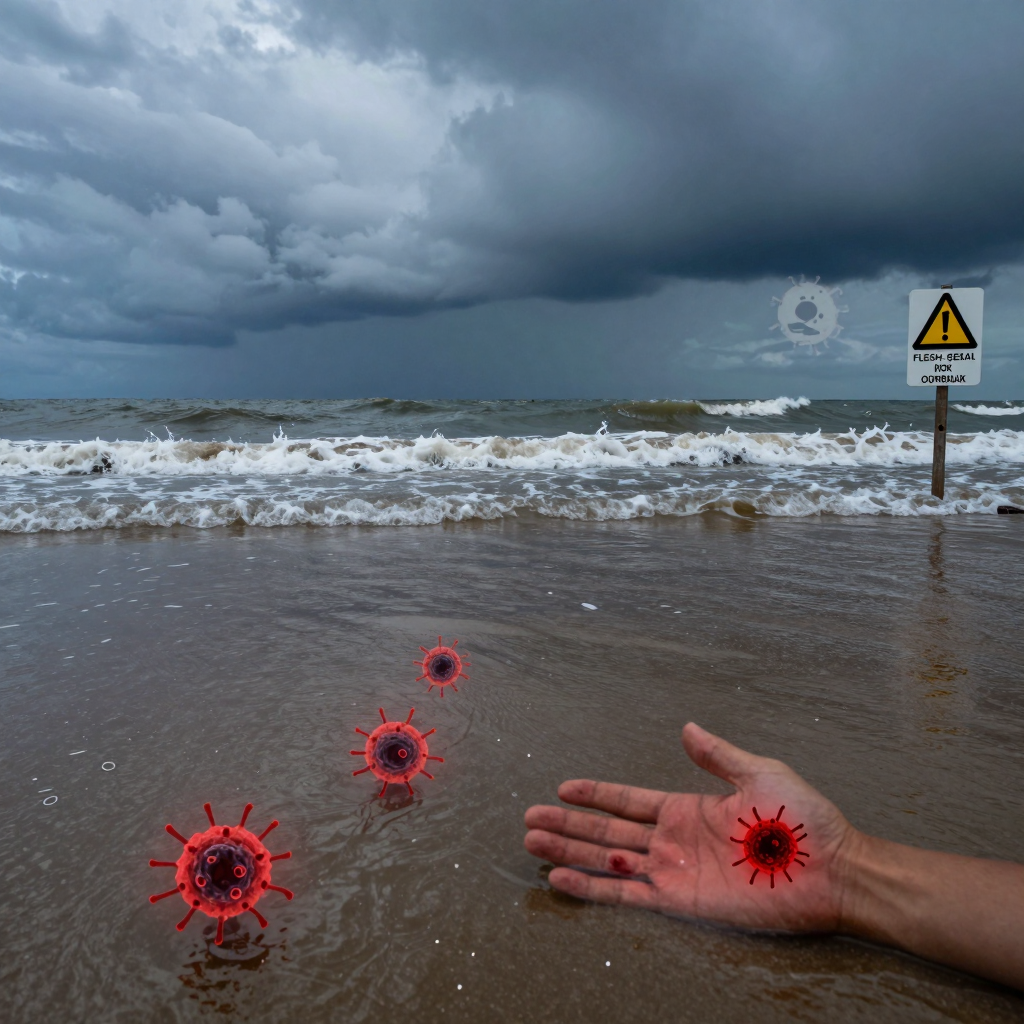
The key to this Louisiana Vibrio vulnificus outbreak is not simply the fact that people “went to the beach.” All 9 reported cases occurred through wounds exposed to seawater or brackish water. Health officials also stated that every patient had an underlying medical condition.
Vibrio vulnificus is a bacterium that occurs naturally in warm coastal waters. It can become especially active in brackish water—the area where seawater and freshwater meet—from May through October, when water temperatures rise. Even a small abrasion, shaving cut, insect bite, or recent surgical wound can provide an entry point for the bacteria.
The danger is that the infection can worsen extremely quickly. If a wound suddenly becomes red, severely swollen, hot, painful, or changes color, it should not be dismissed as simple dermatitis. Some patients go on to develop sepsis or severe skin and soft-tissue infections, and their condition can deteriorate rapidly within just 1 to 2 days after symptoms begin.
The risk is especially high for people with underlying conditions such as liver disease, diabetes, or a weakened immune system. This outbreak is less a warning to avoid beaches altogether than a reminder of who faces greater danger when entering warm seawater with an open wound.
If a wound begins to look unusual after exposure to the sea or brackish water, seek medical attention immediately and be sure to tell the healthcare provider: “My wound came into contact with seawater.” In Vibrio vulnificus infections, that brief piece of information can change how quickly the infection is diagnosed and treated.
The Actual Infection Route of the “Flesh-Eating Bacteria”: What the Louisiana Vibrio vulnificus Outbreak Revealed About the Risk
All nine cases identified in this Louisiana Vibrio vulnificus outbreak began not with eating raw oysters, but with wounds exposed to seawater or brackish water. Even barely noticeable abrasions, cuts, or recent surgical sites can become entry points for infection when they come into contact with warm coastal waters.
When Wounds Meet Seawater
Vibrio vulnificus is a bacterium that naturally occurs in warm seawater and in brackish water, where fresh and salt water mix. It can become more active particularly between May and October, when water temperatures rise.
The problem begins when the skin is no longer a perfect barrier. The following areas can also pose risk:
- Minor abrasions or insect bites
- Small cuts sustained while fishing or crabbing
- Cuts caused by shaving
- New tattoo or piercing sites
- Recent surgical wounds
- Areas where the skin barrier has been damaged by dermatitis, eczema, or blisters
When someone with a wound enters the ocean, coastal wetlands, or the brackish water of a river estuary, the bacteria can penetrate the skin and soft tissue. This is precisely why Louisiana health authorities placed particular emphasis on it in these cases. All nine infected individuals had a connection between water exposure and a wound, and all were reported to have underlying health conditions.
Why Is It Called the “Flesh-Eating Bacteria”?
Although the expression is somewhat sensational, it comes from descriptions of some cases in which the infection progresses rapidly. Vibrio vulnificus can cause severe infections of the skin and soft tissue, and if treatment is delayed, it can lead to bloodstream infections and sepsis.
At first, it may look like an ordinary wound infection. But within several hours to a day, the following changes can develop rapidly:
- Rapid redness and swelling around the wound
- Pain that is unusually severe compared with the size of the wound
- Heat, blisters, or changes in skin color
- Dark red or purplish spots
- Fever, chills, dizziness, or extreme weakness
People with diabetes, liver disease, alcoholic liver disease, or weakened immune systems face a higher risk of developing severe illness. In some patients, Vibrio vulnificus infection can deteriorate into a life-threatening condition within one to two days after symptoms begin, making the decision to “wait and see a little longer” potentially dangerous.
It Is Not Just a Matter of Avoiding Raw Oysters
Vibrio infections can also occur after eating raw or undercooked oysters and seafood. However, the Louisiana cases highlight an important fact: even without eating seafood, a person can become infected simply by exposing a wound to seawater.
Therefore, if you are planning a beach trip, fishing, boating, crabbing, or an excursion through coastal wetlands, you should check not only your diet but also the condition of your skin. If you have a small wound, the safest option is to stay out of the water. If exposure is unavoidable, cover the wound securely with a waterproof bandage and wash it thoroughly with soap and clean water immediately afterward.
One Thing to Remember: Tell Medical Staff About Water Exposure
If a wound becomes red, swollen, hot, painful, or discolored after contact with seawater or brackish water, seek medical attention immediately. Be sure to tell the medical staff: “The wound was exposed to seawater or brackish water.”
This information is more than a simple travel detail. It can provide an important clue in deciding on prompt testing and appropriate antibiotic treatment. That is the most practical warning left by the Louisiana Vibrio vulnificus outbreak: There is no need to view seawater itself as something to fear, but the combination of an open wound and warm coastal water should never be taken lightly.
Warmer Coastlines, a Broader Map of Risk: The Background Behind the louisiana vibrio vulnificus outbreak
Vibrio bacteria are not a new pathogen that suddenly appeared. They have long existed naturally in warm coastal and brackish waters. But as the ocean stays warmer for longer, the story is changing. The louisiana vibrio vulnificus outbreak shows how the familiar waters of the Gulf Coast can quickly become a public health threat under certain conditions.
According to Louisiana health authorities, Vibrio vulnificus is especially active between May and October, when water temperatures are high. Brackish areas, where warm seawater meets freshwater from rivers, provide an ideal environment for the bacteria to multiply. Places that normally seem ordinary—beaches, wetlands, boat docks, and tidal flats—can become areas requiring caution for people with open wounds.
What makes this case particularly notable is not simply the number of infections. All nine severe infections reported in Louisiana occurred after wounds were exposed to seawater or brackish water, and every patient had an underlying medical condition. In other words, the risk is not evenly distributed across the entire coastline. It rises sharply when the following three conditions overlap:
- Exposure to warm seawater or brackish water
- An open wound, abrasion, surgical site, or other break in the skin
- An underlying condition such as liver disease, diabetes, or a weakened immune system
Warmer Waters Create a Longer Risk Season
The Gulf Coast has long been known as a region vulnerable to Vibrio bacteria. However, as climate change drives sea temperatures higher, the period during which the bacteria can actively multiply may grow longer, and the areas where they can survive may expand. In other words, the risk may no longer be limited to a specific beach in the middle of summer.
The continued reports of infections and deaths in Florida suggest that this is not a problem limited to Louisiana. The Gulf Coast combines warm seawater, extensive wetlands and brackish waters, and a strong culture of seafood consumption—conditions that make exposure structurally more likely. As marine environments change, they can expand both the bacteria’s range of activity and its points of contact with people.
Knowing the Risk Matters More Than Fear
This does not mean that everyone must avoid beaches or stop eating seafood. The key is to distinguish the risk accurately. Healthy people can also become infected, but those with open wounds or underlying health conditions need to be especially cautious.
If a wound exposed to seawater quickly becomes red, swollen, severely painful, hot to the touch, or discolored, do not wait to seek medical care. Be sure to tell healthcare providers that the wound was exposed to seawater or brackish water.
The louisiana vibrio vulnificus outbreak is less a sign of a “new fear of the sea” than a warning that familiar risks are surfacing more often as coastal environments grow warmer. The more familiar the water, the more important it is—especially during hot seasons—to make wound care and personal health status a priority.
louisiana vibrio vulnificus outbreak: The Hidden Condition That Matters More Than a Wound
The most important fact to note about this louisiana vibrio vulnificus outbreak is that all nine infected individuals had underlying health conditions. A small wound exposed to seawater can serve as an entry point for infection. However, a person’s overall health plays a major role in determining whether the infection rapidly worsens and progresses to fatal sepsis.
In other words, the risk does not depend solely on whether “there is a wound.” The danger rises sharply when warm seawater, an open skin wound, and a vulnerable immune or metabolic state overlap.
High-risk groups who need to be especially cautious
If any of the following conditions apply, take extra care with exposure to seawater or brackish water and with eating raw oysters.
People with liver disease
Cirrhosis, chronic liver disease, and alcoholic liver disease are known to be major risk factors for severe Vibrio vulnificus infection. When liver function is impaired, the body may have difficulty effectively clearing bacteria from the bloodstream, increasing the risk of sepsis.People with diabetes
Diabetes can affect blood circulation, wound healing, and immune responses. Even a minor abrasion or blister can become an entry point for infection, so carefully check your skin before and after marine activities.People who are immunocompromised
Those undergoing chemotherapy, taking immunosuppressants after an organ transplant, or using steroids over an extended period may have reduced defenses against infection. In these cases, even an ordinary skin infection can worsen within a short time.People who have recently had surgery, a tattoo, or a piercing
A recent surgical site, a new tattoo, a piercing, a shaving cut, or an insect bite can be considered an open wound if it has not fully healed. Assuming that you are safe simply because there is no large, noticeable wound can be dangerous.
Why can the infection progress so quickly and become so deadly?
Vibrio vulnificus can rapidly damage the skin and soft tissue in some people and spread into the bloodstream. When underlying health conditions are present, the immune system may be unable to sufficiently control the growth of the bacteria.
As a result, symptoms that initially look like simple skin redness or pain can worsen within a short period. If the area around the wound becomes rapidly swollen, or if warmth, severe pain, blisters, changes in skin color, fever, chills, or generalized weakness develop, emergency medical evaluation is needed.
Most importantly, be sure to tell medical professionals that “the wound was exposed to seawater or brackish water.” This information can help guide prompt testing and antibiotic treatment.
Raw-oyster lovers are not exempt
All of the cases in this Louisiana outbreak were reported to have resulted from infection through wounds. However, Vibrio vulnificus can also be contracted by eating raw or undercooked seafood, including raw oysters.
For people with liver disease, diabetes, or a weakened immune system, raw oysters may be more than a culinary choice—they may be a risk factor that should be avoided. Lemon juice, hot sauce, and alcohol do not eliminate the bacteria. The safest approach is to cook seafood thoroughly and prevent liquid from raw seafood from coming into contact with other foods or cooking utensils.
Simple principles to remember before marine activities
- Stay out of seawater and brackish water if you have a wound, abrasion, or surgical site.
- If you must enter the water, cover the wound securely with a waterproof bandage.
- After water activities, immediately wash the wound with soap and clean water.
- If the wound becomes red or swollen, or if pain, warmth, or discoloration worsens, seek medical care without delay.
- If you have liver disease, diabetes, or a weakened immune system, it is safer to avoid raw oysters and undercooked seafood.
There is no need to fear beaches or seafood themselves. But knowing your own health status and never dismissing a small wound is the most practical prevention lesson highlighted by the louisiana vibrio vulnificus outbreak.
Action Over Fear: A Prevention Checklist for the louisiana vibrio vulnificus outbreak
The louisiana vibrio vulnificus outbreak may appear to involve only a small number of cases. However, the fact that the infection can worsen rapidly—and that all of the people who died in this outbreak had underlying health conditions—is a clear warning. The key is not to avoid the ocean altogether, but to respond wisely to wounds, seafood, and unusual symptoms.
Before Entering the Water: Check Your Wounds First
If you have any of the following skin injuries, it is safer to avoid contact with seawater or brackish water:
- Cuts, abrasions, or insect bites
- Small cuts caused by shaving
- Recently tattooed or pierced areas
- Wounds that are still healing after surgery
- Areas where the skin barrier has been damaged by dermatitis, eczema, or similar conditions
You should be especially cautious if you have liver disease, diabetes, or a weakened immune system, or if you are taking immunosuppressants after cancer treatment or an organ transplant. If you must enter the water, firmly cover the wound with a waterproof bandage. However, avoiding exposure altogether is the best preventive measure whenever possible.
After Water Activities: Wash Immediately and Watch for Changes
If a wound comes into contact with seawater or brackish water, take action as soon as your time in the water ends.
- Wash the wound and the surrounding skin thoroughly with soap and clean water.
- Replace wet bandages or contaminated clothing as soon as possible.
- Keep the wound clean and dry.
- Closely monitor the condition of your skin and any general symptoms for the next 24 to 48 hours.
Do not wait if the skin begins to change rapidly rather than simply feeling mildly irritated or itchy. Vibrio vulnificus infections can progress extremely quickly in some patients.
Seek Medical Care Immediately If You Notice These Symptoms
If any of the following symptoms appear around a wound exposed to seawater, it is important to visit a medical facility or emergency room that same day:
- Redness that spreads rapidly
- Swelling and warmth
- Pain that is more severe than usual or worsening quickly
- Changes in skin color, blisters, or dark red spots
- High fever, chills, vomiting, dizziness, or extreme weakness
When seeking medical care, be sure to tell the healthcare provider: “My wound was exposed to seawater or brackish water.” This information can help with prompt diagnosis and decisions about appropriate antibiotic treatment.
At the Table: Choose Thoroughly Cooked Seafood Over Raw Oysters
All of the Louisiana cases in this outbreak were reportedly caused by wound exposure, but Vibrio vulnificus can also be transmitted through raw or undercooked seafood. Raw oysters, in particular, are considered a major risk food.
- Cook oysters, clams, shrimp, fish, and other seafood thoroughly.
- Immediately wash your hands, cutting boards, and knives after handling raw seafood.
- Keep juices from raw seafood away from cooked foods, salads, fruit, and other ready-to-eat items.
- People with liver disease, diabetes, or weakened immune systems should avoid raw oysters and undercooked shellfish.
One Thing to Remember
Beaches and seafood themselves are not inherently dangerous. However, the risk increases when warm seawater, an open wound, and an underlying health condition come together. The most practical lesson from the louisiana vibrio vulnificus outbreak is not fear, but preparation.
If you have a wound, stay out of the water. If you are exposed, wash immediately. If the skin becomes red or swollen, or the pain intensifies, seek medical care without delay. Acting quickly may be the most powerful preventive measure of all.
Comments
Post a Comment