 \n
\n
Rebel Creamery: A $23.8 Million Ice Cream Packaging Disaster
How far can the colors, typography, and layout on a single tub of ice cream take a company? The case of U.S. low-carb ice cream brand Rebel Creamery offers an astonishingly expensive answer.
Based in Utah, Rebel Creamery was a nationally distributed brand that entered major U.S. retail chains such as Walmart, Target, and Kroger with its keto-friendly, low-carb ice cream. But everything changed after the company lost a packaging design dispute with Van Leeuwen, a premium ice cream brand from New York.
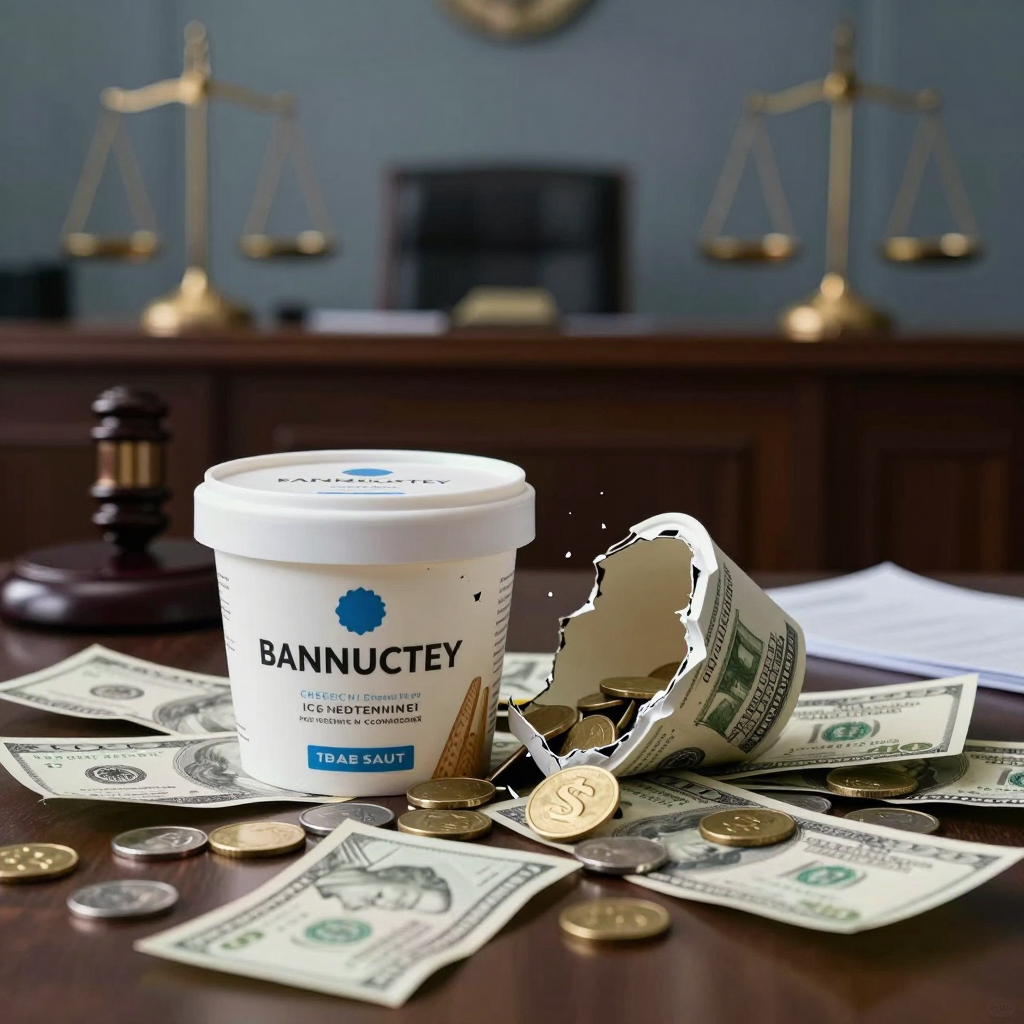
A U.S. federal court determined that Rebel Creamery had not merely created packaging that looked similar to Van Leeuwen’s, but had intentionally copied it. As a result, Rebel was ordered to pay $23,785,000 in connection with trademark and trade dress infringement.
The judgment was issued on July 16, 2026. Less than a month later, on August 14, Rebel Creamery filed for Chapter 11 protection in Utah federal bankruptcy court. Both its assets and liabilities were listed in the $10 million–$50 million range. In other words, the company was shaken not simply by problems with product demand or distribution, but by a single major IP lawsuit that destabilized its financial structure.
What makes this case so striking is that packaging is not merely “pretty wrapping.” To consumers, it is a visual signal that helps distinguish one brand from another in the freezer aisle. To companies, it is brand equity built over years. In the premium ice cream market especially, color blocking, minimalist typography, and whitespace-driven designs have spread like a trend. But following a trend and infringing on a competitor’s distinctive look and feel are entirely different matters.
Rebel Creamery had a differentiated product concept built around low-carb ice cream, but it is difficult to avoid the assessment that the company failed to establish a sufficiently distinct identity through its packaging. Ultimately, the case shows that the design printed on an ice cream carton can be more than a tool for attracting attention on the shelf—it can become a risk that leads all the way to federal court and bankruptcy court.
The Keto Ice Cream Rebellion: Rebel Creamery Becomes a Nationwide Brand
Rebel Creamery may have started in Midway, Utah, but it never remained a small regional manufacturer. The brand secured placement in the frozen-food aisles of major U.S. retail chains such as Walmart, Target, and Kroger, rapidly building its presence in the low-carb ice cream market.
The starting point was clear. Rebel Creamery directly targeted consumers who wanted to reduce their carbohydrate intake without giving up ice cream. At a time when interest in the keto diet and low-sugar, low-carb foods was rising, the brand positioned itself not as a substitute for regular ice cream, but as a health-conscious option for enjoying sweet desserts.
Category Leadership Fueled by Nationwide Distribution
Securing placement in major retail channels meant more than simply gaining additional points of sale. Being displayed in the freezer sections of Walmart, Target, and Kroger meant that Rebel Creamery had moved beyond regional awareness and established a foundation for repeated exposure to consumers nationwide.
In the low-carb ice cream market, distribution is just as important as product quality. Consumers need to be able to easily purchase products that help them maintain their diets at stores nearby. By securing that accessibility, Rebel Creamery was able to expand its customer base beyond keto followers to include everyday consumers seeking to manage their sugar intake.
Selling a “Dessert You Crave,” Not a “Health Food”
Low-carb products are often associated with having to compromise on taste and satisfaction. Rebel Creamery’s strategy was to overturn that perception. Rather than leading with nutritional information alone, the brand emphasized the rich flavor and dessert experience that ice cream itself provides.
This positioning created an important distinction. Consumers were more likely to view Rebel not as a simple dietary aid, but as “real ice cream” they could still choose while managing their diet. The brand’s growth was driven by the intersection of health-conscious trends and the desire to enjoy desserts.
The Challenges Left Behind by Growth
Nationwide distribution presented Rebel Creamery with significant opportunities, but it also demanded a higher level of brand management and risk response. On the shelves of major retailers, taste, price, packaging, and brand perception all determine competitiveness. In particular, in frozen-food aisles where consumers compare countless products at a glance, package design becomes a crucial asset in the purchasing decision.
Rebel Creamery’s growth story demonstrates the potential of the low-carb ice cream market. Yet the packaging design dispute that followed also revealed that, in the process of becoming a nationwide brand, a distinctive brand identity and legal risk management are just as important as product innovation.
The Packaging Battle: The Line Between Inspiration and Imitation, as Shown by Rebel Creamery
Similar color palettes, minimalist layouts, and clean typography have become a familiar design language among premium food brands. But where does “inspiration” from market trends end—and where does “imitation” begin, bringing legal liability with it?
The dispute between Rebel Creamery and Van Leeuwen dramatically illustrates that this question is about far more than personal design preferences. The court found that Rebel’s packaging was not merely coincidentally similar, but an intentional imitation of Van Leeuwen’s brand identity.
Through its use of color blocking, restrained layouts, and a distinctive brand atmosphere, Van Leeuwen had built an instantly recognizable presence on the shelf. The combination of these visual elements was more than mere packaging—it was an asset that enabled consumers to identify the brand. In the United States, such elements can be protected as trade dress.
Ultimately, Rebel Creamery was ordered to disgorge approximately $23.785 million in profits in connection with trademark and trade dress infringement. The key issue was not any single color or font, but the overall look and feel that led consumers to think, “This product looks like that brand.”
The case leaves CPG brands with an important warning:
- Taking cues from a competitor’s successful design is not the same as replicating the impression created by that brand.
- Packaging is not merely a container that protects a product; it is a brand asset that may be legally protected.
- Before a rebrand or new product launch, companies need to assess not only the design itself but also potential trademark and trade dress risks.
This is especially true in categories such as premium, wellness, and low-sugar or low-carb foods, where designs can quickly begin to look alike. Borrowing a competitor’s aesthetic may be an efficient short-term strategy for standing out on the shelf. But if a brand fails to build a distinctive identity of its own, the price can come back far greater—in court.
From Judgment to Bankruptcy, a 29-Day Countdown: The $23.785 Million That Brought Down Rebel Creamery
On July 16, 2026, Rebel Creamery suffered a devastating judgment in its packaging dispute with Van Leeuwen. The court found that Rebel had intentionally imitated Van Leeuwen’s branded packaging and ordered the company to pay $23.785 million in return.
Then, exactly 29 days later, on August 14, Rebel Creamery filed for Chapter 11 protection in the U.S. Bankruptcy Court for the District of Utah. A low-carb ice cream brand with a nationwide distribution network had entered business reorganization proceedings immediately after a single court judgment.
Why the Court Judgment Was More Than Just an Expense
The $23.78 million was not simply a matter of paying a fine or settlement in one lump sum. For a food startup or growth-stage CPG brand, a financial shock of this magnitude can disrupt cash flow, retailer confidence, fundraising, and production plans all at once.
According to Rebel Creamery’s bankruptcy filings, both its assets and liabilities were listed in the $10 million-to-$50 million range. In other words, the $23.785 million judgment was likely large enough to force a fundamental reassessment of the company’s entire financial structure.
Large retail brands, in particular, must continuously absorb costs such as:
- Raw materials and manufacturing
- Frozen logistics and storage
- Operating costs associated with retail partners such as Walmart, Target, and Kroger
- Promotions, discounts, and retail placement fees
- Packaging replacement and rebranding
When a massive legal payment obligation is added to that burden, maintaining cash flow through ordinary operations alone can become extremely difficult.
Chapter 11 Is Not a Declaration of Closure—It Is a Choice to Buy Time
The Chapter 11 protection chosen by Rebel Creamery is different from Chapter 7, which generally involves immediate liquidation. It is a process that allows a company, under court supervision, to restructure its debts, continue operating, and develop a reorganization plan.
Rather than declaring that “the brand is over,” the filing appears to be a defensive move aimed at protecting the business amid a crisis triggered by the enormous judgment. Through Chapter 11, Rebel may be able to rebuild its relationships with creditors, preserve distribution agreements and core product lines, and explore options such as an acquisition or rebranding.
For a consumer brand, however, time is itself a competitive advantage. As news of the legal dispute and bankruptcy spreads, retail buyers may reconsider shelf space, while competitors can move quickly to seize the openings.
What 29 Days Revealed About the Reality of CPG Brands
The central lesson of this case is that packaging is not merely “packaging.” It is the most immediate signal consumers use to distinguish one brand from another in a store—and a valuable piece of accumulated brand equity. At the same time, if a company infringes on another brand’s distinctive look and feel, packaging can become an area of enormous legal liability.
The Rebel Creamery case delivers a clear warning to growing food brands. Drawing inspiration from the mood and appeal of a premium brand is one thing. Evolving into an identity so similar that it creates consumer confusion is an entirely different matter.
Just 29 days. A court ruling over packaging imitation became the direct trigger that sent a low-carb ice cream brand to bankruptcy court. Differentiating a brand’s design is no longer merely an aesthetic choice; it is a management imperative tied directly to a company’s survival.
Rebel Creamery’s Next Chapter: Rebranding or a Sale?
Is Rebel’s story really coming to an end here? Filing for Chapter 11 does not necessarily mean the brand will disappear overnight. rebel creamery’s sales history across major retail channels such as Walmart, Target, and Kroger, along with its low-carb ice cream recipes and existing customer base, may still represent attractive assets to potential acquirers or investors.
The real question is what to preserve—and what to change. Since the dispute with Van Leeuwen stemmed from package design, the first step toward a comeback is likely to involve more than simply tweaking the logo. It may require a complete redesign of the brand identity. Rebel will need a new visual language that consumers can recognize at a glance in the frozen-food aisle, while making the brand clearly distinct from its competitors.
Rebranding: The Most Realistic Path to Survival
If Rebel chooses to remain a going concern, it will need to overhaul everything from its packaging to its product portfolio. The key is not to borrow a “premium” look, but to present its core strengths—low-carb and keto-friendly products—in a distinctive way of its own.
- Develop packaging colors and typography that leave no room for confusion with competitors
- Reduce SKUs with weak sales or excessive production costs
- Strengthen product messaging that consumers can immediately understand, such as low-sugar, high-protein, and clean-label positioning
- Convince existing distribution partners of the company’s supply stability and restart plans
If successful, this process could turn the lawsuit into both a serious blemish and a turning point for introducing a “new Rebel.”
A Sale: The Value of Its Distribution Network and Recipes
Another possible scenario is the sale of the brand or business unit. For food conglomerates, frozen-dessert manufacturers, and health-food companies, Rebel’s distribution history and category recognition could offer significant potential. After addressing the legal risks, an acquirer could completely replace the packaging and restart the business by adding its own manufacturing and logistics capabilities.
In particular, the low-carb ice cream market remains an area with sustained consumer demand from shoppers seeking a balance between taste and nutrition. In other words, the core problem may not have been the keto ice cream category itself, but rather how the product was presented to the market and how its risks were managed.
Ultimately, Rebel’s future is likely to be decided outside the courtroom. Whether it finds a new owner or pursues an independent rebrand, the first condition for survival is clear: give consumers a sharper reason to choose the brand, and give the market a clearer point of differentiation.
Comments
Post a Comment