Kang Shin-cheol, Defense Minister Nominee: A Key Player in Wartime OPCON and Defense Reform Across Four Administrations
 \n
\n
Kang Shin-chul: A Four-Star General from the Korea Military Academy Reopens the Ministry of National Defense
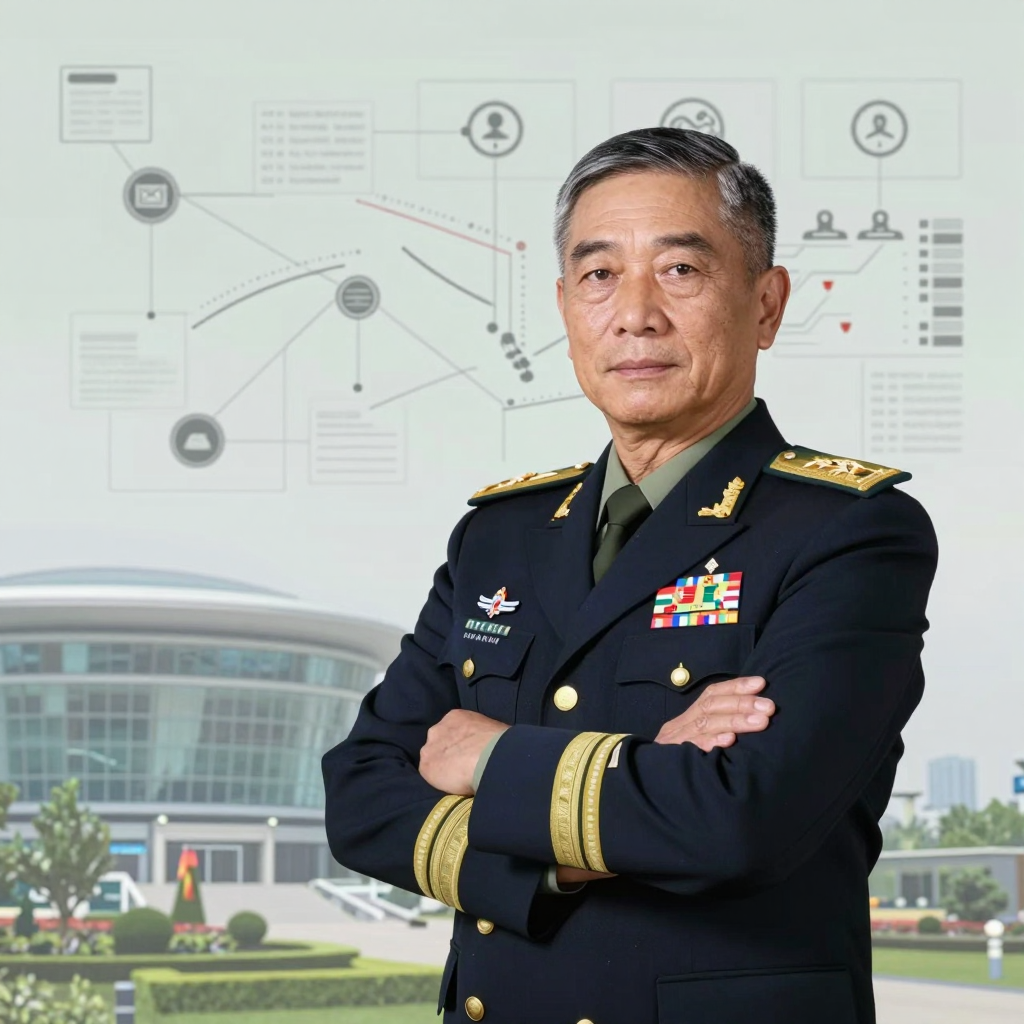
Just one year after the launch of a civilian-led defense ministry, the government has once again chosen a military figure as its ministerial nominee. The man at the center of attention is Kang Shin-chul, a retired four-star general and graduate of the Korea Military Academy’s 46th class. That is why this appointment is difficult to view as merely a routine change in leadership.
Nominee Kang Shin-chul has served as Director of Strategic Planning and Director of Operations at the Joint Chiefs of Staff, Deputy Commander of the Ground Operations Command, and Deputy Commander of the ROK-U.S. Combined Forces Command. His experience spans not only the military’s operational systems, but also the ROK-U.S. combined defense structure, defense policy at the Office of National Security in the Blue House, and the diplomatic field during his tenure as ambassador to Saudi Arabia. This broad background in military affairs, policy, alliances, and diplomacy presents him not simply as a field commander, but as a comprehensive national security strategist.
The nomination is being interpreted as carrying two messages at once. The first is a determination to move major agendas—such as the transfer of wartime operational control and defense reform—into the implementation phase. Having served as deputy commander of the ROK-U.S. Combined Forces Command, Kang is regarded as someone who understands the practical conditions surrounding the combined command structure and the transfer of wartime operational control.
The second message concerns stability within the military. As fatigue and concerns have grown inside the armed forces over issues such as the integration of military academies, personnel reforms, and restructuring of the military, placing a four-star general from the Korea Military Academy at the forefront can be read as an effort to reassure the military. It may also signal an intention to maintain the direction of reform while avoiding the impression that reforms are being carried out with the military left on the sidelines.
Ultimately, the core of Kang Shin-chul’s nomination lies less in a “return” than in “coordination.” The strategy appears to be to restore the organization’s trust through a defense minister with a military background, while simultaneously pushing ahead with sensitive tasks—including the transfer of wartime operational control, reforms to the military academy system, and defense reform—with momentum. The key point to watch will be how effectively he balances the twin goals of reform and stability as head of the Ministry of National Defense.
Kang Shin-chul: A Cross-Administration Security Expert Who Has Served Under Four Governments
The most striking aspect of Kang Shin-chul’s résumé, following his nomination as a candidate for Minister of National Defense, is not simply that he is a “former general.” Rather, it is the fact that he is what might be called a cross-administration security expert—one who has held key positions in defense and national security under the Lee Myung-bak, Park Geun-hye, Moon Jae-in, and Lee Jae-myung governments.
The fact that he was chosen by both conservative and progressive administrations suggests that he has been valued not for political slogans, but for his strategic planning capabilities, organizational coordination skills, and experience managing alliances.
Kang Shin-chul’s Key Positions Across Changing Administrations
Kang Shin-chul’s career spans the presidential office, the Joint Chiefs of Staff, the National Security Office, the ROK-U.S. Combined Forces Command, and the diplomatic arena.
- Under the Lee Myung-bak government, he served as an administrative officer at the presidential office, gaining firsthand experience with national governance and the structure of security decision-making.
- Under the Park Geun-hye government, he served as military aide to Defense Minister Han Min-koo, working at the intersection of military administration and defense policy.
- Under the Moon Jae-in government, he served as Secretary for Defense Reform and later as Secretary for Security and Defense Strategy at the National Security Office, contributing to defense reform and the formulation of mid- to long-term security strategies.
- Under the Lee Jae-myung government, he served as Deputy Commander of the ROK-U.S. Combined Forces Command, later became Ambassador to Saudi Arabia, and was subsequently nominated as a candidate for Minister of National Defense.
In other words, he is not someone familiar only with the policy direction of a single administration. He has carried out his duties amid the shifting security environments and policy priorities that accompany each change of government.
Why He Is Being Described as a “Cross-Administration Elite”
The reason attention is focused on nominee Kang Shin-chul lies less in the number of positions he has held than in the continuity of his career. He gained experience coordinating policy at the presidential office, handled strategy and operations at the Joint Chiefs of Staff, and helped design defense reforms at the National Security Office. He later commanded in the field of combined defense as Deputy Commander of the ROK-U.S. Combined Forces Command and expanded his experience onto the diplomatic stage as ambassador to Saudi Arabia.
It is rare to find someone with experience spanning military operations, defense policy, security coordination within the presidential office, the ROK-U.S. alliance, and defense diplomacy. In particular, when it comes to challenges involving the simultaneous interests of the military, the political sphere, and allied nations—such as the transition of wartime operational control, the integration of military academies, and stabilizing the military organization—this combination of experience could prove to be a significant strength.
Kang Shin-chul’s competitive edge lies not in being a security figure associated with a particular political camp, but in being a practical strategist capable of working effectively across different governments and organizations.
The Role Expected by the New Government
The latest appointment is being interpreted as a choice aimed at managing anxiety and resistance within the military while keeping defense reform on track. As a retired four-star general from the Korea Military Academy who has also experienced the National Security Office, the Combined Forces Command, and the diplomatic arena, nominee Kang Shin-chul is viewed as someone capable of taking both the direction of reform and the organization’s ability to accept it into consideration.
Ultimately, he is likely to face two major tasks. One is to move the transition of wartime operational control and defense reform into the stage of concrete implementation. The other is to maintain stability within the military during a period of change that could unsettle morale. His career spanning four administrations can be viewed as a political and military asset precisely suited to tackling both challenges at once.
Can Kang Shin-chul Become the Architect of Wartime Operational Control Transfer?
The transfer of wartime operational control (OPCON) is not simply a matter of changing the name of who holds command authority. It is one of the most sensitive defense challenges, requiring the simultaneous assessment of South Korea’s independent command capabilities, the U.S.–South Korea combined defense system, and its ability to respond to the North Korean threat. This is precisely why attention is focused on Kang Shin-chul, nominee for Minister of National Defense and former Deputy Commander of the ROK–U.S. Combined Forces Command.
He has experience in both the strategy and operations divisions of the Joint Chiefs of Staff and the command structure of the ROK–U.S. Combined Forces Command. His greatest strength is that he understands, not from behind a desk but from the field, the operational capabilities, combined defense structure, and command-and-control systems required for OPCON transfer.
The Key to OPCON Transfer: Securing ‘Independence’ and ‘Alliance’ at the Same Time
The transfer of OPCON is linked to the transition toward a future Combined Forces Command led by the South Korean military. However, a greater role for South Korea’s military must not come at the expense of the U.S.–South Korea alliance. On the contrary, as South Korea strengthens its command capabilities, intelligence, surveillance and reconnaissance, missile defense, and counterattack capabilities, the alliance’s deterrence can also grow stronger.
The tasks facing nominee Kang Shin-chul are clear:
- Substantially completing a South Korea-led command structure
- Securing confidence in the verification process for conditions-based OPCON transfer
- Maintaining a robust combined defense posture through close consultation with the United States
- Persuading the public and the military of the need for the transfer and the status of preparations
Ultimately, OPCON transfer must be driven first by military preparedness and trust between the allies, not by political declarations. Emphasizing speed alone could heighten security concerns, while delaying the process indefinitely in the name of verification could weaken the momentum toward an independent national defense.
What Nominee Kang Shin-chul Needs Is the ‘Language of Balance’
Rather than framing OPCON transfer as a confrontation between “independent national defense” and the “U.S.–South Korea alliance,” nominee Kang Shin-chul should explain it as independent national defense that makes the alliance stronger. What is needed is a design that expands the South Korean military’s responsibilities and capabilities while firmly maintaining U.S. extended deterrence and the operation of combined forces.
In this process, his experience as deputy commander of the Combined Forces Command could prove to be a significant asset. Because he understands the decision-making structures of the militaries of both countries and how combined operations actually function, he may be able to turn OPCON transfer into a practical roadmap rather than a slogan for domestic politics.
The success of the new government’s defense policy will depend not on how quickly it pursues OPCON transfer, but on how steadily and credibly it completes the process. In that sense, nominee Kang Shin-chul now stands at the most difficult test of balance: raising the South Korean military’s autonomy while preserving the deterrent power of the U.S.–South Korea alliance.
Kang Shin-chul’s First Test: Integrating the Service Academies While Winning the Military’s Trust
The most paradoxical aspect of this appointment is that a four-star general who graduated from the Korea Military Academy (KMA) is expected to lead the restructuring of a system centered on the KMA. For Kang Shin-chul, the nominee for defense minister, integrating the service academies and reforming the military organization are far more than routine institutional improvements. They are a high-stakes test: he must maintain the momentum of reform while restoring the trust and morale within the military that have been shaken in the process.
The government’s push to integrate the service academies is backed by the stated goals of strengthening jointness among the Army, Navy, and Air Force, cultivating personnel prepared for future warfare, and improving the efficiency of the education system. Yet many officers from the KMA remain concerned that the symbolic stature and influence of the Army and the academy could be weakened. With personnel changes and organizational restructuring occurring at the same time, the issue has increasingly come to be seen less as a question of reform itself and more as an emotional one: “Is the military’s tradition and professional expertise being respected sufficiently?”
Kang’s career could prove to be an asset in navigating these tensions. A graduate of KMA’s 46th class, he has served in strategic planning and operations at the Joint Chiefs of Staff, in the National Security Office, and as deputy commander of the ROK-U.S. Combined Forces Command. He is therefore regarded as someone who understands both the military’s institutional logic and the government’s reform objectives. In other words, he may be able to inspire trust within the armed forces while giving the government the ability to turn reform into concrete policy.
Still, opposition will not disappear simply because Kang is a KMA graduate. The key question is whether he can persuade the military that integrating the service academies is not merely a downsizing exercise or a reshuffling of institutional standing, but rather a redesign of the system for strengthening jointness and cultivating future defense talent. He must present a vision that preserves the strengths of Army officer education while expanding connections with the Navy, Air Force, and advanced technology fields—not one that simply diminishes the KMA’s role.
Ultimately, the challenge before Kang is clear. He must keep reform moving forward while creating the perception that the military is not the passive target of a one-sided overhaul, but a co-designer of the reform itself. The way the service academy integration debate is conducted, the pace at which it proceeds, and the quality of communication within the military are all likely to become the first benchmarks by which his leadership is judged.
Kang Shin-chul: A Multifaceted Player Connecting Defense, the Alliance, the Defense Industry, and the Middle East
The role of the Minister of National Defense can no longer be defined solely by troop strength, weapons, and operational plans. The transfer of wartime operational control, management of the ROK-U.S. alliance, defense reform, defense exports, energy security, and diplomacy in the Middle East have become interconnected challenges. In this regard, the career of nominee Kang Shin-chul carries significance beyond that of a mere “military man turned defense minister.”
He served as Director of Strategic Planning and Director of Operations at the Joint Chiefs of Staff, Deputy Commander of the ROK-U.S. Combined Forces Command, and later as Secretary for Defense Reform and Secretary for Security and Defense Strategy at the National Security Office. After retiring from active duty, he served as Ambassador to Saudi Arabia. It is a rare career that encompasses military operations, national security strategy, alliance management, and the realities of diplomacy.
What His Combined Forces Command Experience Means for the Transfer of Wartime Operational Control
Nominee Kang Shin-chul’s greatest strength is his experience as Deputy Commander of the ROK-U.S. Combined Forces Command. The transfer of wartime operational control is not simply a matter of changing the name of the authority in charge. It is a complex undertaking requiring the simultaneous assessment of the South Korean military’s command capabilities, intelligence, surveillance, and reconnaissance systems, missile defense, combined operational capabilities, and the decision-making structure between Seoul and Washington in times of crisis.
Someone who has served in the leadership of the Combined Forces Command is likely to have a strong understanding of the practical intersection between two objectives: strengthening a command structure led by the South Korean military while maintaining the ROK-U.S. combined defense posture. The key question is whether the transfer of wartime operational control can be designed not as a confrontation between “self-reliant defense and the alliance,” but as an effort to enhance South Korea’s leadership while reinforcing the alliance.
Can His National Security Office Experience Turn Defense Reform into Policy?
Reform within the military cannot be carried out through a commander’s will alone. Budgets, laws and institutions, personnel policies, and consultations among the presidential office, the National Assembly, and relevant government ministries must all move in concert. The fact that Kang Shin-chul handled defense reform and security strategy at the National Security Office is particularly noteworthy in this context.
The integration of military academies, restructuring of troop levels, strengthening of jointness, and modernization of capabilities for future warfare are all complex tasks involving numerous competing interests inside and outside the military. What a defense minister needs is not only the ability to set the direction of reform, but also the capacity to listen to concerns within the military and reconcile them in the language of policy. As a four-star general and graduate of the Korea Military Academy who has also experienced the practical work of defense reform, Kang Shin-chul is expected to face a test of balancing reform with organizational stability.
How His Ambassadorship to Saudi Arabia Opens the Door to Middle Eastern Defense Diplomacy
His service as Ambassador to Saudi Arabia is another factor that sets Kang Shin-chul apart from previous defense ministers. Saudi Arabia is a key country in Middle Eastern security and a partner with significant potential for expanded cooperation with South Korea in defense, energy, and infrastructure.
This experience could become an asset that enables him to view defense through both diplomatic and industrial lenses. Defense exports do not end with the sale of weapons. They must be supported by training and education, maintenance and follow-on logistics, joint production, technological cooperation, and long-term diplomatic trust. A defense minister with firsthand experience in diplomacy in the Middle East could expand defense cooperation beyond one-off contracts into strategic partnerships between nations.
The Time Has Come to Show the Results of “Connecting the Dots”
Ultimately, the true test of the Kang Shin-chul nomination will not lie in his impressive résumé itself, but in how effectively he can connect these disparate challenges into a single strategy. In the transfer of wartime operational control, he must preserve trust in the ROK-U.S. alliance. In defense reform, he must secure acceptance within the military. At the same time, through defense diplomacy, he must broaden new cooperation markets, including in the Middle East.
His career spanning the Joint Chiefs of Staff, the Combined Forces Command, the National Security Office, and the ambassadorship to Saudi Arabia means that the role of defense minister need not be confined to the military sphere. Kang Shin-chul now faces the moment of truth: can he weave the transfer of wartime operational control, defense reform, the ROK-U.S. alliance, and defense diplomacy in the Middle East into a single national security strategy? The grading of his performance is about to begin in earnest.
Comments
Post a Comment