 \n
\n
LAFC vs. Querétaro: The 12 Minutes That Overturned an 85% Prediction
For LAFC, who had gone unbeaten in their previous seven home matches, this game clearly appeared to be in their favor. The pre-match AI prediction also gave LAFC an 85% chance of 1X (win or draw). Home-field advantage at BMO Stadium, a steady run of recent form, and a potent attack—most forecasts pointed toward LAFC taking control with relative ease.
But soccer cannot be defined by numbers alone.
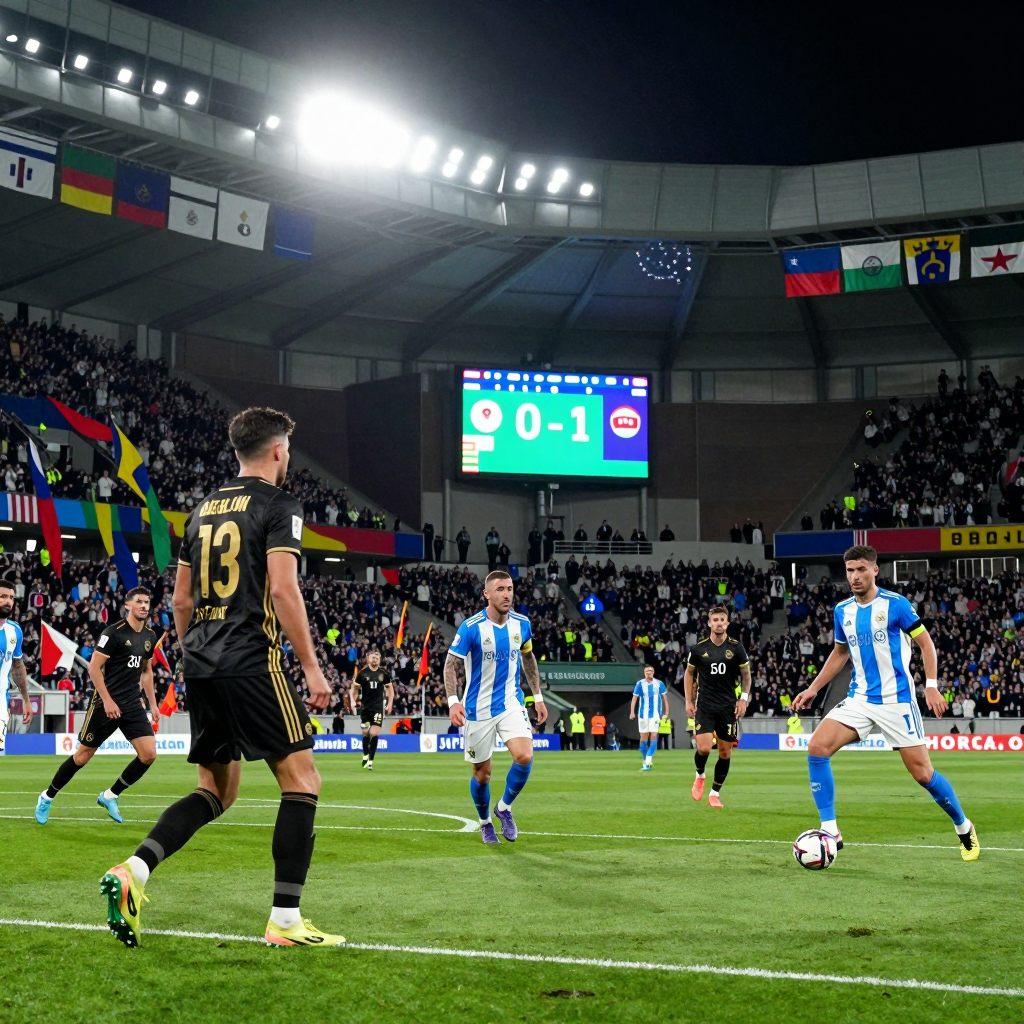
Just 12 minutes into the match, Querétaro’s Ali Ávila fired home the opening goal. The expected script for LAFC vs. Querétaro was overturned by a single finish, forcing the home side to rethink the game from a difficult 0–1 position.
The significance of the goal goes beyond simply changing the scoreboard. As the away underdog, Querétaro secured an early lead, allowing them to organize their defensive block and create an ideal game state focused on counterattacks and set pieces. LAFC, meanwhile, had to push more attacking players forward, taking on the added risk of leaving space behind their defense.
Above all, this moment symbolizes the unpredictability that defines the Leagues Cup. When MLS powerhouse LAFC meets Liga MX dark horse Querétaro, pre-match probabilities are merely a starting point—they never guarantee the result.
Now, the key question is how LAFC will respond. Can they raise the attacking tempo under pressure from the home crowd while preventing Querétaro’s rapid transitions? Or will Ávila’s 12th-minute strike become the beginning of yet another underdog story destined to define this tournament?
LAFC vs. Querétaro: The Clash Between an MLS Powerhouse and a Liga MX Underdog
This is more than a simple clash between two clubs. The LAFC vs. Querétaro 0-1 scoreline represents a head-on collision between the distinct football philosophies of MLS and Liga MX. The home side, LAFC, tried to control the match through intense pressing, rapid transitions, and physicality, while Querétaro responded with an organized defensive block and efficient attacking play.
LAFC were expected to have the upper hand, backed by their recent unbeaten run and home-field advantage. Pre-match predictions also rated the possibility of an LAFC defeat as low. However, Querétaro created an unexpected crack in the script when Ali Ávila opened the scoring in the 12th minute. With the visiting underdogs taking an early lead, the match shifted into a structure where LAFC pushed forward and Querétaro held firm while looking for opportunities.
LAFC’s Fast Transitions vs. Querétaro’s Organization
Regarded as one of the top teams in MLS, LAFC excel at raising the attacking tempo and applying pressure in the opponent’s half. With the support of their home crowd, their ability to keep opponents under constant pressure becomes even greater. However, after conceding first, they had to commit more players forward, which could also expose space behind the defense.
Querétaro, on the other hand, found themselves in a position to showcase the technical and pragmatic approach often associated with Liga MX. After scoring early, it is more effective for them to maintain their defensive shape rather than recklessly trade attacks, while seeking additional chances through counterattacks and set pieces. For an underdog holding an away lead against a stronger opponent, the most important factor is not flair but game management.
If LAFC seek to break the balance with attacking speed and relentless pressure, Querétaro must withstand that pressure through organization and composure.
The League Pride Narrative Created by the 0-1 Scoreline
The scoreline in LAFC vs. Querétaro is more than a one-goal difference. It captures the central narrative of the Leagues Cup: MLS’s expanding investment and aggressive growth facing off against Liga MX’s traditional technical quality and tactical maturity.
For LAFC, a comeback at home is essential. For Querétaro, this is an opportunity to prove that even a mid-table Liga MX team can unsettle an MLS powerhouse. Ultimately, this match is likely to be remembered not for which team controls more possession, but for which side can impose its style more calmly and decisively in the crucial moments.
LAFC vs. Querétaro: The Calculation Behind Querétaro’s One-Goal Lead
The 12th minute: Ali Ávila’s opening goal. Then came the 0–1 scoreline, which remained intact until midway through the second half. The LAFC vs. Querétaro match is difficult to view as nothing more than a fortunate early lead for the visiting team. After taking the lead, Querétaro may have designed a structure in which the more desperate LAFC became, the more space they would create.
How the Balance of Control Changed After the Opening Goal
For an underdog, an early opening goal means far more than just one goal. By going ahead first, Querétaro placed the burden of possession and attacking responsibility on LAFC. The home side now needed an equalizer, leaving them little choice but to push their defensive line higher and increase the intensity of their pressing in the final third.
But that may have been exactly the flow Querétaro wanted. Their approach was likely to compress the gaps between the lines, block the central channels, and surge forward quickly the moment they won the ball. Even if they conceded possession, a 0–1 lead remained manageable as long as they minimized clear-cut chances in dangerous areas.
A Defensive Block Is Not “Just Defense”
Querétaro’s expected key lies in their flexible shifts between a mid-block and a low block. When LAFC circulates the ball in midfield, Querétaro can maintain pressing distance without dropping the defensive line too deep. Conversely, once LAFC advances down the flanks or near the penalty area, quickly adding defensive numbers and erasing the space inside the box becomes an effective choice.
The purpose of this kind of defensive block is simple:
- Cut off passes into the center.
- Force LAFC’s attacks toward the flanks.
- Maintain defensive numbers for crosses and second-ball situations.
- Create a launching point for counterattacks immediately after winning possession.
In other words, Querétaro does not need to hold the ball for long. What matters is restricting LAFC’s attacks to predictable routes and turning the moment of recovery into an attacking opportunity of their own.
The More LAFC Pushes Forward, the More Counterattacking Space Opens Up
The more players LAFC sends forward in search of an equalizer, the more space opens up behind their defense. In particular, when the fullbacks advance into high positions and the midfielders join the attack, Querétaro gains opportunities to exploit the widened flanks and the spaces between the central areas during transitions.
That is why Querétaro’s management of the lead contains two goals at once. One is to hold out in front of their box for as long as possible. The other is to turn LAFC’s desperation into further scoring opportunities. A single accurate forward pass and a quick run in behind could swing the match dramatically toward 0–2.
Ultimately, the 0–1 scoreline in LAFC vs. Querétaro may not be the result of simply sitting back and surviving. Querétaro is using its defensive block to buy time while targeting the spaces that open up as LAFC pushes forward. The most realistic winning formula for an underdog is not to dominate possession. It is to defend when necessary—and strike quickly when the decisive moment arrives.
LAFC vs. Querétaro: They Have to Attack—but the More They Attack, the Greater the Risk
For LAFC, trailing 0–1, a draw is unlikely to be a satisfying result. Playing a tournament match at home, they need more than a simple response: they need one goal to turn the tie around, and then another.
The problem is that the current dynamic of LAFC vs. Querétaro is extremely difficult for LAFC. The moment they push their defensive line higher and commit more players forward to find an equalizer, Querétaro gains new opportunities to attack the space behind the LAFC defense. The more desperate LAFC become, the more predictable their attacks may grow—and the greater the danger of a single counterattack becomes.
LAFC have three main solutions available:
Changing the tempo of their wide attacks
When the center is blocked, LAFC need to create numerical advantages out wide and unsettle Querétaro’s defensive block with quick crosses and cutbacks. However, repeatedly sending in hopeful crosses could simply give the opposition more time to clear the ball.Using the substitution cards precisely
Bringing on energetic players to target Querétaro’s tiring flanks and midfield will be crucial. Rather than simply adding another forward, LAFC should introduce players capable of playing progressive passes and winning second balls to improve the quality of their attacks.Increasing the importance of set pieces
Against a defense sitting deep and compact, corners and free kicks may offer the most realistic route through. Especially as the match enters its final stages, a single moment of concentration at a set piece could change the entire flow of the game.
Querétaro, on the other hand, will move closer to their ideal scenario the more impatient LAFC become. They can erase space with a low defensive block and immediately play the ball forward as soon as they win possession. The higher LAFC’s fullbacks and midfielders push up, the more room Querétaro will have to launch their counterattacks.
Ultimately, the outcome will depend on whether LAFC can increase the intensity of their attack without losing their balance. They need to attack, but simply sending more players forward will not be enough. The second half of LAFC vs. Querétaro is shaping up to be a direct clash between LAFC’s desperation and Querétaro’s composure.
LAFC vs. Querétaro: The Essence of the Leagues Cup, Shaped by a Reality More Intense Than the Predictions
The numbers before the match favored LAFC. They were unbeaten in their last seven games, had home-field advantage, and even prediction models viewed the possibility of a defeat as relatively low. Judging solely by the objective conditions, it was only natural to expect LAFC to take control and manage the game comfortably.
But the actual field in LAFC vs. Querétaro is telling an entirely different story. Querétaro moved ahead with Ali Ávila’s 12th-minute opener and have since established a rhythm defined by the composure expected of an away side, protecting their lead with discipline. Rather than the gap in overall strength reflected by the data, a single decisive moment—and the concentration that followed—has had the greater impact.
This is precisely what makes the Leagues Cup so compelling. When a top MLS team meets an underdog from Liga MX, league standings and pre-match probabilities are merely starting points; they offer no guarantee of the result. The home side, under pressure to mount a comeback, adds more numbers to its attack, while the visiting team in front uses its defensive block and counterattacks to create its own moments. The match becomes more than a simple comparison of strength—it turns into a battle between the ability to withstand pressure and the ability to finish a single opportunity.
Querétaro’s lead, in particular, clearly demonstrates the value of “underdog football.” Without greater possession or a roster filled with bigger names, organized defending and efficient transitions can still shake a strong opponent. LAFC, meanwhile, must now find a way to turn the momentum back in front of its home fans. The more aggressively it commits players forward, the more space it will leave for counterattacks—and the more desperation sets in, the closer the game may move toward the scenario Querétaro wants.
When the final whistle blows, only one team will walk away with the points and the result. But the biggest story this match leaves behind may go far beyond victory or defeat. Querétaro’s goal, which disrupted the pre-match predictions, and LAFC’s desperate response to overturn it are proving why the Leagues Cup is an unpredictable tournament that rises above numbers and standings.
Comments
Post a Comment