 \n
\n
New York’s First Shock: Djokovic Vanishes from the US Open
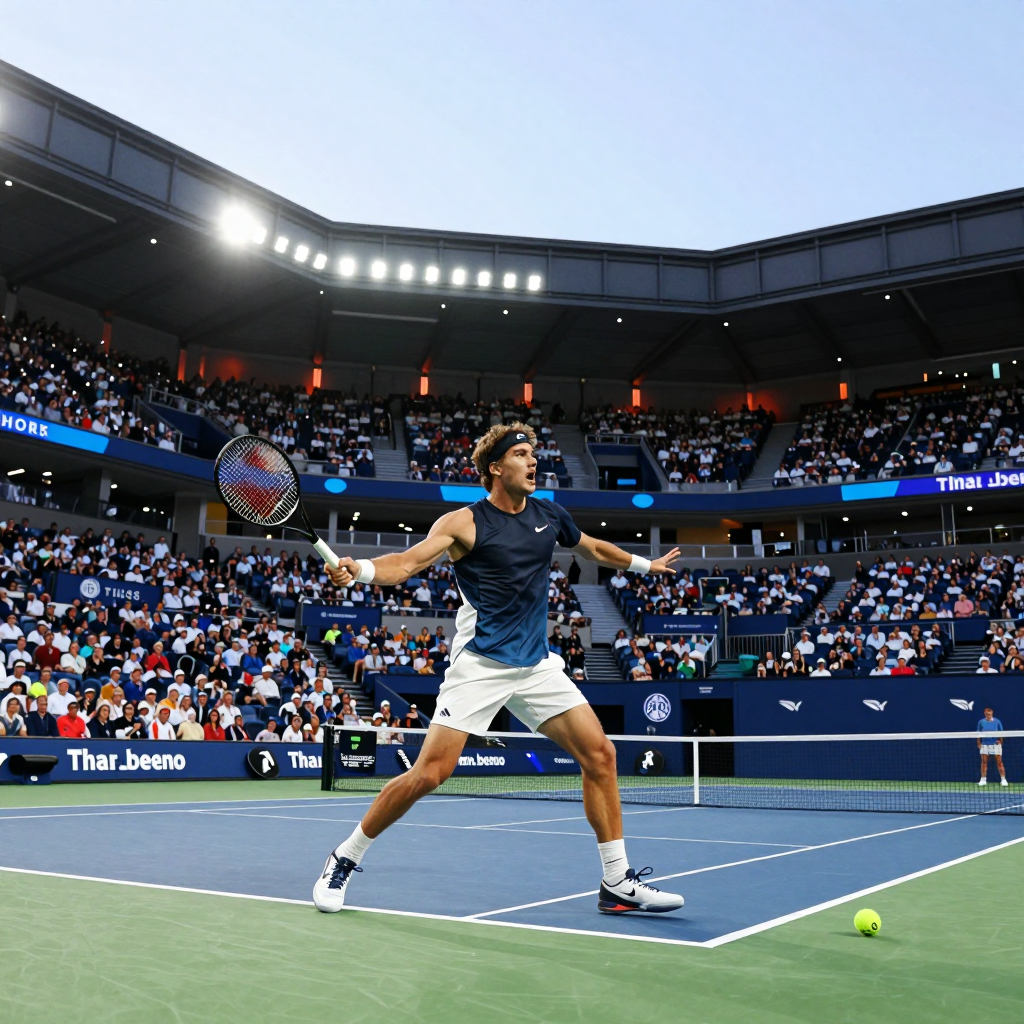
The 2026 US Open upended expectations across the tennis world from the moment it began. Twenty-four-time Grand Slam champion Novak Djokovic was eliminated in the first round. It marked the first time Djokovic had ever lost his opening match at the US Open.
Argentina’s Mariano Navone stunned Djokovic with a comeback victory, winning 7-6(5), 5-7, 4-6, 6-2, 6-1. After taking the first set and then dropping the next two, Navone wrested back control with long rallies and relentless defense. Djokovic, meanwhile, appeared increasingly unsettled in both rhythm and stamina as the match wore on.
The weight of this defeat extends far beyond a first-round upset. Djokovic arrived in New York chasing a record 25th major title, only to pack his bags at the very start of the tournament. The shock of the opening day—played under a new Sunday-start schedule—changed the entire atmosphere at Flushing Meadows.
Now, the question in the men’s singles draw has changed. It is no longer, “Who will stop Djokovic?” The central question is: Who will dominate the draw without Djokovic? Expectations and pressure have both intensified for defending champion Carlos Alcaraz, while the path to the title has opened wider for established contenders who made steady starts, such as Daniil Medvedev.
Navone’s victory left an impact far greater than that of a single match. It declared that this US Open would not be defined by star power alone. New York’s first shock is not the end—it is the beginning of an entirely new title race.
US Open Men’s Singles: A New Path to the Title Emerges in Djokovic’s Absence
Novak Djokovic’s first-round exit is more than just the elimination of a single title contender. As the 24-time Grand Slam champion, who was chasing a record 25th major title, packed his bags early in New York, the entire balance of the US Open men’s singles draw was thrown into question.
Mariano Navone consistently pushed Djokovic with long rallies and clever changes of pace. The result, decided after five grueling sets, does not necessarily mean the veteran’s era has come to a definitive end. Rather, it feels like the moment when more players began to see the title as a realistic target.
An Opportunity—and a Burden—for Alcaraz
Defending champion Carlos Alcaraz can be viewed as the biggest beneficiary of Djokovic’s early exit. But with the draw suddenly wide open, the expectations and pressure surrounding his title defense have grown as well.
The disappearance of such a formidable obstacle does not mean the road has become easy. If anything, it has created an environment in which both the top seeds and the challengers can pursue their opportunities more aggressively. Alcaraz is no longer merely a “title contender”—he has become the clearest benchmark everyone else must overcome.
What Medvedev’s “No-Drama” Start Is Telling Us
Daniil Medvedev made a quiet but impressive start, defeating Hugo Gaston 6-4, 6-2, 6-4. Unlike some of the unsettled moments he showed last year, Medvedev maintained his hard-court game from start to finish in the opening round without wasting energy on emotional battles.
Medvedev’s strength lies not in flashiness, but in repeatability. His deep returns, relentless baseline defense, and court coverage that disrupts his opponent’s rhythm remain highly effective on New York’s hard courts. With Djokovic gone from the draw, his composure carries even greater value.
Navone and the Confidence of a New Generation
Navone’s victory was both an upset and a message. Rising players are no longer stepping onto the court against legends simply to “gain experience.” They are entering with an actual victory as the goal.
It is particularly significant that he never abandoned his game plan throughout the five sets. To defeat an opponent like Djokovic, a player needs more than one or two powerful shots; he needs the endurance to maintain his tactics under pressure. Navone met that standard, and as a result, the competitive landscape of men’s singles has widened even further.
In the end, the question at this year’s US Open is clear. Will Alcaraz hold on to the throne Djokovic has left vacant? Will Medvedev reclaim his place as New York’s dominant force? Or will a new name, like Navone, continue to shake up the tournament all the way to the finish? The draw, just after the opening of the tournament, is already moving in a direction far more intriguing than anyone predicted.
America’s Hope and a Crossing of Generations: Pegula, Kenin, and New Faces Energize the us open
As Novak Djokovic’s shocking early exit changed the atmosphere across the tournament, American players began writing their own home-court narratives at Flushing Meadows in different ways. Some have done so through steady victories, others on symbolic stages that connect generations, while still others are proving their potential on courts where the outcome has yet to be decided.
Pegula’s Composure: The Most Realistic Answer American Fans Are Hoping For
Jessica Pegula advanced cleanly to the second round with a 6–3, 6–2 victory over Romania’s Elena-Gabriela Ruse. She looked somewhat tense early on, but once she took control of the match, she used her trademark solid baseline game to shut down her opponent’s comeback attempts.
Pegula’s strength lies not in flashy one-shot winners, but in making the right choices on the biggest points. Rather than going for reckless winners, she pressures her opponents with deep, reliable strokes and raises the intensity of her attack only when the opportunity presents itself. Over the course of a long Grand Slam run, that consistency is a major asset.
Just as Djokovic’s exit has added uncertainty to the men’s singles draw, the women’s singles event is wide open as well. In that landscape, Pegula is the player home fans can trust and follow with confidence. At this us open, the question is whether she can become more than simply a “top-ranked player” and emerge as a genuine contender for the title.
Venus Williams and Sofia Kenin: More Than Just One Match
The all-American clash between Venus Williams and Sofia Kenin at Arthur Ashe Stadium was a stage that could not be explained by the result alone. Venus remains synonymous with New York’s night sessions, while Kenin is a former Grand Slam champion who is rebuilding her game and finding her way back.
The match placed the history of American women’s tennis across generations on a single court. Venus represented the presence and legacy accumulated over decades. Kenin, by contrast, is living out a story still in progress—one about refusing to remain in the past and working to reestablish herself as a competitive player.
At Flushing Meadows, the crowd has always responded not only to records, but also to stories. That is why this matchup carried significance far beyond the first round. On one side stood the memory of American tennis; on the other, the determination to rise again.
The First Week for American Men Is Far From Over
The opening week is an important test for the American men as well. Tommy Paul took on Coleman Wong in his first match at Louis Armstrong Stadium, while J.J. Wolf also drew attention with a matchup against Alexander Bublik. However, rain and schedule adjustments left some matches suspended or still in progress.
Such variables may seem like minor inconveniences early in the tournament, but they can alter rest days, preparation routines, and even a player’s condition for the next match. While the expectations of home fans are concentrated on top-ranked players such as Pegula and Coco Gauff, the performances of men fighting to expand their standing one match at a time can also shape the mood surrounding American tennis.
Djokovic’s early departure has shaken the tournament’s established order. Amid that opening and the excitement it has created, American players are making their presence felt in their own ways. Pegula’s composure, the generational dialogue created by Venus and Kenin, and the challenges embraced by the new faces are turning this us open into more than just a major tournament—they are making it a stage that reflects the present of American tennis.
An Open Women’s Singles Field—and the Business Behind the US Open’s Record-Breaking Stage
The women’s singles throne is not reserved for anyone. Aryna Sabalenka, seeking a second consecutive title, is the clearest benchmark, but Elena Rybakina, Jessica Pegula, Coco Gauff, and even Marta Kostyuk, who made a strong impression on the opening day, are all part of the picture. The women’s singles draw at the 2026 US Open looks less like a stage dominated by one overwhelming favorite and more like a tightly packed field of players with distinctly different strengths.
For Sabalenka, a historic challenge is on the line: winning three consecutive titles. But Pegula’s composed hard-court game, Gauff’s explosive power in major moments, and Rybakina’s combination of force and precision all give them the ability to shake the throne. Players such as Kostyuk and Leylah Fernandez, who have found their rhythm early, could also emerge as serious variables as the draw unfolds.
The key question in this women’s singles tournament is not “Who is the strongest?” but “Who can remain the most consistent for two weeks?”
Behind that stage, another record is being written. This year’s US Open total prize money stands at $108 million, the largest purse in tennis history. That does not simply mean the winner’s trophy has become more valuable. It is a figure that shows how the Grand Slam has evolved into a vast sports business, combining player compensation, broadcasting rights, sponsorships, and on-site consumer spending.
The expanded schedule, with the tournament opening on Sunday, follows the same trend. In response to explosive ticket demand, the event is offering more sessions, dividing the day-and-night viewing experience into more distinct packages, and transforming Flushing Meadows into an entertainment destination that goes beyond the stadium itself. Fans may come to watch tennis, but they also consume food, merchandise, New York nightlife, and primetime events along the way.
ESPN’s primetime programming and simultaneous English- and Spanish-language broadcasts are important as well. Even with the baseball regular season in full swing, the US Open naturally finds a place in American sports fans’ evening schedules. As global partners such as IBM, broadcast platforms, and New York’s appeal as a tourist destination come together, the tournament becomes something far bigger than a simple tennis event.
Ultimately, the “wide-open” competition on the court and the record-setting investment off it are inseparable. Bigger prize money gives players greater motivation, while more stars and compelling storylines drive ratings and ticket demand. The 2026 US Open is not only a tournament to watch and see who lifts the women’s singles trophy; it is also the clearest showcase of how modern sport becomes one vast spectacle—and one vast industry.
The Real Title Contenders to Emerge After the Rain Stops: The Next Chapter of the US Open
The 2026 US Open has only just opened its first chapter. Rain shortly after the start disrupted the rhythm on the outside courts, but play continued at the covered Arthur Ashe Stadium and Louis Armstrong Stadium. While some players quickly found their match rhythm, others were forced to adjust to rescheduled matches and altered routines.
This imbalance may amount to more than a simple logistical variable. Players who advanced through the first round in straight sets secured valuable energy and preparation time, while those returning to complete suspended matches must reset their rhythm from the very beginning of the tournament. That difference could become even more apparent in the second and third rounds.
Above all, Novak Djokovic’s shocking early exit has erased the benchmark in the men’s singles draw. For defending champion Carlos Alcaraz, both expectations and pressure have intensified, while Daniil Medvedev’s composed first-round victory has opened the door to a greater opportunity. Mariano Navone’s victory also signaled that this tournament will not be explained by reputation alone.
The women’s singles draw is just as difficult to assign to a single leading figure. Three-time defending champion Aryna Sabalenka faces competition from Elena Rybakina, Jessica Pegula, and Coco Gauff, each bringing different strengths. Pegula’s consistency, Marta Kostyuk’s sharp start, and the presence of unseeded players such as Leylah Fernandez have made the draw even more unpredictable.
Ultimately, the key in the days ahead will not be a dazzling first-round victory, but resilience and consistency. Once the rain-delayed courts reopen and all first-round results are settled, the true title contenders of the 2026 US Open will finally emerge.
Comments
Post a Comment