 \n
Perez Hilton Live Stream: A Crisis That Unfolded Without Pause for 30 Minutes
A TikTok live stream watched by countless people suddenly transformed from content into a real-life crisis scene. According to reports, Perez Hilton displayed serious self-harming behavior while broadcasting live from his home in Miami. Viewers who witnessed it immediately began asking for help in the comment section.
Messages urging him to “stop” were quickly followed by pleas to “call 911.” In that moment, viewers outside the screen were no longer mere spectators—they became the first witnesses attempting to connect him with emergency assistance.
The live stream reportedly continued for about 30 minutes before being deleted. During that time, portions of the video spread to other platforms, causing the situation to escalate even more rapidly. Multiple reports were also said to have been made to local authorities. The Miami-Dade County authorities later responded to the home, and Perez Hilton was reportedly taken to safety before being transported to a hospital.
The most significant aspect of this incident is its real-time nature. With a recorded video, reporting and intervention may take time. But a live stream allows viewers to recognize a crisis immediately and call for help. At the same time, it means that many people can witness someone’s personal crisis in an uncontrolled way, increasing the risk that the footage will be redistributed.
For that reason, this incident is about more than a celebrity news story. It leaves us with difficult questions: What should viewers do when someone’s crisis is broadcast live? How quickly can platforms intervene? And once emergency help has been requested, how far should the spread of the footage be stopped?
Perez Hilton Incident: An Emergency Response That Began Off-Screen
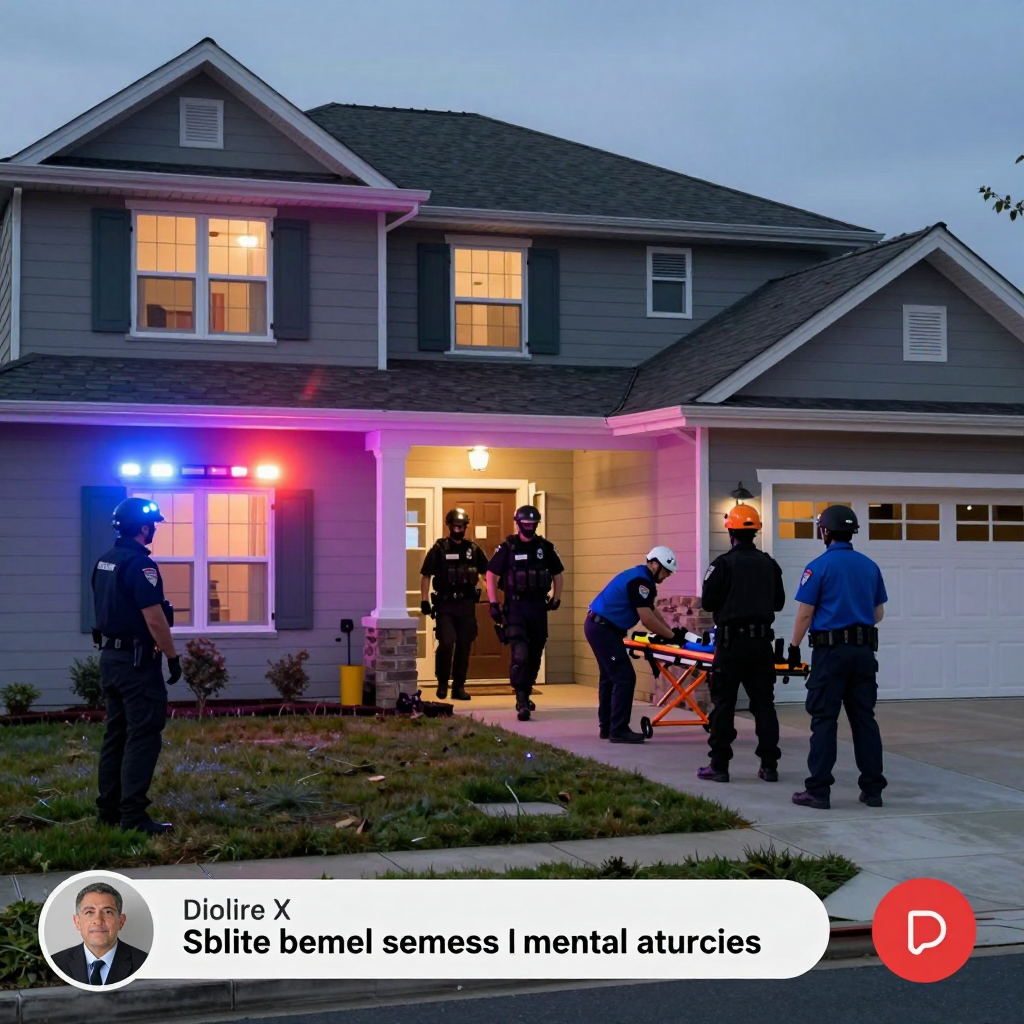
The crisis did not end when the TikTok livestream did. After viewers continued reporting concerns, Miami-Dade County authorities reportedly responded to Perez Hilton’s home, where not only police officers but also a SWAT team and emergency medical personnel were reportedly deployed.
According to early reports, authorities determined that he was alone inside the house and responded with safety as their top priority. Some media outlets and social media posts even raised the possibility of a brief standoff or a barricade situation, but the specific circumstances at the scene have not been officially disclosed in detail.
The sheriff’s office later stated that Perez Hilton had been safely taken into custody and transported to a nearby hospital for medical treatment. Reports also indicated that his children were not at the residence at the time and were in a safe location.
However, his exact current condition, whether he underwent a mental health evaluation, and what conversations or measures took place at the scene remain unknown. As unverified videos and speculation continue to spread rapidly, the priority now should be following official statements and reliable reporting rather than sensationally resharing unconfirmed claims.
The Moment One Person’s Crisis Becomes Content: Questions Left by the Perez Hilton Incident
Perez Hilton’s livestream did not stop when it ended. Some scenes and descriptions were quickly reposted across X, Instagram, YouTube, and other platforms, prompting countless users to share their shock and concern. Yet rapid circulation does not necessarily mean accurate information—or meaningful help.
Short clips from a crisis can easily lose their context. Unverified claims about someone’s health, the police response, or family-related information may spread alongside speculation, creating an additional burden for the person involved and those around them. In particular, repeatedly reposting footage of self-harm or describing it in excessive detail risks becoming sensationalized consumption rather than reporting in the public interest.
Someone’s most vulnerable moment may not be “viral content,” but a crisis requiring immediate protection and support.
The impact on viewers can also be significant. People who witness a crisis unfold in real time may experience secondary trauma, including anxiety, fear, and helplessness. When videos are repeatedly surfaced by algorithms, that burden can extend even to users who did not watch the original footage. That is why we need to pause before sharing and choose to pass along verified reporting or information about where help is available instead of the video itself.
The standards for reporting must also be clear:
- Share necessary facts, while minimizing sensational images and graphic details
- Do not repeat unverified claims as though they were established facts
- Focus on essential information about rescue, treatment, and ensuring safety, rather than the person’s condition itself
- Instead of sharing video links or clips, emphasize that contacting emergency services and seeking professional support are crucial during a crisis
The Perez Hilton incident is not simply the story of one celebrity. It also raises broader questions about how quickly we consume other people’s suffering in digital spaces, and what responsibilities platforms and users have when someone is in crisis. The purpose of reporting and sharing should not be to intensify the shock. The first thing we must protect is not attention, but human safety.
The Irony Behind the Name “Perez Hilton”: Where Gossip Culture Meets Crisis
The fact that Perez Hilton, who for years has turned other people’s private lives, scandals, and controversies into online content, has now revealed his own crisis in a space watched by the public leaves us with an uncomfortable question. What has happened to him goes beyond a personal incident, reflecting the structure of the attention economy surrounding celebrities and creators.
The gossip industry has grown by rapidly transforming people’s mistakes, conflicts, and even suffering into buzz and clicks. But a crisis is not “content” to be consumed. Particularly on real-time platforms, an individual’s pain can be exposed to countless viewers in an instant, then recut into clips and spread even further. In this process, the person’s safety and recovery can easily be pushed aside by the speed of public attention.
This incident also prompts us to reconsider the burden of constant exposure placed on creators. People who work online may feel pressured to respond continually, reveal their emotions and daily lives, and keep the audience engaged. Public attention serves as the foundation of their influence, but it can also become an environment that exhausts them.
What is needed, therefore, is not the redistribution of sensational videos and speculation. What matters is an attitude that refuses to consume one person’s crisis as spectacle, along with a serious discussion about what safeguards platforms and media should establish in situations involving mental health crises. The case of Perez Hilton once again raises the question of where the line should be drawn between gossip and the public interest, and between attention and care.
What the Perez Hilton Incident Reveals About the Role of Live Safety Measures
The core of the situation surrounding Perez Hilton is not simply celebrity news. It raises a much larger question: What should platforms, viewers, and the media do when someone’s serious crisis is exposed through a live video?
Live features make instant communication possible, but in a crisis, that speed can actually magnify the danger. It can take time for a broadcast to be stopped after a report is filed, and when a video is copied and redistributed across other platforms, it can cause additional harm to both the person involved and the viewers who witness it.
Platforms Must Be Responsible Beyond Simply Receiving Reports
Safety measures on platforms such as TikTok should not stop at merely removing problematic videos. In particular, when a livestream contains signs of self-harm or suicide risk, the following responses need to work more quickly and clearly:
- Systems that immediately limit livestream exposure when warning signs are detected
- On-screen guidance that makes it easy to contact emergency services, along with information on local support resources
- Procedures for specialized safety teams to conduct prompt reviews when repeated reports are received
- Connections to counseling and support services for creators experiencing a crisis
What matters most is putting human safety ahead of algorithms designed to increase views or watch time. Live safety measures exist not to control content, but to create an opportunity to intervene before a moment becomes irreversible.
Viewers Also Have a Responsibility Not to Share
The most responsible action a user can take after witnessing a crisis is not to save or spread the video. When possible, they should report it to the platform, and if there is an immediate risk, contact local emergency services first.
Even after the incident, people need to refrain from repeatedly sharing sensational clips, screenshots, or graphic details. Such redistribution can easily become a way of consuming curiosity and shock rather than conveying information in the public interest, causing secondary harm to the individual, their family, and those who witnessed the event.
We Must See It as a Crisis, Not “Content”
The Perez Hilton incident shows how quickly an individual’s suffering can be turned into content online. But a mental health crisis is not something to be consumed through comments, memes, or speculative analysis. Rather than asserting unverified diagnoses or causes as fact, people should choose language that prioritizes recovery and safety.
Ultimately, reducing the risk of the next crisis will require faster platform responses, stronger support for creators, and a more restrained culture of sharing among users. Refusing to leave a crisis unfolding beyond the screen as mere spectacle may be the most basic safety measure of the live-streaming era.
Comments
Post a Comment