Remembering Kim Sang-soon, the Legendary Detective Kim from *Chief Detective*, on the 11th Anniversary of His Passing
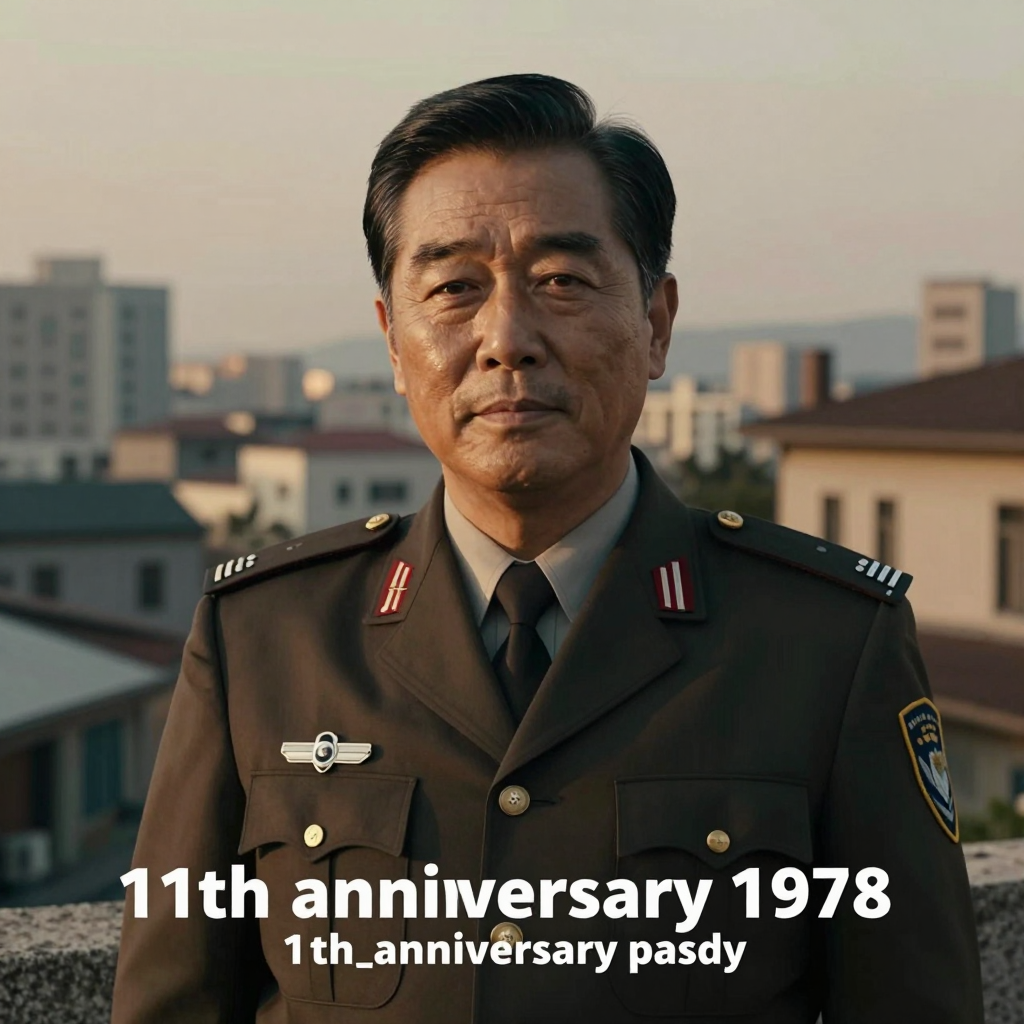 \n
\n
Kim Sang-soon, the Name That Guarded a Generation of Korean Television
Whenever his deep, weighty voice echoed from the television screen, viewers immediately thought of one man: actor Kim Sang-soon, beloved for his role as Detective Kim in MBC’s long-running crime drama Chief Inspector.
Kim Sang-soon was an actor who won audiences over not through flashy exaggeration, but with restrained expressions and a firm, commanding delivery. The Detective Kim he portrayed was a principled investigator who never lost his humanity. Alongside Choi Bool-am, Nam Sung-hoon, and Jo Kyung-hwan, he formed one of the drama’s four iconic detectives, whose chemistry inspired a deep sense of trust and familiarity among viewers of the time.
In particular, Chief Inspector was far more than simple entertainment. With stories reminiscent of real cases, a realistic atmosphere, and plots that captured different facets of society, it established the standard for Korean-style crime dramas. At its center, Kim Sang-soon completed the image of the “reliable detective” in Korean television dramas through performances that were calm yet unwavering.
His presence extended far beyond crime dramas. From historical series and political dramas to family shows, he delivered weighty performances across a wide range of productions, guarding Korean television for many years. He was the kind of actor whose mere appearance could change the gravity of an entire scene—and that is how viewers remember Kim Sang-soon.
There is a clear reason his name is still being mentioned today. Kim Sang-soon was more than an actor who left behind one signature role; he became a symbol of the faces and voices of an era when Korean television dramas were coming into their own.
Kim Sang-soon: A Long Journey That Began on the Stage
Kim Sang-soon’s acting career did not suddenly begin on television. Long before he became beloved as the dependable Detective Kim in Chief Inspector, he spent many years honing his craft on the stage and behind the microphone.
Kim Sang-soon began acting in theater in the mid-1950s. Although sources differ slightly, citing either 1954 or 1955 as the year of his debut, one thing is clear: he immersed himself in stage acting from a young age. Theater, performed at close range with the audience, demands clear delivery, emotional intensity, and complete concentration on the character. His restrained expressions and unwavering performances were closely tied to the experience he gained during this period.
In 1961, he also began working as a voice actor. Having to convey characters and situations using only his voice, without the aid of images, laid the foundation for the calm, resonant delivery that became uniquely his own. His low, steady voice, unhurried manner of speaking, and ability to give weight to every word later brought profound credibility to the detectives, patriarchs, and authoritative figures he portrayed.
His television career truly took off in 1963, when he passed the third KBS open talent audition. After learning to act through his body on the theater stage and mastering the power of his voice through voice acting, he entered the world of television drama. Rather than attracting attention through appearance or star appeal alone, he followed the path of a traditional actor who built his foundation carefully, one step at a time.
After moving to MBC in 1969, Kim Sang-soon expanded his presence by taking on an even wider range of roles. The depth of theater, the vocal training of a voice actor, and the restrained expression of a television performer came together to create his distinctive, dignified style of acting. In the end, his long career led to the trusted face and voice that helped sustain the living rooms of an entire era.
Kim Sang-soon Became the Face of Korean Crime Drama as Detective Kim in Chief Inspector
A fierce sense of justice embodied in the belief that “the criminal must be caught,” unwavering trust in his colleagues, and a calmness that never faltered in the face of a case. The character of Detective Kim, portrayed by actor Kim Sang-soon in MBC’s long-running crime drama Chief Inspector, remains the archetype of the detective in Korean television dramas.
Airing from 1971 to 1989, Chief Inspector was far more than simple entertainment. Its stories, inspired by real cases, combined realistic direction with episodes that reflected the social realities of the time, drawing viewers deeply into each investigation. Rather than relying on flashy action, the series followed the context of each case and the painstaking process of solving it—an approach that brings today’s gritty, realistic crime dramas to mind.
At the heart of the series was the natural chemistry among its four detectives. Alongside Choi Bool-am, Nam Sung-hoon, and Jo Kyung-hwan, Kim Sang-soon completed the character of Detective Kim—stern yet deeply human—as one of the team’s pillars. Instead of stepping into the spotlight or openly displaying emotion, he built the character’s credibility through a low, steady voice and tightly controlled expressions.
Kim Sang-soon’s performance, in particular, left viewers with the impression that “a detective is someone who protects the scene before he is a hero.” He was resolute when pursuing criminals, yet never lost his warmth when facing the stories of victims or the hardships of his colleagues. This realistic balance transformed Detective Kim from a mere supporting character into an everyday kind of detective who would remain etched in viewers’ memories.
There is a clear reason Chief Inspector is still referred to as a textbook of Korean crime drama today. Its foundation was built on a serious attitude toward each case, a thoughtful perspective on society, and the unbreakable teamwork among colleagues. Within that framework, Kim Sang-soon’s understated yet dignified performance created the face of “Detective Kim”—a face that has not faded, even after all these years.
Kim Sang-soon: A Wide-Ranging Acting World Beyond the Role of a Detective
If you remember Kim Sang-soon only as Detective Kim from Chief Inspector, you have seen only half of his true acting world. His image as a principled and trustworthy detective was certainly his signature, but he was also an actor who captured everything from the turbulent currents of history to the everyday lives of ordinary families.
A Serious Dramatic Actor Who Carried the Weight of an Era
Kim Sang-soon made a particularly weighty impression in political dramas and historical series. In works dealing with modern Korean history, including The First Republic, The Second Republic, and The Fourth Republic, he brought to the screen not only his characters’ emotions but also the tension and gravity of the eras they inhabited.
He also delivered steady performances in historical dramas such as Five Hundred Years of the Joseon Dynasty: The Deep-Rooted Tree and The Dawn of the Empire. Rather than relying on exaggerated expression, he convincingly portrayed his characters’ authority and traces of life through restrained gazes and a firm, resonant voice.
A Warm Face in Family Dramas
His acting spectrum was not limited to the stages of history and politics. In family dramas and human-interest series such as Love Has Blossomed on the Jujube Tree, A House with a Deep Courtyard, and A Peculiar Family, A Peculiar School, he revealed a more approachable and deeply human side.
In stories about family conflict and reconciliation, the distance between generations, and the lives of ordinary neighbors, Kim Sang-soon played roles that gave the productions a dependable center. Rather than taking the spotlight for himself, his ability to bring out the strengths of his fellow actors and the scene as a whole reflected the seasoned skill he had developed through years of experience on stage and as a voice actor.
An Active Actor Who Crossed Every Genre
It is also worth noting that his name appeared in dramas from many different eras, including Eyes of Dawn, Lovers in Paris, Famous Princesses, and The Sons of Sol Pharmacy House. Moving freely between historical dramas, political series, melodramas, and family dramas, Kim Sang-soon proved that he was never confined to a single genre.
The fact that he continued working through his final known production, MBC’s Road No. 1 in 2010, is equally impressive. The acting skills he accumulated over the decades shone in different ways in each production, and he remained in his place as an active actor until the very end.
Looking back at Kim Sang-soon’s filmography, Detective Kim was only his starting point and signature role. He was an actor who portrayed figures capable of bearing the weight of history, adults devoted to protecting their families, and supporting characters who captured the texture of life. Through his face and voice, he helped record the many eras through which Korean television drama has passed.
Kim Sang-soon Continues to Be Reexamined on the 11th Anniversary of His Passing
Even after actor Kim Sang-soon passed away on August 25, 2015, his name is remembered anew each year around the anniversary of his death. This is about more than simply commemorating a veteran actor. His body of work and performances captured both the atmosphere of Korean television dramas as they grew during the 1970s and ’80s and the gravitas of the actors who represented an entire era.
In particular, Detective Kim from MBC’s Chief Investigator remains a vivid memory for many viewers. Rather than relying on flashy expressions, Kim Sang-soon built trust through restrained eyes and a firm voice. His performance brought to life the realism and human warmth that defined detective dramas of the time. That is why his name remains inseparable from the generation that grew up watching Chief Investigator.
Recently, audiences have continued to seek out older dramas through reruns, OTT platforms, and online videos. As so-called “old-school acting” receives fresh recognition, Kim Sang-soon’s performances feel like a benchmark of classical acting—unexaggerated, yet capable of conveying profound emotion. His broad presence across period dramas, political dramas, and family series also becomes even more striking with each rewatch.
Revisiting Kim Sang-soon’s work, then, is about more than nostalgia. It offers a chance to trace the roots of Korean drama and reflect on how it found its place alongside the public through the faces and voices of certain actors. The renewed attention surrounding his 11th anniversary is a reminder that great acting and great works can live on in people’s memories, long after the passage of time.
Comments
Post a Comment