 \n
\n
LAFC vs. Portland Timbers: The Night a 61.6% Win Probability Collapsed
Opta calculated the home side LAFC’s win probability at 61.6%. Sitting third in the Western Conference with 34 points, LAFC were still firmly in the race near the top, while the Portland Timbers remained in ninth. Judging by the numbers alone, the night at BMO Stadium seemed far more likely to end with an LAFC victory.
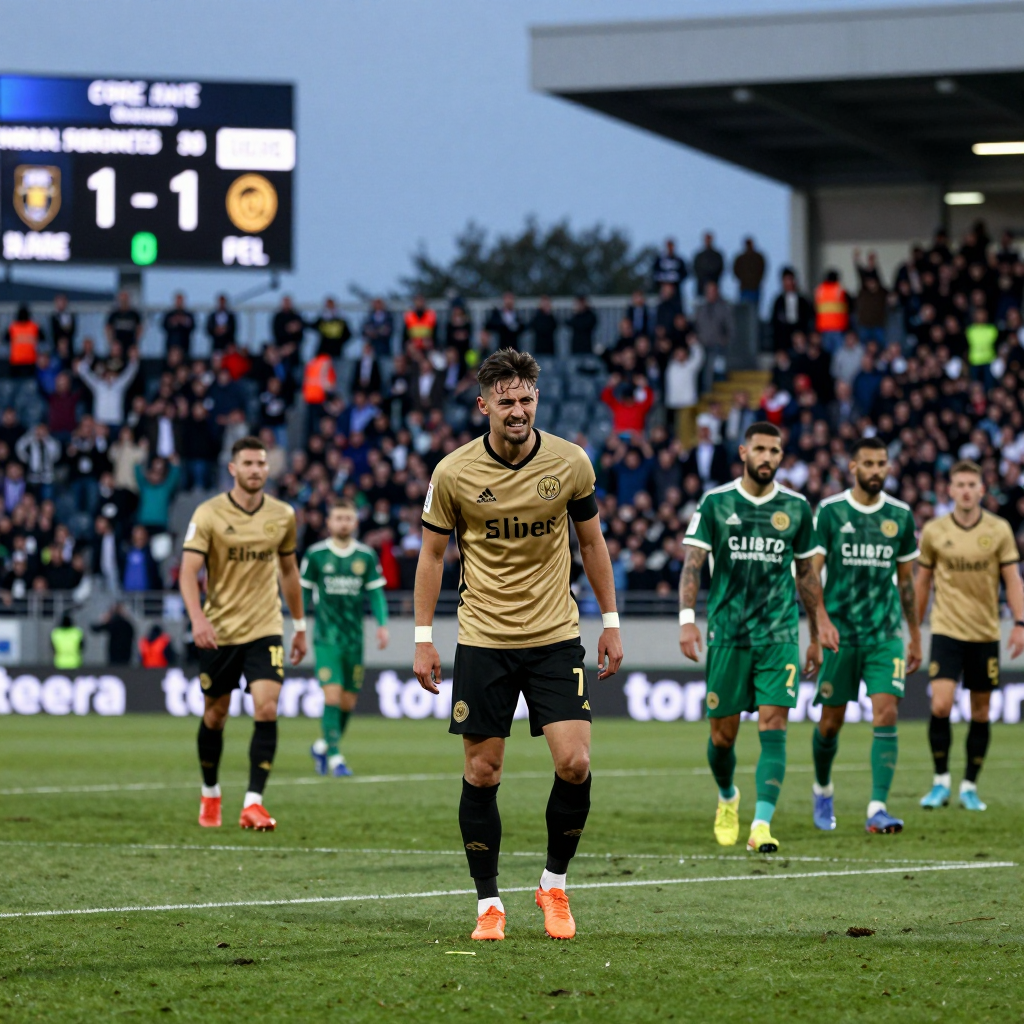
But the actual outcome of LAFC vs. Portland Timbers was anything but predictable. LAFC conceded the opening goal to David Da Costa in the fourth minute, then only managed to restore parity through Denis Bouanga’s equalizer in the 79th minute. The final score was 1–1. In a match they had to win at home, LAFC settled for just one point instead of three.
The draw was frustrating for more than simply missing the prediction. Before kickoff, LAFC had been given a strong home advantage and were also counting on Son Heung-min to reignite his scoring form. However, conceding so early changed the entire premise of the match.
After taking the lead, Portland organized its defensive line and looked for space on the counterattack. LAFC, meanwhile, tried to control possession and dictate the attacking flow, but failed to show enough sharpness with the final pass and in front of goal. Bouanga’s equalizer prevented defeat, but there was not enough time left to complete a home victory.
Ultimately, the match demonstrated that an advantage in the data does not guarantee the result. LAFC were one of the Western Conference’s top teams, and the probabilities were on their side, but a lack of early concentration and diminished attacking efficiency kept them from breaking through Portland’s resolute resistance. The 61.6% figure described the pre-match expectation—but it could not guarantee three points at BMO Stadium.
LAFC vs. Portland Timbers: The Script Flipped Just Four Minutes Into the Match
Before the home crowd could even grasp the pace and flow of the game, the atmosphere inside BMO Stadium suddenly went flat. Just four minutes after kickoff, Portland Timbers’ David Da Costa put the finishing touch on a rapid transition attack and found the back of LAFC’s net. For the home side, who had been expected to dominate, it was the worst possible start.
Portland did not hesitate after winning the ball. They attacked the space behind LAFC’s defense before it could get organized, using short, quick passes to erase the home side’s reaction time. Da Costa’s opener did more than make it 0–1—it was a decisive blow that reshaped the entire tactical dynamic of the LAFC vs. Portland Timbers match.
After taking the lead, Portland had no reason to meet LAFC high up the pitch. They kept their defensive line compact, invited LAFC forward, and adopted a survival strategy built around attacking the space on the counter whenever they won the ball back. From the visitors’ perspective, it was the ideal scenario: endure the remaining 75-plus minutes and strike sharply only when the opportunity arose.
LAFC, meanwhile, became the team chasing the game far earlier than expected. Their plan to control proceedings at home was shaken by the early concession, and the more numbers they committed to attack, the more vulnerable they became to Portland’s counterattacks. In the end, that single moment in the fourth minute became LAFC’s biggest problem to solve throughout the match—right up until Denis Bouanga’s equalizer in the 79th minute.
LAFC vs. Portland Timbers: Was Son Heung-min’s Silence an Individual Problem?
The silence that began after scoring in four consecutive matches has now stretched to six. Son Heung-min returned to the starting lineup as LAFC’s center forward in the LAFC vs. Portland Timbers match, but ultimately finished without a goal. LAFC, meanwhile, could only salvage a 1-1 draw through Denis Bouanga’s equalizer in the 79th minute.
That makes the question simple: Is Son Heung-min’s goal drought really a matter of individual finishing? Or is LAFC failing to make full use of his strengths?
Six Straight Matches Without a Goal After His Scoring Streak
Son Heung-min’s recent form has been sharply divided. He once made a strong impact by scoring in four consecutive matches, but then went five straight games without a goal. After failing to score against Portland, his silence extended to six matches.
Of course, a scoring drought is nothing unfamiliar for a forward. Especially when opponents sit deep and focus on marking the striker, the number of shooting opportunities can naturally decrease. The issue in this match, however, is not simply that Son missed chances—it is how often he was given the positions and situations from which goals are most likely to be created.
The Supply Process Was More Disappointing Than the Finishing
Portland took the lead just four minutes into the match and then focused on protecting it. They narrowed the gaps between their defenders and prevented LAFC from advancing easily through the center. In such a situation, Son needed more than just the ability to hold up the ball with his back to goal. He needed quick runs into the space behind the defense—and passes precise enough to find those runs.
However, LAFC’s attack failed to connect smoothly until the final stages of the second half. The ball moved forward, but the timing and accuracy of the final passes were lacking, and Son rarely received the ball in dangerous shooting positions.
Several factors stood out in particular:
- Forward passes timed to meet Son’s runs were limited.
- The central attack slowed down against a deep defensive block.
- Too many attacking sequences relied on Bouanga’s individual dribbling and finishing.
- With Son fixed at the very front, he had fewer opportunities to display the movement he can produce from the left half-space.
In other words, the fact that Son failed to score is clear, but it is difficult to immediately define the situation as nothing more than an individual slump.
What Son Heung-min Needs Is More “Good Service”
Son’s greatest strength is his ability to turn even limited opportunities into goals. That ability, however, is most dangerous when supported by space to attack and quick, accurate passing. If he is repeatedly forced to receive the ball between defenders or hold it up with his back to goal, his explosiveness will naturally diminish.
The LAFC vs. Portland Timbers match highlighted this problem clearly. Despite controlling possession for long stretches, LAFC needed 79 minutes to recover from the early concession. Bouanga’s equalizer rescued the team from defeat, but it did not create an attacking structure that brought Son fully to life.
Son’s six-match scoreless run is certainly a concerning statistic. But the answer may lie less in the simple instruction to “take more shots” and more in adjusting the way LAFC connects its attacks so that he can move toward the areas where he is most dangerous. If LAFC can make better and more frequent use of Son’s runs, his current silence could end much sooner than expected.
LAFC vs. Portland Timbers: The Lingering Disappointment After a 79th-Minute Equalizer
The player who rescued LAFC from the brink of defeat was not Son Heung-min, but Denis Bouanga. Trailing the Portland Timbers 0-1, LAFC finally restored parity in the 79th minute of the second half with Bouanga’s equalizer. It was a valuable goal in that it helped the home side escape a potential defeat, but considering the expectations heading into the match, the result was difficult to accept.
After David da Costa opened the scoring in the fourth minute, Portland dropped deep and looked for opportunities to counterattack. LAFC controlled possession and dictated the flow of the attack, but struggled to effectively break down Portland’s compact defense. As time went on, the home side’s pressure intensified, yet the decisive final pass and finishing touch never came.
Bouanga’s goal gave LAFC a much-needed lifeline. However, there was no additional goal after the equalizer. Bouanga had a late chance to complete the comeback but failed to capitalize, and ultimately, the LAFC vs. Portland Timbers match ended in a 1-1 draw.
This result can be viewed as more than just a draw that cost LAFC two points. Opta had given the home side a 61.6% chance of winning before kickoff, highlighting how clearly LAFC were favored. For a team that needs to remain in the race near the top of the Western Conference, earning only one point at home against Portland will undoubtedly leave a sense of disappointment.
It is especially noteworthy that Son Heung-min failed to score despite starting up front. Bouanga’s equalizer rescued the team, but the clinical finishing LAFC had hoped for from Son once again failed to materialize. In the end, the 90 minutes exposed both LAFC’s resilience and their ongoing problem of reduced attacking efficiency after conceding the opening goal.
LAFC vs. Portland Timbers: A Western Conference Warning Hidden Behind a Single Point
LAFC drew 1-1 with the Portland Timbers, taking their tally to 35 points and keeping them in third place in the Western Conference. Based on the standings alone, it may not appear to be a major setback. However, the fact that a team playing at home—and one given a 61.6% chance of winning before kickoff—had to settle for just one point is not something to overlook.
Portland also reached 28 points with the draw, holding on to ninth place. From the visitors’ perspective, it was a valuable point earned against a higher-ranked LAFC side. After David Da Costa’s opener in the fourth minute, Portland reorganized its defensive line and looked for opportunities on the counterattack—a game plan that showed why the Timbers are not a team that easily collapses against LAFC.
The Challenge LAFC Must Address After the Home Draw
LAFC avoided defeat thanks to Denis Bouanga’s equalizer in the 79th minute. But there is a clear difference between a match in which a team avoids defeat and one it was expected to win. In the competition among the Western Conference’s top teams, dropping points at home against lower- or mid-table opponents could come back to haunt LAFC even more in the latter stages of the season.
The challenges LAFC identified in this LAFC vs. Portland Timbers match are clear:
- Avoid repeatedly conceding first because of a lack of focus early in matches
- Create faster attacking transitions against opponents sitting deep defensively
- Distribute the scoring burden currently concentrated on Bouanga
- Improve the quality of the penetrating passes aimed at Son Heung-min and the finishing situations that follow
Son Heung-min’s six-game scoreless streak is also connected to this overall trend. It can be viewed simply as an issue of individual form, but LAFC must also examine whether it has created a structure that allows its leading attacker to receive the ball in dangerous positions and finish his chances effectively.
The Power of Portland’s “Matchup Advantage”
The recent meetings between the two teams have been far more fiercely contested than expected. High-scoring, closely fought games such as 3-2, 3-3, and 2-1 have been repeated, with Portland consistently proving to be a difficult opponent for LAFC. Compared with those previous shootouts, this 1-1 draw produced a quieter scoreline—but its significance is by no means small.
Portland kept its playoff hopes alive by taking a point on the road. LAFC, meanwhile, held on to its position but missed an opportunity to close the gap on the leaders. In the end, this draw was more than a simple division of points. It was closer to a warning to LAFC that, if it wants to remain among the league’s elite, it must turn its control of matches into victories.
Comments
Post a Comment