South Korea’s Marine Corps Gun Accident, Unloaded-Rifle Watch, and Civilian Rescue: What’s Going On?
 \n
Why Was a Marine Corps Firearm at Off-Base Quarters?
A Marine Corps staff sergeant was found dead following a gun-related incident at an off-base officers’ residence in Pohang. A handgun reportedly issued as an individual firearm was found at the scene. So far, there are reportedly no clear signs of outside intrusion or evidence pointing to a crime.
However, the first question this case raises is not limited to how the death occurred. It is also this: Through what procedures did a military firearm and ammunition make their way outside the unit and into the residence?
In principle, military firearms and ammunition must be managed under strict systems governing removal and return records, storage procedures, and formal handovers. Off-base residences, in particular, are fundamentally different from conventional armories or guard posts. Accordingly, the investigation must determine more than simply “who was in possession of the firearm.” It must also examine the following:
- Whether the firearm was taken out in accordance with regulations
- Whether there were any omissions in the records of ammunition issuance and return
- Whether storing the weapon at the residence was permitted under the circumstances
- Whether there were any gaps in management during the chain of command and supervision
- Whether there were warning signs in the individual’s psychological condition or working environment
This incident is not merely a Marine Corps issue. It shows that across the military, firearms management and the protection of service members’ human rights and mental health are inseparable challenges. Physical control of weapons is essential, but so is a system that identifies warning signs early, ensuring that officers and soldiers handling those weapons do not face crises without support.
The exact cause of the incident must await the results of the military and police investigations. Even so, the mere fact that a gun-related incident occurred at an off-base residence is enough to raise a fundamental question once again: How rigorously is the military’s weapons-management system actually functioning in the field?
Marine Corps Guards Without Live Ammunition: A Safety Measure—or a Crack in Readiness?
An investigation has revealed that the 2nd Marine Division did not load live ammunition into its firearms while carrying out guard operations for nearly six years, beginning in 2020. This may have been a safety measure intended to prevent accidental shootings. But the difference of a few seconds—or a few minutes—needed to load ammunition once an actual infiltration or provocation occurs cannot be taken lightly.
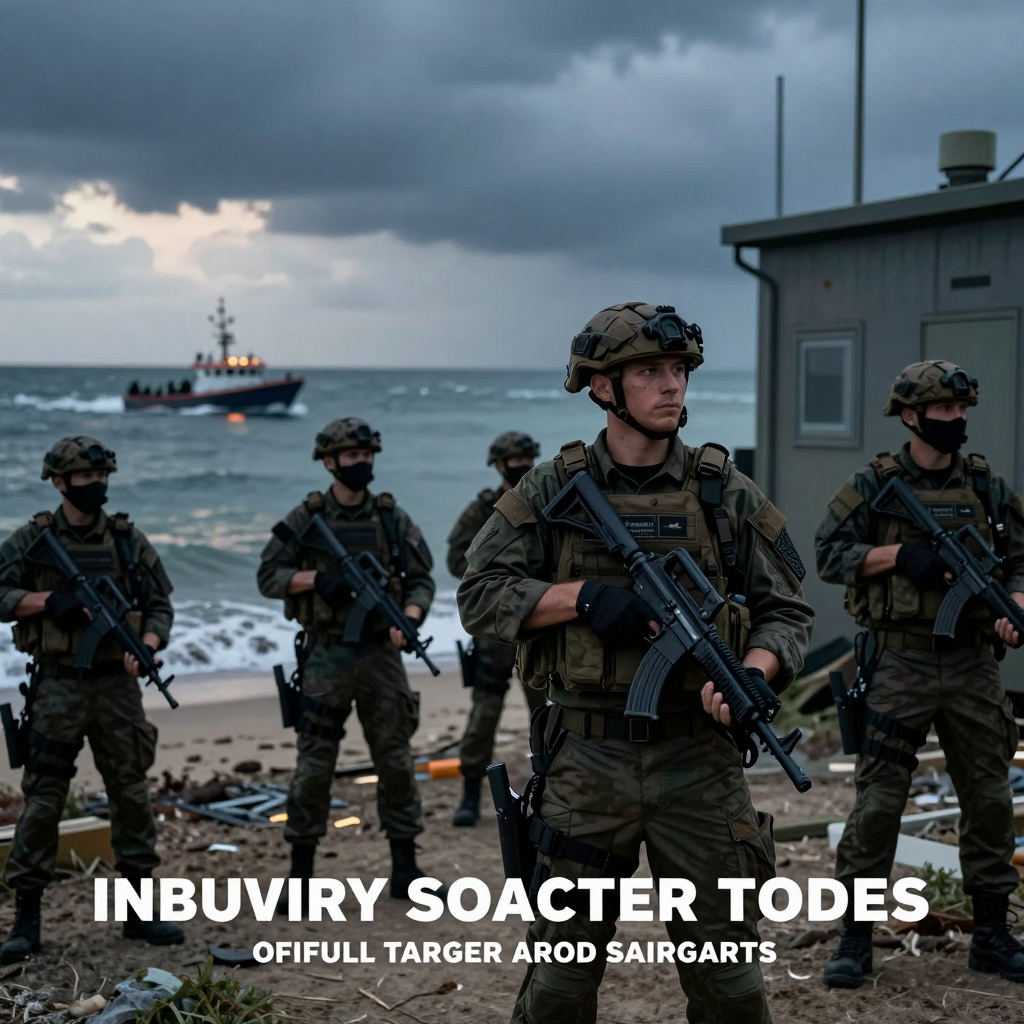
The core issue is not simply whether live ammunition was loaded. Given its mission of guarding the Han River estuary and the coastal areas along the western front, the 2nd Marine Division is expected to conduct peacetime surveillance while also responding immediately in an emergency. If guards were required to stand watch with unloaded weapons for an extended period as a matter of routine, the problem should be viewed not as an individual judgment call, but as a failure across the command and operational systems.
The Paradox Created by a Choice Made for Safety
The decision not to load live ammunition was likely driven by the need to prevent accidental discharges and protect service members. In fact, in high-pressure guard-duty environments, fatigue, differences in experience, and mistakes in handling equipment can all lead to accidents.
But the situation changes when rules that prioritize safety undermine the ability of forward units to respond. The very purpose of a guard unit is to detect threats early and respond immediately when necessary. If ammunition must be issued or loaded only after a threat has been confirmed, troops on the ground may lose the crucial first moments of a crisis.
The essence of the controversy is that leaving firearms unloaded to prevent accidents could, paradoxically, create an even greater danger when a real emergency unfolds.
The Vulnerability in the Reporting System Exposed by the Misidentified Drone Incident
The controversy grew even larger after a U.S. military training drone was mistaken for an enemy aircraft, triggering an alert. Flight information that had been provided in advance was not properly reported up the chain of command, causing confusion on the ground.
This incident cannot be explained solely by issues involving equipment or live ammunition. Guard readiness can quickly collapse when information is not shared in time, the criteria for assessing situations become inconsistent, and the chain of command is not organically connected to the field.
The Marine Corps’ guard mission is more than simple surveillance. Given the characteristics of coastal and island regions, even a minor abnormal sign must be assessed with the possibility of infiltration, provocation, or a disaster in mind. For that reason, the rules governing live ammunition, procedures for identifying drones, reporting systems, and authority at the scene must not be treated separately. They must be managed as one integrated system of operational readiness.
What Is Needed Is a Redesign Beyond Simply Loading Live Ammunition
The solution should not end with a single order to load live ammunition under all circumstances. Procedures for ammunition use and rules of engagement at each level of alert must be carefully redesigned so that units can maintain immediate response capability while preventing accidental discharges.
In particular, the following areas require review:
- Clearly defining when live ammunition must be loaded or carried according to the threat level
- Sharing identification information on drones and unidentified aircraft in real time
- Establishing a multilayered verification system to prevent missed reports
- Strengthening realistic guard training tailored to nighttime operations, severe weather, and island environments
- Creating a command and supervision structure that does not place responsibility solely on individual service members
Safety is not the opposite of operational readiness. True safety comes from building a system that reduces the likelihood of accidents while still enabling an immediate response when a crisis strikes. The Marine Corps’ “unloaded-rifle guard” controversy should remain a warning of how easily that balance can break down.
Marine Corps Alert: The Day the Alarm Sounded for a Friendly Aircraft
The training drone’s flight had been reported in advance. However, because that information was not properly relayed up the chain of command, our military mistook a friendly drone for an enemy aircraft and issued an alert. There is a clear reason why this is difficult to dismiss as a mere “mistake.” Forward-area security is not built around a single piece of equipment; it is a connected system of information, reporting, judgment, and response.
The core issue is not the drone itself. What matters is at which stage the information stopped and why it failed to be reflected in the judgment made on the ground. No matter how sophisticated the surveillance equipment or response manuals may be, once the chain of communication is severed, only uncertainty remains in the field.
“If information that was known is not communicated, then on the ground, it is no different from a threat seen for the first time.”
This incident also naturally connects to the controversy surrounding “empty-rifle guard duty” in the Marine Corps’ 2nd Division. One concerns physical response readiness, with ammunition not loaded, while the other involves the information and command system, with the drone notification failing to reach the necessary level. On the surface, they are different incidents, but both leave us with the same question: How quickly and accurately can the field actually respond in a crisis?
The coastal and island areas guarded by the Marine Corps are environments where even a minor misjudgment can escalate into a major crisis. Multiple variables can arise at the same time, including unidentified aircraft, the possibility of maritime infiltration, and deteriorating weather conditions. What is needed in such circumstances is not simply a stricter policy requiring ammunition to be loaded.
- A reporting system that immediately shares advance notifications
- More sophisticated procedures for identifying and responding to drones
- A real-time information network that supports the judgment of field commanders
- Security regulations that take both accident prevention and immediate response readiness into account
Ultimately, “the day the alarm sounded for a friendly aircraft” was not merely a one-time mishap. It was an incident that prompted a review of how well the forward-area security system is connected. Empty-rifle guard duty and the misidentification of a drone may appear to be different failures, but both point to a larger question: Do the field’s state of readiness and the chain of command actually function in a real crisis?
The Marine Corps’ Culture of Accidents and Its Culture of Rescue Are Two Sides of the Same Reality
On one side, controversy has intensified over firearm and ammunition management and frontline readiness. A firearms accident at an off-base officers’ quarters and the issue of “guard duty with unloaded weapons” have raised questions about whether the Marine Corps has the level of safety management and immediate-response readiness that the public expects.
Yet during the same period, a very different scene unfolded on Yeonpyeong Island. Marine personnel rescued a civilian swept away by powerful waves, demonstrating their role in protecting lives in dangerous maritime and coastal environments. This scene invites us to view the Marine Corps not merely as a combat force, but as an emergency-response organization standing closest to the public.
Controversy and Dedication Do Not Erase Each Other
The important point is that acts of rescue must not be allowed to overshadow controversies over firearms management and guard readiness. The dedication shown in rescuing civilians deserves respect, but gaps in organizational operations must also be examined thoroughly.
In particular, the Marine Corps simultaneously carries out security operations, amphibious missions, disaster response, and assistance to civilians in coastal and island regions. Because it is entrusted with such high-intensity missions, the following foundations must be established together:
- Transparent management of the process for taking firearms and ammunition out of storage and safeguarding them
- Genuine guard readiness capable of responding immediately to frontline situations
- A command-and-communications system that prevents failures to report
- Support systems that monitor the psychological burdens placed on enlisted personnel and officers
- Continuous strengthening of rescue capabilities that function in disaster zones
The Standard the Public Expects from the Marine Corps
For the powerful image of the “Ghost-Catching Marines” to retain meaning today, that strength cannot be demonstrated through combat power alone. The Marine Corps must also possess systems that prevent accidents, leadership capable of making accurate decisions in crises, and the sense of responsibility to be the first to reach out to civilians in danger.
Ultimately, the Marine Corps’ true competitiveness does not lie in concealing accidents when they occur. It lies in verifying and correcting problems transparently, and in protecting the public without hesitation at rescue scenes. Combat readiness and public safety are not opposite ends of a choice; they are two missions that the same organization must complete together.
The Next Face the Marine Corps Must Show: Stronger Trust, Not Stronger Control
A firearms accident, guards standing watch with unloaded weapons, the misidentification of an unmanned aerial vehicle, and the rescue of civilians on Yeonpyeong Island. These incidents may appear completely unrelated, yet they all occurred within the same organization. That is why the central question facing the Marine Corps today is not a simple one.
Is stricter control the answer?
Should a faster, more accurate reporting system come first?
Or should an organizational culture that takes responsibility for service members’ safety and mental health come first?
The answer does not lie in choosing just one. The future of the Marine Corps depends on building an organization where control, readiness, and human rights work together.
Firearms Management Is Not About ‘Regulations’—It Is About Trust
The gravest question raised by the firearms accident at off-base quarters is how thoroughly firearms and ammunition are being managed. Firearms management must not stop at checking records after an accident has occurred.
The entire process—from removal and storage to the issuance and recovery of ammunition, as well as the reporting of warning signs—must be connected without gaps. Above all, punishment alone for violating regulations is not enough. If there are structural conditions that make it difficult to follow the rules in the field, those conditions must be fixed first.
Readiness Begins with Balancing Safety and Real-World Effectiveness
The controversy over standing watch with unloaded weapons showed how safety-focused measures intended to prevent accidental discharges can create different risks in an actual crisis. There is clearly a tension between the principle of keeping live ammunition unloaded and the practical realities of guard duty.
What matters is not the simple choice of whether to “load live ammunition.” Equipment use, command approval, and the authority to respond on the ground must be designed in detail according to the level of threat in each situation. If the Marine Corps is to be trusted as a strong fighting force, it needs clear standards that allow service members in the field to act without confusion in moments of crisis.
Reporting Systems Must Be Fast—and Accurate at the Same Time
The mistaken identification of an unmanned aerial vehicle showed how a small omission in reporting can grow into major confusion. Modern battlefields are not secured by guns and barbed wire alone. Drones, surveillance systems, communication networks, and the speed of information sharing are all part of operational readiness.
Therefore, rather than simply blaming individual mistakes, the Marine Corps and the military as a whole must build systems that immediately fill in gaps even when information is missed. Reporting should not depend on a single person in charge; it must be structured so that information is verified at multiple levels. More important than fast reporting is accurate information sharing that reduces misjudgment.
Service Members’ Mental Health Is Not Separate from Combat Power
Intensive training and a strong sense of responsibility are central to the Marine Corps’ identity, but they must not lead to a culture in which individuals hide their suffering. In particular, officers and noncommissioned officers who carry both practical and command responsibilities can easily end up shouldering work pressures, personnel issues, and relationship conflicts alone.
What is needed is an environment in which service members do not fear disadvantage when requesting counseling, training that enables commanders to identify warning signs early, and a system that immediately connects those in need to protection and treatment. Caring for service members’ mental health does not create a “weaker organization.” On the contrary, it is the most realistic investment in building a Marine Corps that can endure over time and remain steady in a crisis.
The Standard the Public Expects from the Marine Corps
The rescue of civilians on Yeonpyeong Island showed what the Marine Corps can mean to the public. A combat force that protects coasts and islands, yet is also the first to reach out when disaster and crisis strike—that is likely the image of the Marine Corps people expect today.
Ultimately, the Marine Corps’ next chapter will not be completed through powerful slogans or strict control alone. It must be an organization where firearms are managed rigorously, guard duties function realistically, reports are accurate, and service members are protected.
Combat power and safety, honor and human rights, are not opposing values. When the Marine Corps creates this balance, it can move beyond being merely a stronger organization and become one that earns even greater trust.
Comments
Post a Comment