The Great Shake-Up in America’s Restaurant Chains: How Bankruptcy, AI, and Activist Investors Are Reshaping the Dining Industry
 \n
The U.S. Restaurant Chain Market Is Collapsing—and Rebuilding Itself
On one side, Shake Shack and Chipotle are seeing their earnings and stock prices rebound. On the other, Salad and Go, a salad chain that operated 70 locations, filed for bankruptcy protection and then shut down all of its stores just one day later.
Why are some brands growing while others disappear in the same U.S. restaurant market?
The answer cannot be explained simply by saying that “the economy is doing well” or that “consumer spending is declining.” The U.S. restaurant chain market has entered a phase of restructuring in which consumer choices are becoming increasingly polarized, while operational efficiency and brand competitiveness are determining who survives.
Shake Shack has raised expectations for growth as strong earnings coincided with an activist investment firm acquiring a stake in the company. Same-store sales came in above market expectations, while improvements in operating efficiency and the potential for further franchise expansion have also drawn attention. Chipotle, meanwhile, saw its stock plunge over food safety concerns but rebounded quickly after an official announcement from health authorities. It is a case of how strong brand recognition and a swift crisis response can create resilience.
By contrast, the collapse of Salad and Go shows that a healthy-food concept alone is not enough. Inflation, pressure across the food-ingredient supply chain, excessive expansion, and deteriorating profitability all hit at once, leaving its drive-thru salad model unable to survive. Even when demand for healthy food exists, growth itself can become a risk if a company cannot control ingredient costs and a complex supply chain.
The core of this market is clear: consumers are still eating out. But they are either looking for an affordable, predictable value menu or choosing premium dining that delivers a clearly worthwhile experience—even at a higher price. Concepts with ambiguous pricing and little differentiation are coming under pressure first.
Ultimately, the U.S. restaurant chain market is not simply collapsing. It is rapidly clearing out weak structures while capital and customers concentrate around stronger brands. The store closures, sales, asset acquisitions, and technology investments unfolding now are less a sign of crisis than part of the process through which a new order is taking shape.
Even Growing Restaurant Chains Have a Knife at Their Throats
Strong growth does not make market skepticism disappear. In fact, in the U.S. restaurant chain market, improving performance often brings an even tougher question: “How much further—and how efficiently—can this growth be scaled?”
Shake Shack is a prime example. Its adjusted EPS for the second quarter of 2026 came in at $0.43, while revenue reached $417.6 million, surpassing market expectations. Same-store sales also rose 3.5%, demonstrating that the brand’s traffic and pricing power remain intact.
But behind the strong results lies a new source of pressure. With activist investment firm Starboard Value acquiring a stake worth hundreds of millions of dollars, the market is now likely to demand more than simple revenue growth. It may call for changes such as:
- Improving store-level operating efficiency
- Exploring the potential for greater franchise expansion
- Optimizing the menu mix and cost structure
- Validating the profitability of new locations
In other words, Shake Shack’s next challenge is not simply “opening more stores,” but growing while generating higher returns. Activist involvement could serve as a catalyst for a short-term stock revaluation, but it also places pressure on management to prove its growth strategy with hard numbers.
Chipotle reveals a different kind of knife-edge risk. When food-safety concerns emerged in Minnesota, its stock plunged 9.72% in a single day—the biggest one-day decline in nine months. After health authorities stated that there were no concerns regarding the chain, the stock rebounded by about 3.5% in after-hours trading. But the market’s reaction was unmistakable: the moment food safety shakes brand trust, it can move a stock faster than earnings expectations ever could.
For a brand like Chipotle, which builds its identity around “fresh ingredients” and a customized menu experience, food-safety management is not merely an operational issue. It is a brand asset—and the foundation of its valuation.
The greatest risk for a growth company is not that growth comes to a halt, but that it loses operational control in the process of growing.
Ultimately, competition among fast-casual leaders is unlikely to be decided by revenue expansion alone. Shake Shack must prove its capital efficiency and profitability, while Chipotle must demonstrate unwavering food safety and effective crisis communication. The next stage of growth will depend not on the number of new locations opened, but on whether these companies can continue growing without sacrificing operational quality.
Why Mid-Sized Restaurant Chains Can’t Smile Even as Sales Rise
An increase in sales does not necessarily mean a business is healthy. In the U.S. mid-sized restaurant chain industry, top-line growth and declining profitability are unfolding at the same time. That is why growth can no longer be explained by the sales graph alone.
Portillo’s is a prime example. In the second quarter of 2026, the chain reported revenue of $199 million, up 5.6% year over year. However, net income fell 28.8% to $7.2 million. Store expansion and rising brand awareness lifted sales, but food costs, labor expenses, and new development costs squeezed profits.
Sales growth may be visible, but the cost of sustaining that growth can rise even faster.
This structure is particularly burdensome for mid-sized chains. Unlike large franchise groups, they often lack comparable purchasing power and the resources to invest heavily in technology. At the same time, they cannot scale down operations as quickly as small independent restaurants. As a result, expanding the store base can boost sales while simultaneously becoming a risk factor that damages profitability.
Dine Brands Global is showing a similar trend. The company, which operates IHOP and Applebee’s, increased second-quarter revenue by 4.4% year over year. Yet during the same period, it opened 13 new locations while closing 30 restaurants. Cleaning up underperforming locations has become more important than growing through new openings.
This is not simply a contraction. It is closer to a portfolio reset, as family-dining restaurant chains reassess their locations and store productivity. The strategy is to decisively close stores with weak traffic, high rent burdens, or declining brand competitiveness, while concentrating capital only in trade areas with strong growth potential.
To survive, mid-sized chains must now answer three questions:
- Is sales growth translating into actual increases in cash flow and profit?
- Are new openings cannibalizing sales at existing locations?
- Can underperforming stores be closed quickly?
What the market evaluates going forward may not be ‘how many stores were opened.’ The true competitive strengths of mid-sized restaurant chains will be how efficiently they operate, which locations they choose to keep, and how effectively they control the cost of growth.
Coffee Shops Rise Where Salad Stores Disappeared: Restaurant Chain Restructuring in Action
Salad and Go, a salad drive-thru chain, could not withstand inflation, supply chain pressures, and overexpansion. After filing for Chapter 11, it ultimately closed all 70 of its locations just one day later. Stores that had targeted demand for healthy food vanished in an instant.
But the closures were not the end—they became a new starting point for another brand. Dutch Bros, a coffee drive-thru chain, has agreed to acquire Salad and Go’s store assets for approximately $105 million. The existing drive-thru locations, primarily in Arizona and Nevada, are now highly likely to be transformed into expansion hubs for Dutch Bros.
The reason this deal is attracting attention is simple. Building new stores takes time and money. But acquiring locations that already have roadside sites, parking layouts, and drive-thru infrastructure can significantly accelerate expansion. For a coffee brand centered on fast ordering and pickup, the physical structure of the former salad stores is an especially strong fit.
The assets left behind by one restaurant chain’s overexpansion can become the fastest growth infrastructure for another.
Salad and Go’s failure does not mean the healthy-food market as a whole has failed. However, it does show that an appealing concept alone is not enough. When fluctuating ingredient costs, fresh-produce supply chains, low average order values, and aggressive expansion collide, a growth model can quickly become unstable.
Dutch Bros, by contrast, can take advantage of the gap created by a competitor’s withdrawal and expand its market share at lower cost and in less time. In the U.S. restaurant industry, opening new locations is no longer the only growth strategy. How quickly and efficiently a company can absorb the assets left behind by closed stores is becoming a new source of competitive advantage.
The Decisive Battle in Restaurant Chain Restructuring: Redesign the System, Not the Menu
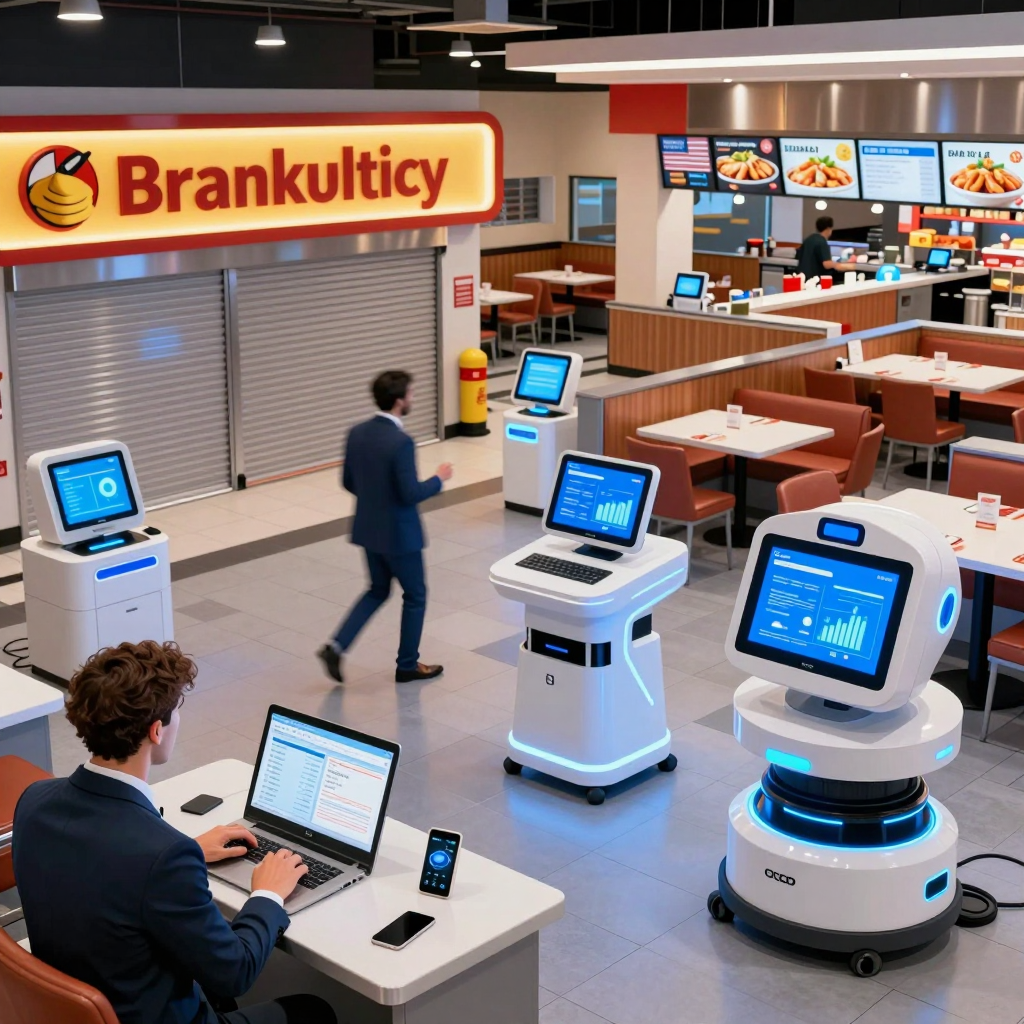
McDonald’s fried apple pie, returning after 30 years, is more than a simple retro menu item. While tapping into customers’ emotions through a familiar taste, McDonald’s is also experimenting with an AI ordering system and its value-focused McValue menu. This is not about adding a single menu item—it is a strategy to redesign customer traffic, ordering methods, restaurant operations, and price perception all at once.
Restaurant chains undergoing restructuring should be asking the same question: before asking, “What else can we sell?” they must first determine “What should we abandon, and where should we focus?”
Menu Innovation Must Go Hand in Hand with Operational Innovation
While McDonald’s is using nostalgic menu items to strengthen brand familiarity, it is also improving restaurant efficiency by introducing AI-powered ordering and changing how beverages are managed. Value menus are designed to retain price-sensitive consumers, while investments in technology provide the foundation for reducing labor costs, ordering errors, and wait times.
The importance of this combination is clear. Today’s consumers want lower prices, but they are not willing to accept a slower or more inconvenient experience. Ultimately, strong chains do more than simply lower menu prices—they reduce the costs and friction generated throughout the ordering, preparation, and pickup processes.
The core of price competition lies not in discounts themselves, but in building an operating structure capable of sustaining them.
The Principles of Choice and Focus Demonstrated by Yum Brands
Yum Brands’ sale of Pizza Hut sends an even more direct message: holding on to every brand forever is not necessarily the best strategy. The company decided to divest Pizza Hut and concentrate its capital and management capabilities on KFC and Taco Bell.
This is not merely an asset sale; it is portfolio optimization. Rather than continuing to pour resources into brands with limited growth potential or weakened competitiveness, Yum Brands is choosing to focus on brands with stronger consumer reach and greater scalability—an effort to accelerate the company as a whole.
For multi-brand restaurant chains in particular, the following criteria are becoming increasingly important:
- Does each brand generate sufficient returns relative to investment, beyond simply having growth potential?
- Does the brand serve a clearly differentiated customer need from the group’s other brands?
- Does it have a scalable system across menu development, marketing, supply chain, and digital operations?
- Does the company have the decisiveness to close underperforming locations and divest brands with limited prospects for recovery?
The Chains That Survive Are Better at Subtracting Than Adding
During periods of market restructuring, new menu items, new restaurants, and fresh promotions flood the market. But expansion does not always translate into growth. The full-scale closure of Salad and Go, the removal of unprofitable locations by IHOP and Applebee’s, and the sale of Pizza Hut all point to the same reality: in an environment of uncertain demand and rising costs, the quality of strategic choices matters more than scale.
The winners of the future may not be the brands with the largest menus. They will be the brands that deliver the right price and experience when customers want them—and make that delivery repeatable. In other words, the competitiveness of a strong chain lies not in the product itself, but in its ability to connect brand portfolios, pricing strategies, digital technology, and restaurant operations into a single system.
Comments
Post a Comment